
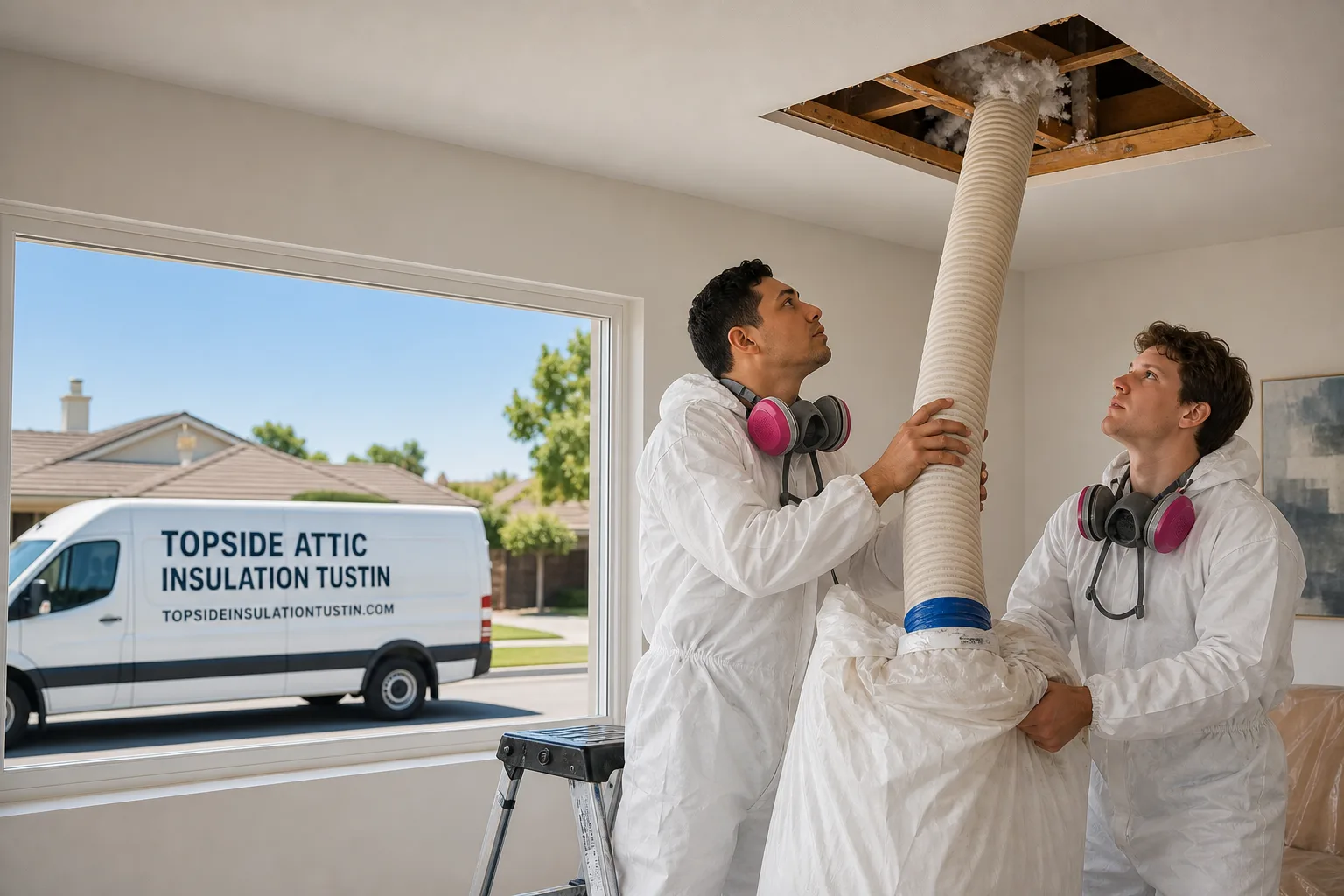
How Much Does Spray Foam Insulation Cost in Tustin?
Spray foam insulation in Tustin, CA typically costs between $1,800 and $6,500 for a whole-home or attic application, with most single-family jobs landing in the $2,400 to $4,200 range depending on the type of foam, the square footage, and whether air sealing work precedes the install. Open-cell foam runs cheaper at roughly $0.44 to $0.65 per board foot; closed-cell runs higher at $1.00 to $1.50 per board foot in this market. For most Tustin homeowners replacing aged fiberglass batts in a 1,500 to 2,000 square-foot attic, the final written price tends to fall between $2,800 and $4,000 before any utility rebates are applied.
Spray Foam Insulation Cost Breakdown (2026)
Spray foam pricing has a few moving parts, and the Tustin market sits squarely within the higher end of the Southern California range. Labor costs here reflect Orange County wages, and material costs have held relatively flat since mid-2025 after two years of post-pandemic volatility. Below is a realistic snapshot of what different scope sizes look like as of 2026.
| Scope of Work | Foam Type | Typical Price Range (Tustin) |
|---|---|---|
| Attic floor air sealing only (no foam) | n/a | $450 – $900 |
| Attic floor air seal + open-cell foam, 1,000 sq ft | Open-cell | $1,600 – $2,400 |
| Attic floor air seal + open-cell foam, 1,500 sq ft | Open-cell | $2,200 – $3,200 |
| Attic floor air seal + open-cell foam, 2,000 sq ft | Open-cell | $2,800 – $4,000 |
| Crawl space encapsulation + closed-cell foam | Closed-cell | $2,200 – $4,800 |
| Closed-cell spray foam, rim joists only | Closed-cell | $600 – $1,200 |
| Full attic conversion (remove old insulation + spray foam roof deck) | Closed-cell | $4,500 – $8,500 |
| Wall cavities, exterior walls only (new construction or gut rehab) | Open- or closed-cell | $1,200 – $3,500 |
| Garage ceiling, single bay, air sealed + foamed | Open-cell | $800 – $1,500 |
These numbers reflect a written-price model – the figure you see is what you pay. At Envelope Insulation Co., every job begins with a flat written price and a written scope of work before any crew lifts a tool. That’s Haven Standard Clause 1, and it’s non-negotiable on every job from Tustin’s older Ranch tracts in the Tustin City Center area to the newer builds near Tustin Legacy.
What Drives Cost Up
- Closed-cell vs. open-cell foam: Closed-cell foam (2-lb density) costs roughly twice as much per board foot as open-cell (0.5-lb), but it also delivers a higher R-value per inch and a vapor barrier in one pass – relevant in Tustin crawl spaces where ground moisture is a real issue.
- Existing insulation removal: If there’s deteriorated fiberglass batt or rodent-compromised blown cellulose already in place, it has to come out before foam goes in. Removal on a 1,500 sq ft attic adds $600 to $1,200 to the bottom line.
- Access difficulty: Many homes in the unincorporated pockets near Old Town Tustin have low-pitch rooflines and tight attic clearance. Tight access adds crew time, which shows up in the price.
- Pre-foam air sealing: Air sealing – closing top plates, recessed can lights, and utility penetrations with foam backer rod and caulk before spray foam is applied – is not an upsell at Envelope. It is a prerequisite. It adds cost in the $450 to $900 range, and we will not skip it.
What Drives Cost Down
- New construction or open-stud access: When walls are open and there’s no demo work, spray foam installs faster. New-construction pricing is typically 15 to 25% below retrofit pricing for the same square footage.
- Southern California Edison rebates: SCE offers insulation upgrade rebates for qualifying Tustin homes. The amount varies by existing R-value and home size, but rebates of $150 to $600 are realistic for attic upgrades meeting their current threshold. We document the pre-install condition specifically to support your rebate application.
- Combining scopes: Attic air sealing, spray foam, and radiant barrier in one mobilization is less expensive per square foot than scheduling each separately. One crew mobilization covers fixed costs that would otherwise repeat.
What Affects Spray Foam Insulation Pricing in Tustin
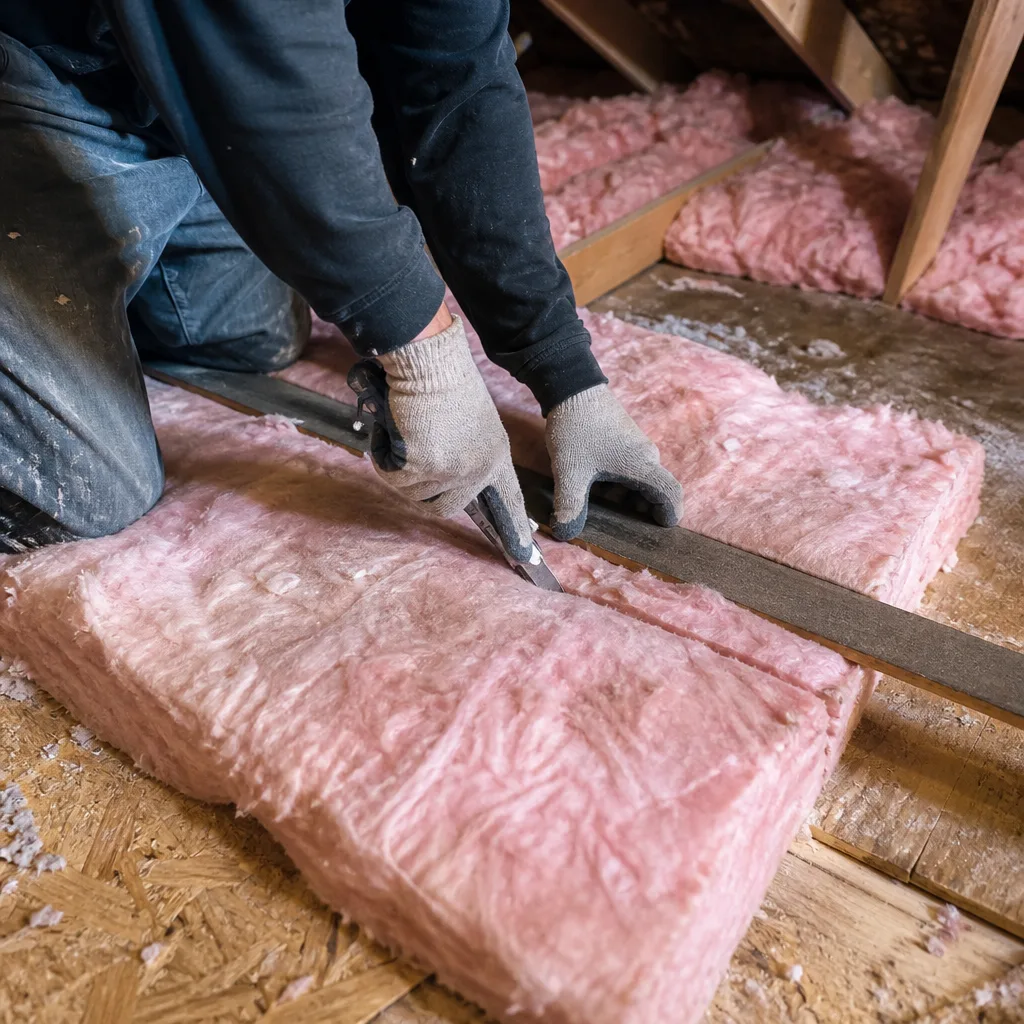
Tustin’s housing stock spans about six decades of construction, from 1950s tract homes near Red Hill Avenue to townhomes built inside the old Marine Corps Air Station footprint. That range matters because the construction era determines what’s inside the walls, how the attic is framed, and what code requirements apply to any retrofit work today.
- Home age and construction type: Homes built before 1980 in Tustin’s older neighborhoods – particularly around the Browning Avenue corridor and near Tustin High School – were framed with different stud spacing and often have knob-and-tube remnants or non-standard penetrations that require extra prep time before spray foam is safe to apply.
- Foam type and R-value target: California Title 24 sets minimum R-value requirements for residential insulation upgrades. In Tustin’s climate zone (Zone 10), attic insulation upgrades for conditioned space typically need to meet R-38 or better. Getting there with open-cell foam requires a thicker application than closed-cell – which affects board-foot totals and total material cost.
- Attic configuration: A simple flat attic floor with no HVAC equipment up top is the cleanest, fastest job. An attic with a central air handler, flex duct runs, and platform framing for equipment costs more to work around, especially if the spray foam application has to work in sections to avoid coating equipment access panels.
- Air sealing scope before foam: The blower-door test – a pressurization reading that shows, in one number, how much conditioned air the building envelope is losing – determines how many penetrations need sealing before foam goes down. In Tustin, we regularly find that homes built in the 1960s and 1970s near the Tustin Marketplace corridor have attic floors with 40 to 60 unsealed can-light penetrations. Each one gets sealed. The count drives time and cost.
- Permit requirements: The City of Tustin Building Division requires permits for certain spray foam applications, particularly roof-deck (hot roof) conversions where the thermal envelope changes. Permit fees add $150 to $350 depending on scope. We handle the permit pull – that line item appears in the written price before any work starts.
- Material sourcing: We source from Icynene, Demilec, and Johns Manville, among others. Material pricing varies by product line and current market. We do not carry a proprietary house-brand foam, which means you can verify the product spec sheet independently. The product name and spec appear in your written scope.
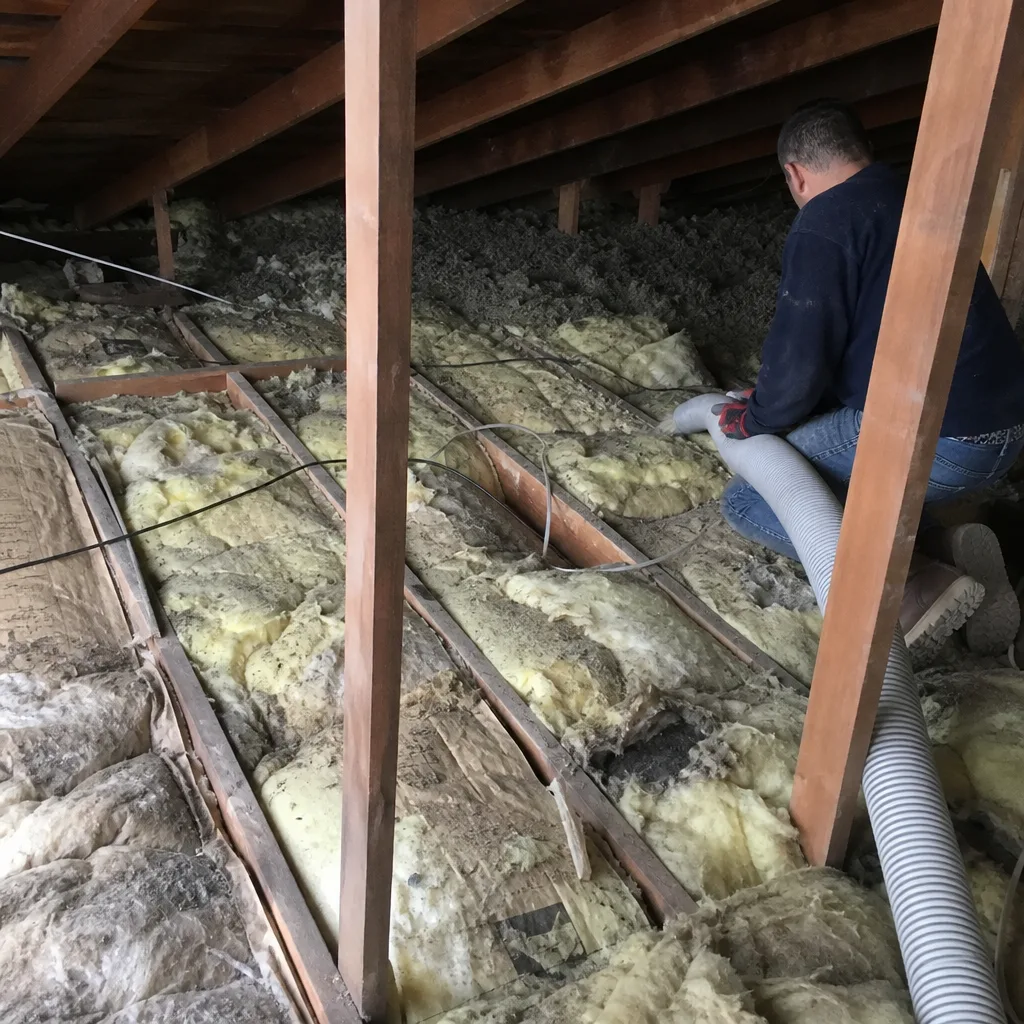 Before
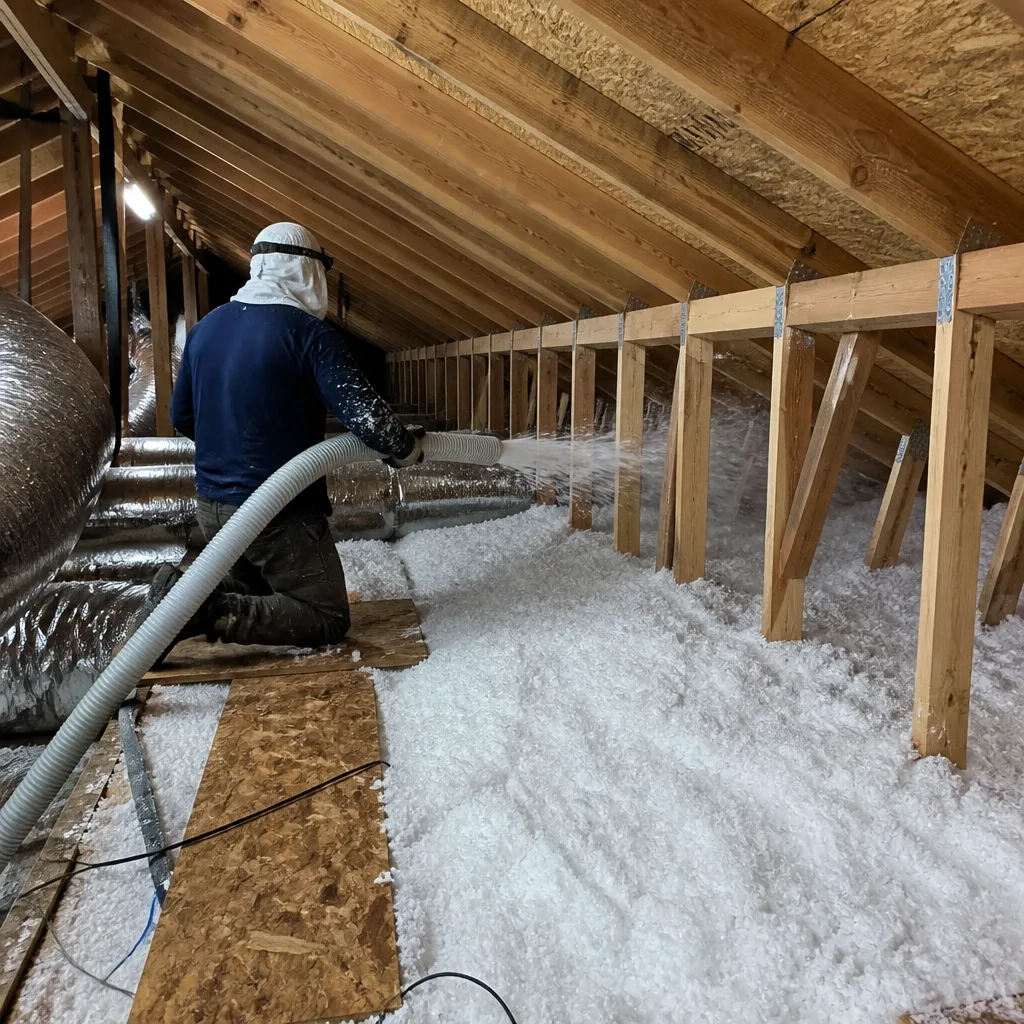 After
AfterOpen-Cell vs. Closed-Cell Spray Foam: Which Is Right for Tustin Homes?
This is the most common question we get from Tustin homeowners who’ve already decided on our Spray Foam Insulation services but haven’t decided which type. The short answer is that the right choice depends on where in the building envelope you’re insulating and what moisture conditions look like in that space.
Open-Cell Spray Foam
Open-cell foam (roughly R-3.5 to R-3.8 per inch) expands aggressively and fills voids well. It’s vapor-permeable, which is actually an asset in Tustin’s Mediterranean-adjacent climate for above-grade walls and attic floors, where letting a small amount of vapor move through the assembly reduces the risk of trapped moisture. For attic floor applications in a typical Tustin ranch home, open-cell at 5 to 6 inches gets you to R-19 to R-22 before additional blown-in insulation is layered on top. Open-cell is the better choice when the goal is air sealing with cost efficiency, and R-value is built up through a combination of materials.
Closed-Cell Spray Foam
Closed-cell foam (R-6.0 to R-7.0 per inch) is denser, structurally rigid, and acts as its own vapor barrier at 2 inches or more. For Tustin crawl spaces – which in homes near the Peters Canyon Wash area can see elevated ground moisture from seasonal drainage patterns – closed-cell is the appropriate choice. It’s also the standard choice for roof-deck applications where a hot roof conversion is the goal, because it adheres directly to the underside of the decking without requiring a separate vapor retarder.
A note on safety: spray foam installation involves pressurized chemical components – isocyanate and polyol resin – that require proper respiratory protection and ventilation during and after application. The curing window where occupants should stay out of the space is typically 24 hours for most products. This is not a DIY application. The equipment alone runs to tens of thousands of dollars, and off-ratio foam – what happens when the two components mix at the wrong ratio – creates a permanent mess that has to be mechanically removed. A professional install with documented materials is the only appropriate approach here.
How to Save on Spray Foam Insulation in Tustin
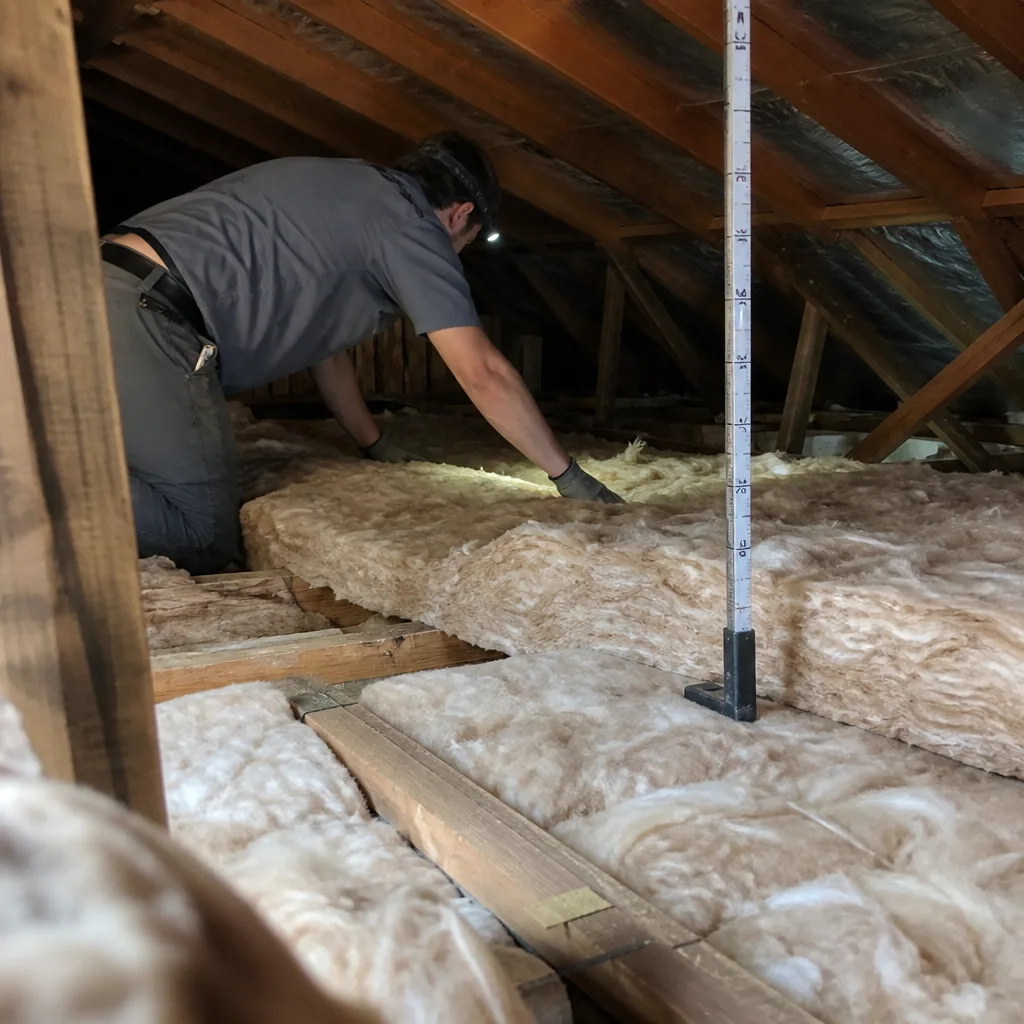
Spray foam is not a budget product, and anyone quoting you dramatically below the ranges on this page is probably cutting something – either the air sealing prep, the product quality, or the application thickness. That said, there are legitimate ways to reduce total outlay.
Apply for SCE and SoCalGas Rebates Before the Inspection
Southern California Edison and SoCalGas both run rebate programs tied to building envelope upgrades. The exact amounts change annually, but as of 2026, Tustin homeowners upgrading an under-insulated attic to R-38 or better through a qualifying contractor can access rebates that offset $150 to $600 of the project cost. The key is documenting the before condition – specifically, the existing R-value measurement – so the utility can verify the improvement. We photograph and document the existing attic insulation on every visit, which gives you what the rebate application asks for.
Get a Second Opinion on Any Written Estimate
Under Haven Standard Clause 1, every Envelope Insulation Co. job starts with a written price. If you have a written estimate from another contractor, bring it. We’ll read it with you – line by line – and tell you specifically what it includes, what it doesn’t, and where the numbers land relative to the Tustin market. That’s a free service, no obligation. Call (657) 286-7673 to set that up.
Combine Scopes in a Single Mobilization
If you’re also considering blown-in insulation on top of the spray foam layer, radiant barrier foil on the rafters, or attic cleaning before the work starts, scheduling it in one mobilization saves on travel and setup cost. The incremental cost of a second scope on an already-mobilized crew is always lower than two separate visits. When we write the price, we price the combined scope as one job.
Address Air Leaks Before You Insulate
This sounds counterintuitive as a cost-saving tip, but it’s real: a house with major air leaks that gets more insulation without sealing first will underperform relative to its R-value rating. You end up spending more on energy indefinitely. The blower-door test before the job identifies exactly where the leaks are. We seal first – always. That’s not extra; it’s part of the job as we define it. You get the blower-door reading before and after so you can see the actual CFM50 change. That number is worth more than any promise about efficiency.
Don’t Over-Specify for the Climate Zone
Tustin sits in California Climate Zone 10. The minimum attic R-value under Title 24 is R-38 for most retrofit applications. Some contractors upsell to R-60 or more with thick closed-cell applications that produce diminishing returns in this climate zone. R-49 to R-60 makes sense in climate zones 11 through 16 – the inland high desert and mountain areas – but in Tustin’s mild coastal-influenced climate, hitting R-38 to R-49 with a well-sealed envelope delivers nearly all the practical benefit. We’ll tell you when a more expensive spec isn’t justified.
Spray Foam vs. Other Insulation Types: Cost Comparison for Tustin
Spray foam is not the right answer for every part of the building envelope. Here’s how it compares against common alternatives for the applications Tustin homeowners ask about most.
- Blown-in fiberglass (attic floor): $0.80 to $1.20 per square foot installed, no air sealing included. Effective at R-value per dollar but does nothing for air leakage on its own. Often the right material for the bulk insulation layer when spray foam handles the air sealing underneath.
- Blown-in cellulose (attic floor): $0.90 to $1.40 per square foot installed. Excellent at settling into odd-shaped cavities. Made from recycled content. Does not act as an air barrier. Same limitation as fiberglass on its own.
- Fiberglass batts (walls): $0.50 to $0.90 per square foot. Fast and cheap. Requires a separate air barrier and careful installation to avoid voids. In older Tustin homes where stud bays aren’t square, batt fit is often imprecise.
- Rigid foam board (exterior continuous): $1.20 to $2.50 per square foot installed. High R-value per inch, good thermal break. Labor-intensive to install correctly at penetrations. Not a common retrofit in Tustin without a full re-siding project.
- Open-cell spray foam (attic or walls): $0.44 to $0.65 per board foot. Air seals and insulates in one pass. The higher upfront cost compared to blown-in pays back in reduced air infiltration from day one.
- Closed-cell spray foam (crawl spaces, rim joists): $1.00 to $1.50 per board foot. The only product that simultaneously air seals, insulates, and provides a vapor barrier in tight spaces. Worth the premium in moisture-exposed applications.
For a more detailed look at what spray foam work in Tustin covers and how we approach each application, see our Spray Foam Insulation in Tustin service page. And if you want context on how spray foam fits into the broader insulation picture for Tustin homes, the home page covers our full building-envelope service line.
What the Job Looks Like, Start to Finish
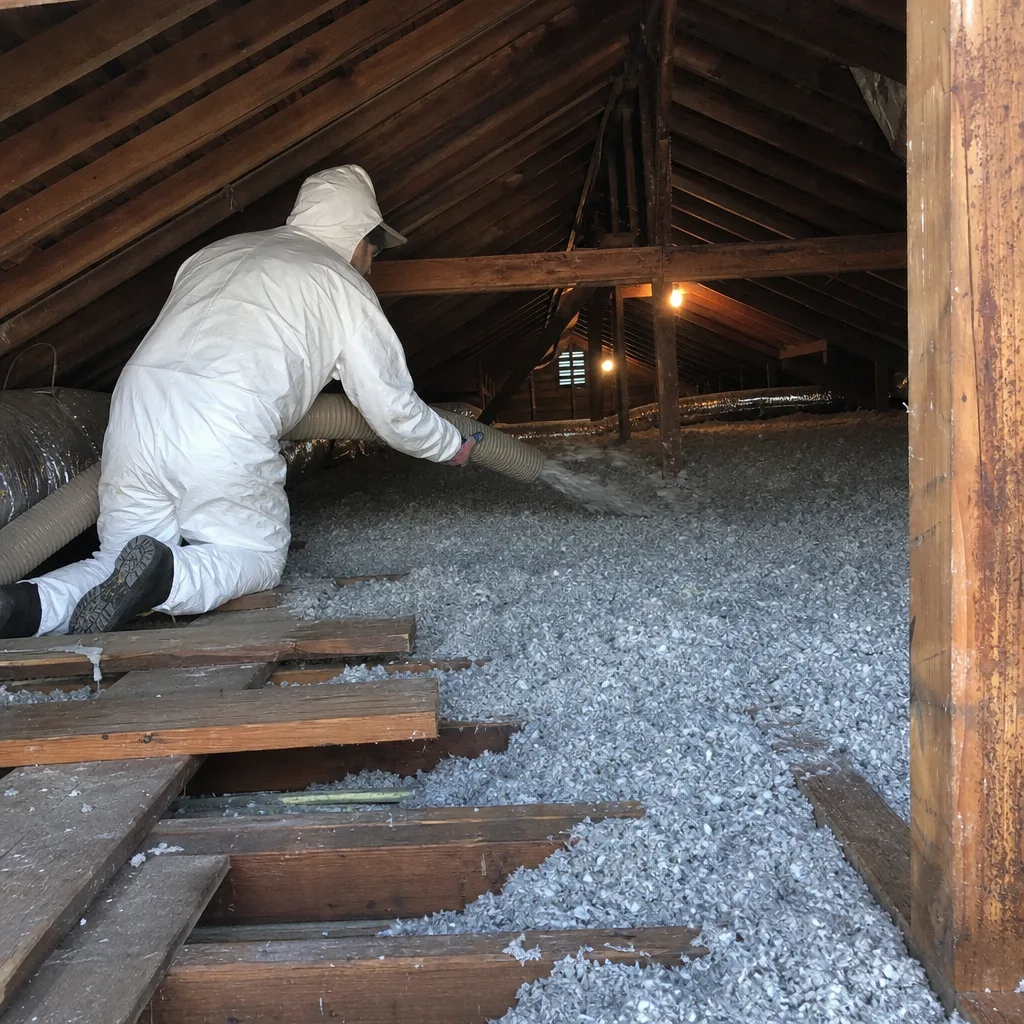
Knowing what you’re buying before the crew shows up is part of what makes a job go well. Here’s what the process looks like on a typical Tustin attic air seal and spray foam installation.
Step 1: Written Price Before Anything Else
Wes Okafor or a member of the Envelope team walks the space, takes measurements, notes the existing insulation type and depth, identifies penetrations that need sealing, and produces a written flat price. That price covers materials, labor, permits if required, cleanup, and the blower-door test. No verbal quotes. No “we’ll know when we get in there.” You approve the number in writing before anyone starts.
Step 2: Blower-Door Test (Before)
We pressurize the home to 50 Pascals using a calibrated fan in the front door – a blower-door test – and record the CFM50 reading. That number tells us, precisely, how much conditioned air the envelope is losing before we touch anything. In Tustin homes built before 1990, we typically see readings between 3,800 and 6,500 CFM50. That range represents hundreds of dollars a year in HVAC energy leaving through gaps we’re about to seal.
Step 3: Air Sealing – First, Always
Top plates, recessed can lights, electrical penetrations, plumbing chases, and any visible bypasses get sealed with canned foam, fire-rated caulk, or backer rod and foam depending on the gap size and fire code requirements. This step is not optional, and it is not an upsell. We will not apply insulation over an unsealed attic floor. That’s an Envelope position, not a preference.
Step 4: Spray Foam Application
The spray foam rig heats the two chemical components to proper application temperature and the technician applies the foam at the specified thickness – measured with depth gauges as the work proceeds. You get the product name, manufacturer, and spec in your written scope. After application, the foam cures for the manufacturer-specified window before the space is re-entered.
Step 5: Blower-Door Test (After)
Once foam is cured, we run the blower-door again. The CFM50 number drops. On a typical Tustin home with a well-executed attic air seal, we see reductions of 30 to 55% from the pre-seal reading. That figure goes into your documented job record. You can hand it to a future buyer, submit it for a utility rebate, or just know what you actually paid for.
Step 6: Documented Photo Record
Every visit closes with a photo record – before and after images of every zone worked. That record is delivered to you, not archived somewhere internal and available on request. It’s part of the job.
FAQs – Spray Foam Insulation Cost in Tustin
How much does spray foam insulation cost per square foot in Tustin, CA?
Open-cell spray foam in Tustin runs $0.44 to $0.65 per board foot (one board foot equals one square foot at one inch thick); closed-cell runs $1.00 to $1.50 per board foot. A typical attic floor application at 5 inches of open-cell over a 1,500 sq ft attic runs approximately $2,200 to $3,200 all-in, including air sealing prep. Call (657) 286-7673 for a free written estimate – the number on the page is a market range, and your written price reflects your actual home.
Is spray foam insulation worth the cost in Tustin’s climate?
For most Tustin homes built before 2000, yes – specifically because the air sealing that comes with a proper spray foam install addresses the largest single source of HVAC energy loss, which is air infiltration, not R-value shortfall. Tustin’s Climate Zone 10 doesn’t produce the extreme temperature swings of inland zones, but it does produce long cooling seasons where a leaky envelope runs up SCE bills steadily. The blower-door readings we document before and after show the actual reduction in air infiltration – that’s verifiable, not theoretical.
How long does spray foam insulation last in Tustin?
Closed-cell spray foam has a documented service life of 80 years or more under normal conditions – longer than the framing it adheres to in most Tustin homes. Open-cell foam is similarly durable in above-grade, protected applications. Neither type degrades, settles, or loses R-value the way blown-in fiberglass does over time. The limiting factor is usually the substrate, not the foam itself.
Can I get spray foam insulation installed in a day in Tustin?
Most attic air seal and spray foam jobs in the 1,200 to 2,000 sq ft range complete in a single day. The 24-hour occupant-stay-out window after foam application means you’d plan to be out of the home for a period after the crew finishes, but the crew is typically in and out in 4 to 7 hours depending on scope. Larger scopes – full roof-deck conversions, whole-home insulation removal and replacement, or complex crawl space work – sometimes run across two days. Your written scope will specify the timeline before work starts.
Does Tustin require a permit for spray foam insulation?
The City of Tustin Building Division requires permits for spray foam applications that change the thermal envelope configuration – specifically, hot roof (roof-deck) conversions and certain unvented attic assemblies. Standard attic floor air seal and spray foam applications typically do not require a permit, though this can vary based on scope. Permit fees, when required, run $150 to $350 and appear as a line item in the written price before any work starts. We handle the permit pull.
What’s the difference between spray foam and blown-in insulation for a Tustin attic?
Blown-in insulation (fiberglass or cellulose) adds R-value but does not seal air leaks on its own. Spray foam does both – it air seals and insulates in one pass. For a Tustin home with significant attic air leakage, blown-in alone will underperform because conditioned air keeps bypassing the insulation layer through gaps. The most cost-effective approach for most Tustin retrofits is a combination: spray foam for air sealing and an initial insulation layer, followed by blown-in on top to reach the Title 24 R-value target. That hybrid approach is usually $400 to $700 less expensive than achieving the same R-value with closed-cell foam alone.
About Envelope Insulation Co. and Wes Okafor
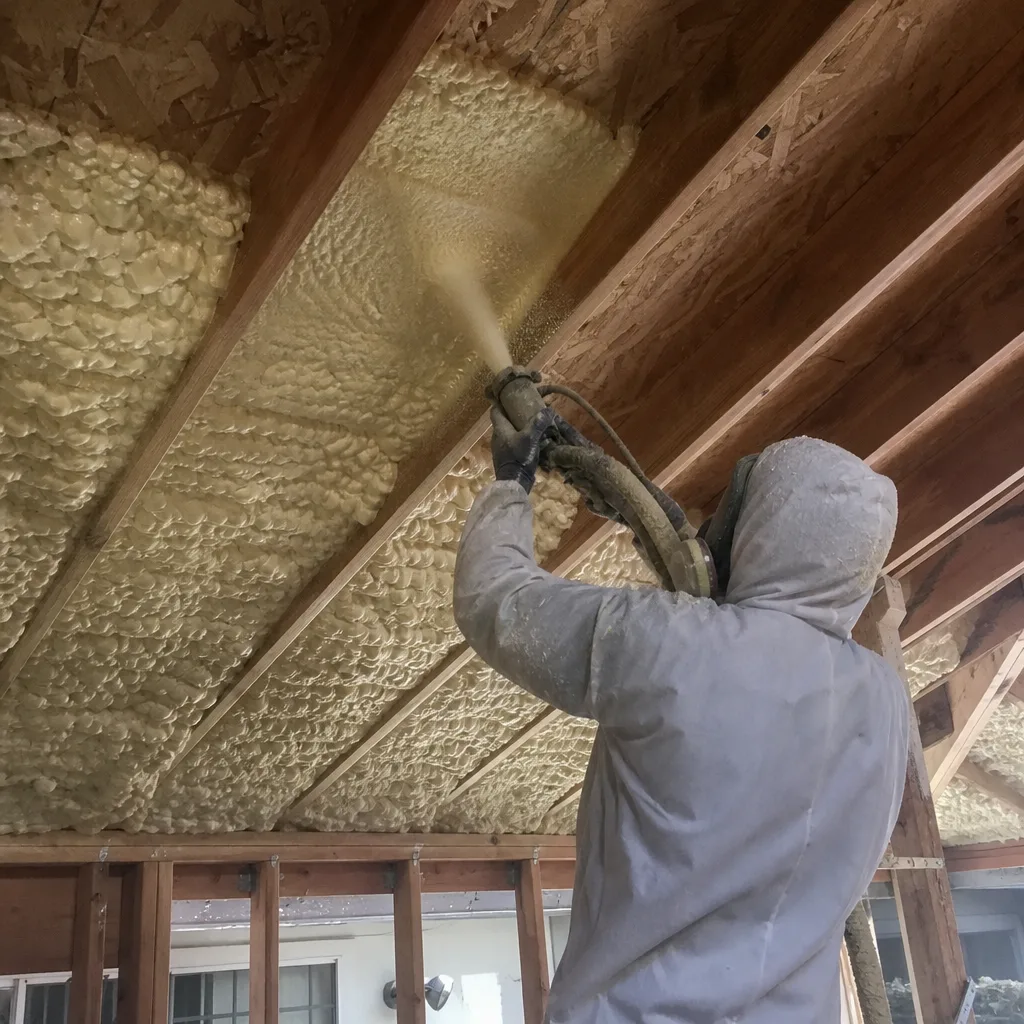
Envelope Insulation Co. has operated under The Haven Standard since 2016. Wes Okafor leads every job that goes out under the Envelope name. Since 2016, the company has completed work on more than 9,000 homes – every one with a written price before any work started and a documented photo record when the crew left. That’s not a differentiator the company is proud of in a performed way; it’s just how the work is structured, because the alternative – verbal estimates, no scope, no documentation – is how disputes start and how corners get cut.
The 365-Day Done Right Promise applies to every completed job. If the work isn’t right, it gets made right. That promise is written into the scope document you receive before the crew starts. You don’t have to ask for it.
If you have a written estimate from another contractor, bring it. Wes will read it with you. Free. No pressure. Under Haven Standard, a Free Second Opinion on any written estimate is a standing offer, not a sales tactic.
Get a Written Price for Your Tustin Home
The ranges on this page reflect real Tustin market pricing as of 2026. Your home’s actual number depends on square footage, existing conditions, attic configuration, and which type of foam fits the application. The only way to get your number is a site visit and a written scope.
Wes Okafor and the Envelope team are available to schedule a free estimate for Tustin homeowners. A live person answers when you call – no voicemail loop, no callback window measured in business days. Call (657) 286-7673 to schedule. You’ll have a written price in hand before any work begins, a documented photo record when we leave, and before-and-after blower-door readings if air sealing is part of the scope.
That’s what leaving looks like when we’re done.
Pricing reflects the Tustin market as of 2026. Topside Attic Insulation Tustin offers free estimates – call (657) 286-7673.
Written by Wes Okafor, Owner at Envelope Insulation Co., serving Tustin, CA since 2016.
What Our Customers Say
"Turned up on time, protected the hallway, and the written scope matched what was actually done."
- Bruno S."Crawl space encapsulation done properly. Photographs of the vapour barrier at every seam, and the damp smell in the hallway is gone."
- Ainsley P."They air-sealed the attic floor before insulating and showed me the blower-door number before and after. The upstairs is finally the same temperature as downstairs."
- Marisol D.