
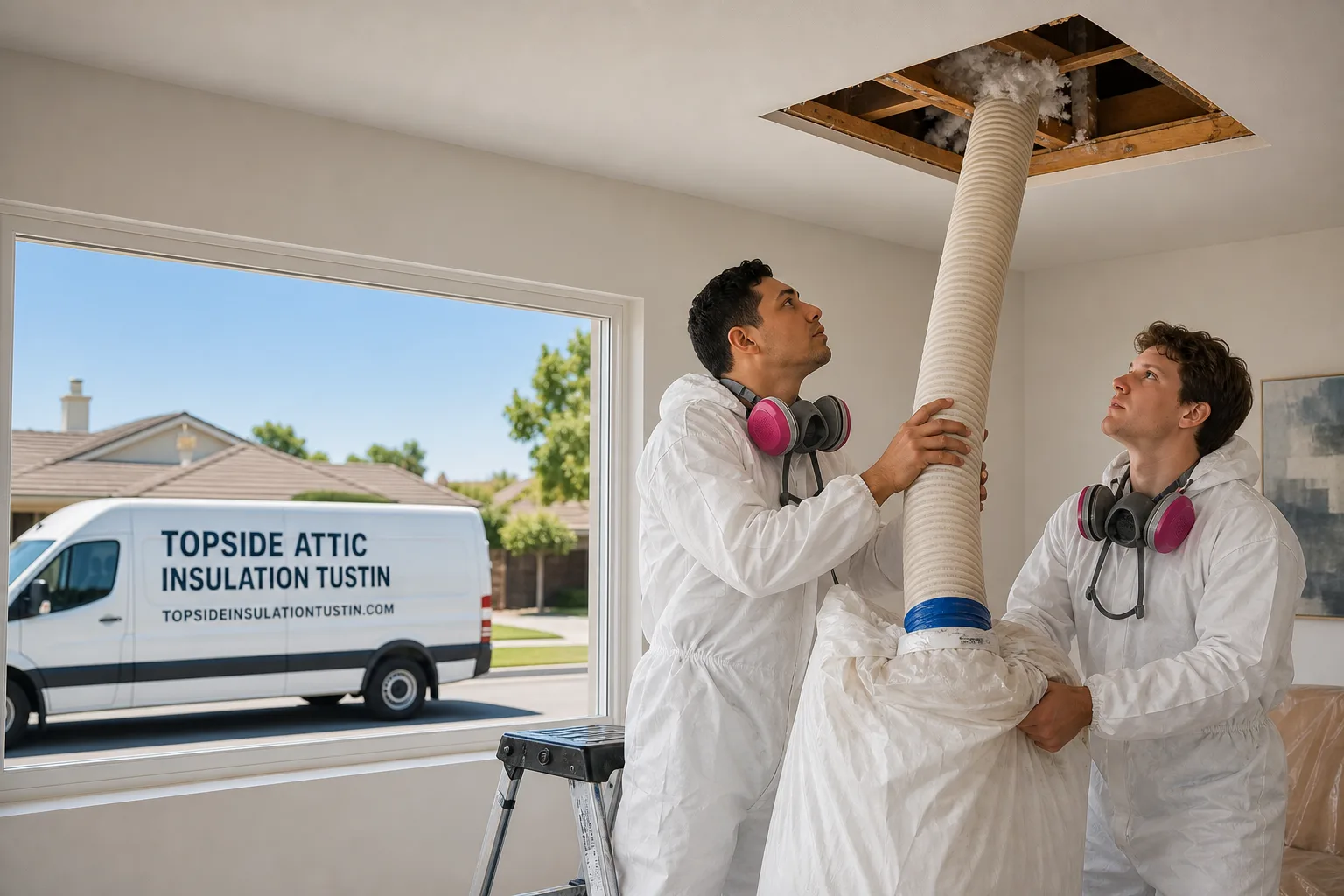
How Much Does Wall Insulation Cost in Tustin?
Our Wall Insulation services in Tustin, CA typically cost between $1,800 and $4,200 for a standard single-story home, or roughly $1.50 to $3.80 per square foot of wall cavity depending on the insulation type, access method, and whether air sealing is done first. Most Tustin homeowners we work with land somewhere between $2,200 and $3,400 for a 1,500-2,000 sq ft home using blown-in fiberglass or mineral wool in existing walls. The number on your estimate will shift based on wall construction, the age of the home, and what’s already in the cavities – but those are the real ranges for this market in 2026.
Wall Insulation Cost Breakdown (2026)
The table below reflects what Envelope Insulation Co. actually sees on jobs in Tustin and the surrounding areas of Orange County. These are not national averages pulled from a database – they are working price ranges calibrated to local labor costs, material pricing from suppliers we use (Owens Corning, Johns Manville, Knauf, Rockwool, CertainTeed, Icynene, Demilec, and GreenFiber), and the building stock common to this part of Southern California.
| Insulation Type | Method | Cost per Sq Ft (Wall Cavity) | Typical Job Total (1,500-2,000 sq ft home) |
|---|---|---|---|
| Blown-In Fiberglass | Dense-pack through small exterior or interior holes | $1.50 - $2.20 | $1,800 - $2,900 |
| Blown-In Cellulose | Dense-pack through small holes | $1.60 - $2.40 | $1,950 - $3,100 |
| Mineral Wool (Rockwool) | Open-wall installation (renovation or new build) | $2.20 - $3.40 | $2,700 - $4,200 |
| Spray Foam (Open-Cell) | Open-wall or cavity injection | $2.80 - $3.80 | $3,200 - $4,800 |
| Spray Foam (Closed-Cell) | Open-wall applications, thin sections | $4.50 - $7.00 | $4,500 - $7,500+ |
| Fiberglass Batts | Open-wall installation only | $0.80 - $1.50 | $1,000 - $2,000 |
| Air Sealing (top plates, penetrations, can lights) | Completed before insulation – always | $0.30 - $0.70 (added to job) | $350 - $900 added to insulation cost |
A few things worth explaining here. Dense-pack blown-in – whether fiberglass or cellulose – is the most common method we use in Tustin’s existing homes because it doesn’t require tearing out drywall. Technicians drill small holes (typically 2 inches in diameter) either from the interior or exterior, fill each stud bay under pressure, then patch and paint. The labor for patching and repainting is sometimes included in the quote, sometimes not – always ask, and under Haven Standard Clause 1, your written price will spell it out before any work starts.
Fiberglass batts are inexpensive but only practical when walls are already open – during a remodel, an addition, or a gut renovation. If your home is finished and occupied, dense-pack or injection foam are the realistic options. Closed-cell spray foam in walls is usually reserved for specific situations: a wall that faces a garage, a wine room, or a space where vapor control and maximum R-value per inch both matter. For most Tustin homes built between 1965 and 2005, blown-in fiberglass or mineral wool hits the right balance of performance and cost.
What Affects Wall Insulation Pricing in Tustin
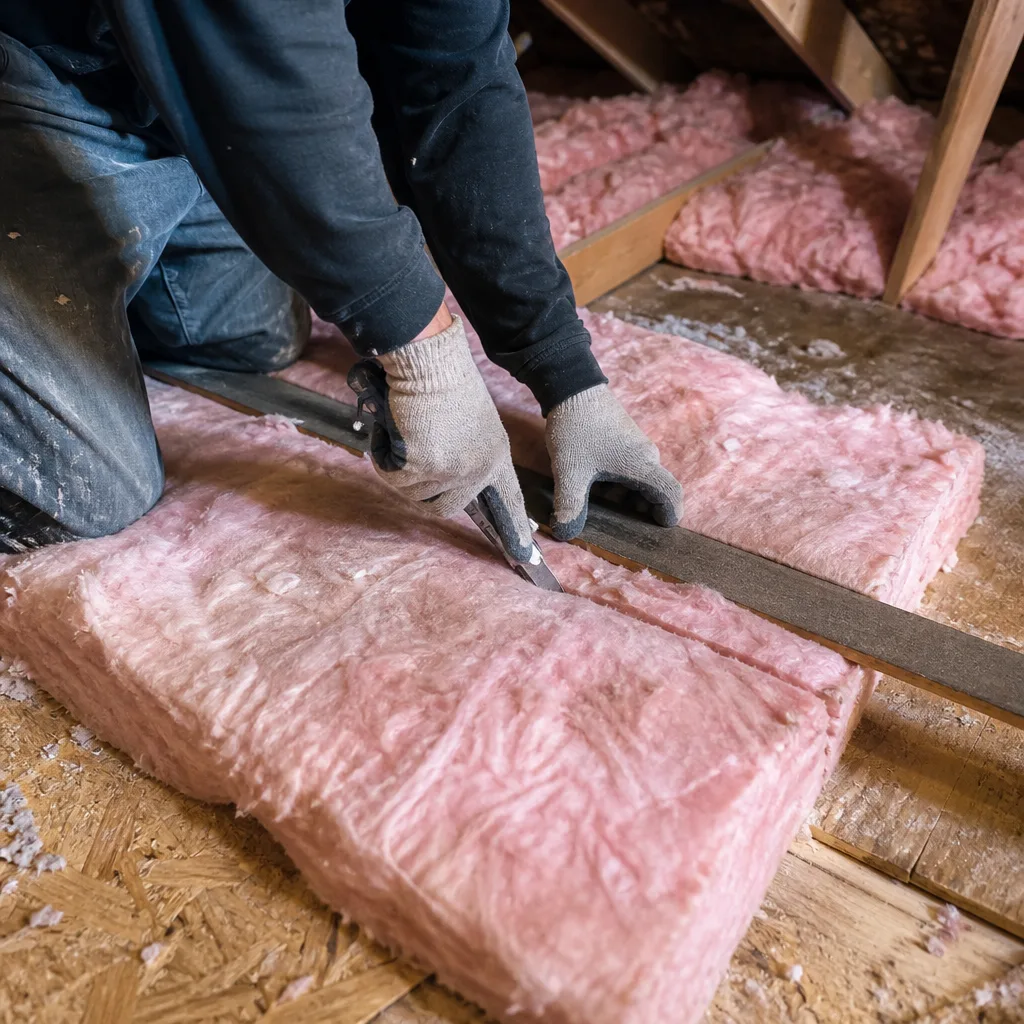
Below are the six factors that move a wall insulation estimate up or down in this market. Each one is something we look at on every job assessment in Tustin.
- Home age and wall construction: Tustin has a wide mix of housing stock – tract homes from the 1960s and 1970s built with 2×4 framing (3.5-inch cavities, R-13 target), ranch-style homes from the 1980s, and newer construction in areas like Tustin Ranch with 2×6 framing (5.5-inch cavities, R-21 target). Deeper cavities hold more material and cost more to fill, but they also produce meaningfully better thermal performance. Older stucco exteriors in older Tustin neighborhoods sometimes complicate exterior-access drilling, which can shift labor costs up by 10-15%.
- What’s already in the walls: If a wall cavity has degraded fiberglass batting from the 1970s or netting that has sagged over decades, that material needs to come out before new insulation goes in. Removal adds cost – typically $300 to $700 for a full home, depending on how much is in there. We document what we find with photos before any work starts.
- Access method – interior vs. exterior drilling: Drilling from the interior means patching and painting interior drywall. Drilling from the exterior on a stucco home means patching stucco, which is a different trade skill and a different material cost. On wood-sided homes, pulling siding and replacing it afterward is another variable. The access method is determined by what’s fastest, cleanest, and least disruptive to your finished surfaces – and it’s spelled out in the written scope.
- Air sealing scope: We treat air sealing as a hard prerequisite, not a line item you can decline. In Tustin’s climate zone (Climate Zone 10 under California’s Title 24 code), unsealed top plates, can lights, and electrical penetrations are the primary pathway for conditioned air to escape into wall cavities and then out through the building envelope. We seal those penetrations before any insulation is added. The cost is listed separately in your estimate so you can see exactly what you’re paying for each scope of work.
- Linear feet of exterior wall: This one is straightforward. A two-story home in Tustin Ranch with 2,800 square feet of conditioned space has more exterior wall surface than a single-story 1,400 sq ft home in Old Town Tustin. More wall area means more material and more labor hours. Garage walls that adjoin conditioned living space are often included in the scope – those cavities are frequently empty and account for a meaningful thermal loss.
- Permit requirements: Most blown-in wall insulation jobs in Tustin do not require a permit if no structural changes are made. However, if the job involves spray foam in an amount that triggers California’s Title 24 energy compliance documentation, or if it’s tied to a renovation that already has an open permit, that documentation adds to the project timeline and occasionally the cost. We check applicable requirements on every assessment and include permit handling in the written scope when it applies.
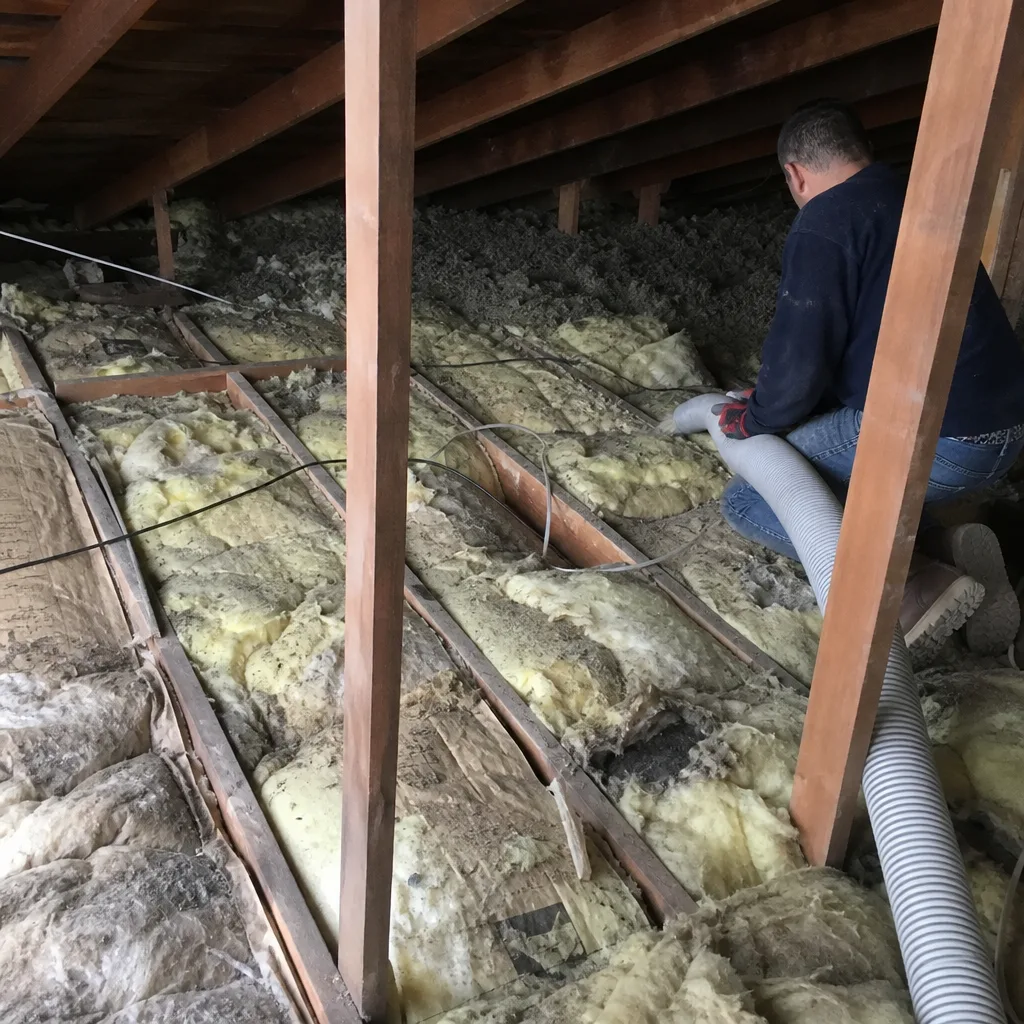 Before
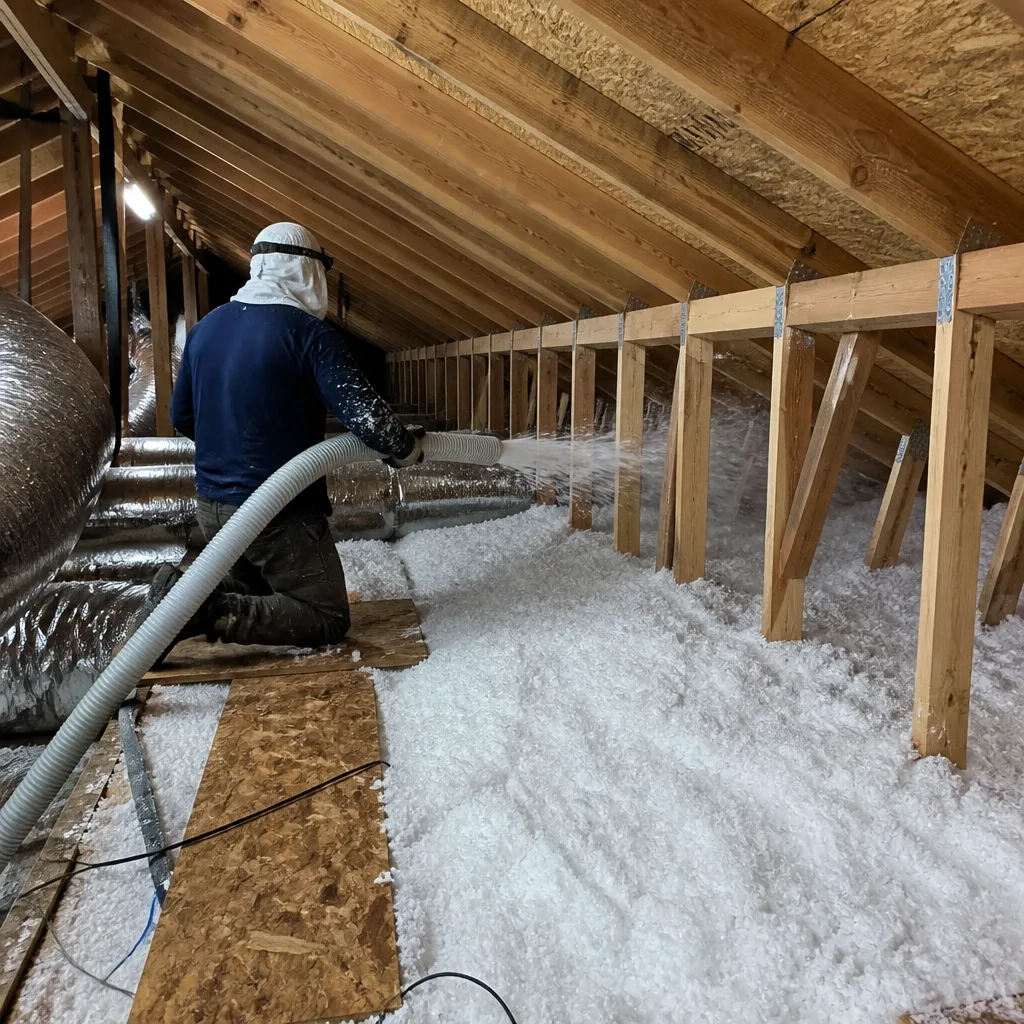 After
AfterWall Insulation and Tustin’s Climate: Why This Market Is Different
Tustin sits in a part of Orange County that sees more temperature swing than coastal cities like Newport Beach or Seal Beach. Summers in Tustin regularly push into the mid-90s in inland neighborhoods – especially in areas east of the 55 Freeway – while winter nights in January drop low enough that a poorly insulated wall is losing meaningful heat. That diurnal swing (the difference between the day’s high and overnight low) is often larger in Tustin than in coastal communities, which makes wall insulation more impactful here than many homeowners expect.
Homes in the Tustin Unified area built before 1978 often have no wall insulation at all – the building code at the time did not require it. When we assess a 1965 ranch home in Old Town Tustin, a blower-door test – a pressurization reading that shows, in one number, how much air the building envelope is losing – frequently reads 3,000 to 4,500 CFM50 before any sealing work. After sealing and adding insulation, that number commonly drops to 1,400 to 2,200 CFM50. That reduction is published in the job documentation every homeowner receives from us. It’s not a feeling; it’s a measurement.
Tustin Ranch homes from the 1990s present a different situation. They typically have some wall insulation already – usually a fiberglass batt that has settled or compressed over 25 to 30 years. Dense-packing over settled batts is possible but requires a blower and pressure confirmation on each cavity to verify full fill. We document cavity fill confirmation with photos. For our Wall Insulation in Tustin service page, we go deeper into the specific methods used on each home type – worth reading if you’re trying to figure out which approach applies to your house.
How to Save on Wall Insulation in Tustin
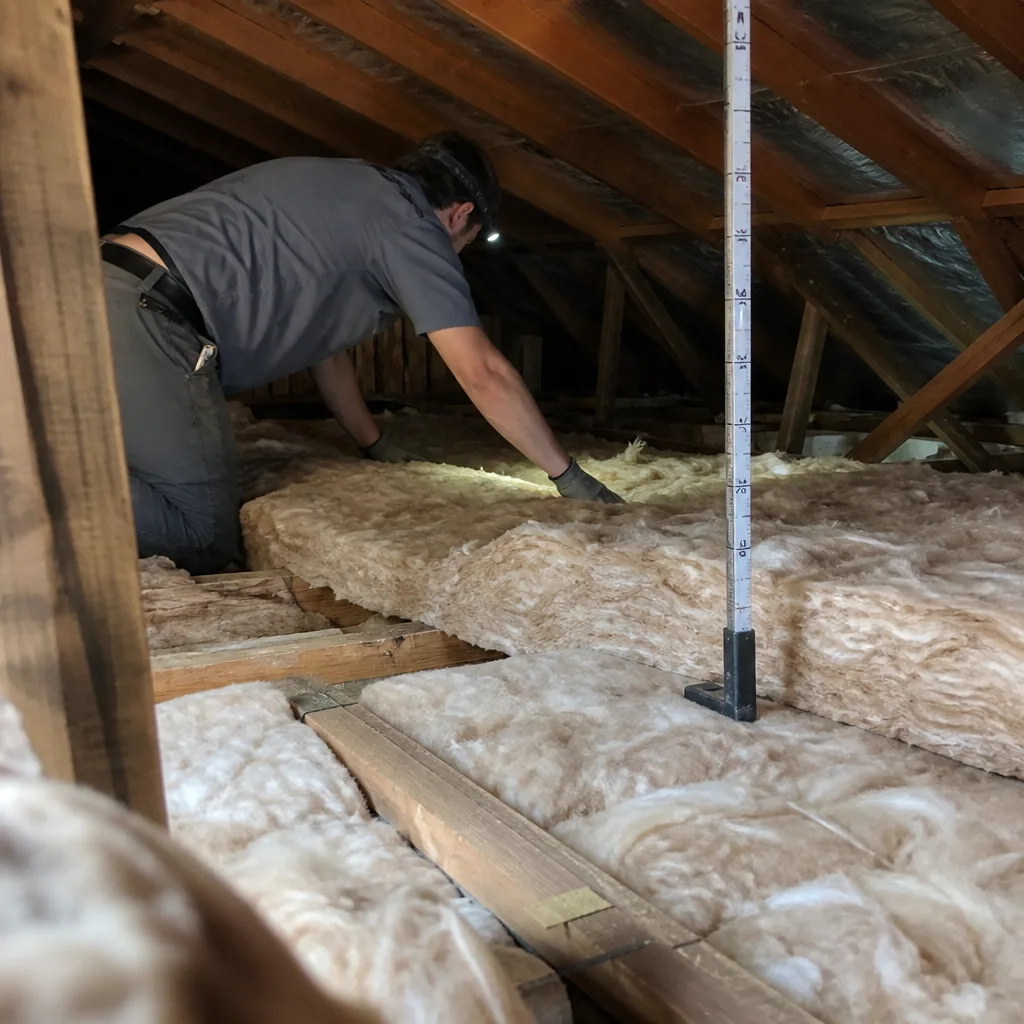
There are real ways to reduce what you spend on wall insulation without cutting corners on performance. Here are the ones that actually apply to the Tustin market.
- Combine wall work with an attic project: If you’re already having attic insulation replaced or blown in, the mobilization cost – the crew showing up, the equipment on site, the blower-door test setup – is already accounted for. Adding wall insulation to an attic job typically reduces the per-square-foot cost of the wall work by 10-20% because you’re not paying for two separate project setups.
- Get a second opinion on any written estimate you already have: Under the Haven Standard, we offer a free second opinion on any written estimate from another contractor. We’ll read through it with you, identify what’s included and what isn’t, and give you a written comparison. There’s no obligation. If the other quote is genuinely better for the same documented scope, we’ll tell you.
- Ask about California Energy Commission rebates and SCE/SoCalGas incentive programs: Southern California Edison and SoCalGas periodically offer rebates for qualifying insulation improvements. The amounts change year to year – as of early 2026, SCE’s residential energy efficiency program covers insulation in certain climate zones, which Tustin qualifies under. We pull the current rebate schedule on every assessment and note what applies to your job in the written scope.
- Don’t skip air sealing to reduce the quote: We understand the impulse to reduce a proposal by removing line items. But removing the air sealing scope and leaving the insulation in place produces a result that is measurably worse and sometimes counterproductive – insulation without air sealing in a drafty wall cavity is less effective than the R-value label suggests, because convective air loops reduce its thermal resistance. The blower-door number won’t lie about that. We include air sealing because the job doesn’t perform without it.
- Schedule in the late fall or early spring: Tustin’s wall insulation demand peaks in June through August and again in December. Scheduling in October, November, or March typically means faster scheduling and, in some cases, better project pricing because crews are not running at peak capacity.
- Have your walls assessed before deciding on a material: Blown-in fiberglass costs less per square foot than mineral wool, and in most 2×4-framed Tustin homes it performs well. Spending more on closed-cell spray foam in a standard exterior wall is often not the best use of your budget unless there’s a specific moisture or fire-blocking reason. An honest assessment of your wall type determines which material makes sense, not which one costs more.
To get a written price before any work starts – no callbacks, no “we’ll send someone out and then give you a number” – call (657) 286-7673. Estimates for wall insulation in Tustin are free, and the written scope includes material type, method, air sealing scope, and warranty terms before anyone lifts a tool.
Wall Insulation R-Value Requirements in Tustin (California Title 24)
California’s Title 24 energy code places Tustin in Climate Zone 10. For new construction and qualifying renovations, the prescriptive minimum for exterior wall insulation is R-15 for 2×4 framing and R-20 for 2×6 framing. For existing homes that are not undergoing a permitted energy improvement, there is no mandatory minimum – but the California Energy Code’s “cool walls” provisions apply when exterior finishes are being replaced, which can affect which insulation options qualify for rebates.
In practical terms: if you have an older Tustin home with no wall insulation and 2×4 framing, achieving R-15 requires dense-pack fiberglass or cellulose at the right density, or a mineral wool product sized to the cavity. A standard 3.5-inch fiberglass batt at R-13 falls slightly short but is often used in existing-wall retrofits where the cavity depth is the limiting factor. We note which R-value you’ll achieve in the written scope so there are no surprises after the job is done.
Comparing Wall Insulation Types: What We Install in Tustin Homes
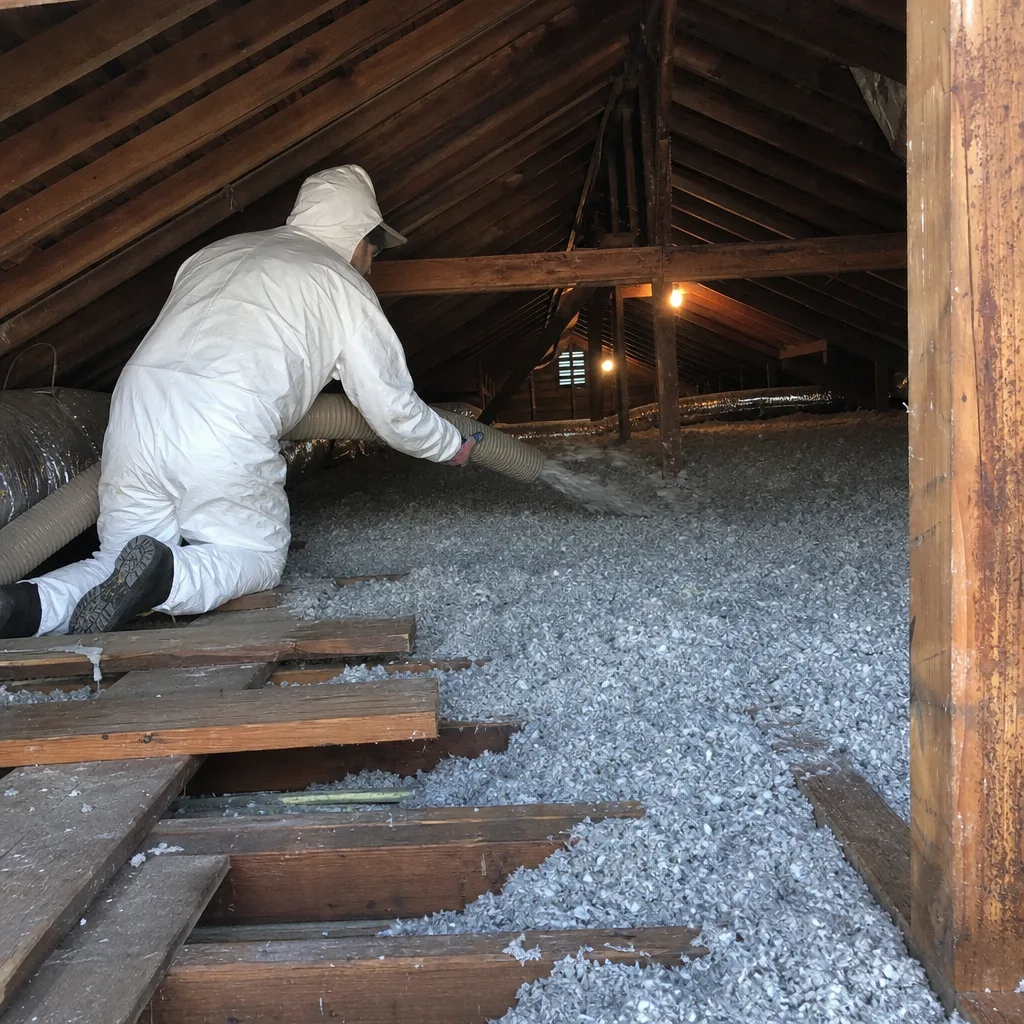
Dense-Pack Blown-In Fiberglass
This is what we use on the majority of existing finished walls in Tustin. Owens Corning and Johns Manville both produce blown-in fiberglass products that, when installed at the correct density (typically 1.8 to 2.2 lbs per cubic foot), resist settling and provide R-values between R-13 and R-15 in a 3.5-inch cavity. The installation process is fast relative to other methods – most whole-house jobs in a 1,500-1,800 sq ft home are completed in one day – and patch work on drywall or stucco can typically happen the same day.
Dense-Pack Cellulose
GreenFiber cellulose is our primary cellulose product. It’s made from recycled paper treated with borate for fire and pest resistance, and it dense-packs similarly to fiberglass. Some Tustin homeowners prefer it for its embodied carbon profile. It performs comparably to fiberglass in a wall cavity, and the price difference is usually modest – $0.10 to $0.30 per square foot more or less depending on current material pricing.
Mineral Wool (Rockwool)
Rockwool’s SAFE’n’SOUND and Comfortbatt products are used in open-wall applications – a remodel, an addition, or a home where the drywall is already coming off. Mineral wool is fire-resistant, does not absorb moisture, and has a noise-dampening quality that dense-pack blown-in doesn’t match. For walls that adjoin a garage or a noisy street – which applies to plenty of homes near Red Hill Avenue or Newport Avenue in Tustin – mineral wool is worth the additional cost.
Spray Foam
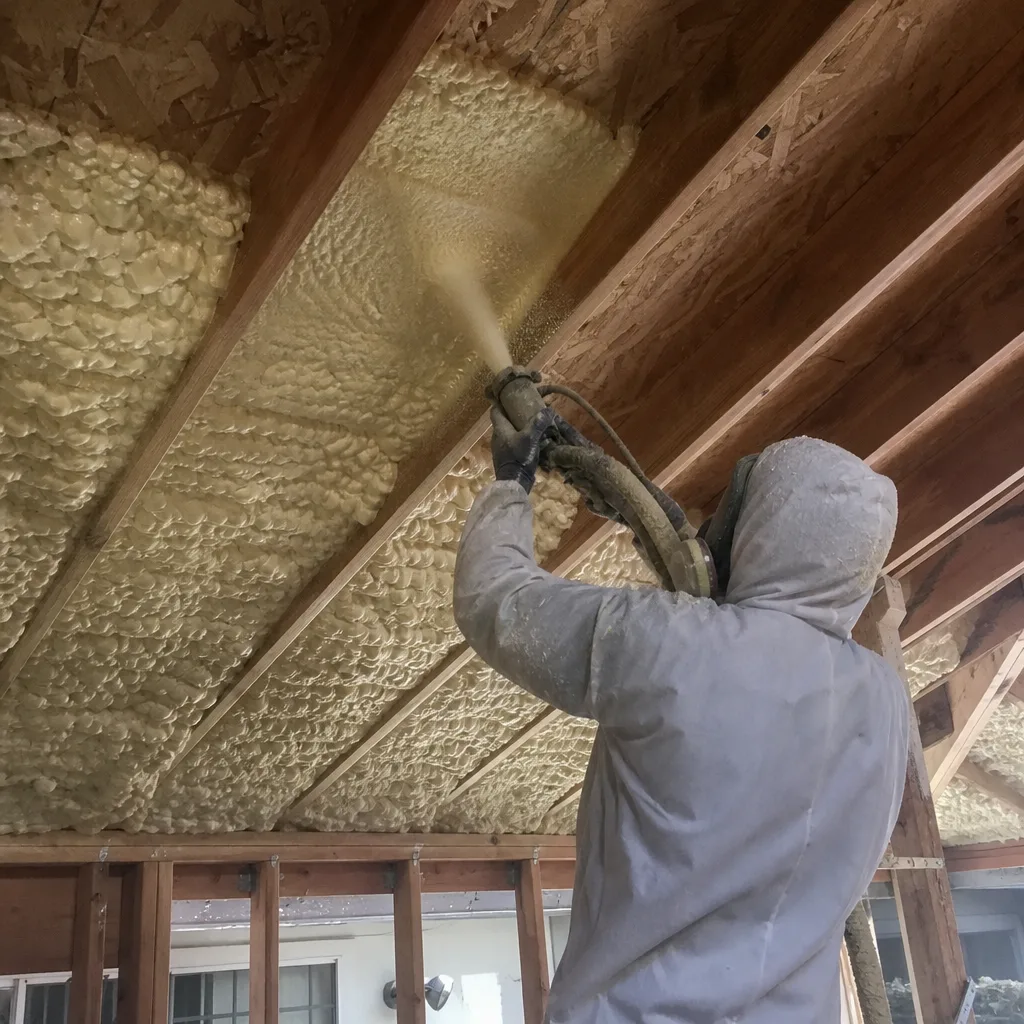
Icynene and Demilec open-cell spray foam is sometimes used in wall cavities during open-wall applications where an air barrier is needed in addition to thermal performance. Closed-cell spray foam (also from Demilec and Icynene) is used selectively – in walls that require a Class II vapor retarder, walls with thin framing members, or walls in direct contact with concrete or masonry where moisture management is a concern. We don’t apply spray foam as a default; it’s chosen when the building conditions require it.
What the Job Documentation Looks Like
Before the crew leaves your Tustin home, you receive a Documented Photo Record – photos of wall cavity conditions before installation, drill points, fill confirmation, patch work, and any air sealing completed. On jobs where a blower-door test is run (which applies to most whole-envelope jobs and any job where air sealing is a meaningful portion of the scope), you get the before and after CFM50 readings in writing. That number is your evidence that the work performed. It’s not a marketing claim; it’s a measurement taken with a calibrated instrument on your specific home.
The written scope delivered before work starts includes: insulation type and brand, R-value target, installation method, air sealing scope (top plates, penetrations, can lights), patch and paint responsibility, permit handling if applicable, warranty terms, and final price. There are no line items added after the fact. This is Haven Standard Clause 1, applied to every job since 2016.
Wes Okafor leads every project assessment at Envelope Insulation Co. and has reviewed the insulation and air sealing specifications on every one of the 9,000+ homes we’ve worked on since 2016. The job documentation you receive at the end reflects that direct oversight – the photo record and blower-door readings go through a quality check before they’re handed to the homeowner.
FAQs – Wall Insulation Cost in Tustin
How much does wall insulation cost in Tustin for an average home?
Most Tustin homeowners pay between $1,800 and $3,400 for wall insulation on a 1,500-2,000 sq ft single-story home using dense-pack blown-in fiberglass or cellulose. Two-story homes or homes with more complex wall configurations typically run $2,800 to $4,500. Air sealing – which we complete before insulating – adds $350 to $900 to the total and is included in the written scope. Call (657) 286-7673 for a written price specific to your home’s square footage and wall construction.
Is blown-in insulation or spray foam better for existing walls in Tustin?
For most finished, occupied homes in Tustin, dense-pack blown-in is the better choice – it’s less expensive ($1.50 to $2.40 per sq ft vs. $2.80 to $3.80 for open-cell spray foam), doesn’t require walls to be open, and performs well in Tustin’s Climate Zone 10 conditions. Spray foam is appropriate when a wall needs both a thermal barrier and an air barrier in a single application, or when moisture control requirements are specific to that wall. We assess which method fits your wall type and write the recommendation into the scope with the reasoning behind it.
Do I need a permit for wall insulation in Tustin?
Most blown-in wall insulation retrofits in Tustin do not require a permit from the City of Tustin’s Building Division when no structural modifications are made. Spray foam installations above a certain volume, or work tied to an open renovation permit, may require energy compliance documentation under California Title 24. We check permit requirements during the assessment and include any applicable handling in the written scope at no surprise cost.
Is it cheaper to repair or replace existing wall insulation?
If existing wall insulation has degraded significantly – settled below 50% of its original fill, contaminated by moisture or rodents, or so compressed that it’s lost most of its R-value – full removal and replacement is typically the better investment. Removal runs $300 to $700 for a standard home; new dense-pack installation runs $1,800 to $3,400. Patching over compromised existing insulation can bring the R-value up marginally, but you’ll see a limited performance improvement and we won’t be able to issue a meaningful blower-door result because the baseline problem remains. We document what’s in the walls before giving a recommendation either way.
Can you insulate walls without removing drywall?
Yes – dense-pack blown-in insulation is installed through small holes (typically 2 inches in diameter) drilled in the drywall or exterior surface, without removing the wall finish. Each stud bay is filled under pressure, confirmed, and then patched. Interior patch work is typically complete in the same visit. This is the standard method for existing homes in Tustin and accounts for the majority of wall insulation work we do in this market. Call (657) 286-7673 and we’ll confirm whether your wall type qualifies for the no-drywall-removal approach.
How Envelope Insulation Co. Handles Wall Insulation Jobs in Tustin
Every wall insulation job in Tustin follows the same sequence. Assessment first – a technician walks the home, identifies wall construction type, existing insulation condition, air leak locations, and access options. A written price is produced from that assessment and delivered before anyone schedules a crew. The written scope includes material, method, R-value target, air sealing plan, patch work responsibility, and warranty terms. Work starts only after you’ve signed off on the written price.
On the job day, air sealing comes first. Top plates, electrical penetrations, can lights in ceiling planes adjacent to wall cavities, and any other bypasses are sealed before insulation is added. Then the blown-in or spray foam application proceeds. At the end of the job, the Documented Photo Record is completed and handed to you, along with blower-door before-and-after readings if a full pressurization test was part of the scope.
The 365-Day Done Right Promise applies from the day the job closes. If the fill settles, if a patch fails, if anything about the finished work doesn’t match the written scope, we come back and make it right. No debate about what the scope said – you have it in writing.
We’ve completed more than 9,000 homes across the region since 2016, and that number includes a lot of Orange County homes in the same building vintage as what you’ll find throughout Tustin – stucco exteriors, 2×4 framing, aging or absent insulation. We know what’s in those walls before we drill the first hole because we’ve seen them enough times to know what to look for.
For more on how wall insulation fits into a complete building envelope approach, the home page covers the full range of services and how each one connects to the others. And if you want detail on the specific installation methods and materials we use locally, the Wall Insulation in Tustin page goes deeper on each option.
Key Takeaways
- Wall insulation in Tustin costs $1,800 to $4,200 for most single-story homes in 2026, or $1.50 to $3.80 per square foot of wall cavity depending on material and method.
- Dense-pack blown-in fiberglass or cellulose is the standard method for existing finished walls – no drywall removal required.
- Air sealing (top plates, penetrations, can lights) is completed before insulation is added and is included in the written scope on every job.
- Tustin’s Climate Zone 10 and older housing stock (especially pre-1978 homes in Old Town Tustin) make wall insulation more impactful here than many homeowners expect.
- Before-and-after blower-door readings document the actual performance change – not estimated, measured.
- Every job starts with a written price and ends with a Documented Photo Record. The 365-Day Done Right Promise applies to all completed work.
- Combining wall insulation with an attic project in the same mobilization typically reduces per-square-foot cost by 10-20%.
Ready for a Written Price on Your Tustin Home?
If you want to know what wall insulation will actually cost for your specific home in Tustin – not a range pulled from a national average, but a written price based on your wall construction, your square footage, and your existing insulation condition – call (657) 286-7673. Estimates are free, the price is written before anyone starts, and Wes Okafor’s team documents every step of the job from assessment to final photos. That’s what every wall insulation job looks like under the Haven Standard.
Pricing reflects the Tustin market as of 2026. Topside Attic Insulation Tustin offers free estimates – call (657) 286-7673.
Written by Wes Okafor, Owner at Envelope Insulation Co., serving Tustin since 2016.
What Our Customers Say
"The winter gas bill dropped by about a third. They had estimated a quarter, so they under-promised."
- Genevieve R."Two other companies quoted to blow more insulation on top of what was there. These were the only ones who said the existing material had to come out first, and explained why."
- Clifford E."Turned up on time, protected the hallway, and the written scope matched what was actually done."
- Bruno S.