
Owens Corning Vapor Barrier Installation: The Tustin Owner’s Guide
Owens Corning vapor barrier installation in Tustin typically runs $1,800-$3,400 for a standard crawl space or attic application, and we stock the full Owens Corning system on our trucks for same-day starts when the scope is straightforward. Most Tustin homeowners discover their vapor barrier is compromised after spotting efflorescence on foundation walls, catching a musty smell that returns within 48 hours of cleaning, or noticing their HVAC system cycling longer than it did the previous summer. The 2022 California Energy Code treats vapor barrier integrity as part of the conditioned envelope, so a failed barrier isn’t just a comfort issue, it’s a code compliance gap that shows up on blower-door tests and thermal imaging.
Which Owens Corning Models This Applies To
Owens Corning doesn’t sell vapor barrier as a standalone branded SKU like their insulation batts. What we’re installing is the Owens Corning-engineered system: 6-mil or 10-mil reinforced polyethylene sheeting, seam-sealed with OC-approved acrylic tape, integrated with their EnergyComplete spray foam sealant at perimeter terminations. The compatibility question isn’t model-number matching, it’s matching the mil rating to your existing insulation package and the soil conditions beneath your Tustin home.
Here’s how to identify what you’ve got now. Look for the mil rating stamped in the corner of the polyethylene sheet, 6-mil or 10-mil, and check whether seams are taped or merely overlapped. In Tustin Legacy, we’ve found builders spec’d 6-mil through 2018, then shifted to 10-mil as the default after the 2019 Title 24 updates. The OEM-spec approach uses Owens Corning tape and termination bars; some contractors substitute generic 3-mil sheeting with duct tape, which fails at the seams within three to five years in Orange County’s clay-heavy soil conditions. We stock both mil ratings, the OC acrylic tape, and the termination hardware. We also carry Reflectix as an alternative radiant barrier-vapor retarder hybrid for specific attic applications where a traditional polyethylene barrier isn’t the right fit.
Topside Attic Insulation Tustin is an independent service provider, not affiliated with Owens Corning. We source their materials through authorized distribution and install to their published specs, but we don’t represent the manufacturer.
Signs Your Owens Corning Vapor Barrier Installation Is Failing
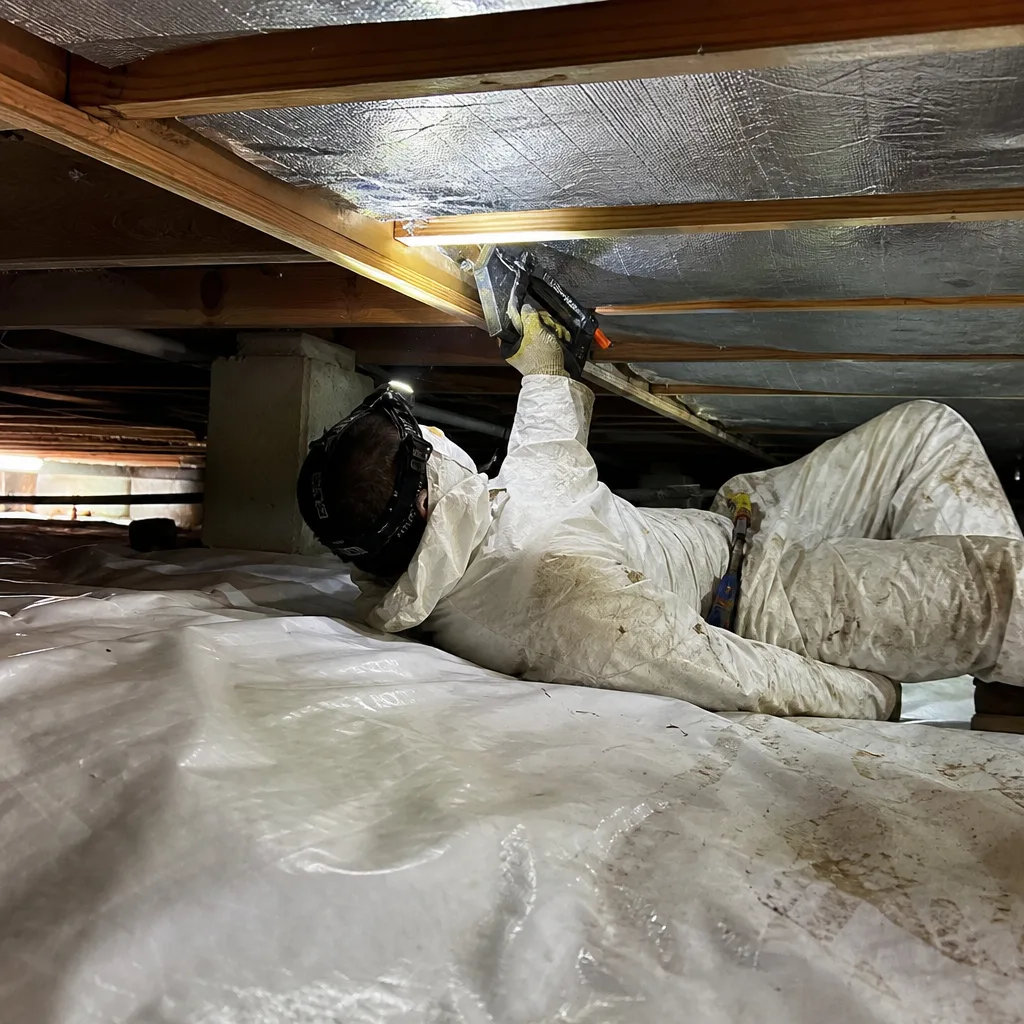
- White, powdery deposits on foundation walls or piers. That’s efflorescence, mineral salts pulled through the concrete by moisture migrating from soil to air. It means your barrier has tears, unsealed seams, or has pulled away from the perimeter wall, letting ground moisture evaporate into the crawl space instead of being blocked at the soil interface.
- Musty odor that returns within a day or two of cleaning. The smell is microbial growth on organic material, wood joists or the paper facing of nearby insulation. A functioning vapor barrier keeps relative humidity below 70% at the joist line; when it fails, humidity spikes and mold spores activate within 24 to 48 hours in Tustin’s mild climate.
- Insulation sagging or dropping from between joists. Fiberglass batts lose structural integrity when they absorb moisture, and the added weight pulls them from friction-fit or staple-supported positions. If you’re finding pink or yellow batts on the ground, the vapor barrier failed first and the insulation damage followed.
- HVAC runtime increasing year-over-year for the same thermostat setting. Ductwork in a vented crawl space or attic is fighting latent heat load from evaporating moisture. The blower-door test will show elevated CFM50, but the thermal image is what tells the story, cool, damp patches along duct runs where conditioned air is warming against wet surroundings.
- Pest activity concentrated near soil contact points. Termites and rodents follow moisture gradients. A compromised barrier creates humid corridors against foundation walls that attract foraging insects. We document this with perimeter photos during our initial inspection.
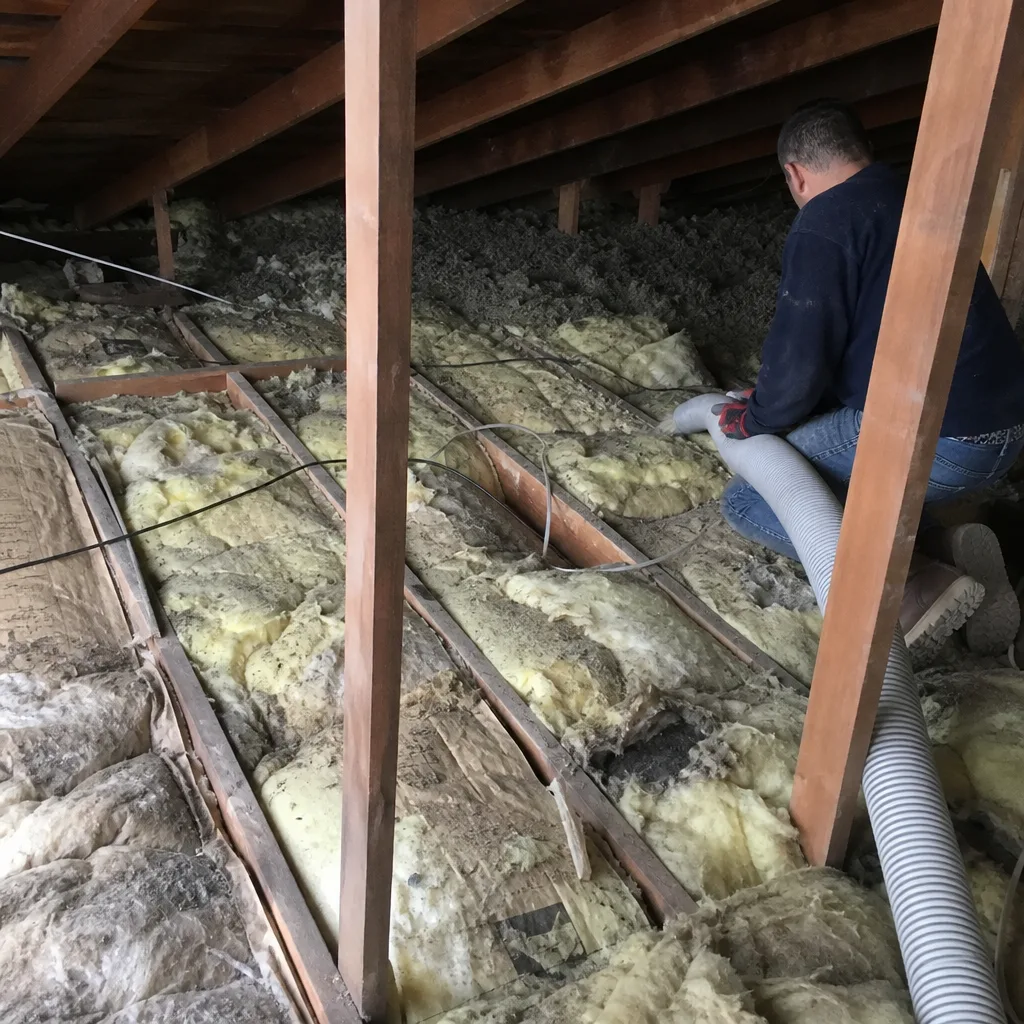 Before
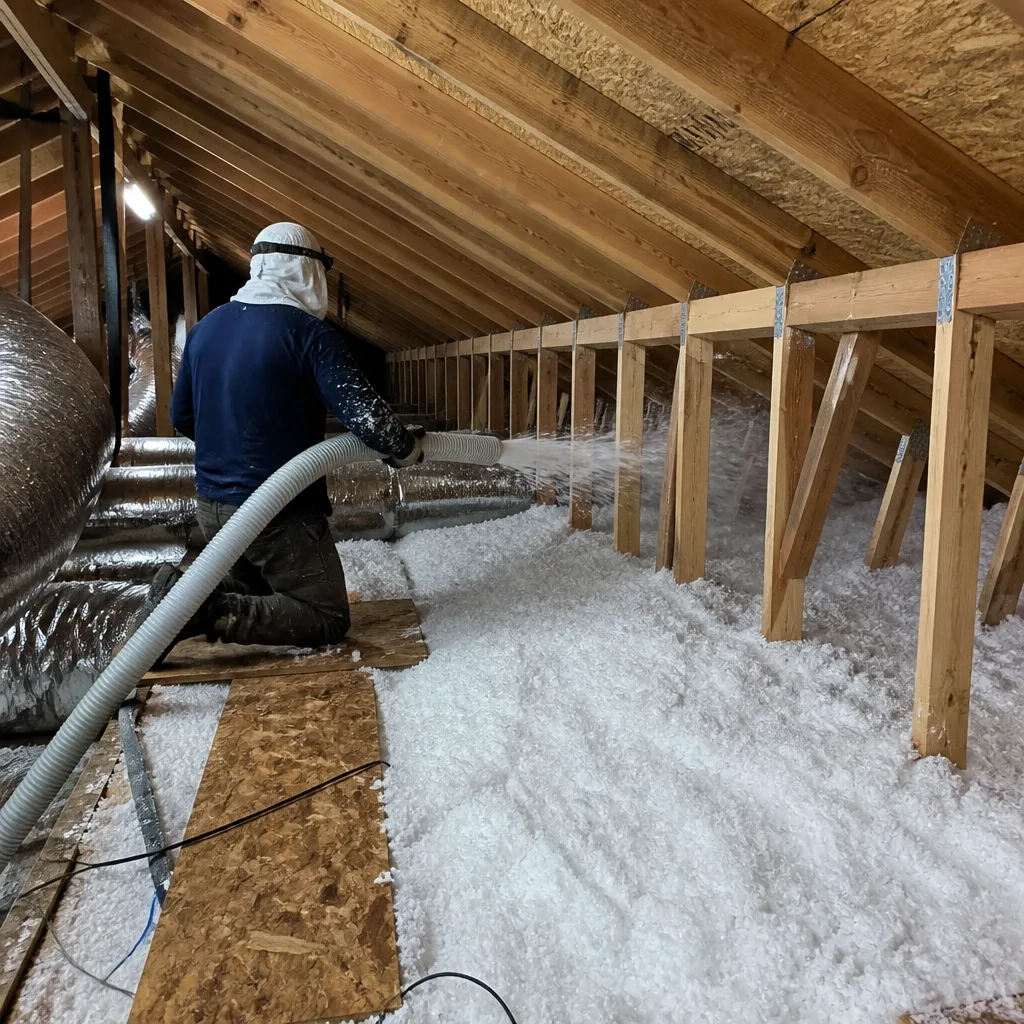 After
AfterReplacement Cost & What’s Included
Most Owens Corning vapor barrier replacements in Tustin fall between $1,800 and $3,400 installed. The lower end covers a straightforward 6-mil swap in a clean, accessible crawl space under 1,200 square feet. The upper end accounts for 10-mil reinforced sheeting, extensive seam taping, perimeter termination bar installation, and remediation of saturated insulation that needs removal before the new barrier goes down.
| Component | Typical Range |
|---|---|
| 6-mil polyethylene sheeting, taped seams | $1,800 - $2,400 |
| 10-mil reinforced, full perimeter seal | $2,400 - $3,000 |
| With insulation removal/replacement | $2,800 - $3,400+ |
| Additional: sump pump or drainage mat | $400 - $800 |
What drives the range: square footage, joist height and accessibility, existing insulation condition, and whether we find standing water that needs addressing first. Every quote is a written price before any work starts, Haven Standard Clause 1. The scope specifies mil rating, seam taping method, and whether we’re including new insulation. Our 365-Day Done Right Promise covers the installation, and you’ll receive a Documented Photo Record of the completed work plus any applicable blower-door readings if we’re air-sealing the same envelope.
DIY or Call Us?
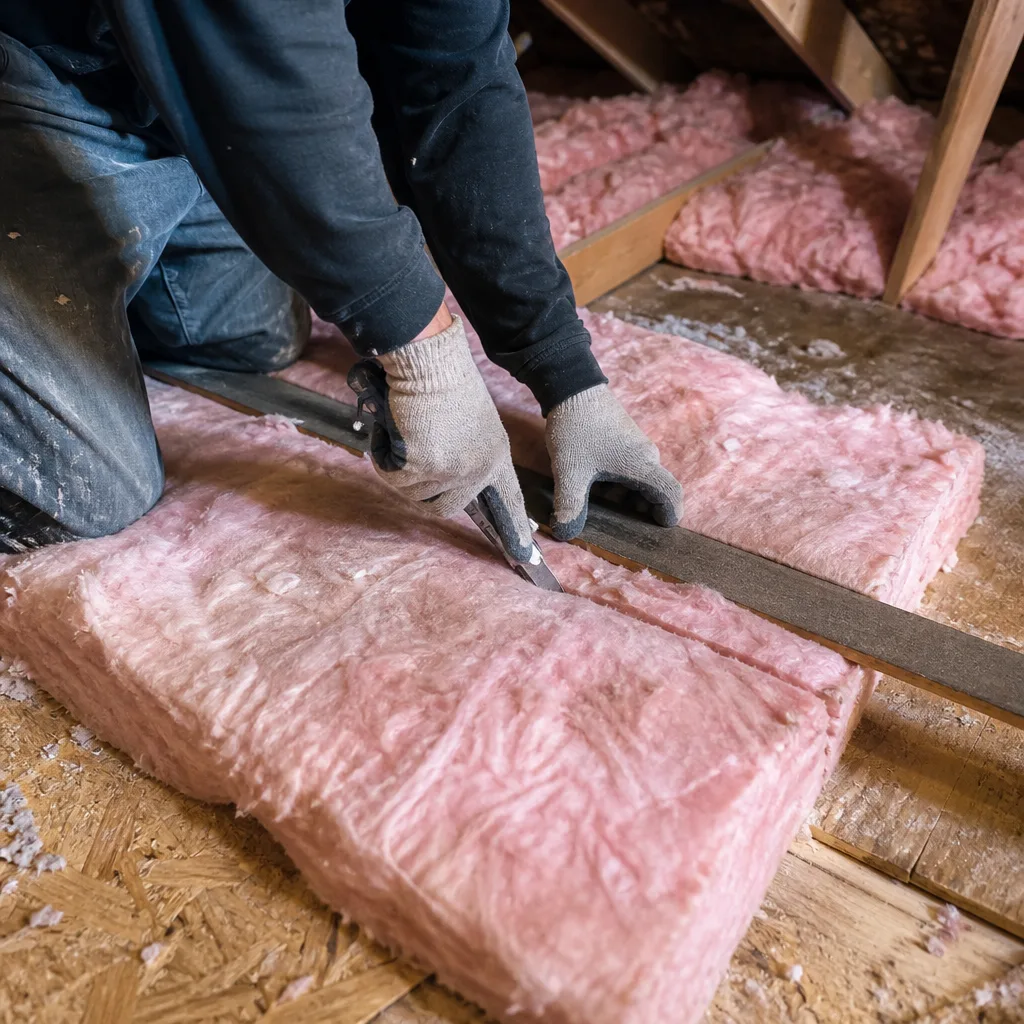
There’s a clear line between what a homeowner can verify and what requires the right equipment and sequencing. You can safely check: the mil rating on your existing sheeting, whether seams are taped or just overlapped, and whether the perimeter is secured or flapping free. Use a flashlight and a moisture meter from any hardware store, readings above 20% at wood contact points mean the barrier isn’t doing its job.
Where DIY goes wrong: crawling over compromised vapor barrier without proper respirator protection in a confined space, cutting new sheeting to fit around piers and ductwork without accounting for thermal expansion, and sealing seams with hardware-store tape that off-gasses adhesive failure within 18 months. The 2022 California Energy Code requires vapor retarders in specific climate zone configurations, Tustin sits in CZ-8, and misapplication can create condensation planes that rot joists from the inside out. We’ve replaced three DIY jobs in Tustin Legacy alone where the homeowner’s barrier trapped moisture upward instead of blocking it from below.
Seal the leaks first. Then insulate. The R-value on the bag means nothing if conditioned air is moving through the gap around that recessed can. Call (657) 286-7673 for a written price before anyone lifts a tool.
FAQs
A properly installed 10-mil reinforced barrier with sealed seams typically lasts 15 to 20 years in Tustin’s climate, though clay-heavy soils in the Tustin Legacy area can accelerate perimeter wear. Call (657) 286-7673 and we’ll assess your specific conditions, estimates are free.
Small punctures under six inches can be patched with matching polyethylene and acrylic tape, but seam failures, widespread embrittlement, or perimeter pull-away mean full replacement. We don’t quote patch jobs when the underlying material has degraded, it’s a false economy that shows up on the next thermal scan. Call (657) 286-7673 for an exact scope and written price.
Most residential vapor barrier replacements in Tustin are completed in one day, two days if we’re removing saturated insulation and allowing the deck to dry before closing. We arrive with the sheeting on the truck, so there’s no material delay. Call (657) 286-7673 to check current scheduling.
Yes, we carry 6-mil and 10-mil reinforced polyethylene, OC acrylic seam tape, and termination hardware on every Tustin-area truck. For Reflectix hybrid applications or specific code-triggered configurations, we can source within 24 hours. Call (657) 286-7673 to confirm compatibility with your existing system.
Written by Wes Okafor, Owner, Topside Attic Insulation Tustin at Topside Attic Insulation Tustin, serving Tustin and nearby areas.