
Johns Manville Radiant Barrier Installation: The Tustin Owner’s Guide
Most Johns Manville radiant barrier installations in Tustin run between $1,800 and $3,400 for a typical 1,500-2,200 square foot attic, including material, labor, and the air-sealing prep we won’t skip. We stock JM AP Foil-Faced and Reflectix-compatible rolls on our trucks, and we can usually inspect and quote same-day if you call before noon. Homeowners usually figure out something’s wrong when their upstairs bedrooms won’t cool below 78 degrees even after the AC runs all afternoon, or when they climb into the attic in August and the radiant barrier they paid for five years ago is dangling in strips, oxidized dull gray, or was never properly taped at the seams to begin with.
Which Johns Manville Models This Applies To
Johns Manville makes two radiant barrier product lines you’ll find in Tustin attics: the AP Foil-Faced Polyiso (rigid foam boards, typically R-6 to R-10 per inch, with a reflective aluminum facing on one or both sides) and the Reflective Foil Insulation rolls (flexible, multi-layer polyethylene with aluminum facing, common in retrofit jobs). The rigid boards are usually stamped with a JM logo and ASTM C1289 compliance mark on the foil facing; the rolls carry a lot number and emissivity rating, typically 0.03 to 0.05, printed every 24 inches along the edge.
Here’s the compatibility gotcha we see constantly in Tustin Legacy and the older ranch homes off Newport Avenue: AP Foil-Faced boards from 2015-2019 production runs carry a slightly narrower 47.5-inch width versus the standard 48-inch batts most crews stock today. If your original install used the narrow boards and we don’t measure first, you’ll end up with a 1/2-inch gap every four feet where radiant heat bleeds straight through. We always measure the existing substrate before ordering replacement material. Topside Attic Insulation Tustin is an independent service provider, not affiliated with Johns Manville, and we source JM, Reflectix, or equivalent based on what actually fits your assembly, not what moves our inventory.
For the OEM-versus-aftermarket question: Johns Manville’s foil facing uses a heavier 0.7-mil aluminum layer than most commodity reflective products, which matters in Tustin’s inland heat where attic temperatures hit 140°F regularly. We match OEM spec when we’re tying into existing JM work, but we’ll flag when a Reflectix or Knauf equivalent meets the same emissivity and puncture-resistance numbers at lower cost. The decision belongs to the homeowner after they see the written price for both options.
Signs Your Johns Manville Radiant Barrier Installation Is Failing
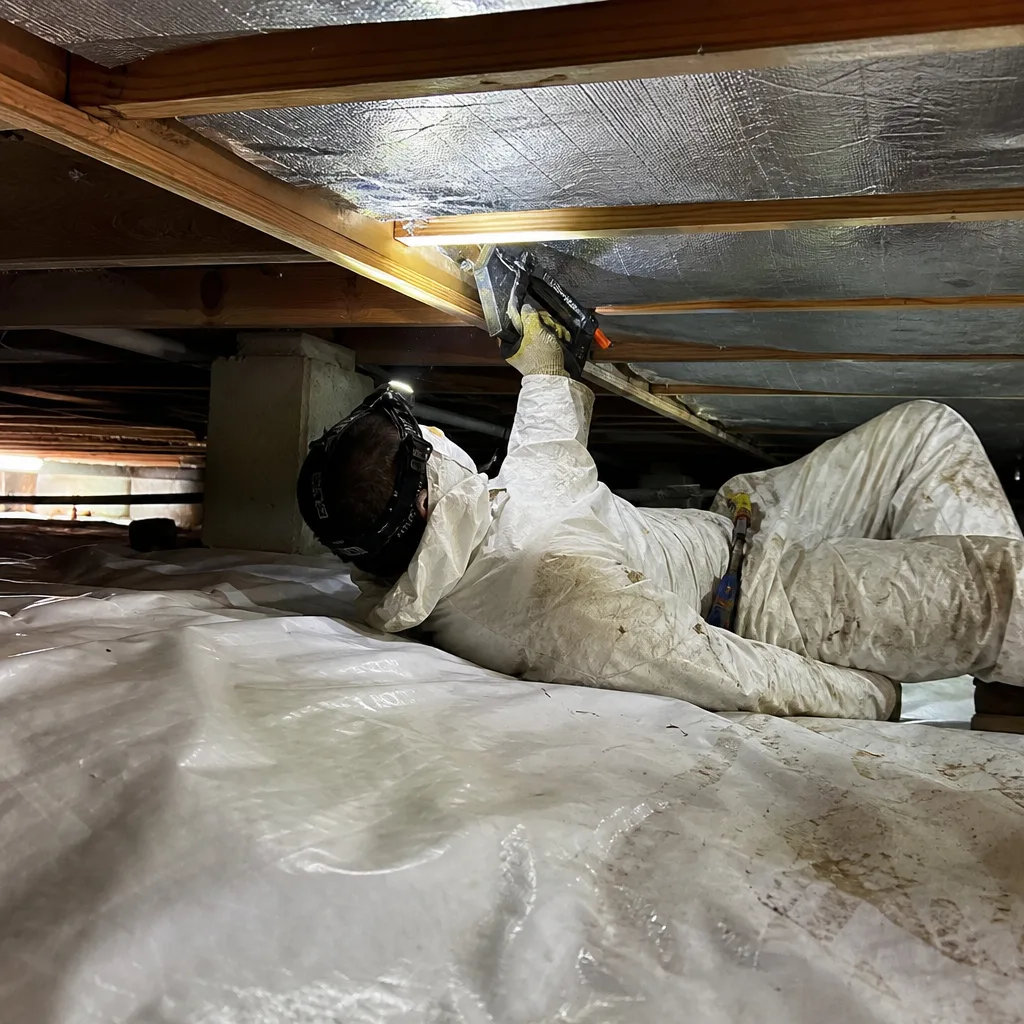
- Upstairs rooms stay hot until midnight. The radiant barrier’s job is to reflect infrared heat back toward the roof deck before it reaches your insulation layer. When foil facing oxidizes to a chalky white or tears at the seams, emissivity climbs from 0.03 toward 0.30 or higher, and your attic insulation absorbs the heat load instead of rejecting it. We see this most in Tustin homes with tile roofs, where decades of accumulated dust grind into the foil surface.
- AC runs continuously from 2 PM to 8 PM, then short-cycles after dark. This pattern means your thermal mass is wrong: the attic is superheating through a degraded barrier, then radiating that stored heat downward for hours after sunset. The barrier isn’t reflecting, and your insulation is saturated with heat it can’t dump fast enough.
- Foil facing is brittle, cracked, or flaking at staple lines. Johns Manville’s adhesive-bonded foil can delaminate from the polyiso core when attic humidity spikes above 60% repeatedly, which happens in Tustin during Santa Ana wind events when warm, dry outside air pulls moisture through ceiling penetrations. The foil separates, exposes the foam, and the R-value drops to that of bare polyiso without the radiant benefit.
- Visible gaps at seams, around duct boots, or near the attic hatch. A radiant barrier is only as good as its continuity. JM spec calls for 2-inch minimum overlaps taped with foil tape rated to 180°F. We find original installs in Tustin where generic HVAC tape was substituted, turned to dust in three years, and left 15% of the attic unprotected.
- Energy bill climbed 20-35% year-over-year with no rate change. When the barrier fails, your HVAC system compensates by running longer. In a 2,000-square-foot Tustin home with a failed radiant barrier, we’ve measured cooling loads increase by 1.5 to 2.5 tons equivalent, which translates directly to kWh on your SCE bill.
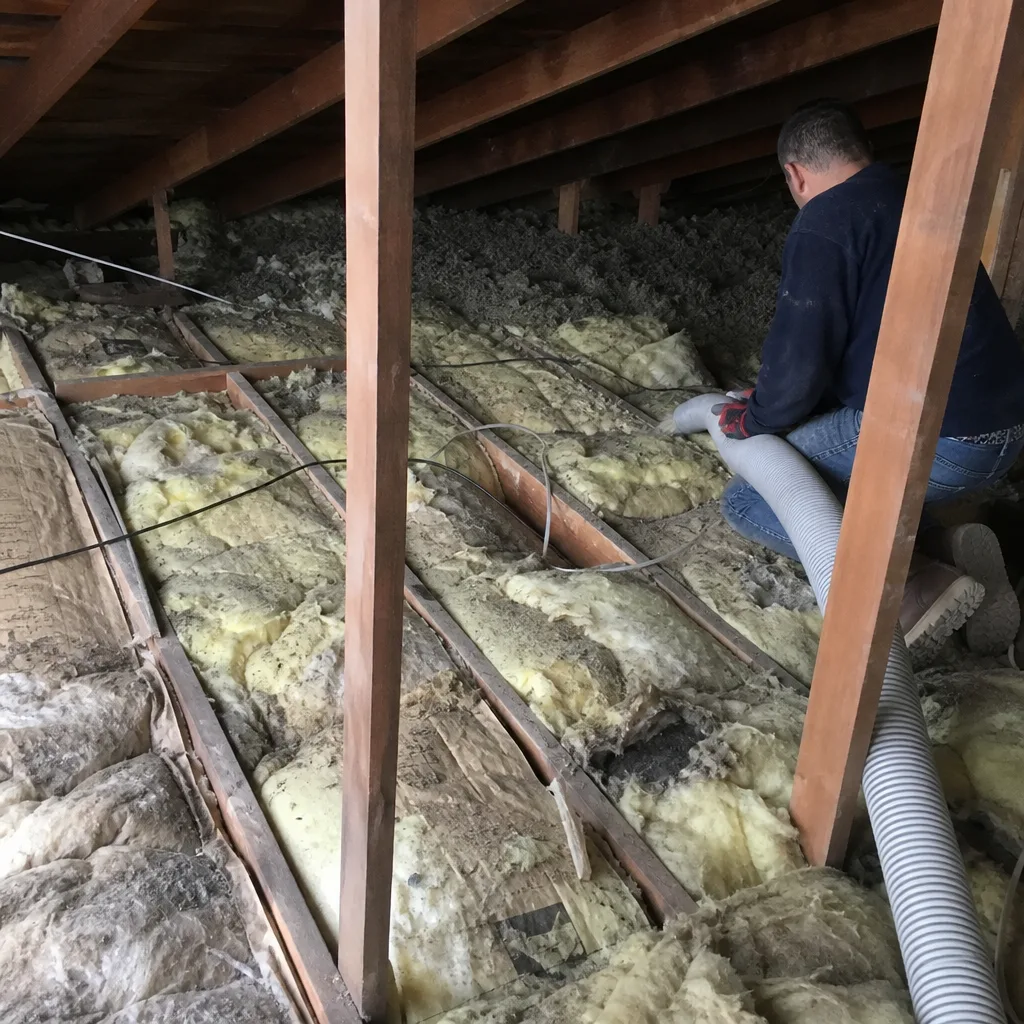 Before
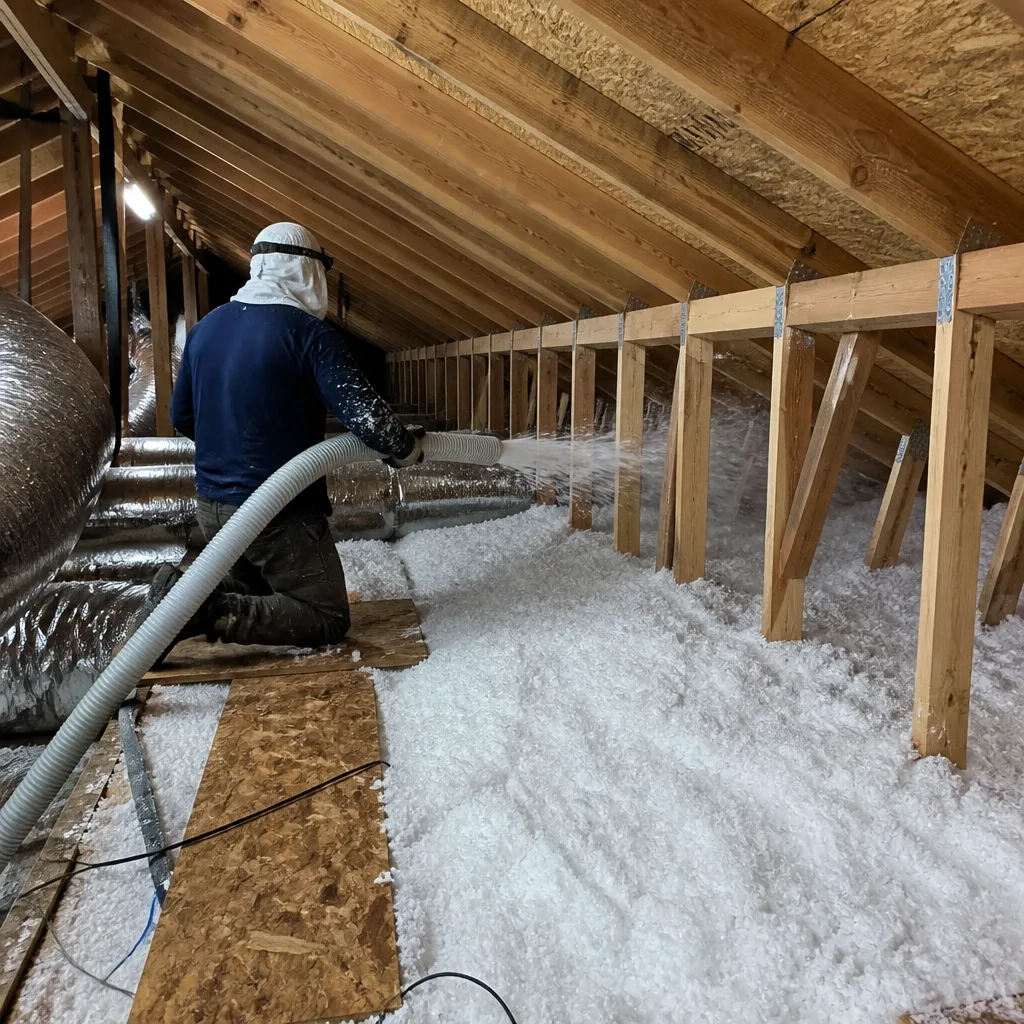 After
AfterReplacement Cost & What’s Included
| Scope | Price Range in Tustin | What’s Driving It |
|---|---|---|
| Partial repair (seam retaping, localized foil replacement, under 300 sq ft) | $850 - $1,400 | Accessibility, extent of delamination, whether original boards can be salvaged |
| Full attic replacement, JM AP Foil-Faced or equivalent, 1,500-2,200 sq ft | $1,800 - $3,400 | Board versus roll product, roof pitch (steeper = slower), air-sealing prerequisite scope |
| Full replacement with upgraded air sealing and blower-door verification | $2,600 - $4,200 | Top-plate sealing, can-light enclosures, duct boot sealing, pre/post blower-door test |
Every price is flat and written before anyone enters your attic. Under Haven Standard Clause 1, you get the scope, the warranty, and the total cost in writing before work starts. The range depends on three factors: whether we’re repairing around existing HVAC and electrical or working clear spans, whether your original install used the 47.5-inch or 48-inch board width (affects waste factor and labor), and how much air sealing the attic floor needs before the new barrier goes in. We don’t blow insulation over unsealed top plates, and we don’t hang radiant barrier over a leaky ceiling plane. Seal the leaks first. Then insulate. The R-value on the bag means nothing if conditioned air is moving through the gap around that recessed can.
Our 365-Day Done Right Promise covers all completed radiant barrier work. The Documented Photo Record you receive shows every seam, every taped joint, and every penetration detail, plus pre- and post-installation thermal images where we can capture meaningful contrast.
DIY or Call Us?
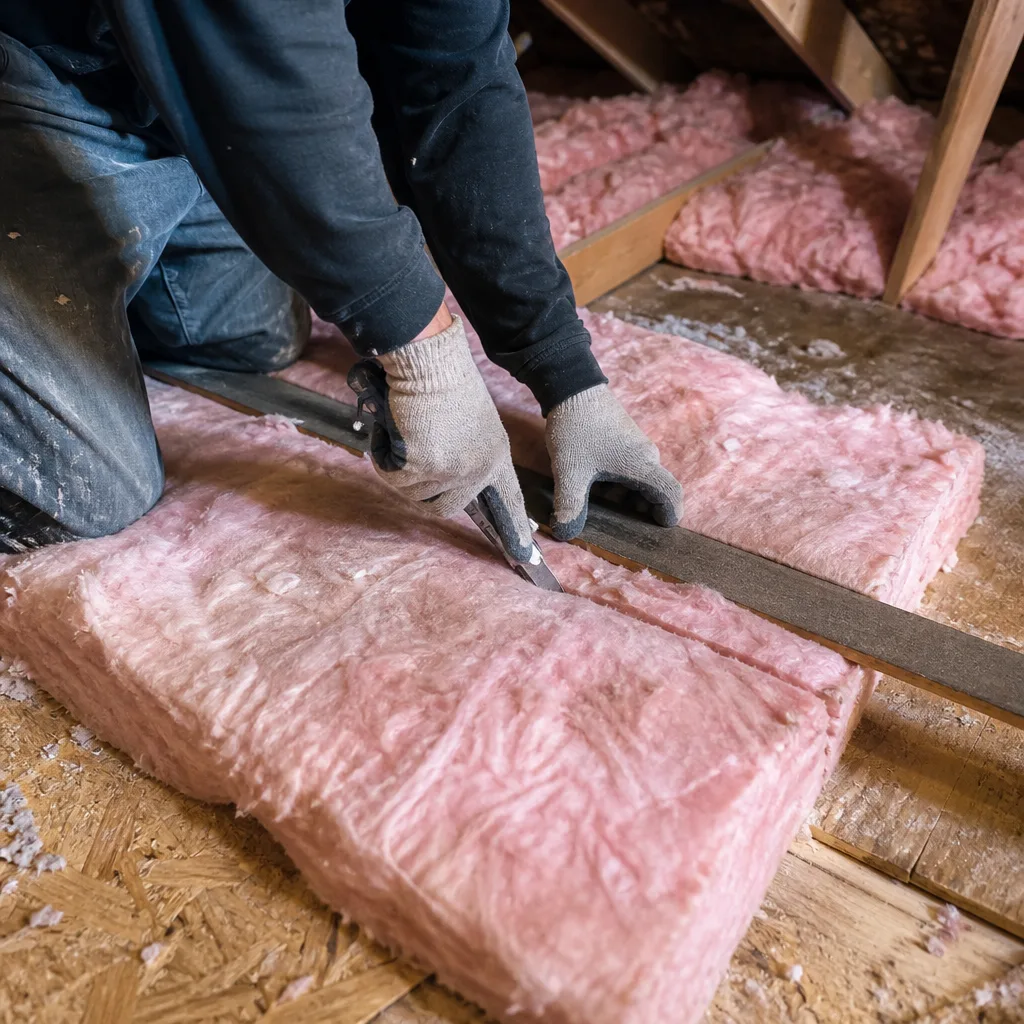
There’s no high-tension spring or electrical hazard in radiant barrier work, but there are two ways DIY goes wrong fast. First, attic work in Tustin’s summer heat is genuinely dangerous: 140°F ambient, limited egress, and the false confidence of “I’ll just be up there twenty minutes.” Second, most homeowners who self-install miss the air-sealing prerequisite entirely, or they staple foil to the attic floor (wrong side faces the wrong temperature zone), or they use painter’s tape on seams and wonder why it fails in six months.
What you can safely check from the hatch with a flashlight: whether your existing foil facing still has a mirror-like reflectivity or has dulled to gray, whether seams are still taped with intact foil tape, and whether any boards have pulled loose at staple lines. Take photos. If you see degradation, call us at (657) 286-7673. We’ll read your situation with you, no charge for the assessment, and give you a written price if work is needed.
FAQs
In Tustin’s climate, properly installed JM AP Foil-Faced product lasts 15 to 25 years before emissivity degradation becomes significant. The lifespan shortens to 8-12 years if the original install skipped seam taping, used staples that tore the foil facing, or was applied over an unsealed attic floor where humidity cycled the adhesive bond. Call (657) 286-7673 and we’ll inspect what you’ve got; estimates are free.
Localized delamination or failed tape seams can be repaired if the underlying foil facing retains at least 70% of its original reflectivity. Once oxidation covers more than 30% of the surface or the foil has cracked at staple lines, replacement is the only fix that restores performance. We don’t quote repairs that won’t last; if we wouldn’t do it on our own home, we won’t write it on your scope. Call (657) 286-7673 for an honest assessment.
A typical Tustin attic of 1,800 square feet takes one full day for removal, air-sealing prep, and new JM barrier installation, assuming standard gable roof with reasonable hatch access. Steep pitches, built-up HVAC platforms, or active rodent damage can push it to a second day. We tell you the day count in the written price, not after we start.
We stock JM AP Foil-Faced boards and Reflectix-compatible rolls on our Tustin service trucks, and we can typically inspect and quote same-day for calls received before noon. Specialty thicknesses or the narrow 47.5-inch legacy width require a one-day order from our Anaheim supplier. We’ll tell you exactly what’s on the truck when you call (657) 286-7673.
Ready to get your attic performing again? Call (657) 286-7673 and a live person will pick up, 24 hours a day. We’ll schedule a same-day inspection when possible, measure your existing barrier, and deliver a flat written price before any work starts. Every job closes with a Documented Photo Record and, on applicable work, before-and-after blower-door numbers so you can verify what changed.
Written by Wes Okafor, Owner, Topside Attic Insulation Tustin at Topside Attic Insulation Tustin, serving Tustin and nearby areas.