
Rockwool Attic Insulation: The Tustin Owner’s Guide
Rockwool attic insulation installation in Tustin typically runs $2.80 to $4.20 per square foot for batt or loose-fill products, with most single-story homes in the 1,200-2,400 sq ft range landing between $3,400 and $8,900 for a complete attic replacement. We stock Rockwool Comfortbatt, Comfortboard, and Safe’n’Sound on every Tustin truck, and we can usually inspect and quote same-day. Most homeowners figure out something’s wrong when their upstairs bedrooms won’t cool below 78°F in August, or when they pull down the attic ladder and see batts compressed to half their labeled thickness, stained from roof leaks, or scattered by rodents.
Which Rockwool Models This Applies To
Rockwool’s residential attic line breaks into three families, and getting the right one matters for California Title 24 compliance. Comfortbatt is the flexible batt, labeled R-15 through R-23 for 2×4 and 2×6 cavities; in Tustin attics, we most often see the R-30 and R-38 batts specified for ceiling joist bays. Comfortboard 80 and 110 are the rigid boards, used for thermal breaks at attic hatches or cathedral ceiling assemblies, not loose in open attic floors. Safe’n’Sound is the 3-inch density product, technically rated for interior walls and between floors, but we’ve found it specified by Tustin architects for sound-dampening in second-story additions where HVAC ducting runs through conditioned attic space.
Here’s the compatibility gotcha: Rockwool batts are sized in “standard” and “NetFit” dimensions. NetFit is slightly oversized, designed to friction-fit into stud bays without stapling. If your existing batts measure 15.25 inches wide in a 16-inch on-center bay, you’ve got NetFit. Standard batts measure exactly 15 inches and will sag or fall without fasteners. We check this on every Tustin job because mixing the two in the same attic creates gaps at the edges. Topside Attic Insulation Tustin is an independent service provider, not affiliated with Rockwool, and we source through standard distribution channels alongside Owens Corning, Johns Manville, and Knauf.
OEM Rockwool vs. aftermarket: for mineral wool, there isn’t really an “aftermarket” in the automotive sense. What we do see is substitute fiberglass batts sold as “equivalent R-value.” They are not equivalent. Rockwool’s density runs 6.0-8.0 lbs per cubic foot versus 0.5-1.0 for fiberglass, which means it doesn’t compress under foot traffic during future HVAC service, and it holds its position in angled ceiling assemblies where gravity pulls fiberglass down. We don’t substitute without writing the change into the scope and explaining why.
Signs Your Rockwool Attic Insulation Is Failing
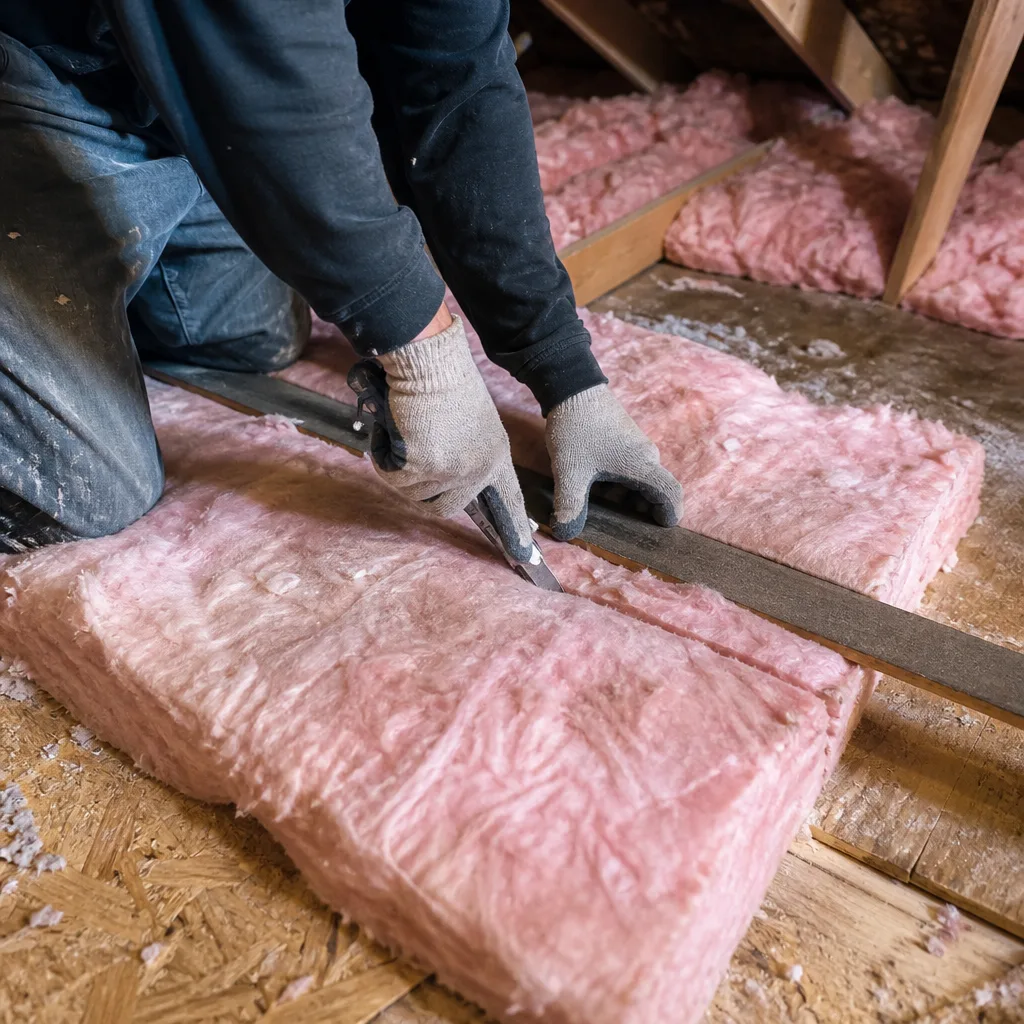
- Uneven temperatures room-to-room. Rockwool doesn’t settle like cellulose, but if it was installed over unsealed top plates or recessed can lights, conditioned air escapes around the edges. The insulation itself is fine; the air barrier is missing. We find this in about sixty percent of pre-2010 Tustin homes, especially in Tustin Legacy where fast construction schedules skipped the sealing step.
- Moisture staining or mold on the batt face. Rockwool is hydrophobic, it won’t hold water like cellulose, but it will wick vapor to the cold side. In Tustin’s marine-influenced climate, morning dew forms on roof decking when attic ventilation is insufficient. The stain pattern tells us whether it’s bulk water from a leak or surface condensation from poor airflow.
- Batts compressed below labeled thickness. R-value is thickness-dependent. A 6.25-inch R-23 batt compressed to 3.5 inches performs like R-13. We see this after homeowners or HVAC techs use the attic for storage, or when insulation was blown over with additional material without accounting for the weight. Rockwool recovers better than fiberglass, but not fully.
- Rodent nesting or droppings throughout. Rockwool’s density makes it less appealing to rodents than fluffy fiberglass, but they’ll tunnel through anything for attic warmth. The damage isn’t always visible from the hatch; we photograph the full field and flag compressed tunnels that break the thermal boundary.
- Energy bills climbing year-over-year with no rate change. When we blower-door test Tustin homes with original Rockwool, we often read 3,500-5,500 CFM50 before air sealing. After sealing top plates, can lights, and duct boots, then reinstalling or supplementing insulation, we typically see 1,800-2,800 CFM50. The insulation didn’t fail; the envelope around it did.
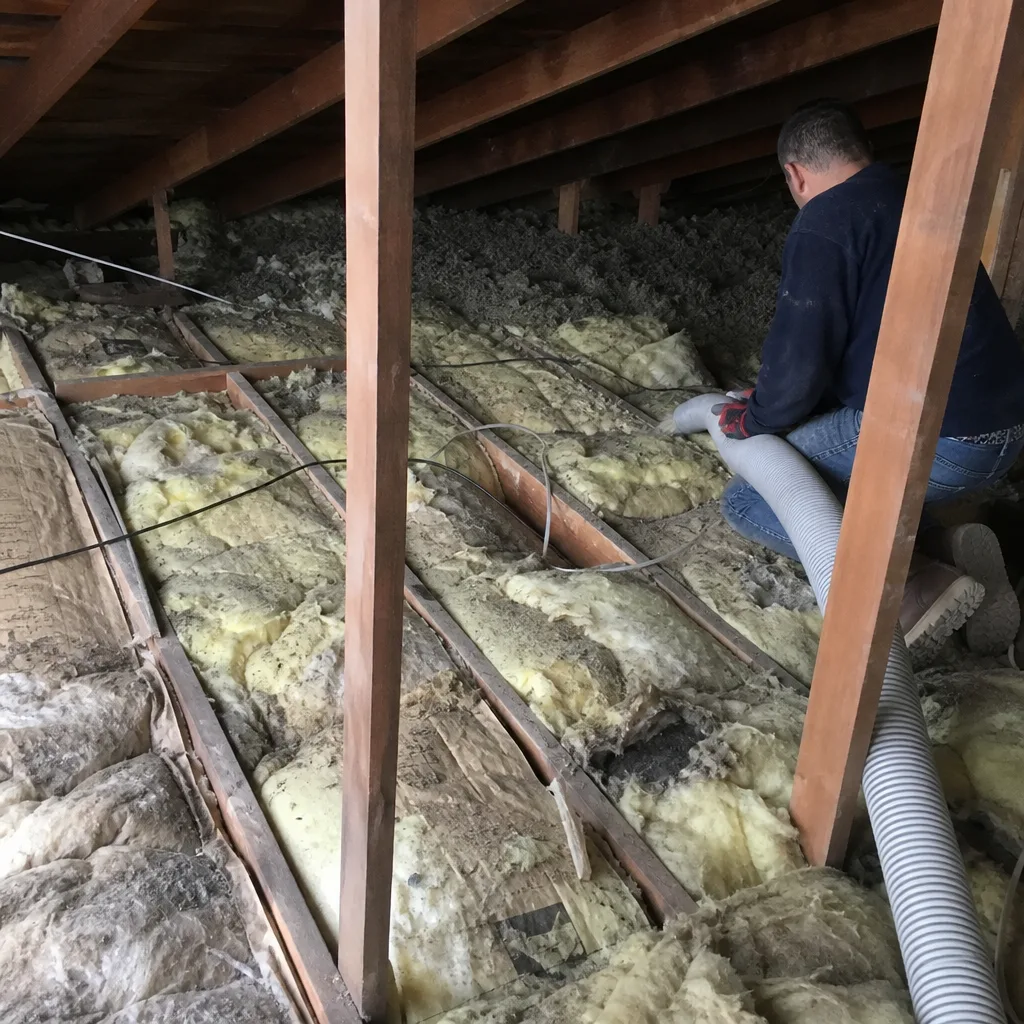 Before
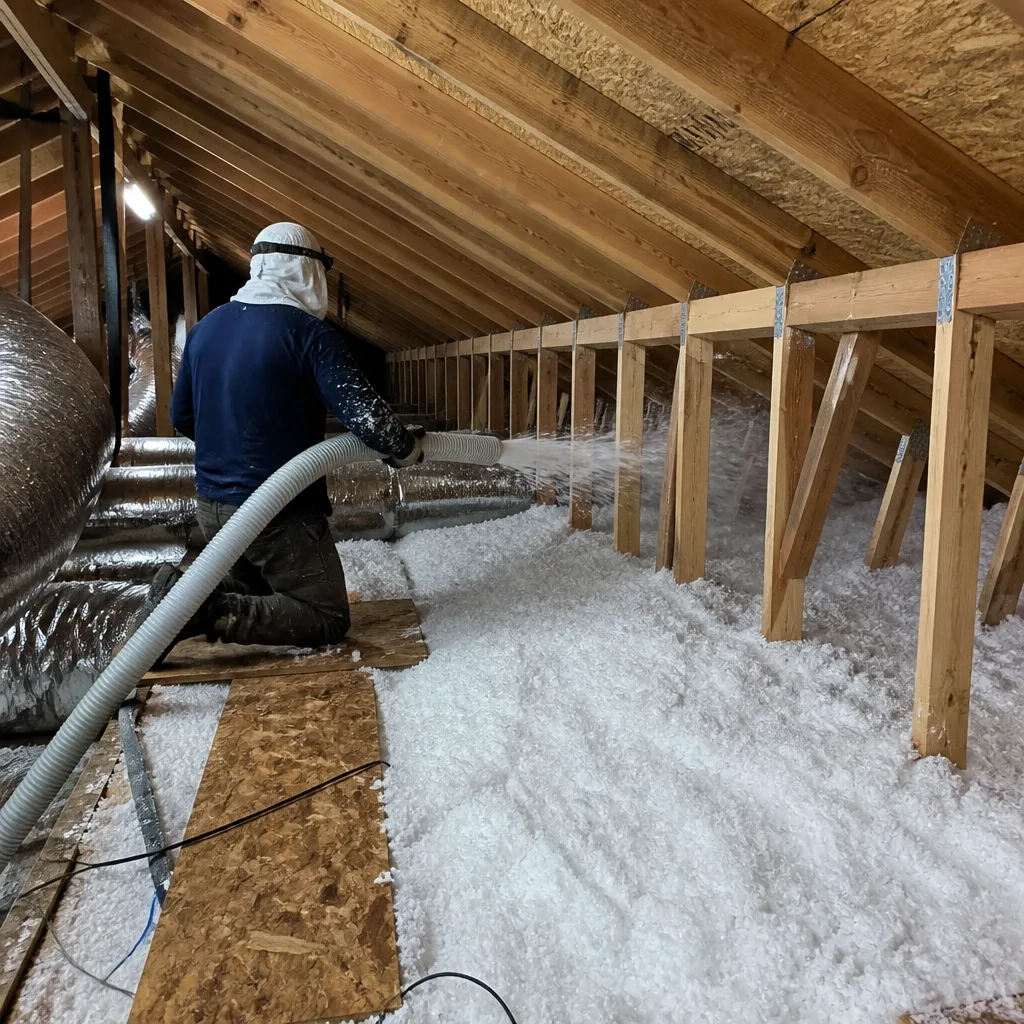 After
AfterReplacement Cost & What’s Included
Most full Rockwool attic replacements in Tustin fall between $3,400 and $8,900, with the spread driven by three factors: attic square footage, whether we need to remove existing material, and how much air sealing is required before new insulation goes in. A partial top-off with additional Comfortbatt over existing batts, where the base layer is in good shape, runs closer to $1.80-$2.40 per square foot. Removal and replacement of contaminated or compressed material adds $0.80-$1.40 per square foot for bagging, haul-off, and disposal fees at Orange County facilities.
Every job includes: written scope with line-item pricing before work starts, air sealing of all accessible top plates and penetrations, installation to labeled thickness with photo documentation, and a post-installation inspection. On applicable jobs, we provide before-and-after blower-door numbers so you can verify the air-sealing result. The 365-Day Done Right Promise covers all completed work. We also stock Reflectix radiant barrier products if your roof assembly benefits from that addition.
DIY or Call Us?
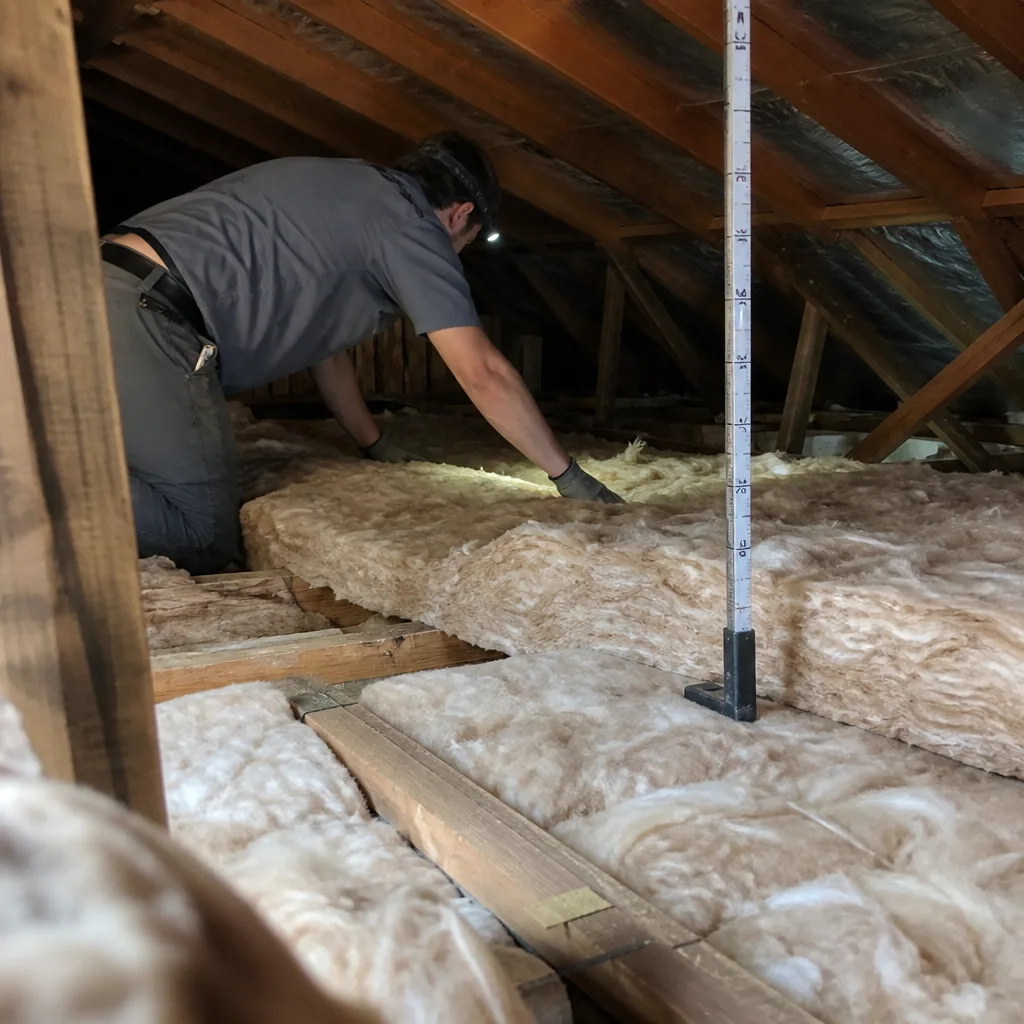
What you can safely check yourself: measure your existing batt thickness against the label, look for obvious water staining or rodent activity from the attic hatch, and verify your attic ventilation intake isn’t blocked by insulation at the eaves. Use a ruler, not a guess. What goes wrong with DIY Rockwool installation: underestimating the lung and skin protection required, mineral wool fibers are sharper than fiberglass and irritate more aggressively; compressing batts to fit around obstructions rather than cutting and fitting properly; and installing over unsealed air leaks, which wastes the material entirely.
Seal the leaks first. Then insulate. The R-value on the bag means nothing if conditioned air is moving through the gap around that recessed can. If you’re not set up for blower-door guided air sealing, call (657) 286-7673 and we’ll quote it in writing before anyone lifts a tool.
FAQs
Rockwool itself doesn’t degrade from heat or moisture the way organic materials do; we’ve inspected thirty-year-old batts in Tustin Ranch that still meet labeled thickness and R-value. The failure point is almost always the building envelope around it, leaks, compression, or contamination, not the mineral wool. If your attic stays dry and vermin-free, expect indefinite service life. Call (657) 286-7673 for an inspection if you’re unsure of condition.
Localized damage from a single roof leak or small rodent intrusion can be spot-repaired with matching batts cut to fit. Widespread compression, contamination, or installation over an unsealed attic floor usually warrants removal and restart, because patching around bad work traps the underlying problem. We assess this on every Tustin job and write exactly what’s needed into the scope. Free estimates at (657) 286-7673.
A typical 1,500 sq ft Tustin attic, including removal of old material, air sealing, and new Rockwool installation, takes one to two days. Larger homes or those with complex cathedral ceiling assemblies may run into a third day. We don’t rush the sealing phase; the blower-door test at the end has to hit the target we wrote down before we started. You’ll get a text when the crew is on the way and photos when they’re done.
We carry Comfortbatt R-30 and R-38, Comfortboard 80, and Safe’n’Sound on every Tustin truck. Less common densities or thicknesses are available next-day through our distributor. We don’t start a job without confirming material on hand, written into the scope. If you’re comparing quotes, bring us any written estimate for a free second opinion, we’ll read it with you line by line.
Ready to get your attic performance back to where it should be? Call (657) 286-7673 for a free estimate with written pricing before any work starts. We answer live, 24/7.
Written by Wes Okafor, Owner, Topside Attic Insulation Tustin at Topside Attic Insulation Tustin, serving Tustin and nearby areas.