
Demilec Vapor Barrier Installation: The Tustin Owner’s Guide
Demilec vapor barrier installation in Tustin typically runs $1,800-$3,400 for a standard crawl space or attic application, and we stock the full Demilec-compatible membrane line for same-day starts. Most homeowners realize theirs has failed when they notice musty odors returning after a dry winter, or when their post-installation humidity readings climb back above 60% RH. In Tustin Legacy and the older ranch homes near Old Town Tustin, we see this most often where the original 6-mil polyethylene was never sealed to the sill plate or where Demilec’s higher-perm assemblies were retrofit over existing batt insulation without addressing the air gaps first.
Which Demilec Models This Applies To
Demilec doesn’t sell vapor barrier as a standalone SKU with a model number the way they catalog their Heatlok or Demilec 500 spray foam kits. What you’re matching is the membrane specification to your existing Demilec envelope assembly. Check your original scope paperwork for the perm rating - Demilec systems typically specify 0.1 perm or lower for full encapsulation, or 1.0-10.0 perm for vapor retarder applications that allow some drying. The label, if it’s still legible, will be on the membrane edge or on a tag left by the original installer.
We carry both the OEM-spec Demilec-compatible reinforced polyethylene and a quality aftermarket equivalent from Stego that meets the same 15-mil thickness and 0.009 perm rating at roughly 15% lower material cost. The gotcha in Tustin’s climate: Demilec’s original spec for coastal-adjacent zones called for a 0.15 perm maximum, but the 2022 California Energy Code pushed that to 0.10 perm for new work in Orange County. If your home was done between 2016 and 2022, the membrane may still be functional but no longer code-compliant for a full replacement. We measure what you’ve got, match or exceed it, and tell you which side of that line you fall on.
Identification is straightforward if the original installer left documentation. No paperwork? We cut a small sample from an inconspicuous corner, measure thickness with a micrometer, and check the perm rating against the manufacturer’s published sheet. Tustin’s building department doesn’t require a permit for like-for-like vapor barrier replacement, but they do want to see compliance with current energy code if you’re altering the assembly - adding insulation, changing ventilation, or converting a vented crawl to sealed.
Signs Your Demilec Vapor Barrier Installation Is Failing
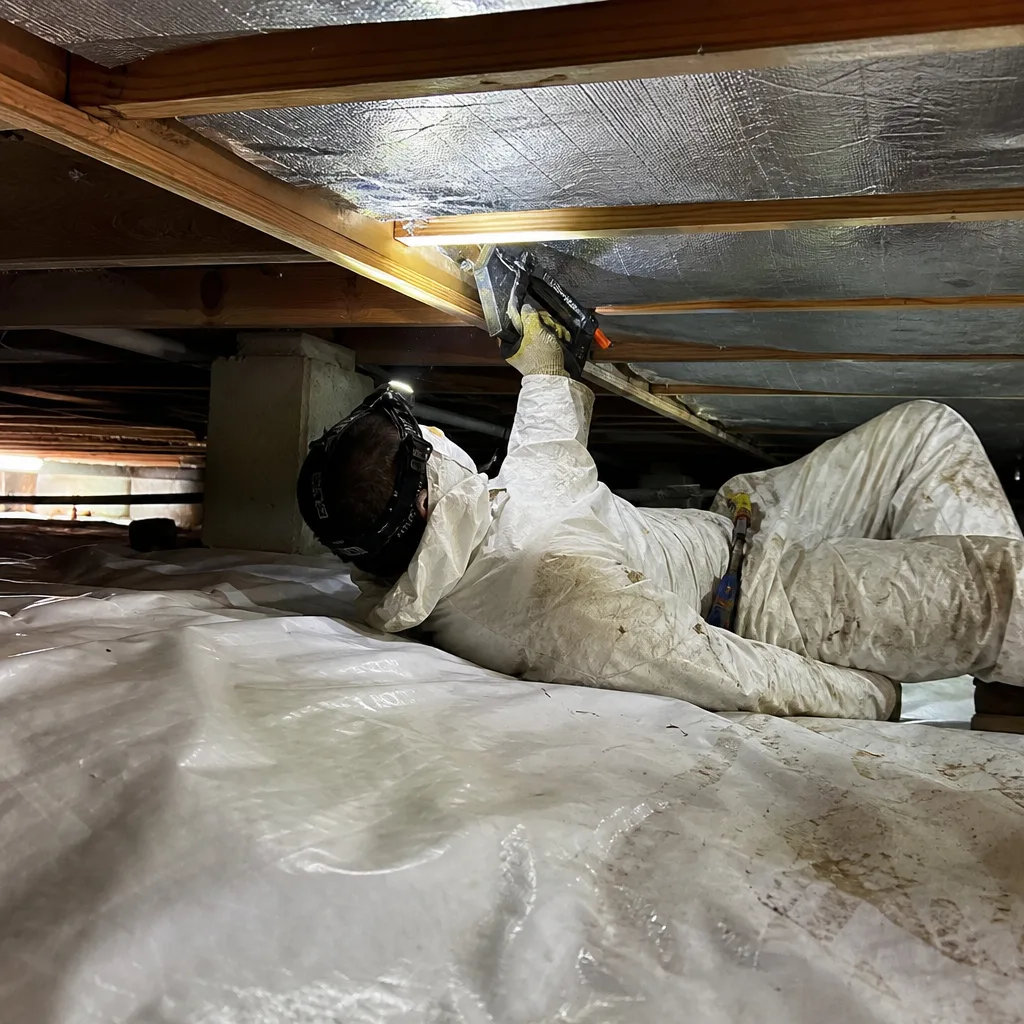
- Condensation beads on the membrane underside. This means your dew point is being hit inside the assembly, usually because the barrier has torn at a seam or penetration and warm, moist interior air is contacting the cooler surface. In Tustin’s spring months, when marine layer moisture lingers, this shows up first along north-facing foundation walls.
- Musty odor that returns after running a dehumidifier. A functional vapor barrier should keep relative humidity below 60% without constant mechanical drying. If you’re emptying a crawl-space dehumidifier weekly, the barrier is breached somewhere - often at the sill plate or around plumbing penetrations where the original sealant has aged out.
- Visible mold on floor joists or insulation above the barrier. This is past the warning stage. The barrier has failed completely in that zone, and moisture is migrating upward through the assembly. We document this with thermal imaging before touching anything, because your insurance adjuster will want dated evidence.
- Membrane has pulled away from walls or has standing water on top. Either the original fastening system failed - common with stake-and-batten installs in Tustin’s clay-heavy soils - or groundwater is finding its way in through a perimeter breach. The membrane should shed water to a drainage point, not pool.
- Your energy bills climbed without an HVAC change. A failed vapor barrier lets moisture into insulation, and wet insulation underperforms its rated R-value by 40% or more. We’ve seen Tustin homes where the attic was reading R-38 on paper but performing closer to R-15 because the vapor retarder above the batts had disintegrated.
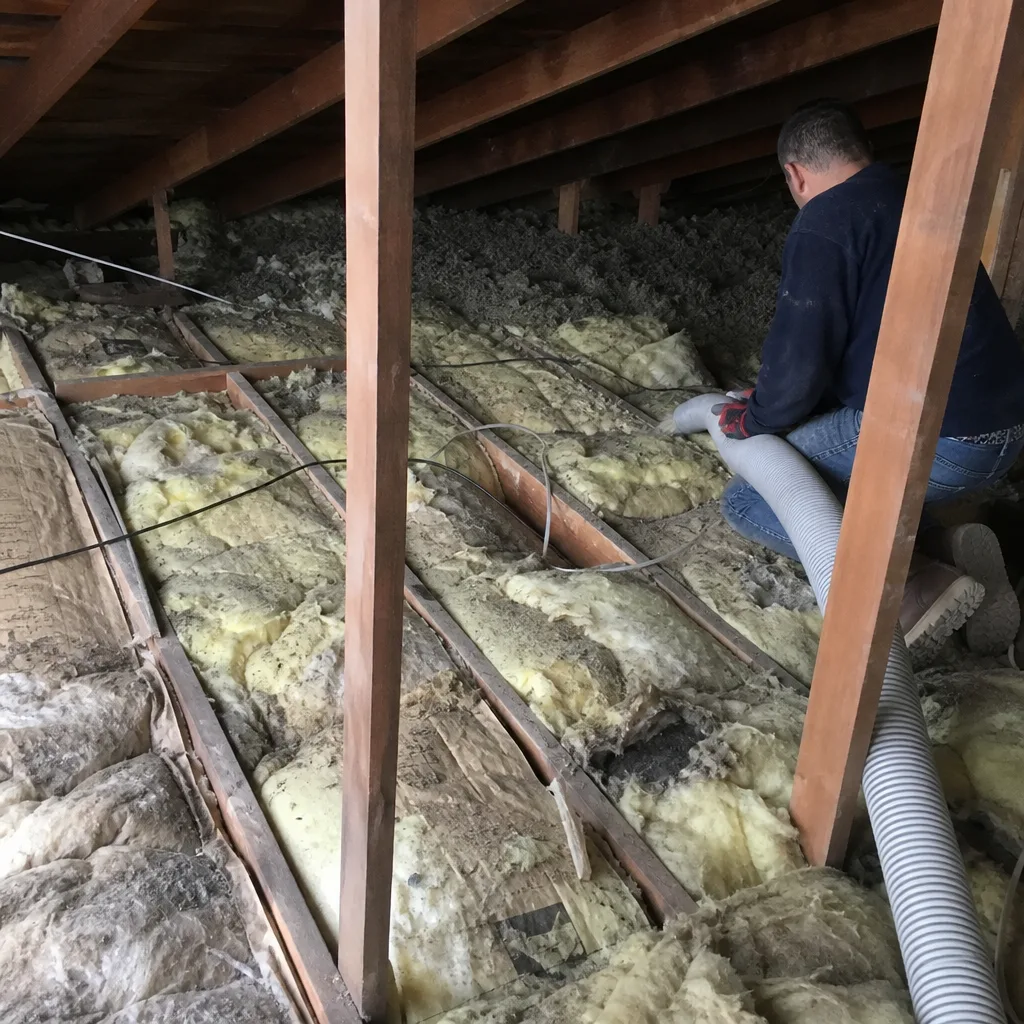 Before
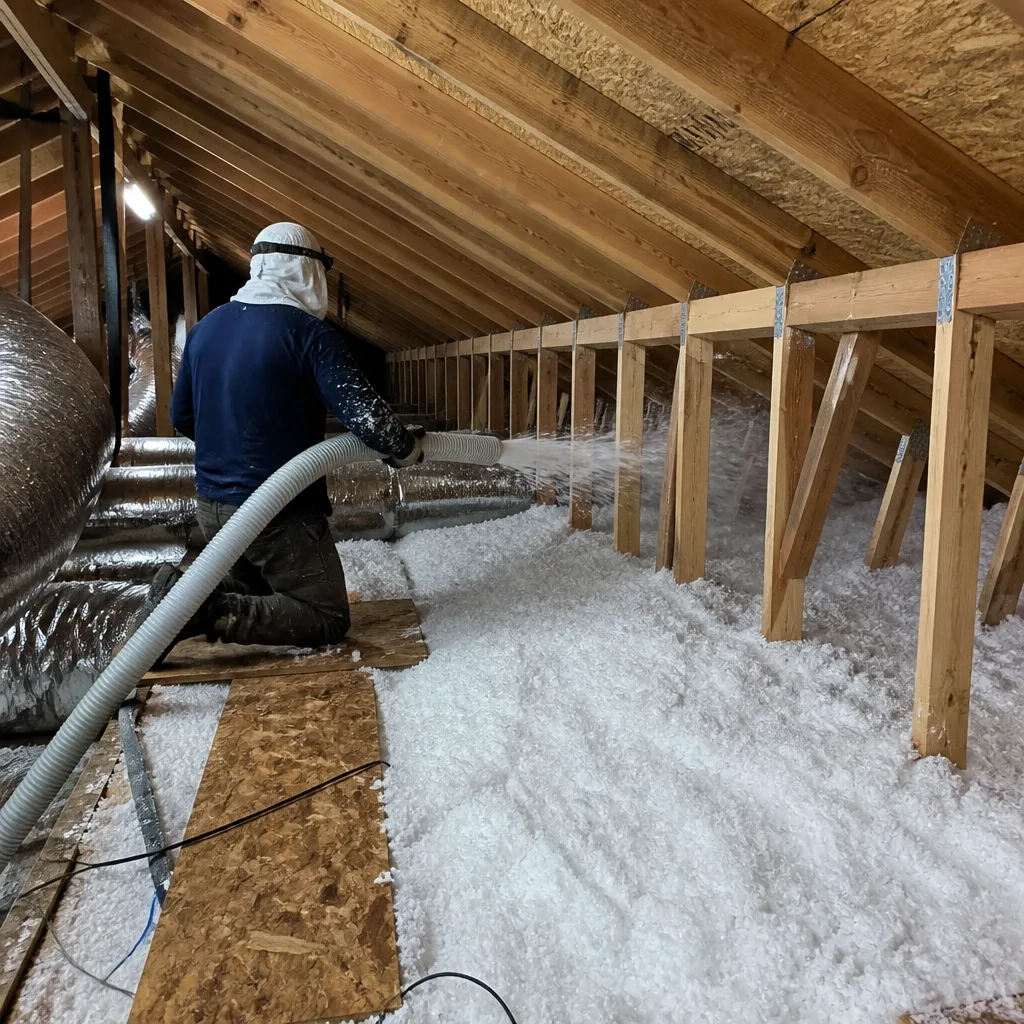 After
AfterReplacement Cost & What’s Included
Most Demilec vapor barrier replacements in Tustin fall between $1,800 and $3,400 installed. A small crawl space under 800 square feet with good access and no remediation needs lands near the bottom. A full attic encapsulation over 1,500 square feet with multiple penetrations to seal, new mechanical fastening, and code-compliant detailing at the eaves pushes toward the top.
| Component | Typical Range |
|---|---|
| Demilec-compatible membrane (material only) | $0.75-$1.40/sq ft |
| Seam tape, fasteners, sealant | $180-$340 |
| Labor: removal, prep, install | $1,100-$2,200 |
| Mold remediation if needed | $400-$900 additional |
What drives the spread: access difficulty (crawl height under 18 inches adds time), whether the old barrier is glued versus mechanically fastened, and if we find compromised insulation that needs removal before the new membrane goes down. Every job gets a written price before work starts - Haven Standard Clause 1 - and that price includes the Documented Photo Record, not an upsell. We also publish before-and-after blower-door numbers on applicable jobs so you can verify the air-sealing result in CFM50, not take our word for it.
Topside Attic Insulation Tustin is an independent service provider with no affiliation to Demilec. We source materials through our regular distributors and do not claim exclusive or preferred status with any brand.
DIY or Call Us?
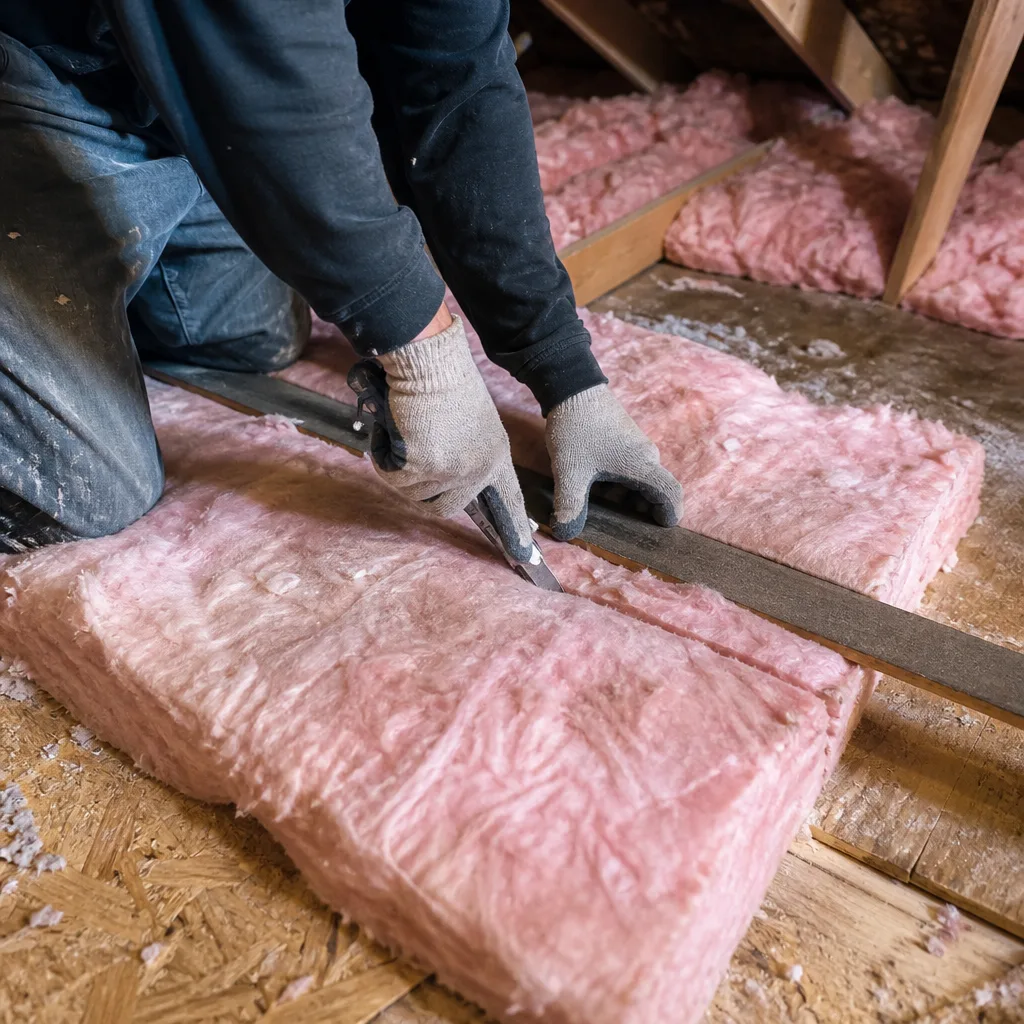
There’s no high-tension danger in vapor barrier work the way there is with garage door springs or gas lines. The risk is quieter: you spend a weekend cutting and taping, miss a seam or a sill-plate gap, and two seasons later you’re paying twice because moisture got in behind your work. What an owner can safely check: whether the membrane is still physically intact, whether standing water is present, and whether a humidity meter reads under 60% at the far corner from the access point.
Where DIY goes wrong: surface preparation (the old barrier has to come out completely, including adhesive residue), proper overlap at seams (minimum 6 inches per Demilec spec), and termination detailing at walls and piers where capillary wicking starts. We’ve also seen homeowners install a 10-mil hardware-store roll where the assembly called for 15-mil reinforced - it lasts three years instead of fifteen. If you want a second opinion on a written estimate you’ve already got, bring it to us. We’ll read it with you. For a new written price on your Demilec vapor barrier installation in Tustin, call (657) 286-7673.
FAQs
A properly installed 15-mil reinforced polyethylene barrier should last 15-20 years in Tustin’s dry-warm climate, though homes near the Tustin Legacy golf course or other irrigated areas sometimes see accelerated degradation from soil moisture cycling. Call (657) 286-7673 for a free inspection if you’re past year 12 and seeing any symptoms above - estimates are free.
Small punctures under 2 inches can be patched with compatible tape if the surrounding membrane is still supple and the damage is isolated. Multiple tears, seam failures, or brittle membrane anywhere in the field means full replacement - patched old material fails adjacent within 2-3 years, and we don’t do work we know we’ll be redoing. Call (657) 286-7673 and we’ll tell you which category you’re in.
Most residential Demilec vapor barrier replacements in Tustin take one day for crews of two. A full encapsulation with wall insulation and dehumidifier rough-in runs two days. We arrive with the material on the truck, so there’s no supplier delay - the written price includes everything, and we don’t leave until the Documented Photo Record is complete.
We stock the full Demilec-compatible membrane line in 12-foot and 16-foot widths, plus the seam tape and mechanical fastening systems that match their published specs. Same-day starts are standard for Tustin and surrounding areas. Call (657) 286-7673 to confirm current inventory for your square footage - we’ll hold it when you approve the written price.
Seal the leaks first. Then insulate. The R-value on the bag means nothing if conditioned air is moving through the gap around that recessed can. Wes Okafor and our crew have applied that rule to over 9,000 homes since 2016, and we apply it to every Demilec vapor barrier installation we touch in Tustin.
Written by Wes Okafor, Owner, Topside Attic Insulation Tustin at Topside Attic Insulation Tustin, serving Tustin and nearby areas.