
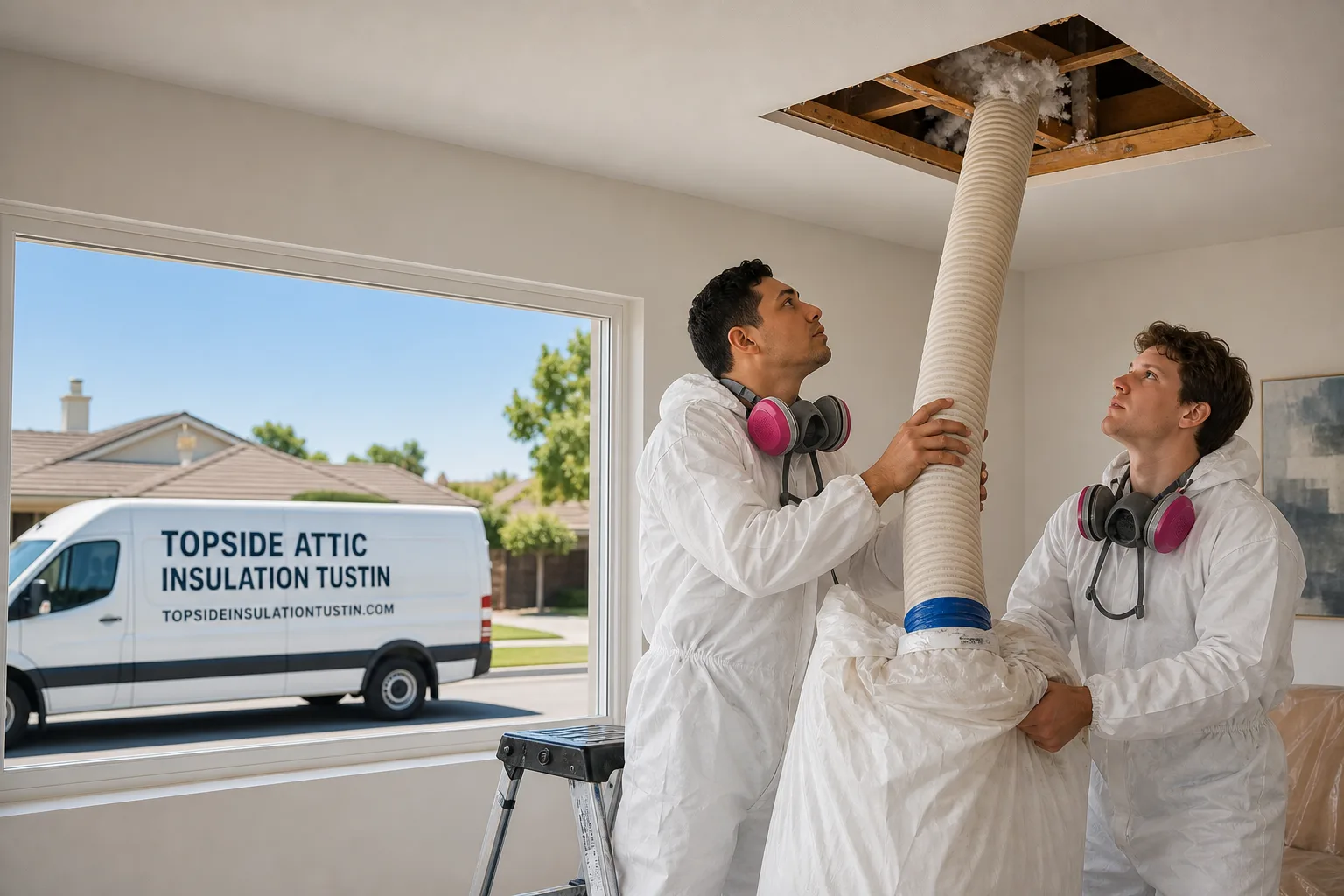
How Much Does Attic Air Sealing Cost in Tustin?
Attic Air Sealing services in Tustin, CA typically run between $800 and $2,200 for a single-family home, with most jobs in the 1,400-to-2,200-square-foot range landing around $1,100 to $1,600. That price covers sealing top plates, can-light penetrations, plumbing chases, and other bypass points before any insulation goes in – which is the only order that actually works. At Envelope Insulation Co., every job starts with a written price before anyone touches your attic, and closes with before-and-after blower-door readings so you can see the measured result, not just take our word for it.
Attic Air Sealing Cost Breakdown in Tustin (2026)
The table below reflects what we’re seeing in the Tustin market right now. These are ranges, not guesses – they’re built from actual job data in Orange County, where attic access, ceiling heights, and housing stock (a lot of 1960s-1980s tract homes in Tustin’s older neighborhoods, plus newer construction near The District) create consistent cost patterns.
| Scope of Work | Typical Price Range (Tustin, 2026) | Notes |
|---|---|---|
| Air sealing only (no insulation), 1,000-1,400 sq ft attic floor | $800 – $1,100 | Smaller tract homes, good access, moderate number of penetrations |
| Air sealing only, 1,400-2,200 sq ft attic floor | $1,100 – $1,600 | Most common scope in central Tustin and Tustin Ranch |
| Air sealing only, 2,200-3,000+ sq ft attic floor | $1,600 – $2,200 | Larger homes, more penetrations, sometimes low-pitch rooflines |
| Air sealing + blown-in insulation (combined scope) | $2,200 – $4,800 | Full-envelope approach; air sealing completed first, then insulation added |
| Air sealing + radiant barrier | $1,800 – $3,200 | Common upgrade in Tustin given summer attic temps that regularly hit 140-160°F |
| Blower-door test (standalone, if not bundled) | $250 – $450 | Before-and-after readings; bundled at no extra charge on Envelope jobs |
| Air sealing around HVAC penetrations only | $350 – $650 | Targeted work – ducts, boots, air handler platform; not a whole-attic seal |
A few things to understand about those ranges. Labor is the dominant cost driver in Tustin – materials (two-part spray foam, caulk, fire-rated caulk for certain penetrations, and rigid foam where needed) are a relatively small portion of the total. What takes time is the inspection and the actual sealing: getting into tight corners at the eave bays, tracking down every top-plate penetration, dealing with recessed can lights that weren’t airtight from the factory. A 1,600-square-foot attic floor with 30 can lights and an older plumbing chase costs more to seal than one with clean drywall and no penetrations, even if the square footage is identical.
On combined scopes (air sealing plus insulation in the same visit), Envelope Insulation Co. never reverses that sequence. The sealing work is finished and inspected before insulation goes in. This matters because blown insulation on top of an unsealed attic floor hides the leaks – it doesn’t stop them. The conditioned air still moves; it just takes a longer path before escaping into the attic.
What Affects Attic Air Sealing Pricing in Tustin
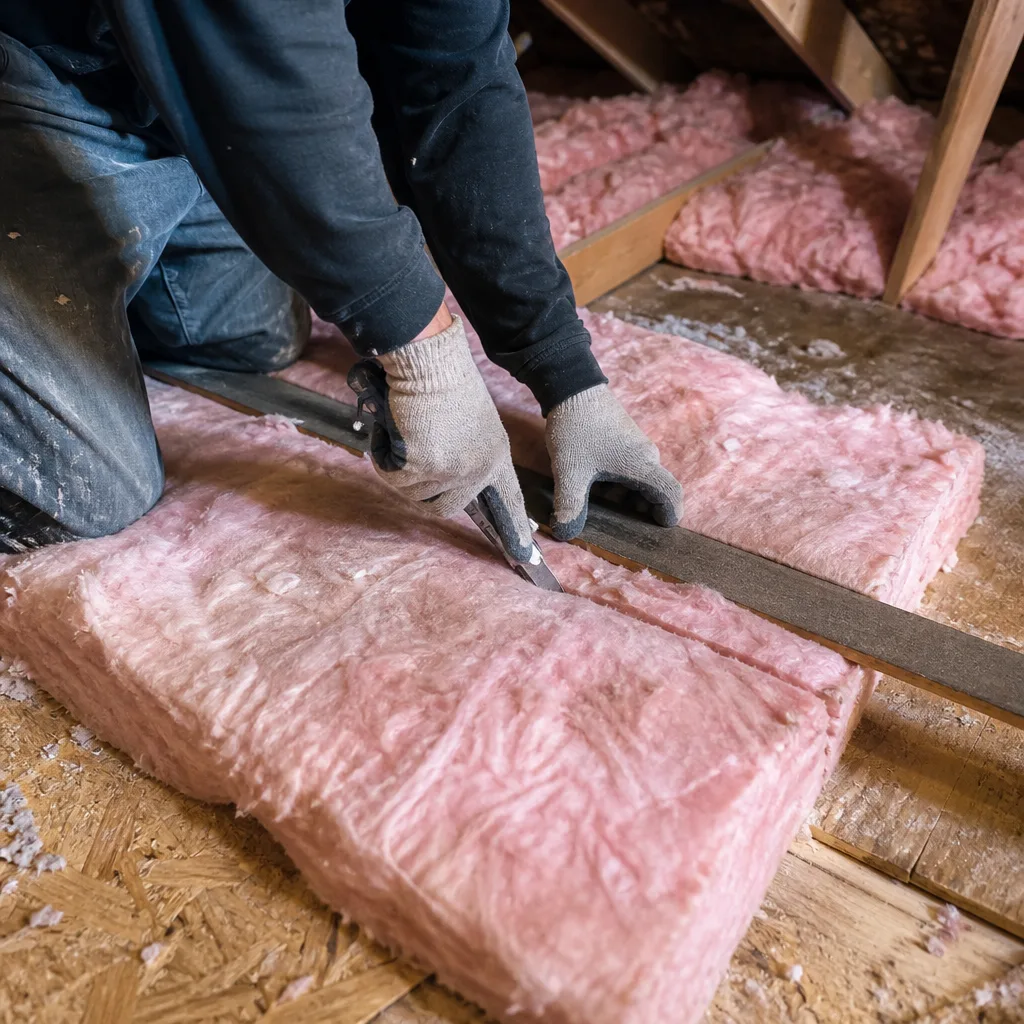
Six variables move the number more than anything else in this market. Understanding them helps you evaluate any quote you receive – including ours.
- Attic square footage and layout. This is the most straightforward driver. A larger attic floor means more linear feet of top plate to seal, more area to inspect, and more time on-site. Split-level homes in older Tustin neighborhoods – particularly in the Columbus Grove area and around Red Hill Avenue – sometimes have multiple attic compartments that don’t connect, which adds inspection and setup time.
- Number and type of penetrations. Every hole through the attic floor is a potential bypass – recessed can lights, plumbing vents, electrical boxes, HVAC boots, bath exhaust fan housings, attic access hatches. Tustin-area homes built in the 1970s and 1980s routinely have 20 to 50 recessed fixtures, and the older-style “non-IC” cans (meaning they weren’t rated for contact with insulation) need a specific sealing approach that takes more time than simply foaming a pipe penetration. A home with 40 cans costs more to seal than a comparable home with 12.
- Attic access and headroom. Tight attic access – small hatch openings, steep or shallow pitches, knee walls, or a HVAC air handler in the middle of the attic floor – slows everything down. Some homes in Tustin Ranch have very limited access points, and in those cases the crew spends extra time just getting materials and themselves into position. That labor shows up in the price.
- Existing insulation depth. If the attic already has insulation and the goal is to improve air sealing without full removal, the crew has to carefully move batts or blown-in material, seal the bypasses below, and replace the insulation. That’s more time than starting with a clean attic floor. If the insulation is old, compacted, or contaminated (rodent activity is common in parts of Tustin near the Tustin Legacy development area, where construction displacement pushes wildlife), attic air sealing is often paired with a full removal and replacement – which changes the price entirely.
- Material requirements for fire-rated assemblies. California’s Title 24 building energy code and local Tustin building standards require fire-rated caulk or intumescent sealant in certain locations – around electrical boxes and at some HVAC penetrations. This isn’t optional, and contractors who skip it are cutting a corner you can’t see. Fire-rated materials cost more than standard foam, and the labor to apply them properly is slower. If a quote looks unusually low, ask specifically which sealant is being used and where.
- Blower-door verification. A proper air-sealing job should be verified with a blower-door test – a pressurization reading that measures, in a single number (CFM50, or cubic feet per minute at 50 Pascals of pressure), how much air the building envelope is losing. Without a before-and-after test, you have no documented proof the sealing changed anything. Some contractors charge separately for this; at Envelope Insulation Co., the before-and-after blower-door readings are included and published with every applicable job. If a bid omits this, ask why.
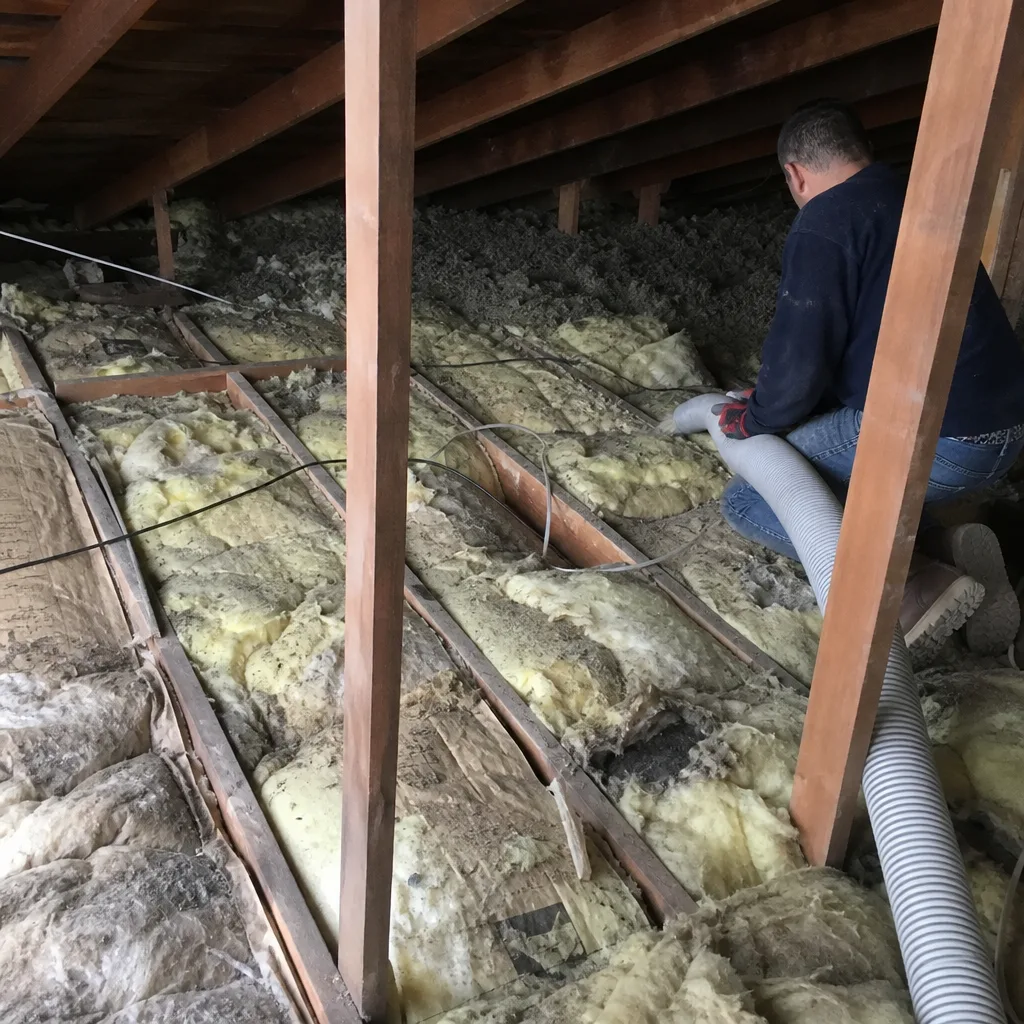 Before
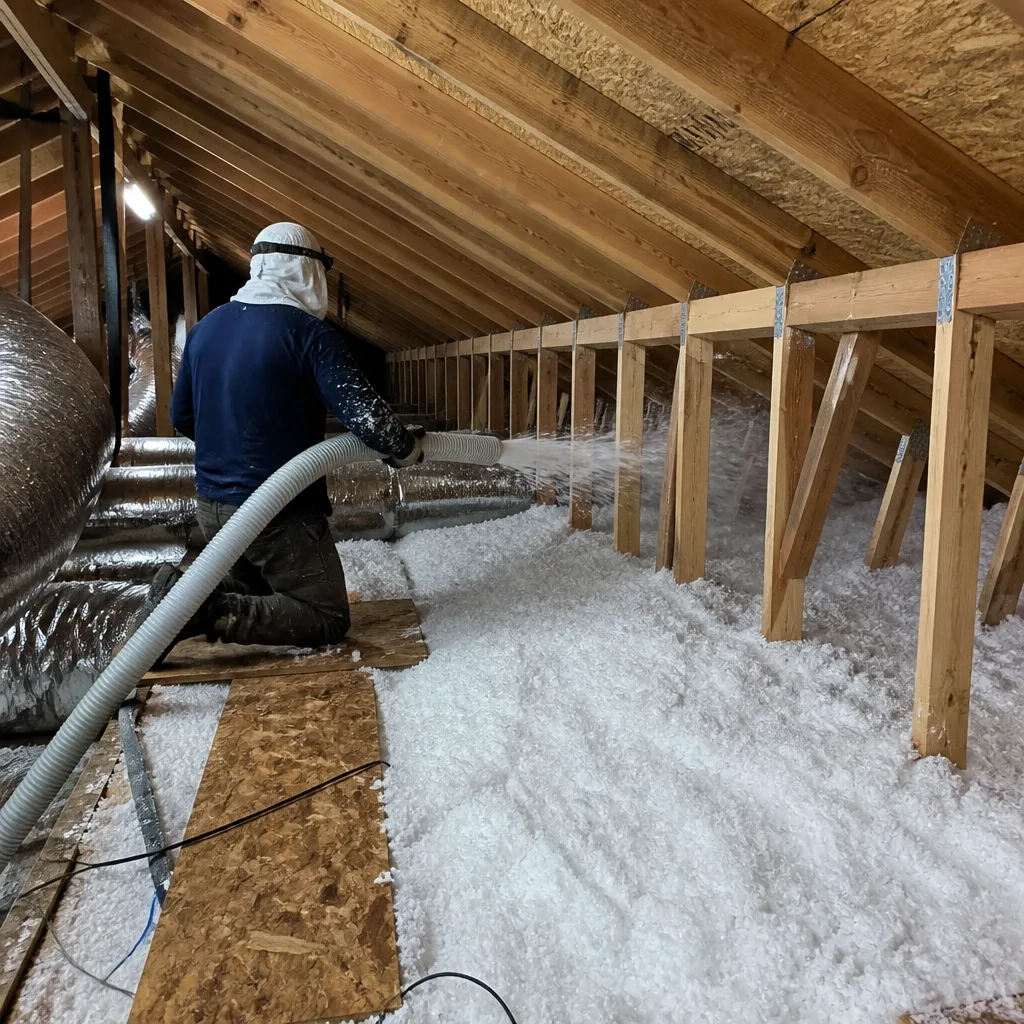 After
AfterWhat Tustin Homes Look Like From Inside the Attic
Tustin’s housing stock is different from what you’d find in newer coastal cities, and those differences affect air sealing work in specific ways. A significant portion of the city’s single-family homes were built between 1960 and 1990 – tract construction that used standard-depth top plates and a lot of recessed lighting that was not designed with air sealing in mind. The original builders weren’t wrong; air sealing as a building practice wasn’t prioritized the way it is under current Title 24 standards.
In the older sections near Old Town Tustin, we frequently find attics where every interior wall top plate is open to the attic – meaning conditioned air from the living space below can travel up through the wall cavity and directly into the attic, where it’s either lost through the roof assembly or mixed with unconditioned air before cycling back through the HVAC. In one job on a 1978-built home near El Camino Real, the blower-door test read over 4,800 CFM50 before sealing. After top-plate sealing and can-light treatment, the reading came down to under 2,100. The homeowner’s HVAC had been running 35 to 40 minutes per cycle in summer; after the seal work, cycle times dropped noticeably in the first billing period.
Newer construction in Tustin Ranch and near the Tustin Legacy redevelopment tends to have tighter initial construction – but those homes still accumulate penetrations over time as HVAC systems are replaced, cable and data runs are added, and fixtures are upgraded. A 2008-built home that’s had two HVAC replacements may have more unsealed penetrations than a 1985 home that’s never been touched.
The Tustin climate also matters more than people expect. Average summer attic temperatures here regularly exceed 140°F – sometimes hitting 160°F on south-facing roof sections. That temperature differential between attic and living space is part of what drives air movement through unsealed bypasses: hot air rises, and if there’s a path from the conditioned living space into a superheated attic, the stack effect pulls conditioned air up and out even when the HVAC isn’t running. Sealing those paths is the only way to interrupt that cycle; R-value alone doesn’t stop air movement.
How to Save on Attic Air Sealing in Tustin
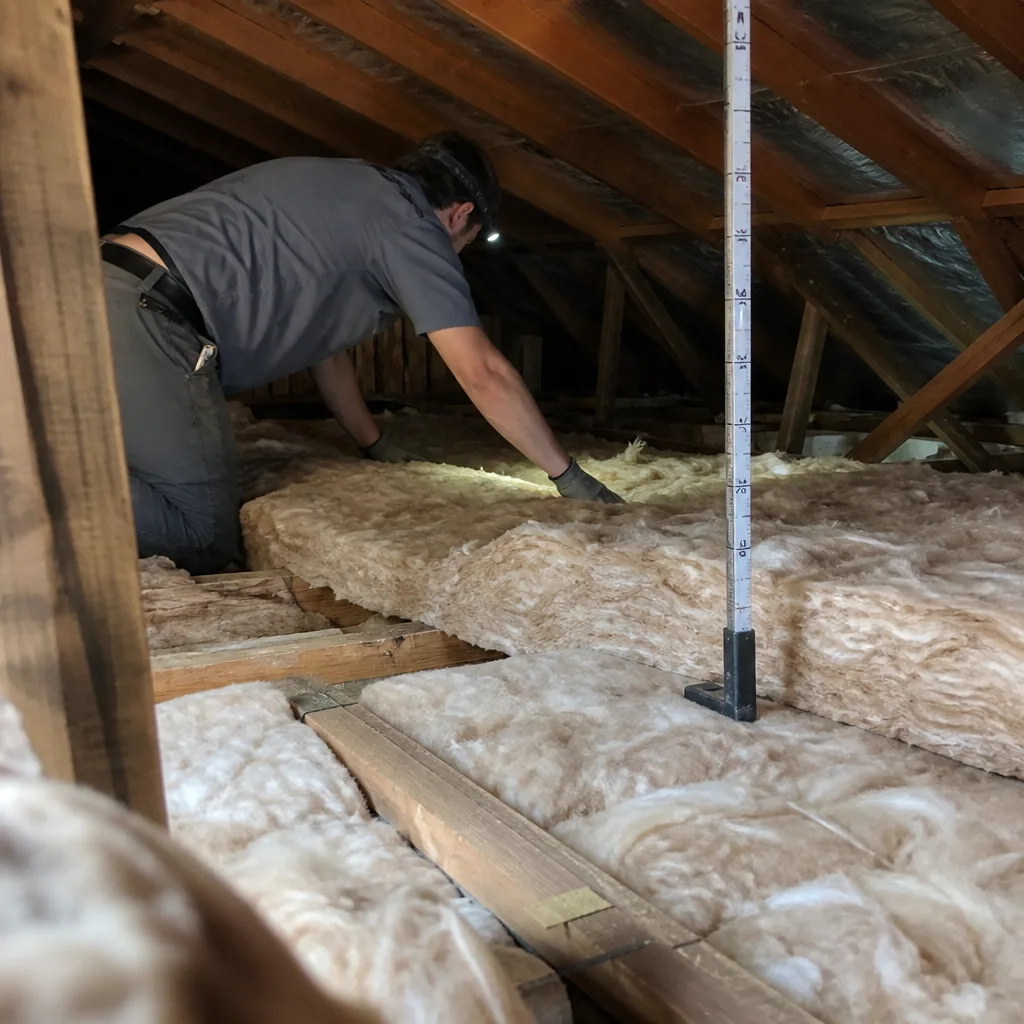
The most direct way to reduce cost per dollar of actual performance improvement is to combine air sealing with insulation in a single visit. The setup time – attic access, blower-door equipment, crew positioning – is the same whether you’re sealing only or sealing and insulating, so bundling the scopes into one job typically costs less than doing them separately. It also guarantees the sequence: sealed first, then insulated, with documentation at both stages.
A few other approaches worth knowing:
- Get a second opinion before committing to a large scope. Under the Haven Standard, Envelope Insulation Co. offers a free second opinion on any written estimate – bring us a competing quote and we’ll go through it line by line. This isn’t about price-matching; it’s about making sure you understand what’s in the scope and what isn’t. A quote that omits blower-door verification or fire-rated materials at certain penetrations isn’t a lower price – it’s a different scope.
- Check for utility rebates before scheduling. Southern California Edison and SoCalGas both run rebate programs for qualifying air sealing and insulation work in Orange County. The programs change annually and have income-qualification tiers, but in 2025 and into 2026, we’ve seen customers offset $200 to $600 of their total cost through utility rebates on qualified projects. Ask about this before you book; paperwork timing matters.
- Federal tax credits under the Inflation Reduction Act. The 25C energy efficiency tax credit currently covers 30% of qualifying air sealing and insulation costs, up to a $1,200 annual cap for insulation and air sealing combined. This isn’t a rebate – it’s a credit applied when you file – but on a $1,400 job, that’s potentially $420 back. Requirements include a qualified contractor and documented materials; we provide the written scope and material documentation as standard.
- Don’t defer air sealing hoping insulation alone will close the gap. We see this calculation regularly: a homeowner adds R-38 blown-in over an unsealed attic floor because the air sealing quote feels like an extra expense. The insulation improves comfort somewhat, but the underlying air bypass is still there, and the insulation now covers it – which means the bypasses can only be addressed later by pulling the insulation back. Doing it right the first time costs less than doing it twice.
- Schedule in the off-peak season. Spring (March through May) and fall (September through October) tend to have shorter lead times than the summer rush. Scheduling during those windows sometimes allows for faster project start dates, which matters if you’re trying to time work before a hot season or coordinate with other contractors.
For a precise number on your home, call (657) 286-7673. The estimate is free, it’s written before any work begins, and it includes a scope detailed enough that you can compare it line-for-line with any other quote you’ve received. That’s Haven Standard Clause 1: flat price, written scope, written warranty before anyone lifts a tool.
What Happens on the Day of the Job
Under the Haven Standard, you get a named technician and a text when they’re on the way – no four-hour windows with a callback promise. When the crew arrives at your Tustin home, the first step isn’t materials; it’s the pre-work blower-door test. We pressurize the house to 50 Pascals and record the baseline CFM50 reading. That number is yours. It goes into the documented photo record that closes every job.
The sealing work follows a standard inspection path: attic hatch, top plates along every interior wall, can-light housings, plumbing and electrical penetrations, HVAC boot connections, and any visible bypass at eave bays. Two-part spray foam handles large gaps; fire-rated caulk goes on electrical penetrations and anywhere the building code requires it. Rigid foam board is used at hatch openings when they’re not already insulated to an adequate level. Nothing gets covered until the lead technician has walked every sealed section.
Once sealing is complete, the blower-door test runs again. The after-reading is recorded and compared against the baseline. Both numbers – before and after – go into the written record you receive when the crew leaves. On jobs where insulation follows the same day, that’s added after the post-seal blower-door confirms the results.
The 365-Day Done Right Promise applies to the finished work. If something in the seal fails within a year, we make it right. That’s in writing before anyone starts.
Air Sealing vs. Insulation: Which Comes First and Why
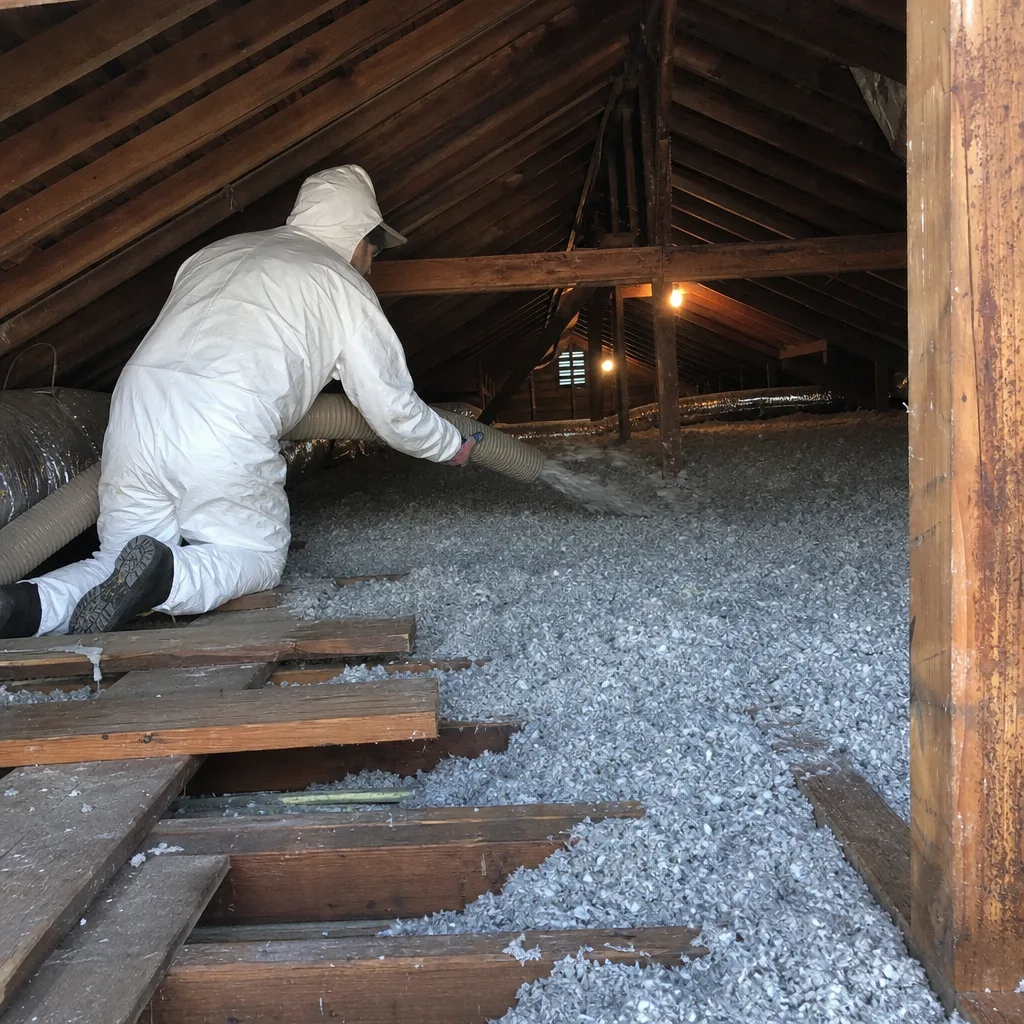
This is probably the most important technical distinction on this page, and it’s one a lot of homeowners don’t encounter until they’ve already had insulation added to an unsealed attic.
Insulation slows the transfer of heat through a solid material – what building scientists call conductive heat transfer. Air sealing stops air from moving through gaps – convective heat transfer. These are different mechanisms, and insulation does not stop air movement. A perfectly installed R-49 blown-in attic can sit directly above an attic floor that’s losing hundreds of cubic feet of conditioned air per minute through top-plate bypasses and can-light housings. The insulation does its job (slowing conduction through the ceiling drywall) while the air leaks do theirs (moving conditioned air directly into the unconditioned attic space).
This is why Envelope Insulation Co. won’t blow insulation over an unsealed attic floor. It’s not a sales tactic; it’s a sequencing requirement. And it’s why the blower-door test before and after is non-negotiable on our jobs – because without the numbers, there’s no way to tell what the sealing actually accomplished.
If you’ve had insulation added recently and want to know whether air sealing was done first, a blower-door test will give you a current leakage reading. Whether that reading indicates the sealing was done or skipped is a separate diagnostic question – but the number itself is objective. Wes Okafor and the team at Envelope Insulation Co. can walk you through what the reading means for a home your size in Tustin’s climate.
Tustin Building Codes and Title 24 Air Sealing Requirements
California’s Title 24, Part 6 (the Building Energy Efficiency Standards) sets mandatory air sealing requirements for new construction and significant renovations, including requirements around can lights in insulated ceilings and penetrations through the building envelope. Tustin enforces these through the City of Tustin Building Division, and permits are required for work that involves HVAC modifications or significant structural changes.
For most attic air sealing projects – sealing existing penetrations in an existing attic – a permit is not required under Tustin’s current code, because the work is maintenance and energy improvement rather than new construction or alteration. But if the project includes attic insulation as part of a larger renovation, or if HVAC equipment is being modified as part of the same scope, check with the Building Division at 300 Centennial Way before scheduling.
One area where code matters consistently: the type of sealant used around electrical penetrations. Intumescent or fire-rated sealant is required in locations where the penetration passes through a fire-rated assembly. Standard spray foam is not fire-rated and is not a compliant substitute in those locations. Ask any contractor you’re evaluating which sealant they use, and where.
FAQs: Attic Air Sealing Cost in Tustin
How much does attic air sealing cost in Tustin, CA?
Most attic air sealing jobs in Tustin run between $800 and $2,200 for a standalone scope, with the majority of single-family homes in the 1,400-2,200 sq ft attic-floor range landing between $1,100 and $1,600. Larger homes with more penetrations or difficult access can reach $2,200 or more. Call (657) 286-7673 for a written estimate specific to your home – estimates are free, and the price is written before any work starts.
Is attic air sealing worth the cost in a Tustin home?
For most Tustin homes, yes – and the blower-door numbers make the case more clearly than any general claim. On a typical Orange County tract home with an unsealed attic floor, pre-sealing readings often run 3,500 to 5,500 CFM50. Post-sealing readings commonly fall 30 to 55 percent. That reduction translates directly to shorter HVAC run times and lower cooling costs during the summers here, when attic temperatures regularly exceed 140°F. The 25C federal tax credit and available SoCal utility rebates can offset $400 to $800 of the cost on qualifying projects, which improves the payback timeline further.
How long does attic air sealing take in Tustin?
Most jobs are completed in 3 to 6 hours, including the pre-work blower-door test, the sealing work itself, and the post-work blower-door verification. Larger homes with many penetrations, difficult attic access, or combined insulation scopes may run 6 to 8 hours. We don’t leave until the post-seal blower-door reading is documented – that’s part of the job, not an add-on.
Can I just add insulation instead of air sealing?
Insulation slows conductive heat transfer; it doesn’t stop air movement. Adding R-38 or R-49 blown-in over an unsealed attic floor covers the bypasses without closing them – conditioned air still moves through the top-plate gaps and can-light housings; it just takes a slightly longer path. The practical result is that you’ve spent money on insulation that’s performing below its rated value, and the air leaks can only be addressed later by pulling the insulation back. Sealing first costs less than correcting the sequence after the fact. Envelope Insulation Co. will not install insulation over an unsealed attic floor – it’s a sequencing requirement, not an upsell.
Does Envelope Insulation Co. provide a blower-door test with attic air sealing in Tustin?
Yes – before-and-after blower-door readings are included on every applicable air sealing job, at no separate charge. The pre-work reading establishes your baseline CFM50 (the cubic feet per minute of air your home is losing at 50 Pascals of pressure). The post-work reading documents the change. Both numbers go into the written photo record you receive when the crew leaves. This is how you verify what you paid for – not by how we describe the work, but by the measured numbers. Call (657) 286-7673 if you’d like to understand what your home’s current leakage reading might look like before booking.
What should I look for in an attic air sealing quote in Tustin?
Four things: a written price with a line-item scope (not a verbal estimate), explicit mention of which sealant is used at electrical penetrations (it should be fire-rated), confirmation that a blower-door test is included before and after, and clarity on sequence – sealing completed before any insulation is added. If the quote doesn’t address those four points, ask directly. Under Haven Standard Clause 1, every Envelope Insulation Co. quote includes a flat price, written scope, and written warranty before anyone starts work. Call (657) 286-7673 or bring us any written estimate you’ve already received – the second opinion is free.
Key Takeaways
- Attic air sealing in Tustin costs $800 to $2,200 for most single-family homes, with typical scopes running $1,100 to $1,600.
- The main cost drivers are attic square footage, number of penetrations (especially recessed can lights), existing insulation depth, and access difficulty.
- Combining air sealing and blown-in insulation in one visit usually costs less than scheduling them separately – and guarantees the correct sequence.
- The 25C federal tax credit (30%, up to $1,200) and SoCal utility rebates can offset $400 to $800 on qualifying projects.
- Before-and-after blower-door readings are the only documented proof that air sealing changed anything – insist on them in any scope you accept.
- Insulation does not substitute for air sealing. The sequence is: seal first, then insulate. Reversing it costs more to fix later.
- Every Envelope Insulation Co. job starts with a written price (Haven Standard Clause 1) and closes with a documented photo record and blower-door results.
Get a Written Estimate for Your Tustin Home
If you’re ready to get a documented baseline on your home’s air leakage – or you want to understand exactly what air sealing would cost before committing to anything – call (657) 286-7673. The estimate is free, it’s written, and it comes with a specific scope before anyone starts work. That’s how we’ve operated since 2016, on every one of the 9,000+ homes Envelope Insulation Co. has sealed and insulated.
Wes Okafor and the team answer calls live, 24 hours a day. No voicemail loop, no callback window. If you prefer, you can also request an estimate through our home page. If you’ve already received a competing quote, bring it – the second opinion is free, and we’ll go through it with you line by line.
Written by Wes Okafor, Owner at Envelope Insulation Co., serving Tustin, CA since 2016.
Pricing reflects the Tustin market as of 2026. Topside Attic Insulation Tustin offers free estimates – call (657) 286-7673.
What Our Customers Say
"Crawl space encapsulation done properly. Photographs of the vapour barrier at every seam, and the damp smell in the hallway is gone."
- Ainsley P."They air-sealed the attic floor before insulating and showed me the blower-door number before and after. The upstairs is finally the same temperature as downstairs."
- Marisol D."They photographed rodent damage in the old insulation that we had no idea about, and priced the exclusion work separately so we could decide."
- Harriet N.