
Attic Insulation Top-Up in Tustin, CA
An attic insulation top-up adds blown-in insulation over your existing material to bring the total depth up to current energy code – without a full tear-out or replacement. Most Tustin homes built before 2005 are running 4 to 6 inches of settled fiberglass or cellulose when they need 12 to 15 inches to meet Title 24’s R-38 to R-60 targets. The result is a measurable drop in heat gain through the ceiling, lower cooling loads on your HVAC system, and utility bills that reflect the difference.
If your home’s attic hasn’t been touched since you bought it – or since it was built – there’s a good chance a top-up is the single highest-return improvement you can make to the building envelope. Our Attic Insulation in Tustin service covers the full picture, and a top-up is the most common job we do in Tustin’s older residential neighborhoods like Old Town, Tustin Ranch, and the tracts west of Red Hill Avenue.
Before any insulation goes in, we seal. That’s the non-negotiable part. Blowing material over unsealed top plates, recessed can lights, and attic penetrations locks air leaks under a blanket of fluff and calls it done. We don’t do that. Air sealing comes first, every time – it’s how Envelope Insulation Co. has operated under The Haven Standard since 2016, and it’s why Wes Okafor built the process the way he did. To schedule a written-price assessment, call us at (657) 286-7673.
When You Need Attic Insulation Top-Up
- Your existing insulation measures under R-30. Probe the attic floor with a ruler: if you’re looking at less than 9 inches of cellulose or less than 10 inches of fiberglass batts, you’re below the California Title 24 minimum for a home in Tustin’s climate zone (Climate Zone 8). A top-up can close that gap in a single visit without disturbing the material below.
- Your upstairs rooms run noticeably warmer than downstairs from June through September. Tustin regularly sees summer highs above 90°F, and an attic that peaks at 140°F or higher pushes radiant heat through an under-insulated ceiling plane. If the second floor of your home feels like a different building on a July afternoon, thin insulation is usually part of the cause.
- Your home was built between 1970 and 2000. The insulation standards in place during those decades – and the material that went in at construction – settled and degraded over time. In many Tustin Ranch tracts built in the late 1980s and early 1990s, we find original fiberglass batts that have compressed to roughly half their installed depth.
- Your energy bills climbed even though you didn’t change your thermostat habits. Aging HVAC systems often get the blame, but a ceiling plane losing R-value every year is a more common culprit in homes that haven’t had any envelope work done. A blower-door test – a pressurization reading that shows, in one number, how much conditioned air your building envelope is losing – can confirm where the losses are actually coming from.
- A home energy audit flagged low attic R-value. If an audit report is sitting on your counter with a recommendation to add insulation, bring it to us. Under our Free Second Opinion offer, we’ll read the written estimate with you and tell you whether the recommended scope and price are reasonable before you sign anything.
- You recently had HVAC, electrical, or plumbing work done in the attic. Contractors who work in attic spaces often disturb, compress, or displace existing insulation – sometimes significantly. If someone was up there in the last few years and you haven’t had the insulation checked since, a top-up assessment is worth scheduling.
Our Attic Insulation Top-Up Process
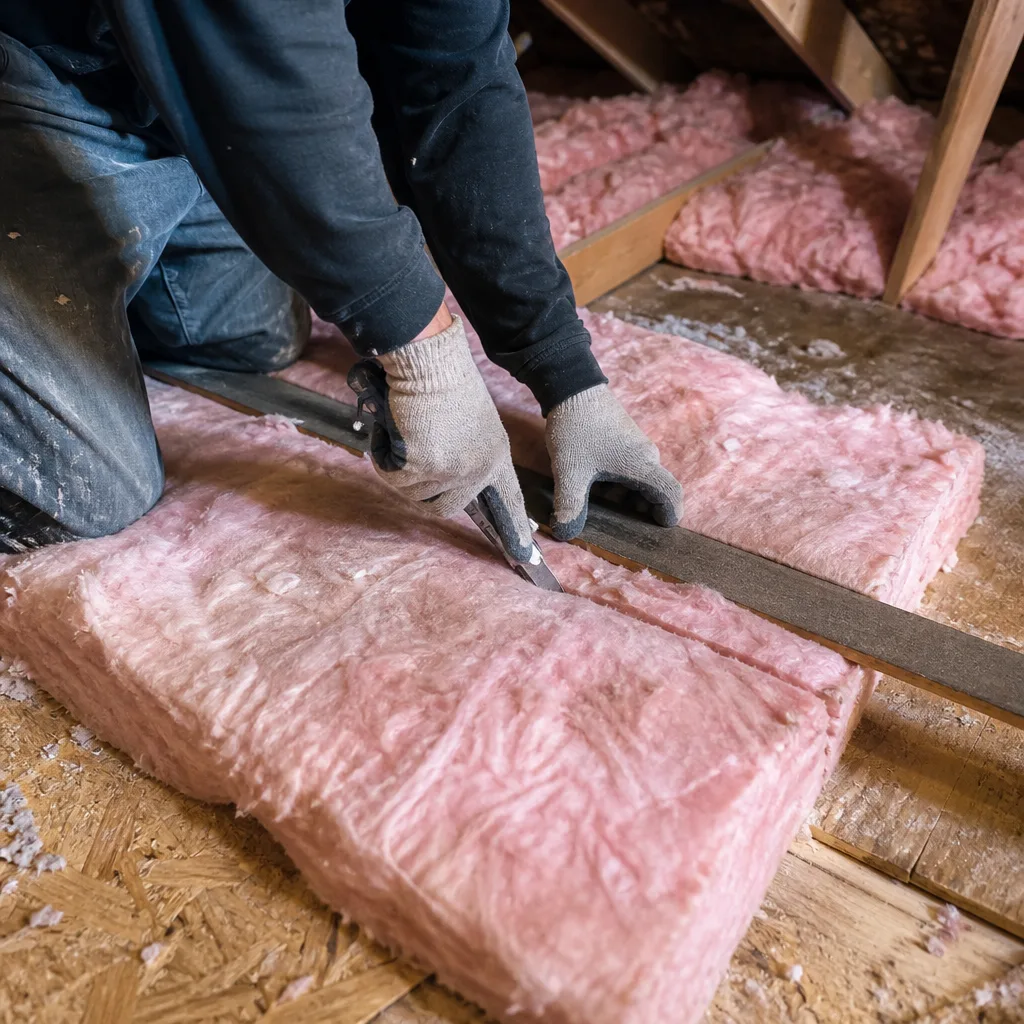
Here’s what actually happens from the time we arrive to the time we hand you the documented record. No guesswork, no surprises – this is what the Haven Standard looks like in practice on a top-up job.
- Pre-job blower-door test and attic inspection. We start with a blower-door test before any work begins. This gives us a baseline CFM50 reading – the cubic feet per minute of air moving through the envelope at 50 Pascals of pressure. We also measure existing insulation depth at multiple points across the attic floor, note material type, and photograph the full space. You get those photos as part of the Documented Photo Record included on every visit.
- Written price and scope delivered before any work starts. Haven Standard Clause 1: flat price, written scope, written warranty before anyone lifts a tool. We’ll tell you exactly how many bags of material will go in, what R-value you’ll end up with, what the air-sealing work covers, and what the total cost is – in writing. If the numbers don’t work for you, we leave. No pressure.
- Air sealing of the attic floor plane. This step happens before a single inch of insulation is added. We seal top plates (the framing members where interior walls meet the attic floor), recessed can light housings, attic hatch perimeters, plumbing and electrical penetrations, and any HVAC boot connections visible from the attic side. Two-part spray foam and fire-rated caulk are the primary tools here. Skipping this step and blowing insulation over open penetrations is one of the most common ways insulation jobs underperform – and it’s the reason we don’t do it.
- Blown-in insulation to target R-value. Once sealing is done, we bring in the blowing equipment and add insulation to the specified depth. In most Tustin homes, we’re targeting R-38 to R-49 for the attic floor, which works out to 12 to 15 inches of blown cellulose or 15 to 18 inches of blown fiberglass depending on material. We use material from Johns Manville, Knauf, and CertainTeed – no proprietary product lock-in, and we’ll tell you which material we’re specifying and why before the job starts.
- Post-job blower-door test. After sealing and insulation are complete, we run the blower-door again. The after number goes in the written record alongside the before number. In a well-sealed Tustin home, we typically see the post-sealing CFM50 drop 20 to 40 percent relative to the pre-job reading. If the numbers are close together, we’ll tell you exactly why – sometimes an attic isn’t where the biggest losses are, and you deserve to know that.
- Documented close-out and warranty delivery. Before we leave the property, you receive the written warranty, the photo record from start to finish, and both blower-door readings in a single close-out document. The 365-Day Done Right Promise applies: if anything about the completed work doesn’t hold up within a year, we come back and make it right – no negotiation required.
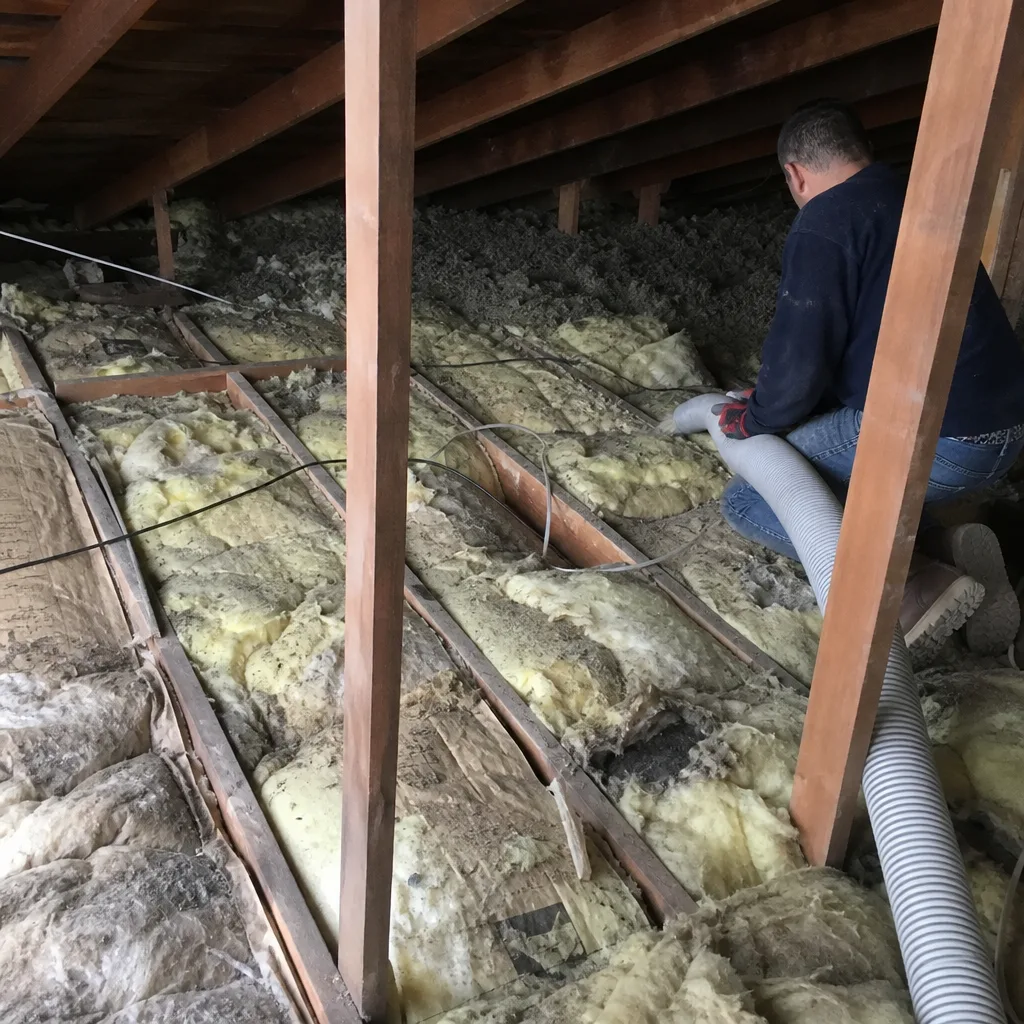 Before
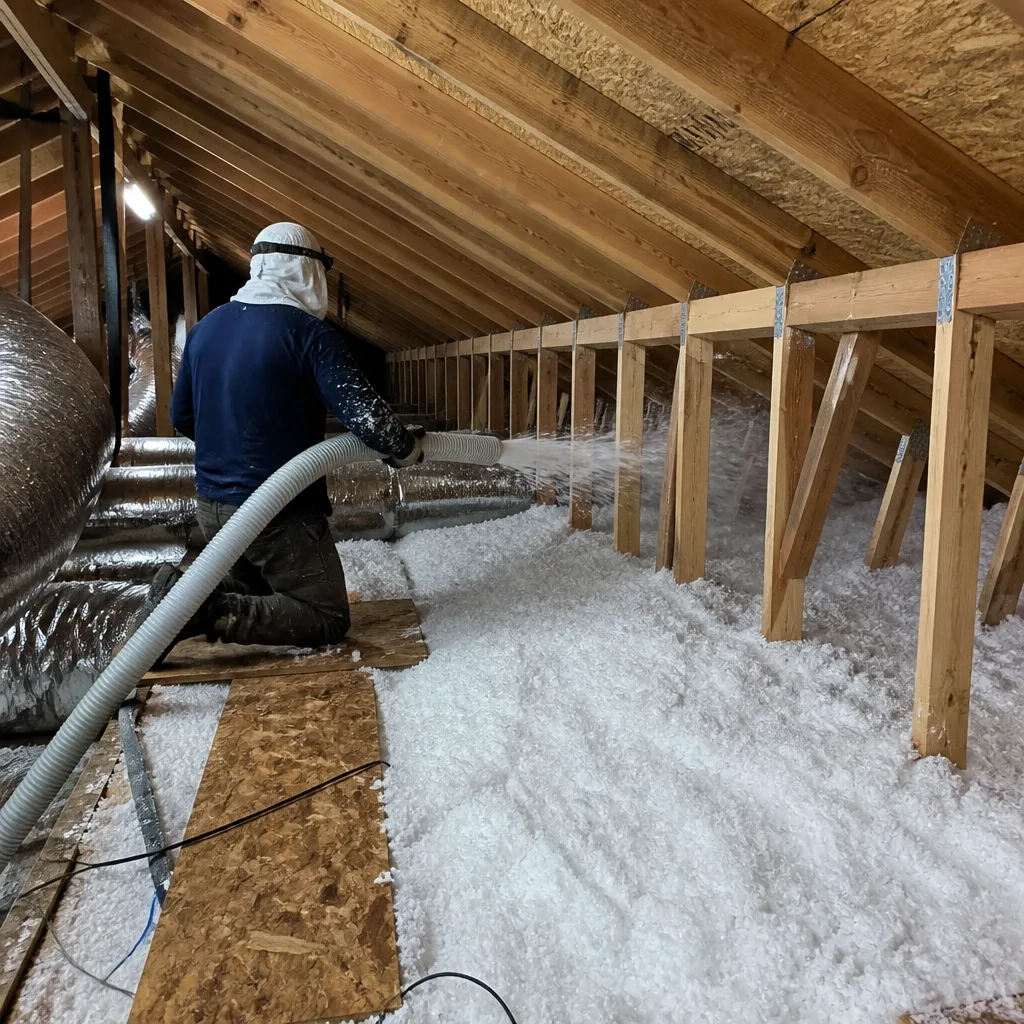 After
AfterAttic Insulation Top-Up Pricing in Tustin
Most attic insulation top-up jobs in Tustin run between $900 and $2,400 for a single-story home with 1,200 to 2,000 square feet of attic floor space. The range reflects real variation – not a vague estimate designed to get you on the phone. Here’s what moves the number:
- Attic square footage. The bigger the space, the more material and labor. A 1,200-square-foot attic and a 2,400-square-foot attic are meaningfully different jobs, and the written price will reflect the actual measurement.
- Starting R-value. A home sitting at R-11 needs more added material than one at R-22. We measure at multiple points rather than averaging a few spots, because inconsistent depth is common in attics that had batt insulation installed by hand.
- Volume of air sealing required. An attic with 30 recessed can lights and multiple HVAC penetrations takes more sealing time than a clean attic floor with four or five penetrations. We price the sealing work as a line item so you can see exactly what you’re paying for.
- Attic access and working conditions. Low-pitch rooflines and obstructed access hatches slow the work down. Tustin Ranch homes with tray ceilings and complex rooflines sometimes require more time than a straightforward gable-roof tract home – and the price will say so, in writing, before anyone starts.
- Material choice. Blown cellulose (GreenFiber is a common option on our jobs) and blown fiberglass (Johns Manville, Knauf) land at slightly different price points per R-value achieved. We’ll walk you through the tradeoffs.
For a free, written-price assessment with no work starting until you’ve approved the scope and number, call (657) 286-7673. If you already have a written estimate from another contractor, bring it – we’ll read it with you under our Free Second Opinion offer before you decide anything.
For a broader look at what insulation work in Tustin costs and covers, the Attic Insulation in Tustin parent page has the full pricing breakdown by job type.
FAQs – Attic Insulation Top-Up
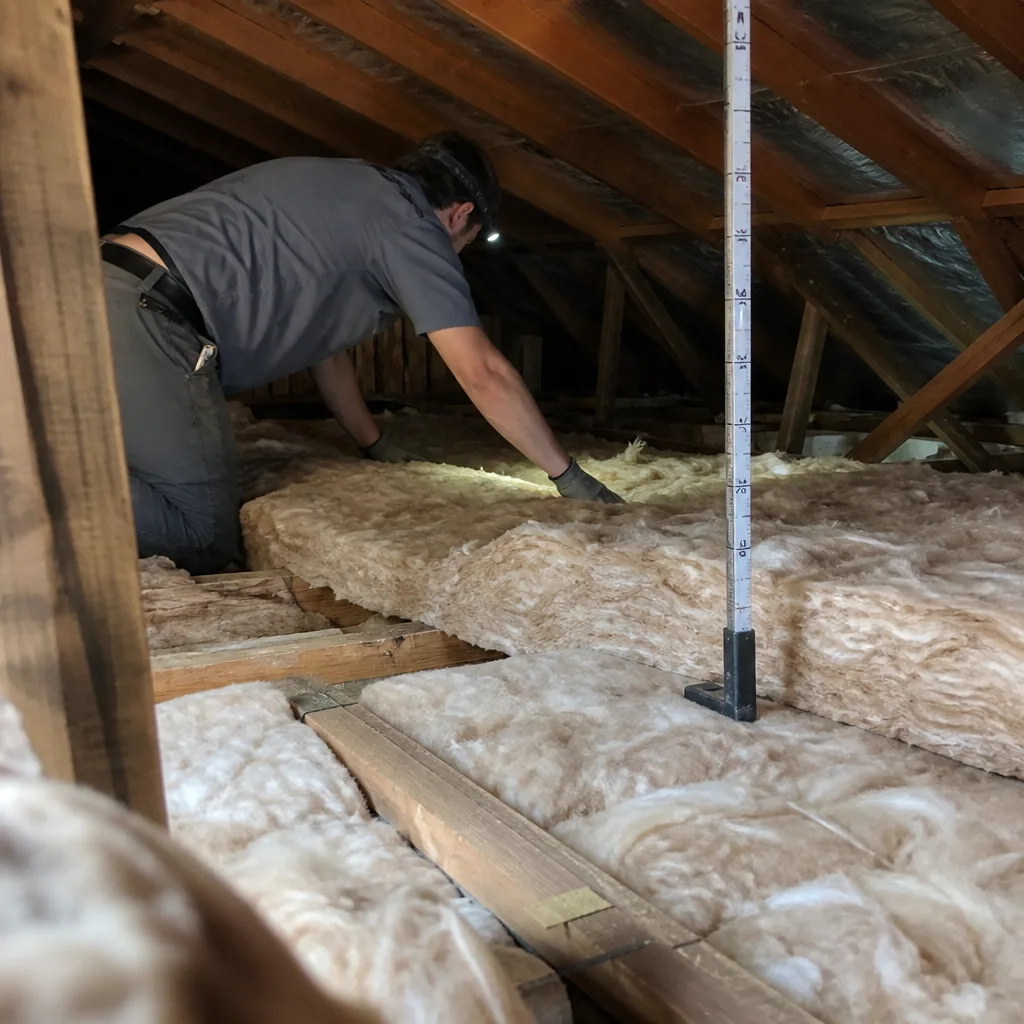
Can you add insulation on top of my existing insulation, or does the old material need to come out first?
In most cases, the existing insulation stays in place and new blown-in material is added on top. Removal is only necessary when the existing material is wet, contaminated with mold, rodent waste, or pest debris – or when it’s in such poor condition that it would trap a moisture problem under the new layer. If your attic is clean and dry, a top-up over the existing depth is both code-compliant and effective. We photograph the existing material before we make the call and document the reasoning either way. Call (657) 286-7673 for a written assessment before assuming you need a full tear-out.
How much does attic insulation top-up cost in Tustin?
Most top-up jobs in Tustin fall between $900 and $2,400 for homes with 1,200 to 2,000 square feet of attic floor, with the main variables being starting R-value, attic square footage, and the volume of air sealing required before the insulation goes in. The written price you receive before any work starts will be itemized – material, air sealing, and labor as separate lines – so you can see exactly where the number comes from. Call (657) 286-7673 to schedule a free written-price assessment.
What R-value should my attic reach after a top-up in Tustin?
California Title 24 requires R-38 for attic insulation in Tustin’s climate zone (Climate Zone 8), but we typically recommend targeting R-49 when the cost difference is modest, because settled insulation loses effective R-value over time. At R-49, a blow-in job using Johns Manville or Knauf fiberglass batt will land at roughly 15 to 18 inches of depth. We’ll measure your current depth, calculate the added material needed to hit the target, and put both the target R-value and the material quantity in the written scope before any insulation is moved.
Do you do the air sealing and the insulation top-up on the same visit?
Yes, and the air sealing always comes first. We do not blow insulation into an unsealed attic – not as a shortcut, and not because a homeowner prefers it. The blower-door test runs before we start and again after the sealing and insulation are complete, so you have a before-and-after number in the written record documenting what changed. Both steps happen in the same crew visit in the large majority of Tustin jobs. If the scope of sealing is unusually large, we’ll tell you upfront and schedule accordingly – in writing.
Tustin-Specific Notes on Attic Insulation Top-Ups
Tustin’s housing stock covers a wide range. Old Town has single-story homes from the 1940s and 1950s where the original rock wool or early fiberglass has been sitting undisturbed for 70 years. Tustin Ranch carries a dense concentration of two-story stucco homes from the late 1980s and 1990s where attic R-values were compliant at construction but have since settled below modern code thresholds. The neighborhood west of Newport Avenue toward the Santa Ana border includes smaller lot homes, often with irregular attic geometry that makes insulation depth inconsistent from joist bay to joist bay.
Climate Zone 8, which covers Tustin, doesn’t carry the extreme cold that pushes attic R-values into the R-60 range further north – but the combination of hot, dry summers and mild-but-real winters means the ceiling plane is working in both directions. An attic at 140°F in July is pushing heat down through a ceiling that, at R-15, barely slows it. The same ceiling in January is letting conditioned heat escape upward while your furnace runs. The insulation does two jobs here, and it needs to do both of them adequately.
Permit requirements for insulation top-ups in Tustin are generally straightforward – most blown-in top-up work does not require a building permit under the City of Tustin’s guidelines when the existing structure is not altered and ventilation prep is limited. If the scope involves any structural or HVAC changes in the attic, that changes. We’ll tell you what’s required for your specific job in the written scope, before any work starts.
Since 2016, the team at Envelope Insulation Co. – operating here as Topside Attic Insulation Tustin – has completed insulation and sealing work in more than 9,000 homes. Every one of those jobs started with a written price and closed with a documented record. That’s the part that doesn’t change by neighborhood, by job size, or by how complicated the attic turns out to be. To see what the home service looks like across the full building envelope, or to schedule a written-price assessment for your Tustin attic, call Wes Okafor’s team at (657) 286-7673. A live person picks up – no voicemail, no callback window.
Written by Wes Okafor, Owner at Topside Attic Insulation Tustin, serving Tustin.