
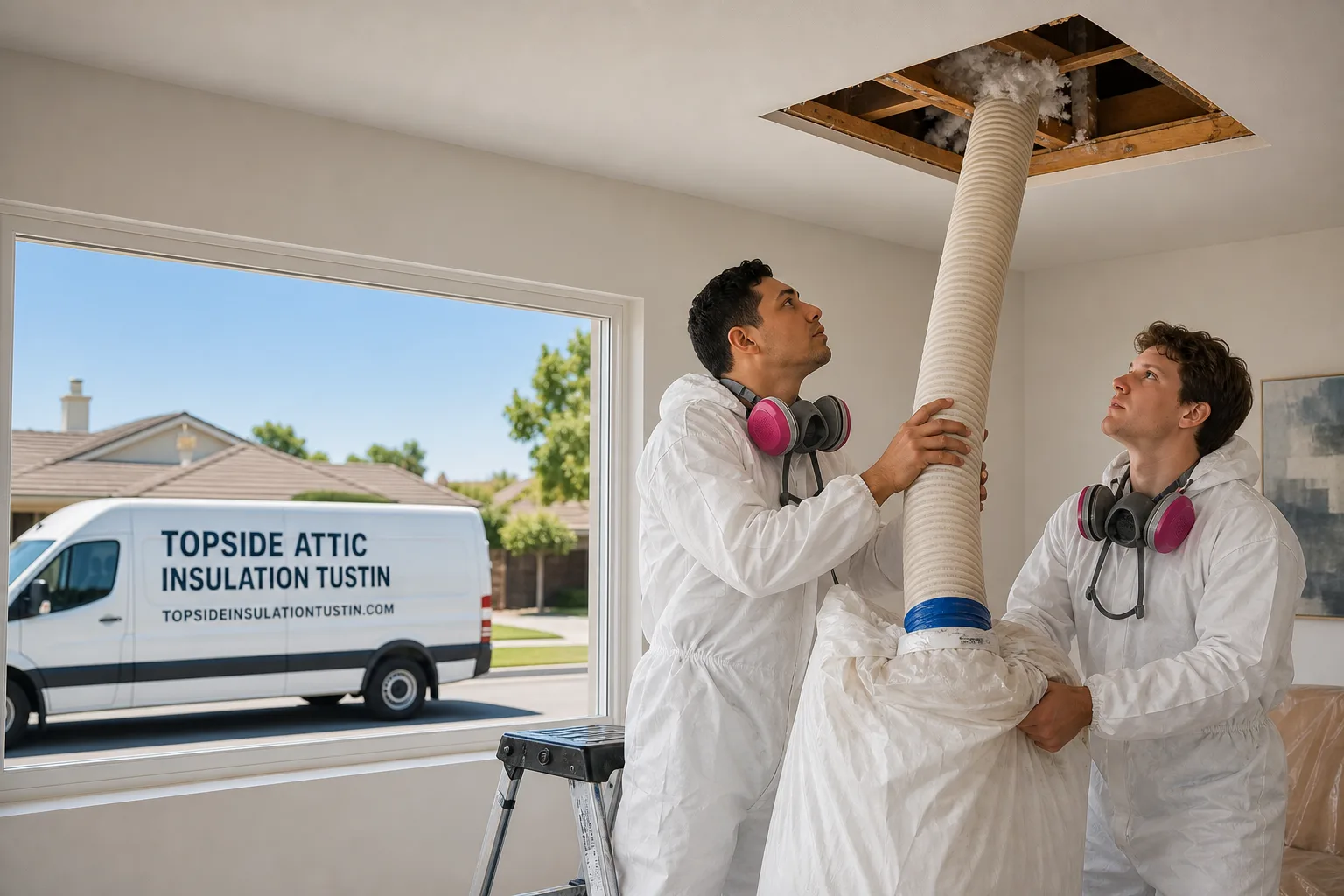
How Much Does Blown-In Insulation Cost in Tustin?
Blown-In Insulation services in Tustin, CA typically cost between $1,800 and $4,200 for a standard attic, with most single-story homes in the 1,400-2,200 square foot range landing between $2,100 and $3,400 installed. That range moves based on your current R-value, attic access conditions, and whether air sealing is completed before the insulation goes in – which, at Envelope Insulation Co., it always is.
Blown-In Insulation Cost Breakdown (2026)
Blown-in insulation in Tustin runs $1.20 to $2.80 per square foot, installed. The table below reflects what Wes Okafor and the team at Envelope Insulation Co. see in actual Tustin jobs – from older ranch homes in the Peppertree neighborhood to two-story colonials near Tustin Legacy. These are not national averages pulled from a database. They reflect what contractors are quoting and what homeowners are paying in this specific market right now.
| Scope of Work | Typical Cost Range (2026) |
|---|---|
| Attic blown-in insulation only (1,000-1,400 sq ft attic) | $1,800 – $2,600 |
| Attic blown-in insulation (1,500-2,200 sq ft attic) | $2,400 – $3,600 |
| Attic air sealing + blown-in insulation (1,000-1,400 sq ft) | $2,400 – $3,400 |
| Attic air sealing + blown-in insulation (1,500-2,200 sq ft) | $3,100 – $4,200 |
| Dense-pack blown-in (exterior walls, per 100 sq ft) | $320 – $580 |
| Blown-in over existing insulation (top-up to R-38 or R-49) | $900 – $2,100 |
| Insulation removal + replacement (per 1,000 sq ft) | $1,400 – $2,800 |
| Blower-door test (standalone, pre/post measurement) | $300 – $500 |
What Pushes the Price Up
Attic access is the most common cost driver in Tustin. Homes built in the 1960s and 1970s in older sections of the city – including parts of Old Town Tustin – frequently have attic hatches under 18 inches, which slows setup and requires smaller equipment configurations. Vaulted ceilings in tract homes near Tustin Ranch add complexity because the rafter bays have to be dense-packed rather than open-blown, which takes more time and material per square foot.
The other price driver is starting R-value. California’s Title 24 energy code sets the minimum attic insulation requirement at R-38 for climate zone 8, which covers most of Tustin. If your attic currently has R-11 batts from the original build in the 1980s, you need significantly more material to reach compliance than a home that already has R-19 and just needs a top-up. We confirm your current R-value before writing any price, so the number on the quote reflects what actually needs to go in.
What Keeps the Price Down
Open attic floors with good access, no existing contaminated insulation to remove, and minimal utility penetrations through the top plate all reduce job time and material waste. Cellulose blown-in – made largely from recycled content and sourced here from GreenFiber – costs less per bag than fiberglass and settles to a consistent R-value in Southern California’s climate. For homeowners who just need to add depth to a reasonably clean existing layer, a top-up job is almost always the most cost-effective path to hitting R-49, which is the voluntary target many Tustin homeowners pursue for both comfort and resale value.
What Affects Blown-In Insulation Pricing in Tustin
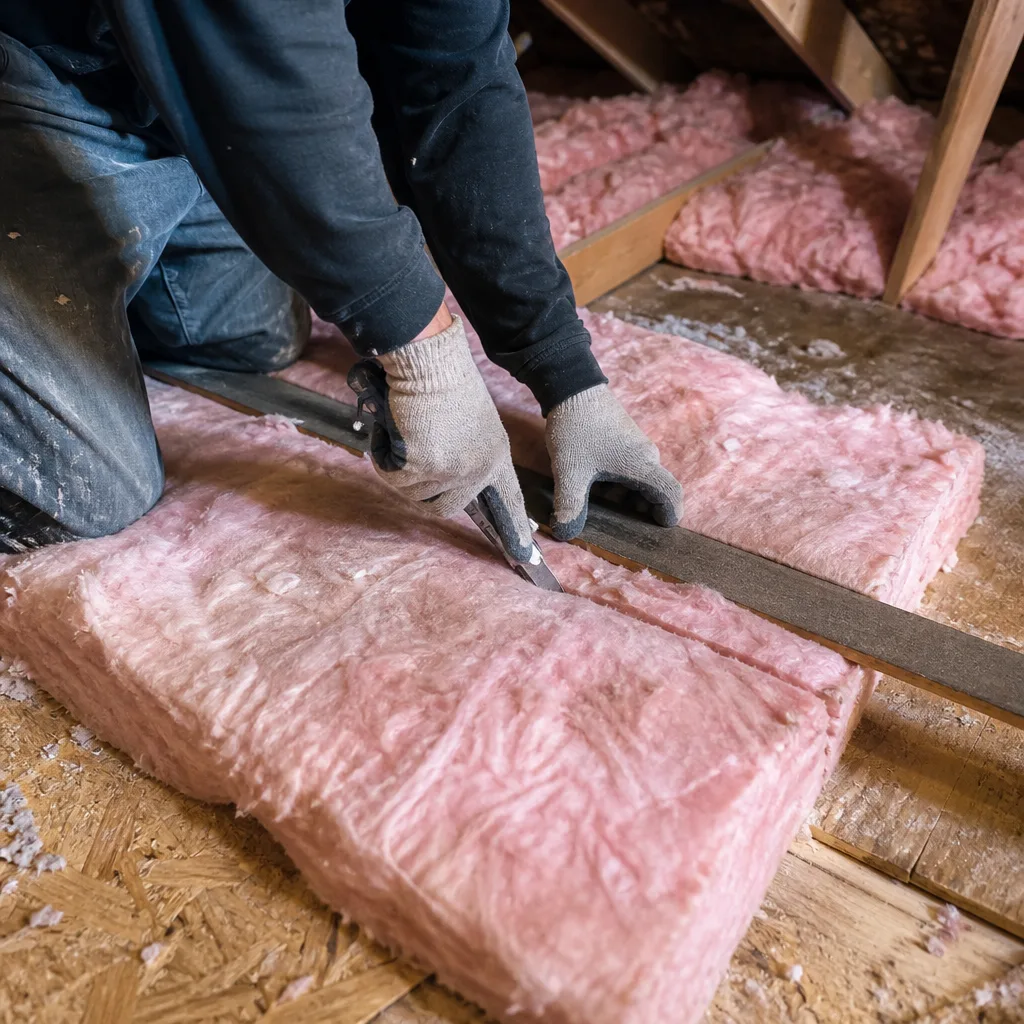
- Attic square footage and ceiling height. More square footage means more material and more blowing time. Homes in Tustin’s Laurelwood tract typically run 1,600-1,900 sq ft of attic floor – right in the middle of the cost range. Cathedral ceiling sections require dense-pack installation, which costs 25-40% more per square foot than open-blown attic work.
- Current insulation depth and condition. A home with original 1970s insulation that tests below R-11 needs more material to reach R-38 or R-49 than one that’s been partially updated. Rodent-contaminated or moisture-damaged insulation has to be removed first, which adds a separate line item – typically $1.40-$2.40 per square foot for removal and disposal in the Tustin market.
- Air sealing scope before installation. Sealing top plates, recessed can lights, plumbing chases, and HVAC penetrations before blowing insulation is not optional work at Envelope Insulation Co. – it’s a prerequisite. The cost depends on how many penetrations exist and how accessible they are. Homes in Tustin built before 1985 tend to have more unsealed penetrations per 100 square feet than post-2000 construction, which reflects in the air-sealing portion of the quote.
- Material choice: cellulose vs. fiberglass vs. mineral wool. Cellulose (sourced from GreenFiber) runs roughly $0.85-$1.10 per square foot for material alone. Fiberglass blown-in from Owens Corning or Johns Manville is slightly higher at $0.95-$1.25. Mineral wool – Rockwool’s blown product – costs more but handles Tustin’s summer attic temperatures differently, as it’s non-combustible and doesn’t settle over time the way cellulose can in the first six months after installation.
- Southern California climate factors specific to Tustin. Orange County sits in a marine-influence zone with summer attic temperatures regularly exceeding 140 degrees Fahrenheit. At those temperatures, fiberglass batts lose a measurable percentage of their stated R-value. Blown-in products installed to proper depth perform more consistently because they conform to attic floor irregularities without the air gaps that batts develop under thermal stress. This is not a theoretical concern – it’s why we see consistent blower-door improvement in homes where we replace batt-only installations with air-sealed blown-in systems.
- Access difficulty and attic obstructions. HVAC ducts routed across the attic floor add time – the crew has to work around them, and blown material can’t simply be distributed by hose without checking that vents and intake points are protected. Homes in Tustin Legacy’s newer development have modern duct layouts that are generally cleaner to work around. Some older Tustin Ranch homes have ductwork that practically fills the lower attic space, which adds 1-2 hours to a standard job and shows up in the quote accordingly.
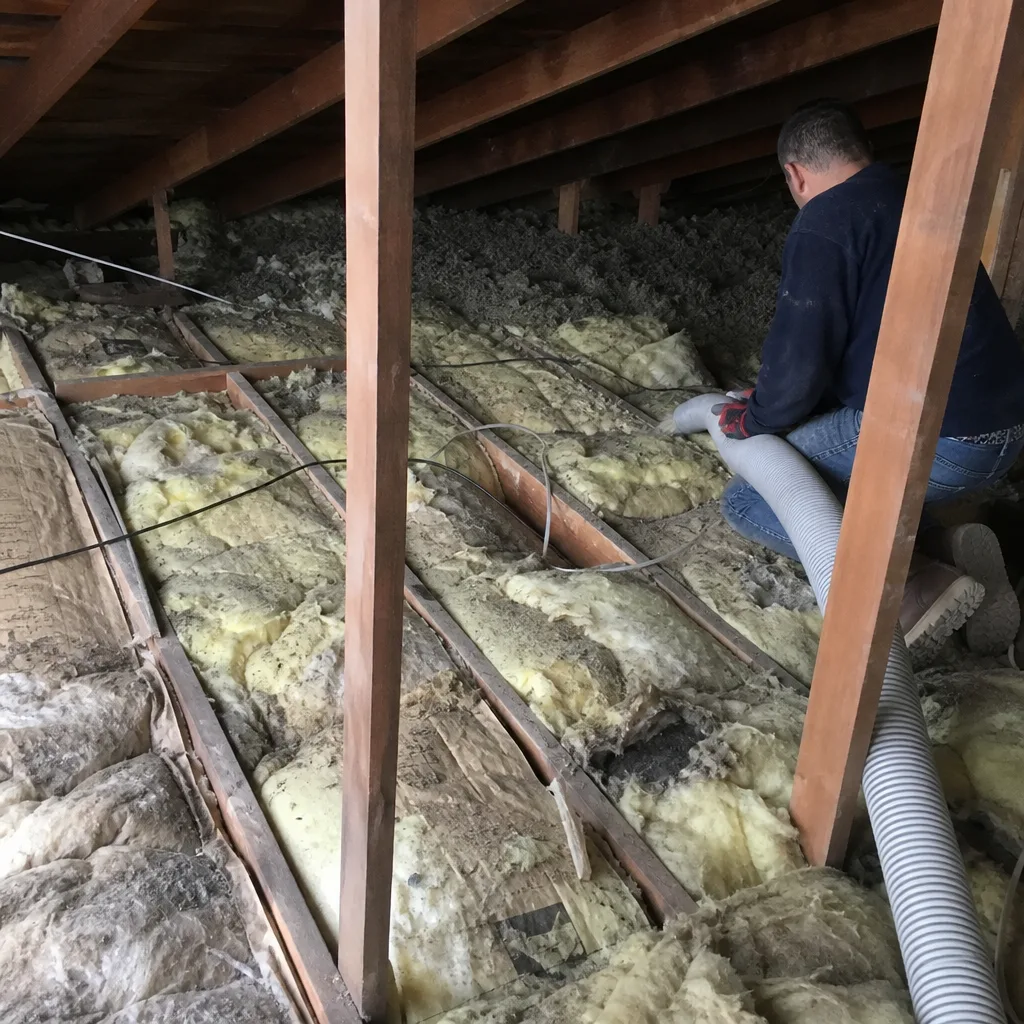 Before
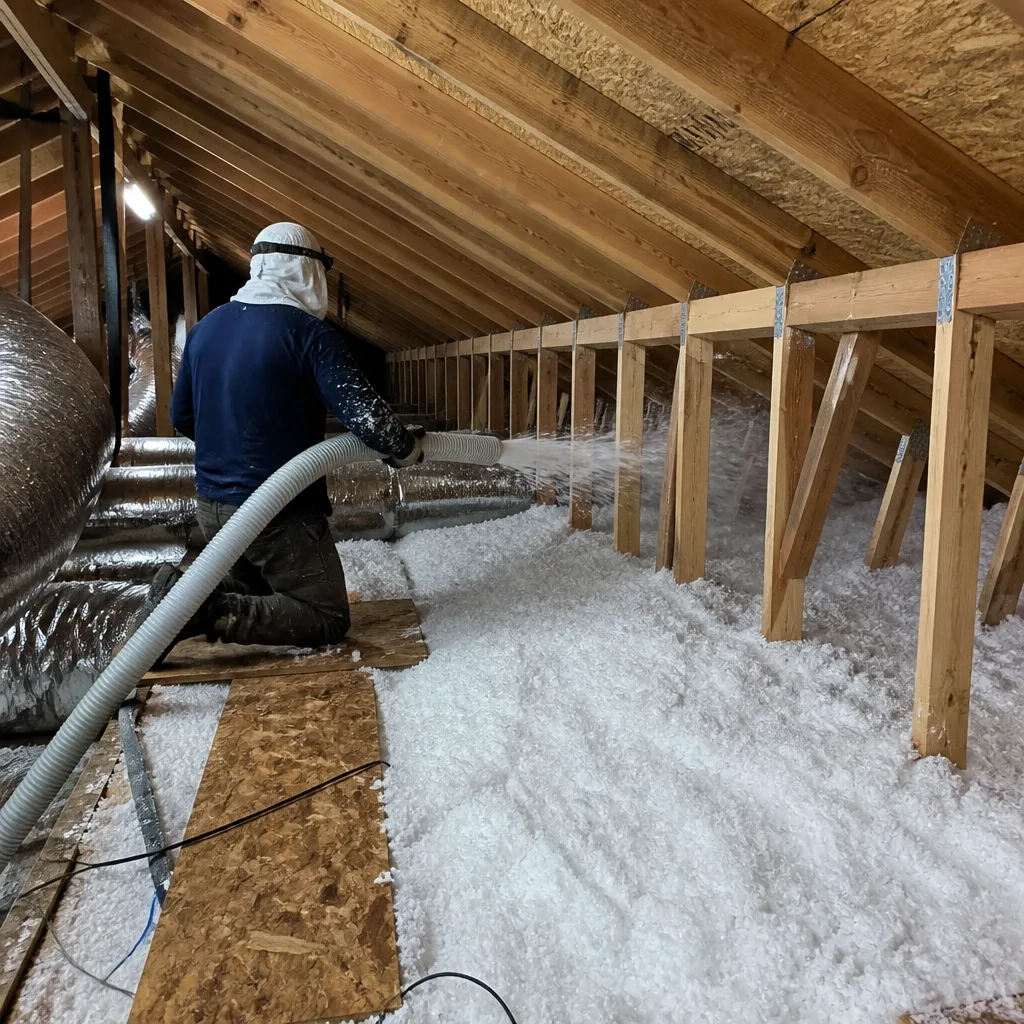 After
AfterBlown-In vs. Batt Insulation in Tustin: Which Costs Less Over Time?
Batt insulation – the pink fiberglass rolls most people picture – costs less to install upfront. A typical attic batt installation in Tustin runs $0.80-$1.40 per square foot, compared to $1.20-$2.80 for blown-in. But the cost comparison doesn’t end there, and it’s worth being precise about why.
Batts have to be cut to fit around obstacles, and any gap – even a small one around a can light or a joist-framing irregularity – creates a convective bypass where conditioned air moves freely. In Tustin’s climate, where attic temperatures create a significant temperature differential between the living space and the attic for roughly seven months of the year, those bypasses show up on blower-door tests. We’ve run pre-and-post measurements on homes where the crew replaced degraded batt-only systems with air-sealed blown-in, and the CFM50 readings consistently drop by 30-50% – meaning 30-50% less conditioned air leaking out of the building envelope per minute at standard pressure.
That number translates to lower monthly utility costs. Southern California Edison’s residential rate structure for Tustin homes has increased in recent years, which makes envelope performance more financially meaningful than it was five years ago. The payback period on the cost difference between batts and blown-in has shortened as a result. We can show you the math on a specific home if you bring us a copy of a recent utility bill – no commitment required.
The Air Sealing Prerequisite: Why It Matters for Your Final Cost
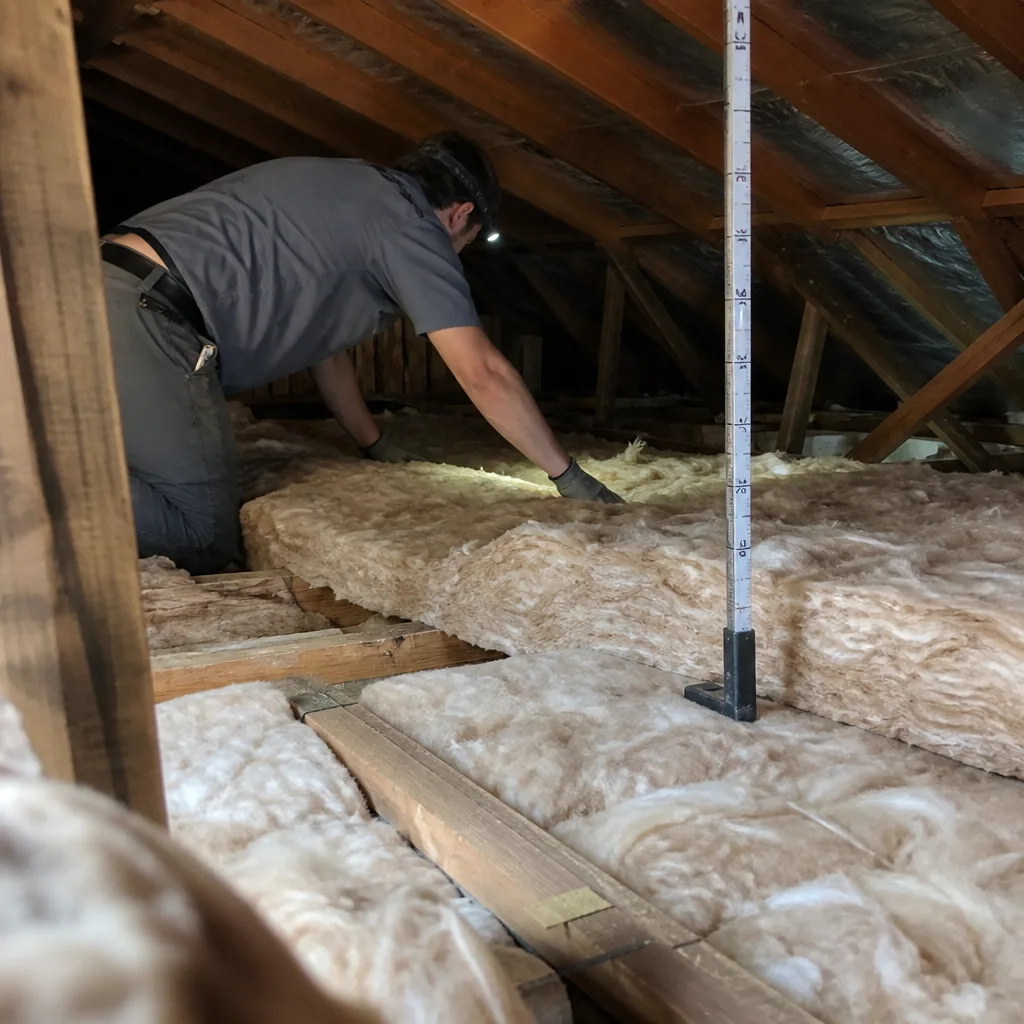
Some contractors quote blown-in insulation without air sealing and present that as a lower price. It is a lower price – for a worse result. Insulation slows conductive heat transfer. It does not stop air movement. An attic with perfect R-49 insulation and unsealed top plates still loses conditioned air through every gap that connects the living space to the attic, and the blower-door number reflects that precisely.
Under the Haven Standard that Wes Okafor built Envelope Insulation Co. around, we will not blow insulation over an unsealed attic floor. The scope of every applicable job includes air sealing of top plates, recessed can lights, attic hatches, electrical and plumbing penetrations, and HVAC chases before any insulation is installed. The written price you receive before work starts includes both line items. There’s no version of our process where one happens without the other.
The before-and-after blower-door readings we publish for every applicable job exist specifically so you can see what that process actually produced – not what it was supposed to produce. A reading of, say, 3,800 CFM50 before sealing and 2,050 after is a measurable, documented result. It’s not a feeling about quality. It’s a number on a report that you keep.
Title 24 Compliance and Permit Requirements in Tustin
California’s Title 24 Part 6 energy standards apply to insulation work performed in Tustin. For climate zone 8, the prescriptive minimum for attic insulation in conditioned residential space is R-38, though many homes pursuing HERS (Home Energy Rating System) compliance or voluntary efficiency targets are insulated to R-49. If your project involves a permit – which is typically required when replacing existing insulation as part of a larger remodel or when changing the thermal envelope as part of an ADU addition – the City of Tustin Building and Safety Division requires documentation of the installed R-value and may require a HERS rater inspection for certain project types.
Top-up blown-in insulation added to an existing, intact layer does not typically require a permit in Tustin when performed as standalone maintenance work. We confirm this with each homeowner during the written-scope phase before any work is priced, because the answer can change depending on whether the project is connected to a larger permitted scope of work on the property. The written price we provide specifies whether permit costs are included or whether the project falls outside the permit threshold – Haven Standard Clause 1 means no surprises in that area.
How to Save on Blown-In Insulation in Tustin
Start with an Energy Audit
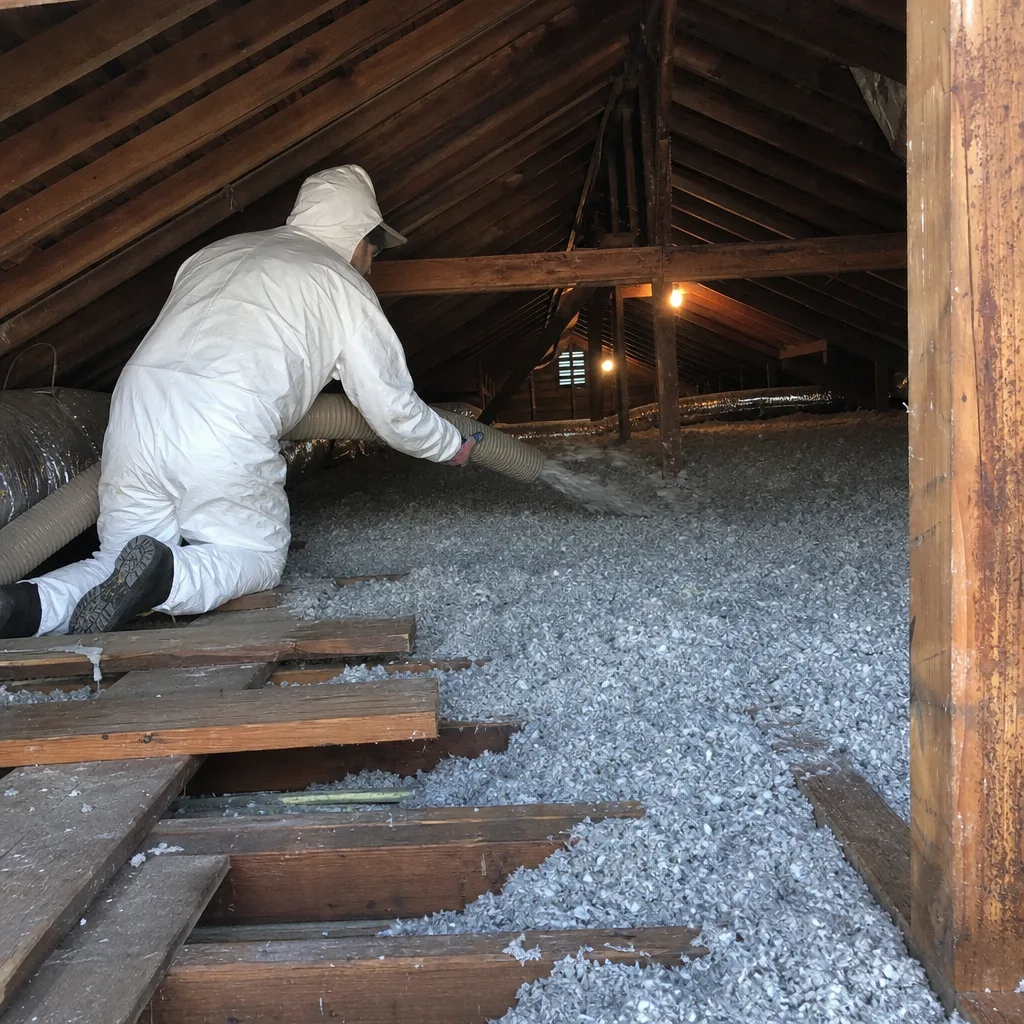
Before committing to any scope of blown-in work, a Blown-In Insulation in Tustin assessment that includes a blower-door reading tells you exactly where your envelope is losing air and how much depth you’d need to add to reach your target R-value. That data shapes the scope, and a tighter scope means a more accurate price rather than a conservative estimate that pads for unknowns. We include blower-door readings on applicable jobs – you’re not paying extra for the measurement when it’s part of the project.
Use Available Utility Rebates
Southern California Edison offers rebates under its residential energy efficiency program for qualifying insulation upgrades. The rebate amounts change annually – for 2026, eligible attic insulation upgrades in Edison’s service territory (which covers most of Tustin) have offered $0.10-$0.20 per square foot for projects that bring attic insulation to R-38 or above with verified installation. The exact figure depends on current program funding and project documentation requirements. We identify applicable rebate opportunities during the estimate process and note them in writing so you know what to expect. The rebate reduces your net out-of-pocket cost without affecting the scope or materials.
Bundle Air Sealing and Insulation in One Job
When air sealing and blown-in insulation are scoped together, the mobilization cost – getting the crew, equipment, and materials to your Tustin address – is absorbed once rather than twice. Homeowners who separate the two jobs typically pay $300-$600 more in total than those who bundle them. The work has to happen in sequence anyway (sealing first, then insulating), so bundling is both the correct technical approach and the more cost-effective one.
Get a Second Opinion on Any Written Quote
Envelope Insulation Co. offers a free second opinion on any written estimate you’ve received from another contractor. Bring the quote – we’ll read it with you, identify what’s included and what’s missing, and give you a written comparison. This isn’t a sales tactic. It’s how we build a conversation. Call (657) 286-7673 and we’ll schedule a time that works.
Don’t Skip Removal When Removal Is Needed
This sounds counterintuitive as a savings tip, but blowing new insulation over old contaminated or moisture-damaged insulation creates a different problem: the new material’s effective R-value is reduced by contact with degraded material underneath, and any biological contamination remains sealed in the attic floor. Catching that during the estimate rather than discovering it mid-job keeps the total cost predictable and prevents a future remediation expense that costs significantly more than removal would have at the outset.
What You Receive When the Job Is Done
Under the Haven Standard, every completed Envelope Insulation Co. job includes a Documented Photo Record – photos of the attic condition before work started, during the air-sealing phase, and after blown-in installation is complete. On jobs where a blower-door test was performed, you receive the before-and-after CFM50 readings in writing. You also receive the written warranty for the 365-Day Done Right Promise, which states clearly what we’ll do if anything about the installation isn’t right – no negotiation, no callback windows measured in weeks.
The written scope you signed before work started is the standard the crew is held to. That document specifies the target R-value, the materials used (from Owens Corning, Johns Manville, Knauf, GreenFiber, or whichever product was selected for your project), the air-sealing locations, and the blower-door target if one was set. When work ends, you have a record of what was installed, where, and how it performed. That’s the documentation the customer walks away with – no vague “we improved your efficiency” summary.
FAQs – Blown-In Insulation Cost in Tustin
How much does blown-in insulation cost per square foot in Tustin?
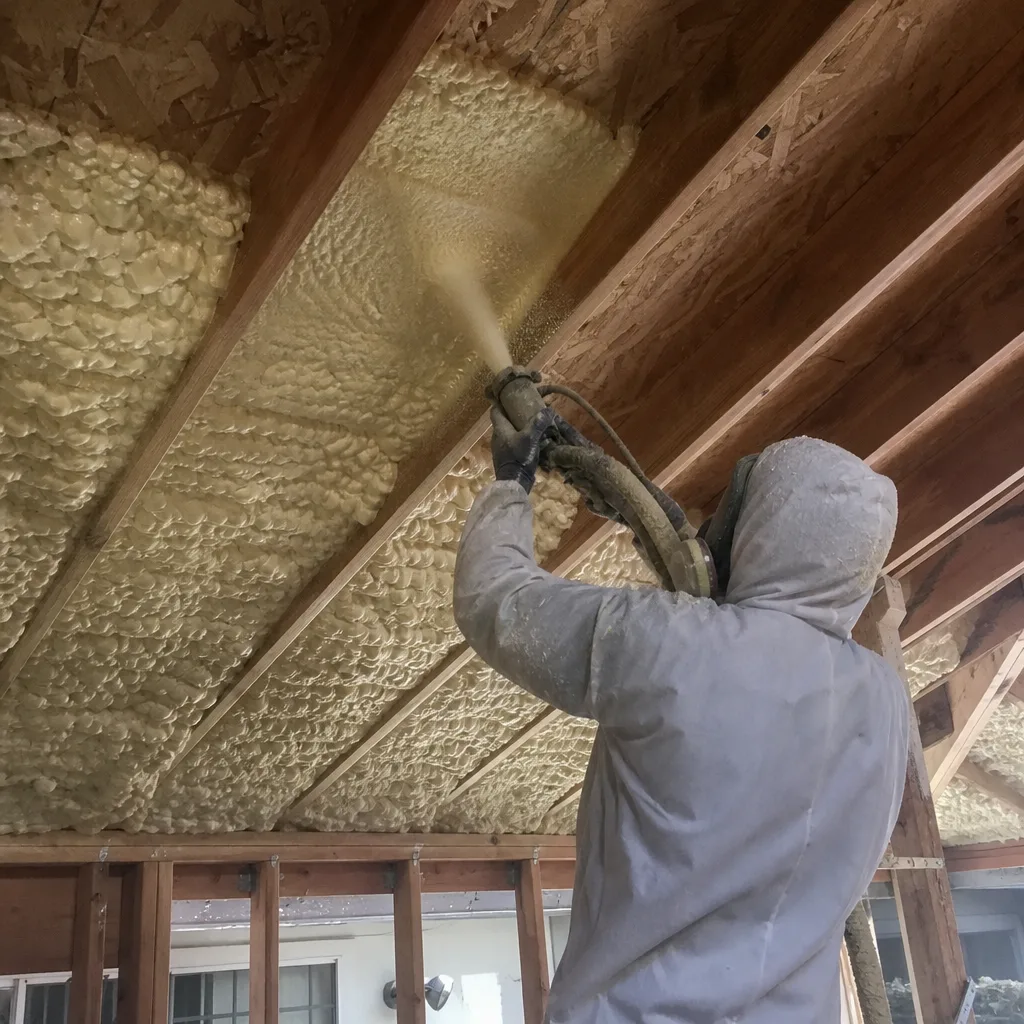
Blown-in insulation in Tustin runs $1.20 to $2.80 per square foot installed, including labor. The lower end applies to straightforward attic top-up jobs with good access and minimal air sealing needed. The higher end reflects dense-pack wall installation or attics with significant access difficulty, contaminated existing insulation, or extensive air-sealing scope. Most standard attic jobs in Tustin land between $1.60 and $2.20 per square foot when air sealing is included. For a price specific to your home’s square footage and current R-value, call (657) 286-7673 – estimates are written and provided before any work is scheduled.
Is it cheaper to do blown-in or batt insulation in Tustin?
Batt insulation costs less upfront – roughly $0.80-$1.40 per square foot installed, compared to $1.20-$2.80 for blown-in. But blown-in installed over a properly air-sealed attic floor consistently outperforms batts in blower-door testing, particularly in Tustin’s climate where attic temperatures push 140+ degrees in summer and thermal bypasses around batt gaps become measurable in CFM50 readings. Over a 5-10 year horizon, the energy cost difference between a batt-only system and an air-sealed blown-in system often offsets the higher install cost. We can show you that comparison with numbers from similar Tustin homes on request.
How long does blown-in insulation last in Tustin’s climate?
Fiberglass and mineral wool blown-in insulation last 40-80 years under normal attic conditions with no pest intrusion or moisture events. Cellulose blown-in is rated for similar longevity when installed dry and kept dry, though it can settle 15-20% in the first six months – which is why a good installation account for that settlement in the target depth, so post-settling depth still meets the R-value target. Tustin’s dry summers help; the risk factor here is moisture from inadequate roof ventilation or a plumbing leak above the attic floor, which is something we photograph and document during the pre-installation walkthrough so there’s a record if it becomes relevant later.
Does Tustin require permits for blown-in insulation?
Standalone attic insulation top-up work in Tustin does not typically require a permit when it’s performed as maintenance on an existing system. Permit requirements apply when the project is connected to a larger permitted remodel, involves changing the thermal boundary (such as converting attic space to conditioned living area), or is part of an ADU project subject to Title 24 compliance documentation. We confirm permit requirements for each project during the estimate phase and note the determination in your written scope – so you know before anyone starts work whether a permit is part of the cost picture.
Can blown-in insulation reduce my energy bills in Tustin?
Yes, measurably. Homes in Tustin that upgrade from under-performing or absent attic insulation to an air-sealed R-49 blown-in system typically see 15-30% reductions in cooling load based on energy modeling for climate zone 8. The blower-door number gives a cleaner measure: a home that tests at 4,000 CFM50 before sealing and 2,200 after has cut its envelope air leakage nearly in half, which directly reduces how hard the HVAC system runs to maintain set-point temperatures on Tustin’s hottest days. Southern California Edison’s current rate structure makes that reduction financially meaningful – the higher the rate, the faster the payback on the installation cost.
How do I know if I need blown-in insulation or just air sealing?
The blower-door test answers that question with a number rather than a guess. A reading above 7 ACH50 (air changes per hour at 50 pascals of pressure) on a Tustin home built before 2000 typically indicates that air sealing alone will produce a meaningful improvement. If the home already has adequate insulation depth but poor sealing, adding more insulation without sealing first produces little measurable change in the blower-door number. If the home has both – unsealed penetrations and under-depth insulation, which is common in Tustin’s pre-1990 housing stock – the correct sequence is to seal first and then insulate. We perform the diagnostic measurement before writing any scope, so the recommendation comes from data, not from which service is more profitable to sell that day.
About Envelope Insulation Co. and the Haven Standard
Envelope Insulation Co. has operated under the Haven Standard since 2016. In that time the team has sealed and insulated more than 9,000 homes across the region, every one with a written price before work started and a documented photo record when the crew left. Wes Okafor built the company around a straightforward premise: a homeowner should know what they’re getting before they sign anything, and they should have documentation of what was installed when it’s done. That’s Haven Standard Clause 1 – a written price, a written scope, and a written warranty before anyone touches the attic.
The 365-Day Done Right Promise covers every completed job. If something about the installation isn’t right – the R-value target wasn’t reached, the air-sealing work left bypasses we missed, anything – we come back and make it right. No negotiation required. That promise is in writing in your project file before the crew starts.
For Tustin homeowners who want to know what’s actually happening in their attic before they make any insulation decision, the starting point is a visit – a blower-door test, a written scope, and a flat price for the work. There’s no version of that process that costs you anything unless you decide to proceed. And if you’ve already got a written quote from another contractor, bring it. We’ll read it with you and tell you what it does and doesn’t include.
More information about our full service line is available on our home page.
Key Takeaways
- Blown-in insulation in Tustin costs $1,800-$4,200 for most residential attics, installed, including air sealing.
- The price per square foot runs $1.20-$2.80 depending on attic access, existing insulation depth, and air-sealing scope.
- California Title 24 requires R-38 minimum for attic insulation in Tustin’s climate zone 8; R-49 is the voluntary high-performance target.
- Air sealing before installation is not an upsell – it’s what makes the insulation perform. A blower-door test confirms the result in a single number.
- Southern California Edison rebates can reduce your net cost; we identify applicable rebates during the estimate process.
- Every Envelope Insulation Co. job includes a written price before work starts, a Documented Photo Record, and a 365-Day Done Right Promise in writing.
- Standalone top-up insulation work in Tustin typically does not require a building permit; we confirm this in your written scope before any work is priced.
Get a Written Price for Your Tustin Home
If you’re trying to figure out what blown-in insulation should cost for your specific home in Tustin, the most accurate answer starts with someone actually looking at your attic – checking the current R-value, identifying what needs to be sealed, and measuring what the blower-door reads before anything else happens. Wes Okafor and the team at Envelope Insulation Co. provide that diagnostic visit and deliver a written price before any work is scheduled. No estimates delivered verbally and adjusted later. No work that starts before you’ve seen the number in writing.
Call (657) 286-7673 to schedule your free estimate. A live person answers – no voicemail, no callback window measured in business days. If you have a written quote from another contractor and want a second opinion, bring it. We’ll read it with you at no charge and give you a written comparison of what’s included and what isn’t.
Pricing reflects the Tustin market as of 2026. Topside Attic Insulation Tustin offers free estimates – call (657) 286-7673.
Written by Wes Okafor, Owner at Envelope Insulation Co., serving Tustin, CA since 2016.
What Our Customers Say
"Crawl space encapsulation done properly. Photographs of the vapour barrier at every seam, and the damp smell in the hallway is gone."
- Ainsley P."They air-sealed the attic floor before insulating and showed me the blower-door number before and after. The upstairs is finally the same temperature as downstairs."
- Marisol D."They photographed rodent damage in the old insulation that we had no idea about, and priced the exclusion work separately so we could decide."
- Harriet N.