
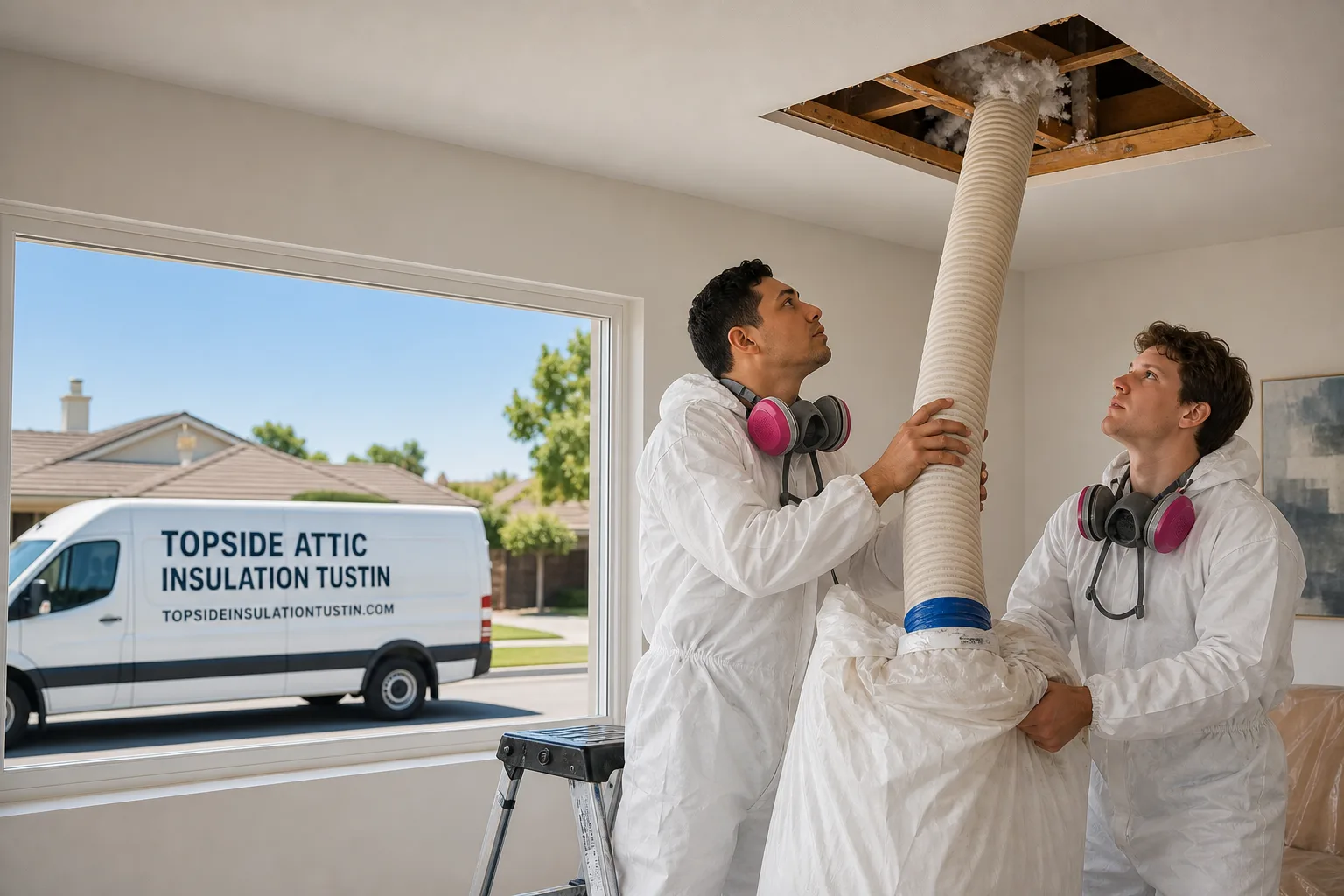
Fast, Reliable Blown-In Insulation Across Orange
Blown-in insulation in Orange typically runs $1.80 to $3.20 per square foot of attic floor, with most complete attic jobs falling between $2,400 and $5,800 depending on accessibility and whether air sealing is included first. We dispatch crews to Orange from our Los Angeles coordination office, and most Orange appointments are scheduled within 48 hours of first contact. Call (657) 286-7673 for a written price before any work starts.
We’ve worked in the zip codes that matter here: 92802 around Old Towne, 92805 through El Modena and Edna Park, and 92870 up toward the Villa Park border. Each zone presents a different insulation problem. The 1910s balloon-framed bungalows near the Lorenzo A. Ramirez Library Plaque need dense-pack wall work with circuit mapping before a drill touches plaster. The mid-century ranches off Chapman Avenue need top-ups over compressed fiberglass that’s been baking since the Eisenhower administration. And the hillside homes in Cowan Heights need fire-hardening-compliant materials that standard fiberglass doesn’t satisfy.
Why Topside Attic Insulation Tustin Is Orange’s Preferred Blown-In Insulation Company
We’ve sealed and insulated over 9,000 homes since 2016, and a meaningful share of them sit inside Orange city limits. Our crew knows the difference between a Grand Sunrise tract home built in 1962 and a Heninger Park bungalow from 1924 before we park the truck. That matters because the wrong approach on either one wastes your money or creates a fire hazard.
Reviews from Orange customers consistently mention two things: the blower-door numbers we leave behind, and the fact that we actually show up when we said we would. Under Haven Standard: Arrive on schedule, you get a named technician and a text when they are on the way.
Response time to Orange averages same-day or next-day for standard bookings, with our Blown-In Insulation team carrying Knauf and GreenFiber materials stocked for common Orange attic configurations. Emergency calls for insulation-related comfort failures, especially during Santa Ana wind events, get prioritized scheduling.
Wes Okafor, who leads our operation, personally reviews any Orange job involving pre-1950s wiring or hillside fire-hazard-zone specifications. That’s not marketing; it’s the only way to keep our 365-Day Done Right Promise intact on complex retrofits.
Our Blown-In Insulation Services in Orange
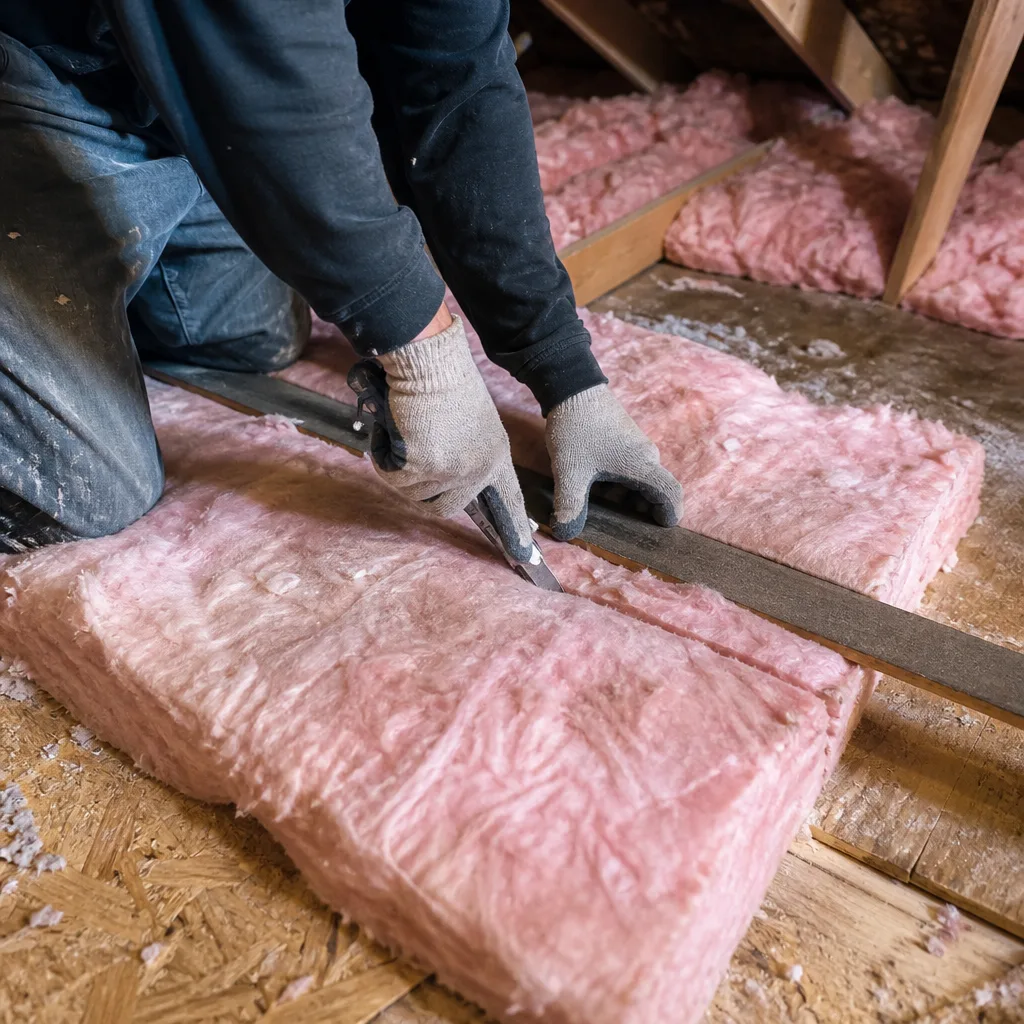
Blown-In Cellulose
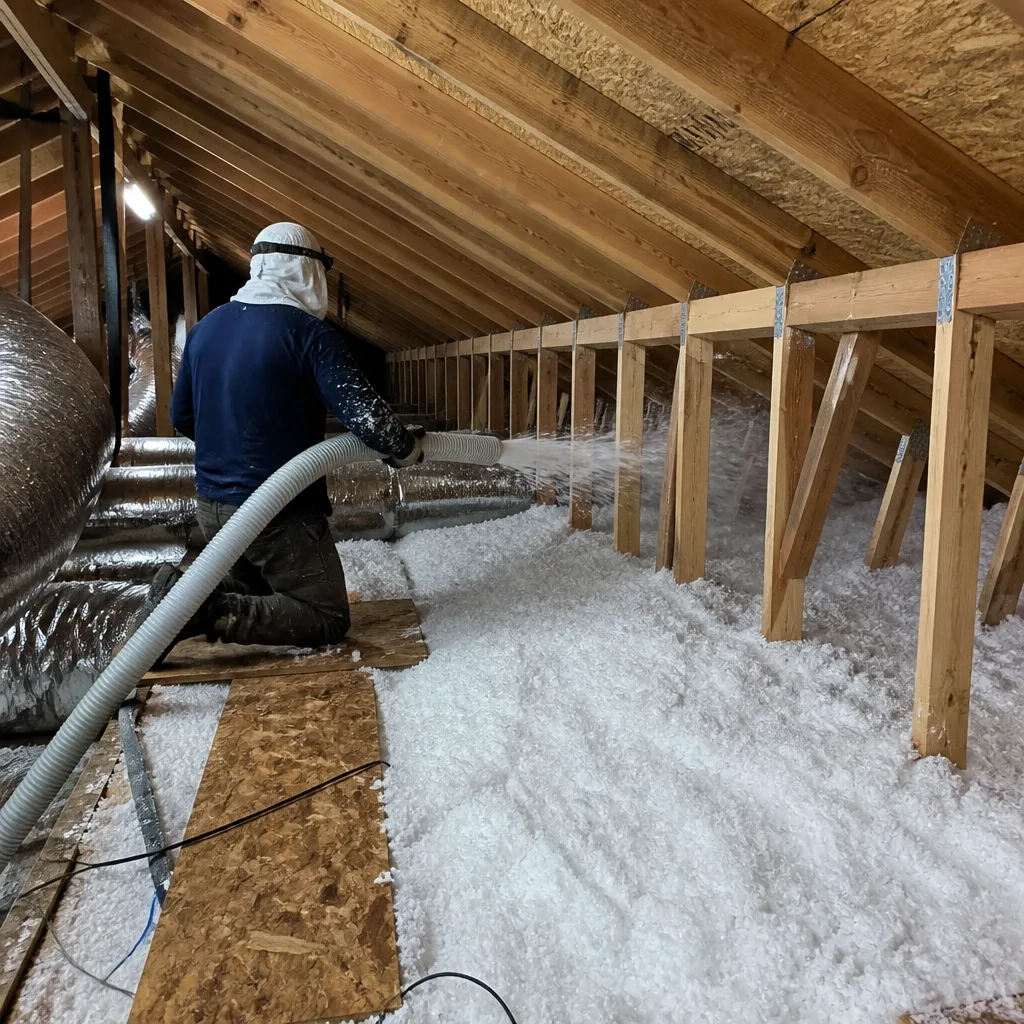
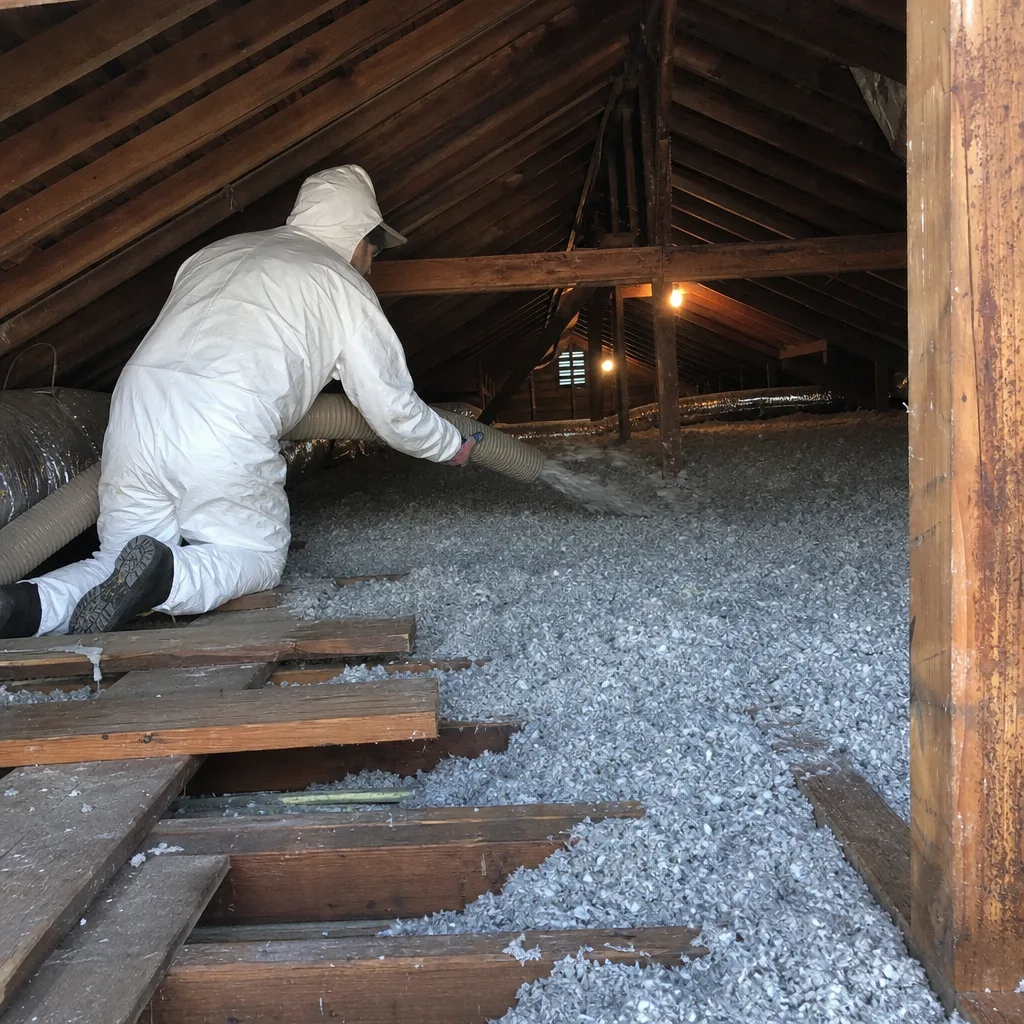
We specify GreenFiber cellulose for most Orange attic top-ups and full replacements. Cellulose handles the radiant heat gain that hits 92805 and 92802 attics when summer pushes past 95°F, because it packs tighter and resists convection better than loose fiberglass at temperature extremes. For Old Towne Orange balloon-framed walls, cellulose gets blown in staged lifts, not one dump, so it doesn’t settle into voids. We verify density with a wall probe at mid-height before we patch the holes.
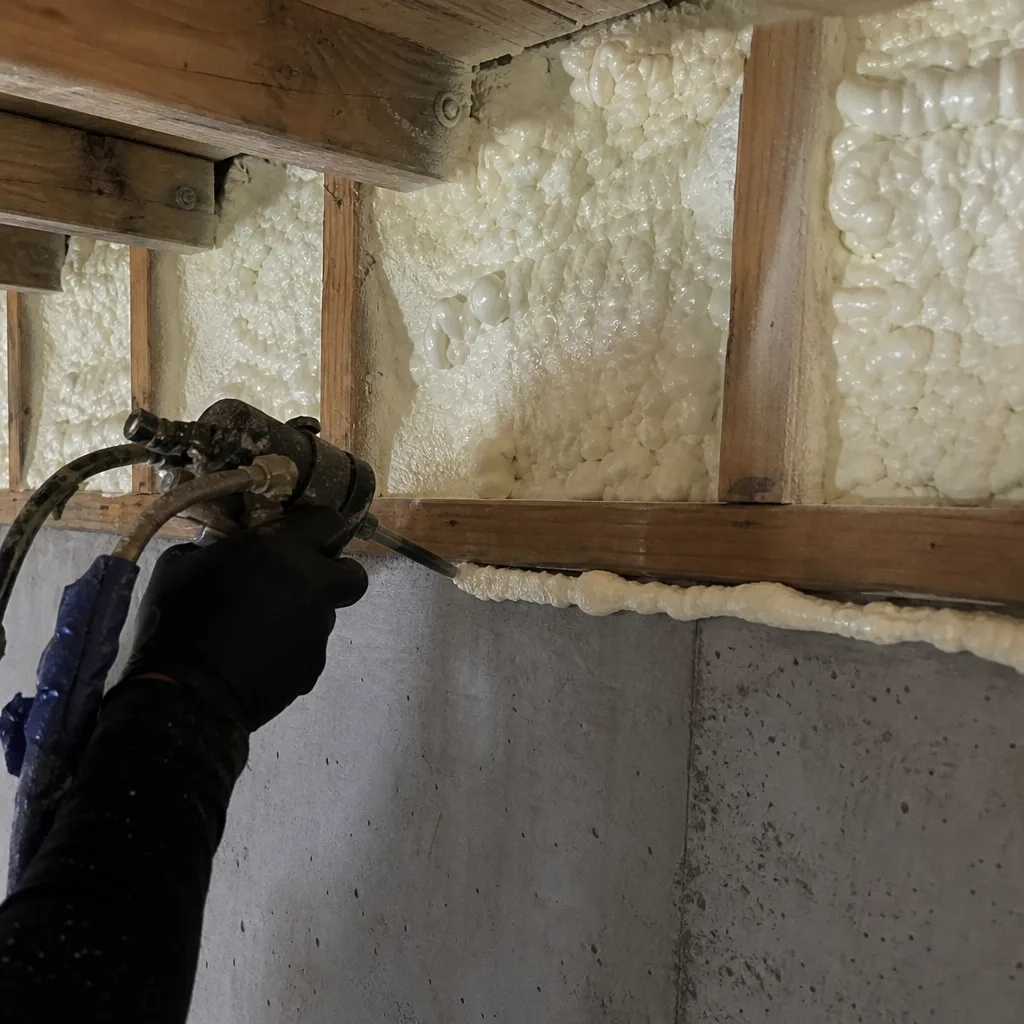
Blown-In Fiberglass
Fiberglass works well in standard-framed Orange attics with adequate clearance and no fire-hardening restrictions. We stock Knauf fiberglass for jobs in El Modena and Edna Park ranches where the existing insulation is thin but the framing is conventional and the electrical is Romex, not knob-and-tube. The key limitation in Orange: fiberglass underperforms cellulose when Santa Ana winds pressurize attic bypasses, which is why we won’t blow it over unsealed top plates.
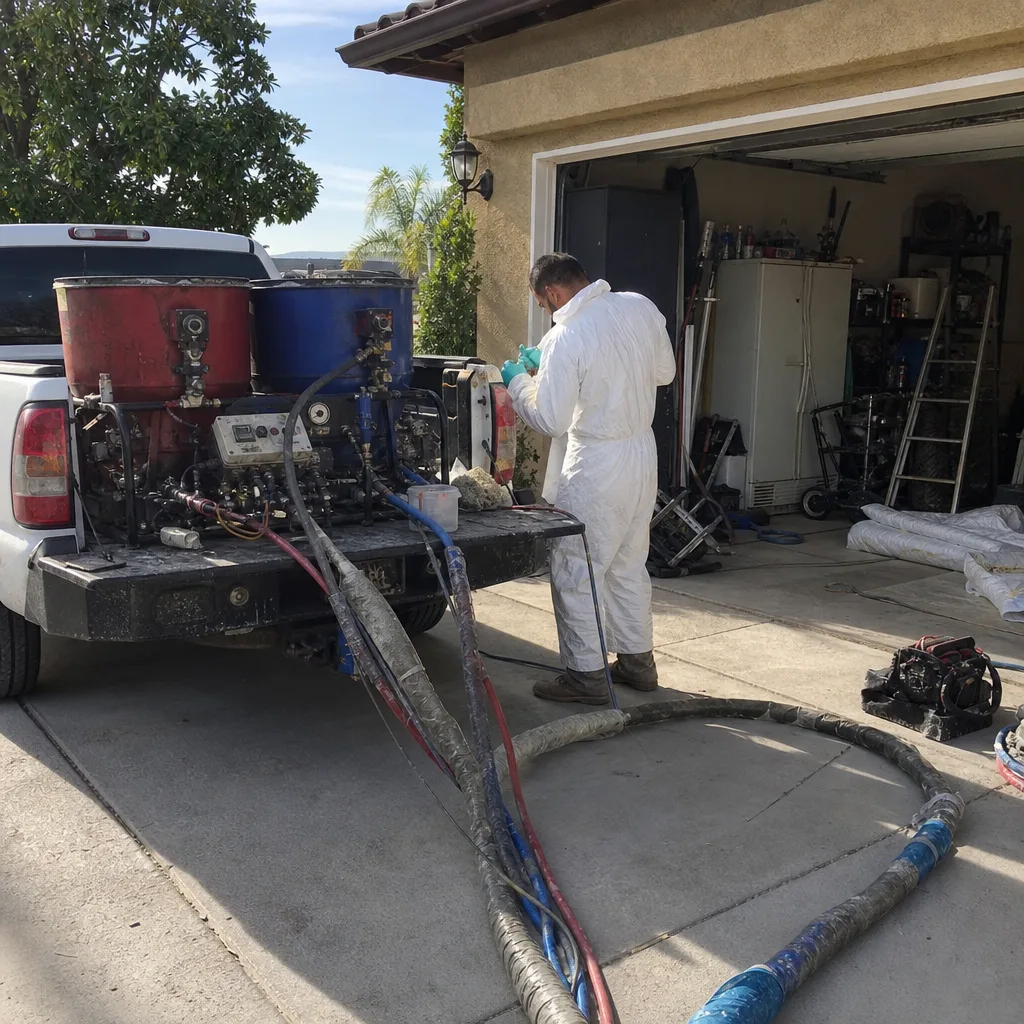
Dense-Pack Wall Insulation
This is where Orange’s housing stock gets specific. Old Towne Orange contains one of California’s largest and most intact concentrations of early-20th-century housing, primarily 1910s-1940s Craftsman bungalows and Colonial Revivals built decades before California mandated insulation standards. These balloon-framed, plaster-over-lath homes almost universally lack wall insulation, and many retain original knob-and-tube wiring, meaning blown-in retrofit jobs require careful circuit mapping and coordination to avoid fire risk, a complexity rarely encountered at this scale in newer neighboring cities like Anaheim or Fullerton.
The balloon-framed open stud bays run full wall height. Dense-pack blown-in insulation can migrate downward and leave voids unless the crew blends walls in staged lifts and probes at mid-wall. Many bays still contain live knob-and-tube circuits that have to be mapped before a single hole is drilled. We document every circuit with photos, share them with you before we blow, and only then proceed.
In the French Park tract just off Old Towne, we dense-packed a 1923 Craftsman whose south-facing plaster wall read 20°F hotter than the north side on a July afternoon, so we probed the balloon-framed bays first, confirmed no knob-and-tube ran behind them, and blew GreenFiber cellulose in two lifts; the crew then air-sealed the top plates the Santa Ana wind events kept finding so the wall held its R-value instead of washing out.
Blown-In Top-Up
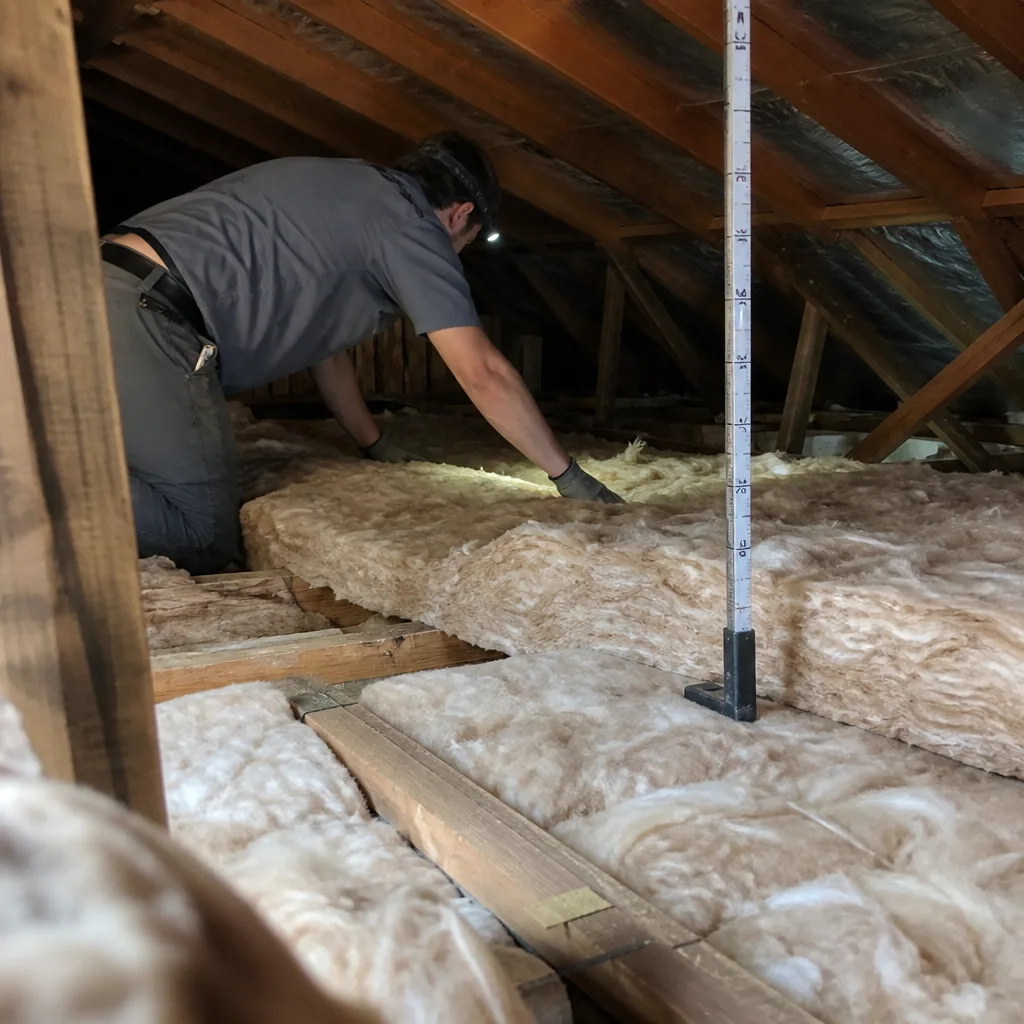
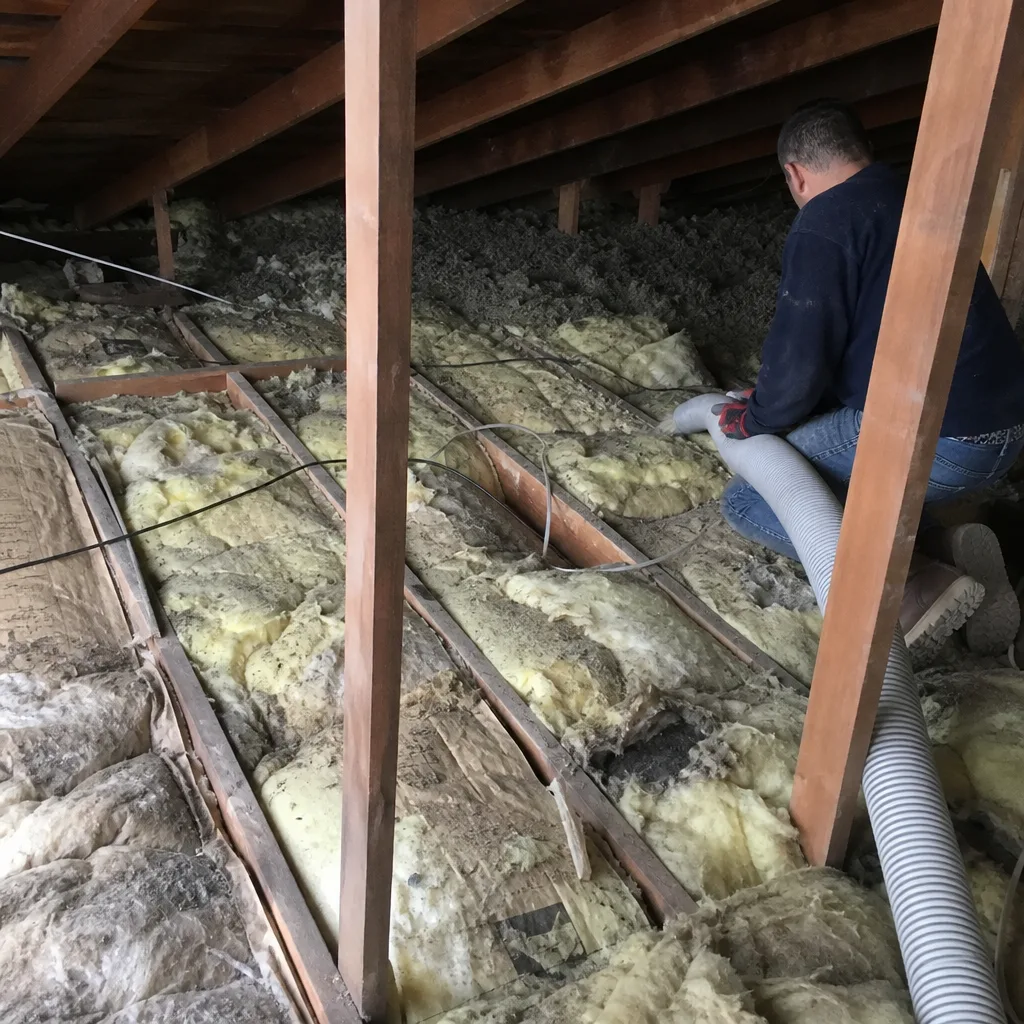
Most 1950s-60s El Modena and Edna Park tract homes started with 3 to 6 inches of blown fiberglass that’s now compressed, displaced by maintenance traffic, or uneven from decades of storage stacking. A blown-in top-up in these attics doesn’t just add R-value; it restores the continuous thermal boundary that the original installation lost. We measure existing depth with a ruled probe across a grid pattern, photograph the before condition, calculate the volume needed to reach current Title 24 equivalent, and blow to that mark. The photo record goes to you same day.
What happens when you call
- 1
A real person answersNo phone trees - you reach a local pro.
- 2
You get an upfront price rangeHonest numbers before anyone is dispatched.
- 3
A background-checked tech heads outLicensed & insured, dispatched right away.
- 4
You approve before work beginsNothing starts until you say go.
 Before
 After
AfterTrusted Brands We Service in Orange
We source materials from Knauf, Rockwool, and CertainTeed, among others, with no proprietary lock-in that limits what’s right for your specific Orange home. Rockwool mineral wool comes up frequently for Cowan Heights and Orange Park Acres jobs in the Very High Fire Hazard Severity Zone, where fire-hardening inspectors may flag standard fiberglass against state retrofit program requirements. We stock Knauf fiberglass for standard attic work in 92805 and 92802, and keep GreenFiber cellulose on every truck for the dense-pack and top-up jobs that dominate our Orange schedule. Because we don’t franchise and buy direct, turnaround on material-specific requests runs 24 to 48 hours, not two weeks.
Common Blown-In Insulation Problems We See in Orange Homes
- Top-plate bypasses in balloon-framed Old Towne bungalows let Santa Ana Canyon wind loads push air through wall cavities, so insulation alone reads fine on paper but the room still gains heat. We air-seal every top plate with foam and rigid blocking before any blown-in product goes in.
- Radiant attic heat with summer highs in the mid-to-upper 90s bakes the top few inches of a thin blown-in layer in Edna Park and El Modena mid-century ranch attics, so the installed depth is effectively less insulated than the bag label implies. We measure actual settled depth and calculate effective R-value, not nominal.
- In Cowan Heights and Orange Park Acres hillside homes, vaulted ceilings and non-standard framing block consistent blow paths, leaving uneven coverage that fire-hardening inspectors flag when they see fiberglass where a mineral-wool or closed-cell spec was expected. We pre-map these attics with photos and specify the right material before we bid.
- Live knob-and-tube circuits in Grand Sunrise and Heninger Park pre-war homes create fire risks when dense-pack insulation contacts overheated conductors. Our crew maps every circuit with a non-contact voltage tester, documents with photos, and coordinates with a licensed electrician when deactivation or replacement is needed before we proceed.
Pricing for Blown-In Insulation in Orange, CA
Most attic insulation jobs in an Orange home of 1,200 to 2,200 square feet run between $2,400 and $5,800 for complete removal, air sealing, and replacement with blown cellulose or fiberglass. Dense-pack wall insulation in Old Towne Orange balloon-framed homes typically ranges $3,200 to $6,400 depending on wall square footage, plaster repair scope, and whether knob-and-tube coordination with an electrician is required. Blown-in top-ups over existing viable insulation in 92805 or 92802 ranches generally fall between $1,400 and $2,800.
What moves the number: attic accessibility (standard hatch versus no access), existing insulation condition (removable versus contaminated), air sealing scope (top plates, can lights, penetrations), and material specification (standard cellulose versus fire-rated mineral wool for hillside zones). Every job gets a Written Price Before Any Work Starts, flat, with scope and warranty in writing before anyone lifts a tool. We also provide a Free Second Opinion on any written estimate you’ve already received. Call (657) 286-7673 for exact numbers on your specific Orange home.
We Also Serve Cities Near Orange
Our crews work throughout central Orange County, including Blown-In Insulation in Orange proper plus Santa Ana to the south, Villa Park to the east, Tustin to the southwest, and Garden Grove to the west. Dispatch and scheduling are coordinated from our Los Angeles office, with local crews serving each city from stocked trucks. The same Haven Standard applies everywhere: written price first, documented record last, blower-door numbers when applicable.
Serving Orange, CA - Our Local Coverage Area
We’re based in the Orange area and know this community well. Use the map below to see our service coverage - if you’re nearby, we can almost certainly help.
FAQs - Blown-In Insulation in Orange
Because live knob-and-tube conductors buried in balloon-framed stud bays overheat when surrounded by insulation, creating a documented fire hazard that has destroyed California homes. We map every circuit with non-contact voltage detection, photograph the findings, and only proceed after you review the documentation. Call (657) 286-7673 if your Old Towne home still has original wiring and you want a written scope for safe dense-packing.
Yes. The Santa Ana Canyon corridor creates sudden high-infiltration pressure loads that push conditioned air out through attic bypasses and top-plate gaps, making combined air-sealing-plus-insulation scopes far more effective than insulation alone. We blower-door test before and after to prove the seal held. Without that step, you’re paying for R-value that the wind renders half-useless.
These neighborhoods fall within California’s Very High Fire Hazard Severity Zone, and fire-hardening inspections tied to state retrofit programs increasingly flag standard fiberglass where mineral wool or closed-cell spray foam was specified for ignition resistance. We use Rockwool mineral wool on hillside jobs where the inspector’s sign-off matters to the homeowner’s compliance path.
We pre-map the cavity geometry with a borescope and photos before bidding, because non-standard framing often blocks consistent blow paths and leaves voids that only thermal imaging reveals later. When cavity depth or access is insufficient for blown-in, we pivot to spray foam or rigid board with a written change scope, never guessing and hoping.
It restores the thermal boundary that decades of compression, displacement, and settling have degraded. Original 1950s blown fiberglass in these tracts was often 3 to 4 inches, now compressed to 2 inches or less, with R-value cut by half. A top-up brings the assembly back to current performance standards without the cost of full removal, assuming the existing material is clean and dry. We verify that condition with a ruled probe and moisture meter before we recommend it. Call (657) 286-7673 for a free assessment of your attic’s current state.
Written by Wes Okafor, Owner at Topside Attic Insulation Tustin, serving Orange since 2016.