
Icynene Blown-In Insulation in Tustin: What to Know First
We provide independent Icynene blown-in insulation service in Tustin, typically completing attic top-ups and dense-pack wall jobs in a single day with a written price delivered before any work starts. Most Icynene systems we encounter in Tustin Legacy and the older neighborhoods near Old Town are running 15 to 20 years at this point, and the original blown-in cellulose or fiberglass has settled below its labeled R-value. If you’re seeing uneven temperatures between rooms, rising HVAC runtime, or you’ve had a rodent issue that compromised the existing layer, we can assess what’s salvageable and what needs replacement. Call (657) 286-7673 for a free estimate with a written scope and price before anyone lifts a tool.
How Icynene Products Fail - and How We Fix Them
- Icynene LD-C-50 open-cell foam shrinkage in Tustin attics. The LD-C-50 line, common in 2008 to 2015 builds around Tustin Legacy, can pull away from rafter bays as it ages, especially where roof decking hits 140°F in August. We find the gaps with a thermal imager, remove the compromised sections, and dense-pack the cavity with blown-in fiberglass to restore the thermal boundary without trapping moisture against the sheathing.
- Icynene MD-R-200 closed-cell overspray bridging wall studs. MD-R-200 was sprayed thick in some Tustin townhomes to hit R-13 in 2×4 walls, but the rigidity of closed-cell foam can bridge across studs and telegraph cracks through drywall as the framing moves. We shave the overspray flush, then blow in cellulose behind a fabric mesh to fill the cavity properly without the stress concentration.
- Icynene water-blown formulations absorbing attic humidity. Early Icynene water-blown open-cell foam in pre-2010 Tustin ranch homes can hold moisture if the attic ventilation was marginal to begin with. We test with a moisture meter, remove saturated foam, remediate any sheathing damage, and switch to blown-in fiberglass which doesn’t absorb water and won’t support mold growth.
- Icynene top plates left unsealed at the attic floor. Even where Icynene foam was applied to rooflines, the top plates of perimeter walls often got missed, creating a direct air path from conditioned space to attic. We seal these with caulk and foam, then blow in insulation over the sealed surface so the R-value actually performs.
- Icynene degradation from rodent activity in eaves. In the older Tustin neighborhoods near the 5 Freeway, we’ve found LD-C-50 chewed and nested in by roof rats. The foam loses its structure and the insulation value drops to near zero. We remove the contaminated foam, sanitize the cavity, rodent-proof with steel mesh, and dense-pack with blown-in cellulose treated with borate.
Our Icynene Blown-In Insulation Process
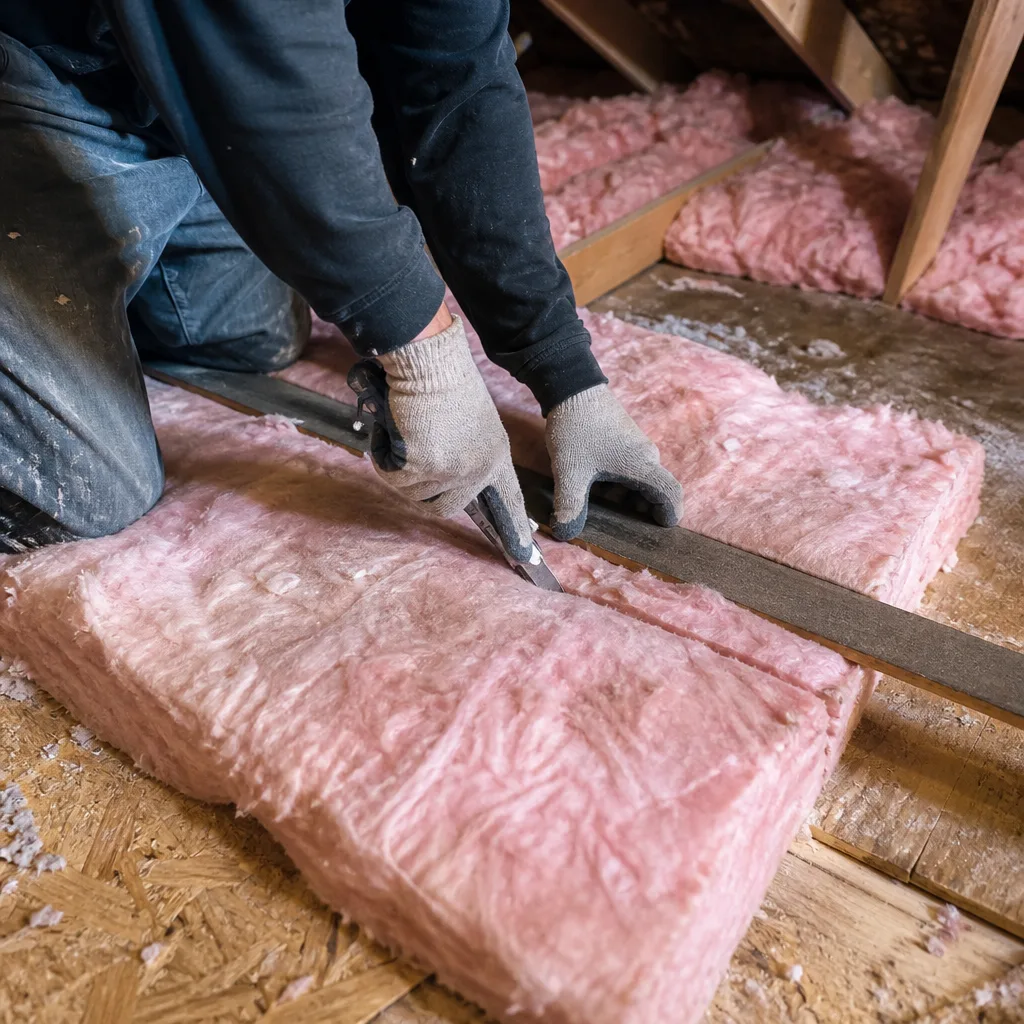
- 1
Call and schedule. A live person answers at (657) 286-7673. We book a time, and you get a text when Wes or a named technician is en route.
- 2
Attic inspection and blower-door test. We pressurize the house to 50 pascals and record the CFM50 reading, then thermal-scan the attic to find where the Icynene has failed, settled, or been compromised.
- 3
Written scope and price. Before any work starts, you get a flat price, a written description of what we’ll do, and the warranty terms. Haven Standard Clause 1: no surprises.
- 4
Air sealing first, then insulation. We seal top plates, can lights, penetrations, and any gaps in the existing Icynene. Seal the leaks first. Then insulate. The R-value on the bag means nothing if conditioned air is moving through the gap around that recessed can.
- 5
Blown-in installation and documentation. We blow in cellulose or fiberglass to the specified depth, per the 2022 California Energy Code. You get a Documented Photo Record, pre- and post-installation thermal images, and on applicable jobs, the before-and-after blower-door numbers showing the actual air leakage reduction.
- 6
Cleanup and 365-Day Done Right Promise. The crew vacuums the work path, and your written warranty goes into the file. If something’s not right, we make it right.
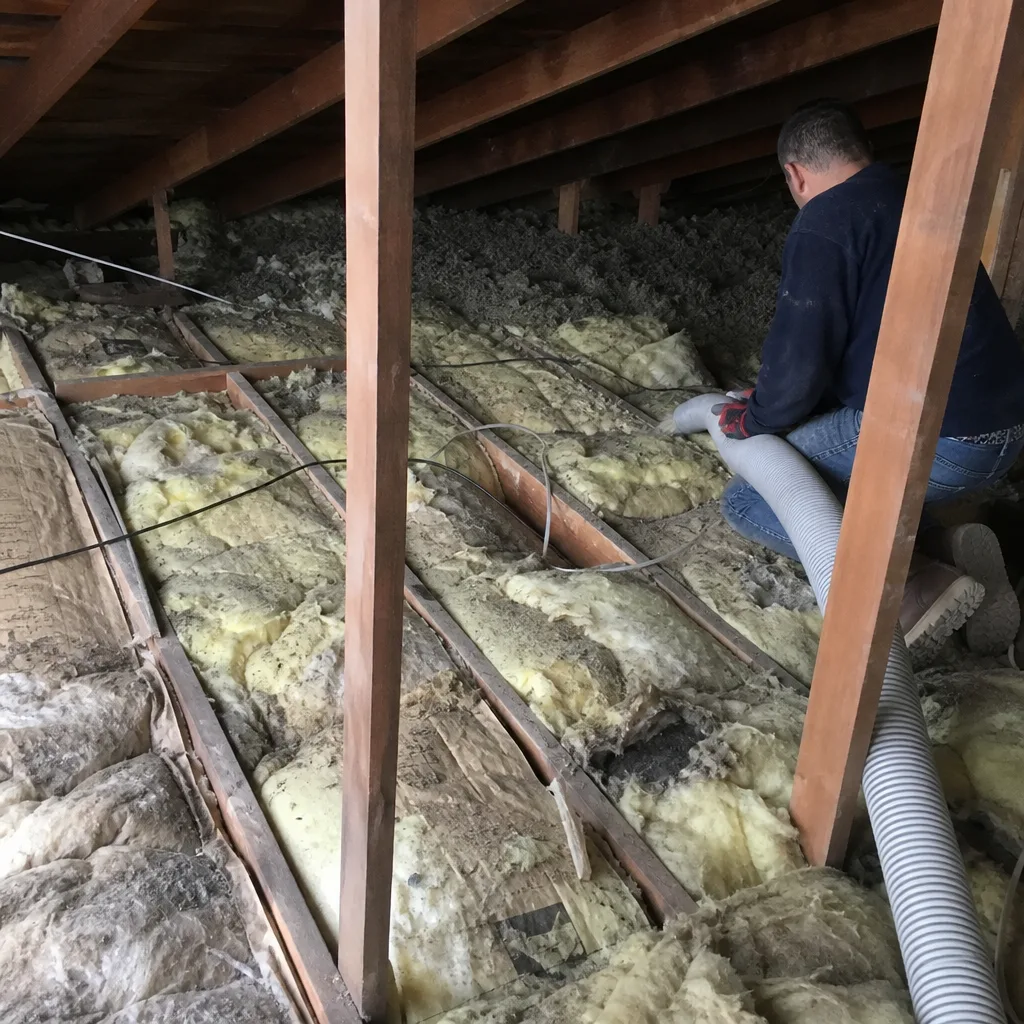 Before
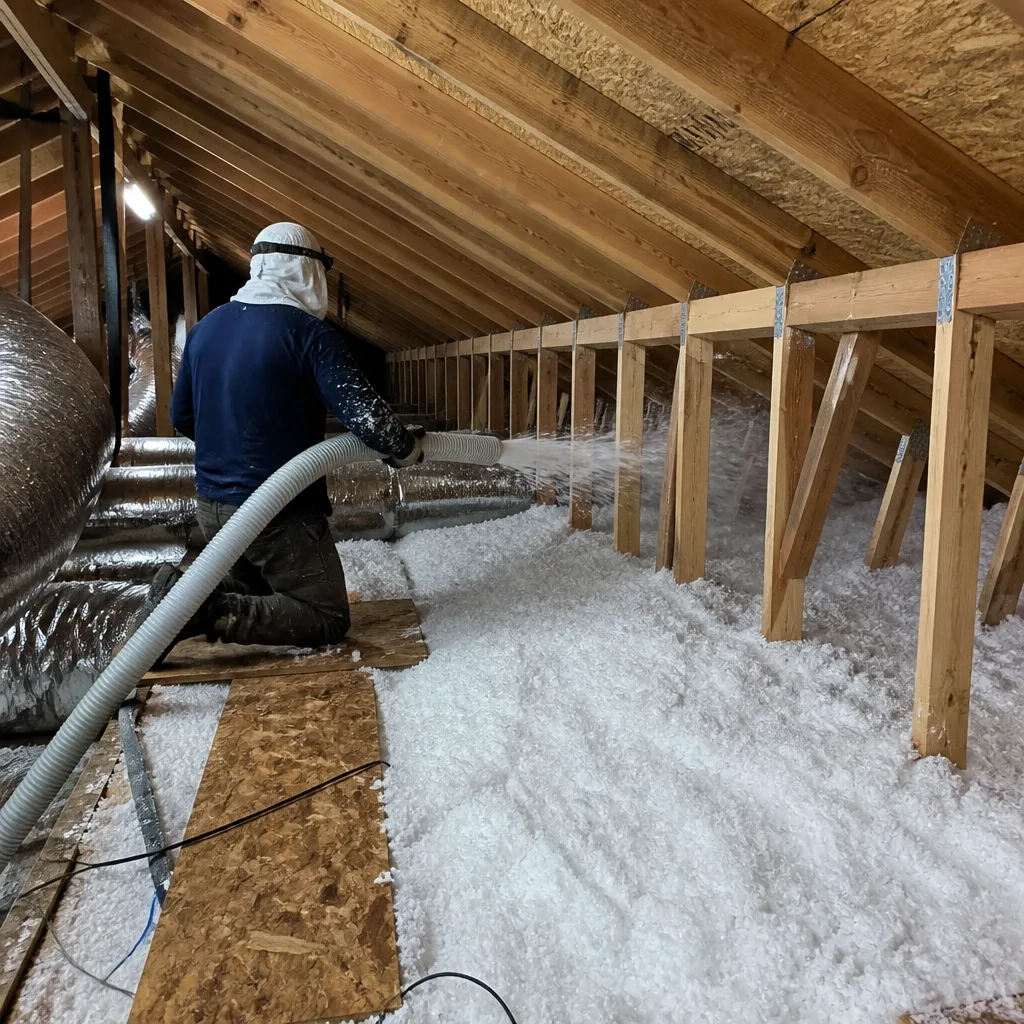 After
AfterWhat Icynene Blown-In Insulation Costs in Tustin
Most attic top-up jobs in a Tustin home of 1,500 to 2,500 square feet run between $1,800 and $3,400, depending on how much existing Icynene needs removal and whether the attic floor requires air sealing before we blow. Dense-pack wall insulation in a typical three-bedroom runs $2,200 to $4,100, with price movement driven by cavity access, whether we’re drilling exterior siding or working from inside, and how much degraded foam comes out first.
What moves the price: accessibility of the attic hatch, quantity of contaminated material to remove, need for borate-treated cellulose versus standard fiberglass, and whether we find code violations in the existing work that must be corrected before new insulation goes in. We also service Reflectix radiant barrier systems if your Icynene job includes a hybrid approach.
Every estimate is free, and we offer a Free Second Opinion on any written estimate you’ve already received. Bring us the competing quote and we’ll read it with you.
Why Tustin Homeowners Call Topside Attic Insulation Tustin for Icynene Work
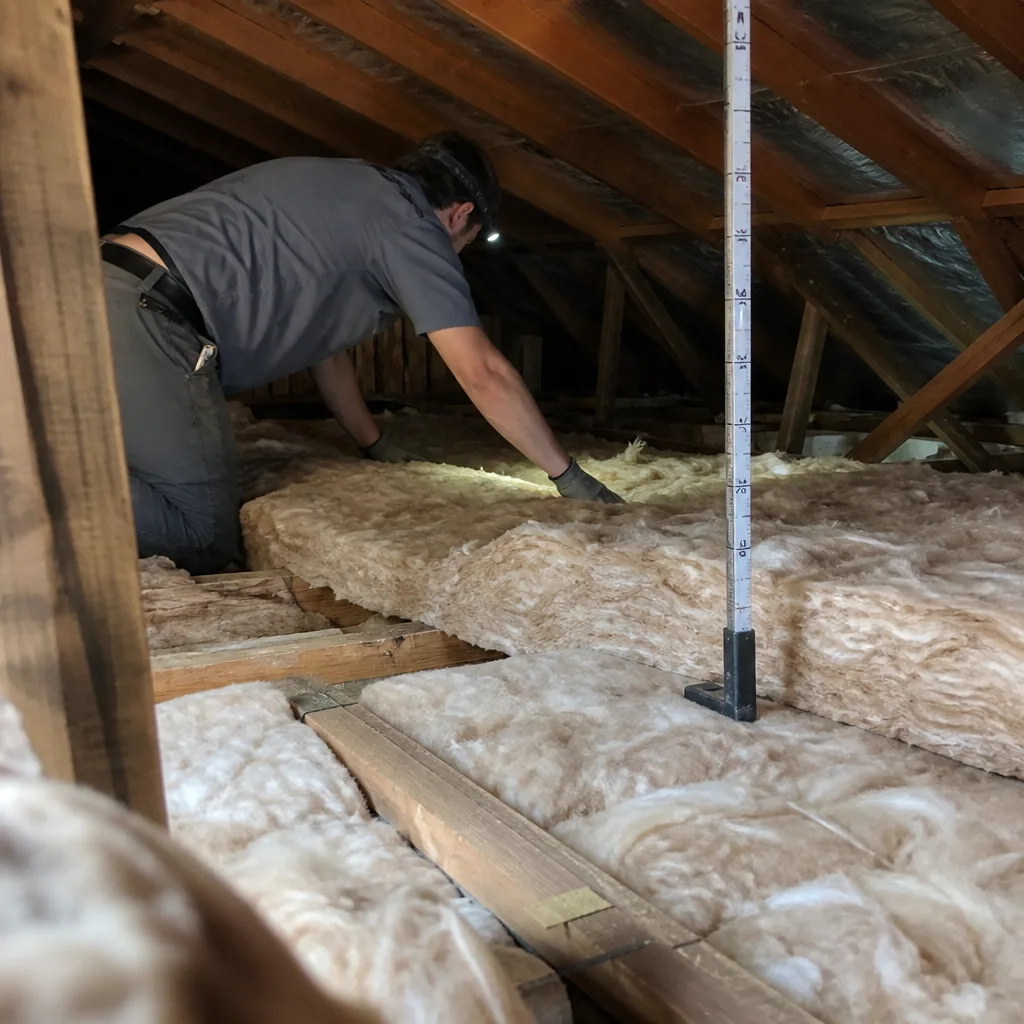
We’ve logged a lot of time in Tustin Legacy, where the post-redevelopment housing stock made blower-door testing a baseline step rather than an afterthought. Wes Okafor keeps a worn copy of the 2022 California Energy Code in his truck and has been known to read it over a bowl of jollof rice on a slow Friday. Our crew knows the difference between LD-C-50 and MD-R-200, knows where each one was typically installed in Tustin’s building waves, and knows what fails first. The 365-Day Done Right Promise applies to every job, and the Documented Photo Record means you have paper to hand a future buyer or HVAC contractor. Calls are answered by a live person, 24/7.
FAQs
No, because the original Icynene warranty on most residential applications was 10 years and has likely expired if your installation was pre-2015. As an independent Icynene service provider, we do not represent the manufacturer, and we use warranty-safe practices that do not create liability for you. Our 365-Day Done Right Promise covers our workmanship. Call (657) 286-7673 for an exact quote, estimates are free.
Yes, blown-in cellulose at R-3.7 per inch and blown-in fiberglass at R-2.5 per inch can meet or exceed the original assembly R-value when installed to proper depth, and in many cases outperform aging Icynene that has settled or degraded. We calculate the target depth from the 2022 California Energy Code and document the installed R-value in your written report. Call (657) 286-7673 for a free estimate.
Most attic jobs finish in one day; dense-pack wall work typically runs one to two days depending on cavity count and access. We stock blown-in cellulose and fiberglass from Owens Corning, Johns Manville, Knauf, and GreenFiber, so material availability does not delay your job. Call (657) 286-7673 to check next available dates.
Repair is cheaper when less than 30% of the installed area has failed and the remaining foam is dry, firmly adhered, and passes a probe test. Full removal adds $800 to $1,600 in Tustin for a typical attic, but it’s necessary when moisture damage, rodent contamination, or widespread shrinkage has compromised the thermal boundary. We assess this during inspection and give you both numbers in writing. Call (657) 286-7673 for a free estimate.
We are an independent Icynene service provider with no manufacturer affiliation, so we do not source OEM Icynene products for repair work. For blown-in insulation replacement, we use quality materials from Owens Corning, Johns Manville, Knauf, Rockwool, CertainTeed, Icynene, Demilec, and GreenFiber, selected for the specific application rather than brand loyalty. Call (657) 286-7673 for a free estimate with full material specification.
Written by Wes Okafor, Owner, Topside Attic Insulation Tustin at Topside Attic Insulation Tustin, serving Tustin and nearby areas.