
Icynene Radiant Barrier Installation: The Tustin Owner’s Guide
We stock and install Icynene-compatible radiant barrier systems in Tustin homes, with most complete installations running between $2,800 and $5,200 depending on attic square footage and whether the existing air sealing needs correction first. Same-day installation is available when we have your measurements and photos ahead of the crew’s arrival. Most Tustin homeowners discover their radiant barrier is compromised during summer afternoons when the second floor won’t cool below 78 degrees despite the AC running continuously, or after a roof replacement when the original foil-facing was disturbed or removed.
We’ve been called to a lot of Tustin Legacy homes where the builder-grade radiant barrier was stapled loosely to rafters and has since sagged, torn, or collected enough dust to lose its reflectivity. The R-value on the bag means nothing if conditioned air is moving through the gap around that recessed can.
Which Icynene Models This Applies To
Icynene does not manufacture standalone radiant barrier products. What we’re addressing here is the radiant barrier layer that integrates with Icynene open-cell or closed-cell spray foam assemblies, typically installed on the attic-side surface of roof decking or as a standalone foil-faced substrate beneath Icynene LD-C-50 or Icynene Classic Max in conditioned attic applications. The critical compatibility point is the substrate: Icynene open-cell foam requires a vapor-permeable radiant barrier (perforated foil or kraft-faced) when applied to the underside of roof sheathing in Climate Zone 3, which is where Tustin sits. Closed-cell applications can use solid foil facing.
To identify what you have, check the spray foam surface itself. Icynene Classic Max leaves a light-yellow, slightly coarse texture; Icynene LD-C-50 is denser and off-white. If there’s a foil layer visible between foam and sheathing, note whether it’s perforated (tiny holes visible when held to light) or solid. We carry both. For aftermarket equivalents, we source from Johns Manville and CertainTeed rather than Icynene-branded substrates, which carry a 40-60% markup for identical ASTM C1313 compliance. The one gotcha in Tustin’s inland Orange County climate: solid foil without adequate ventilation gap will trap moisture against OSB sheathing during Santa Ana humidity swings. We’ve replaced roof decking in three Tustin Ranch homes where that exact assembly failed.
Signs Your Icynene Radiant Barrier Installation Is Failing
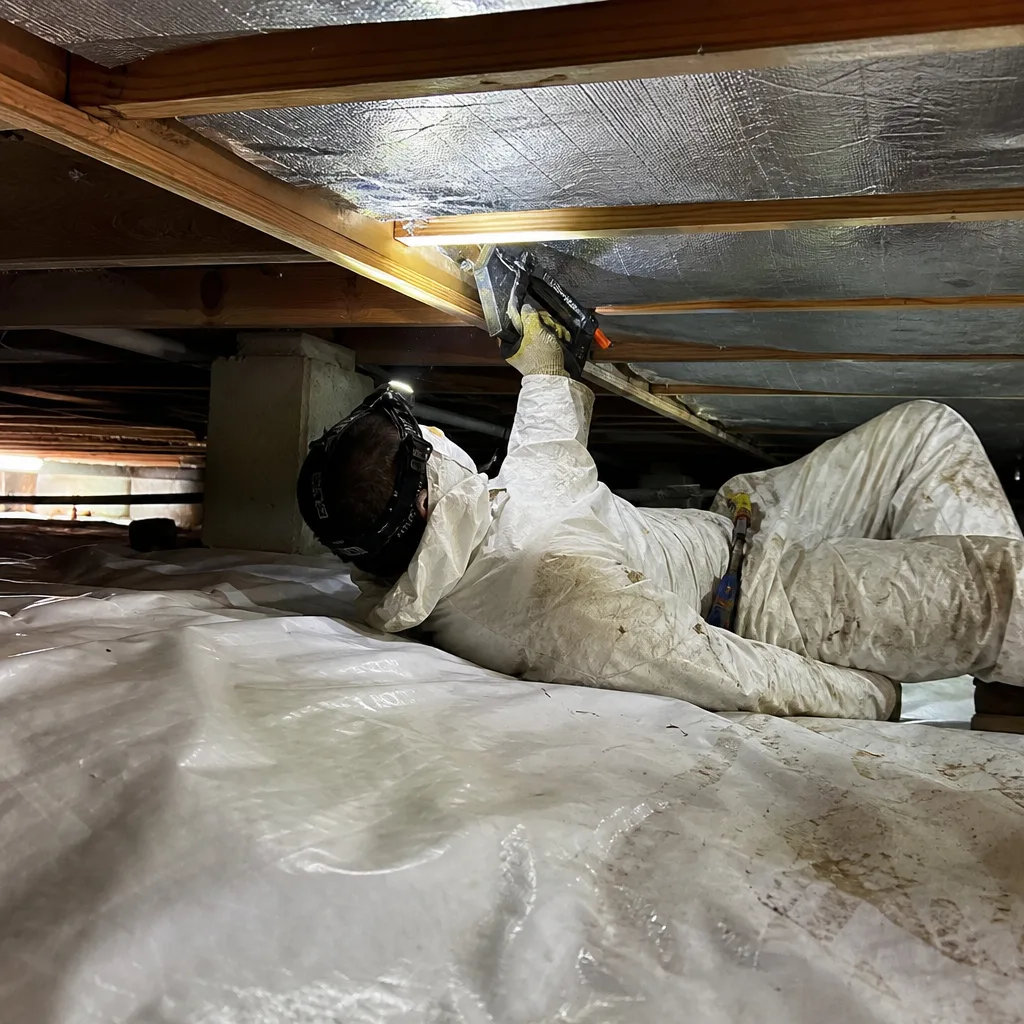
- Second-floor temperature stratification. The upstairs runs 8-12 degrees warmer than downstairs by 4 PM. This usually means the radiant barrier has sagged away from roof decking, creating an air gap that nullifies the reflective surface’s effect. We measure this with a thermal imager; the sagging sections read 140-160°F on the surface in July, versus 110-120°F where the barrier remains tight.
- Dust accumulation on foil facing. Radiant barriers work by reflectivity, not insulation. Once dust settles to the point of obscuring the shiny surface, emissivity drops and the assembly behaves like plain roof decking. In Tustin’s dry summers with occasional Santa Ana wind events, we see this accelerate in homes within a mile of construction zones or agricultural fields.
- Torn or punctured foil after roof work. Any roofing crew walking the attic side of decking will damage foil facing. The failure pattern is localized hot spots directly above the puncture, detectable with a handheld infrared thermometer. We document these with photos for insurance supplement claims when the roof work triggered the damage.
- Moisture staining on rafters or sheathing. This indicates the wrong barrier type for the foam assembly, typically solid foil where perforated was required. Icynene open-cell is vapor-permeable; pairing it with solid foil creates a one-way trap. We’ve found this in Tustin Legacy townhomes built 2015-2018 where the subcontractor used leftover solid-foil inventory.
- Spray foam delamination from the substrate. The foam pulls away from the radiant barrier layer in sheets or bubbles. This is an adhesion failure, often from oil contamination on the foil surface during manufacturing or from installation in cold, damp conditions. It requires removal of the affected foam section and reapplication, not just barrier replacement.
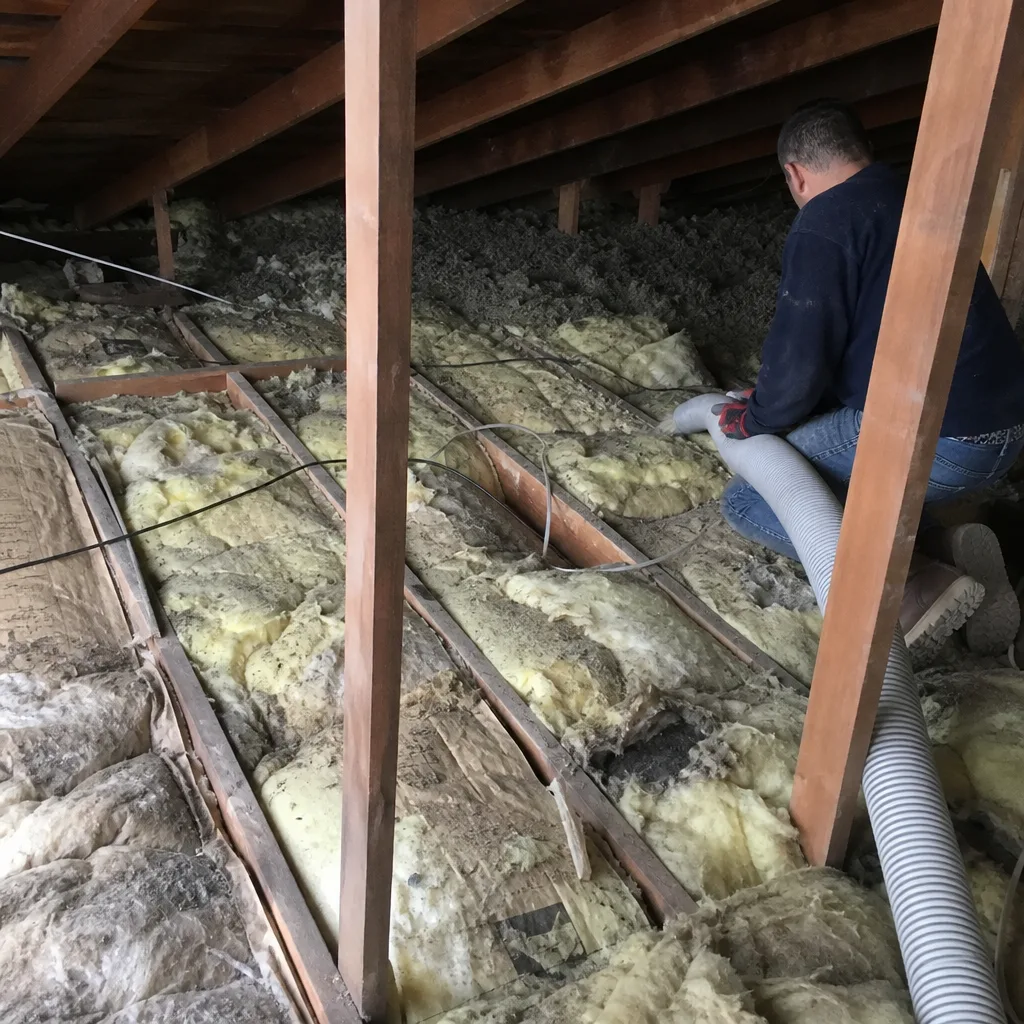 Before
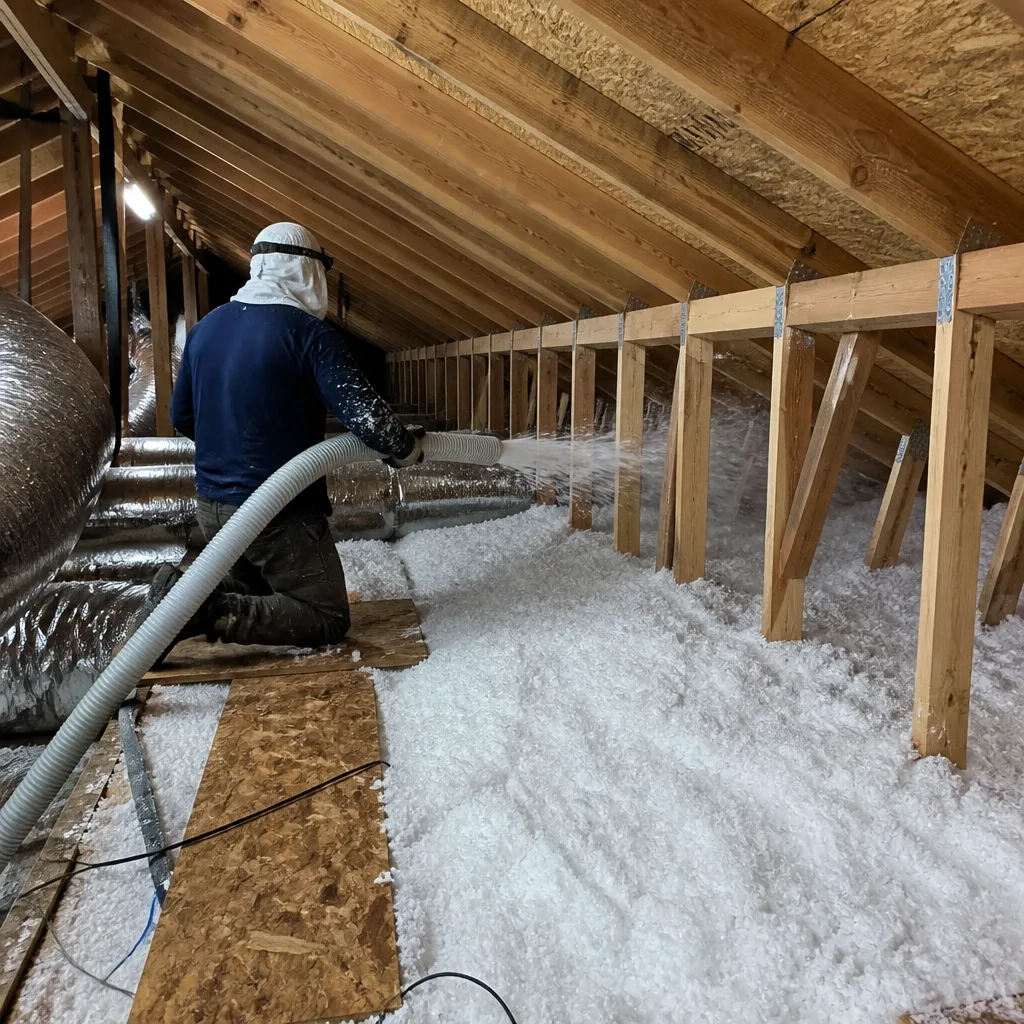 After
AfterReplacement Cost & What’s Included
For a typical Tustin single-family home with 1,200-2,000 square feet of attic roof deck, complete radiant barrier replacement with Icynene-compatible perforated foil runs $2,800-$4,200. Homes requiring solid foil or with complex dormer geometry push toward $5,200. Here’s how the pricing breaks:
- Perforated foil barrier material: $1.10-$1.40 per square foot installed
- Solid foil barrier material: $1.30-$1.65 per square foot installed
- Air sealing correction (top plates, can lights, penetrations): $450-$890 if needed
- Spot foam removal and reapplication where delaminated: $180-$340 per section
- Blower-door test before and after: included on every job
We won’t quote radiant barrier replacement without first verifying your attic floor is sealed. Installing reflective foil over a leaky ceiling plane is spending money to move hot air around more efficiently. Every job gets a written scope, written warranty, and Documented Photo Record before we leave. The 365-Day Done Right Promise covers adhesion and material defects.
DIY or Call Us?
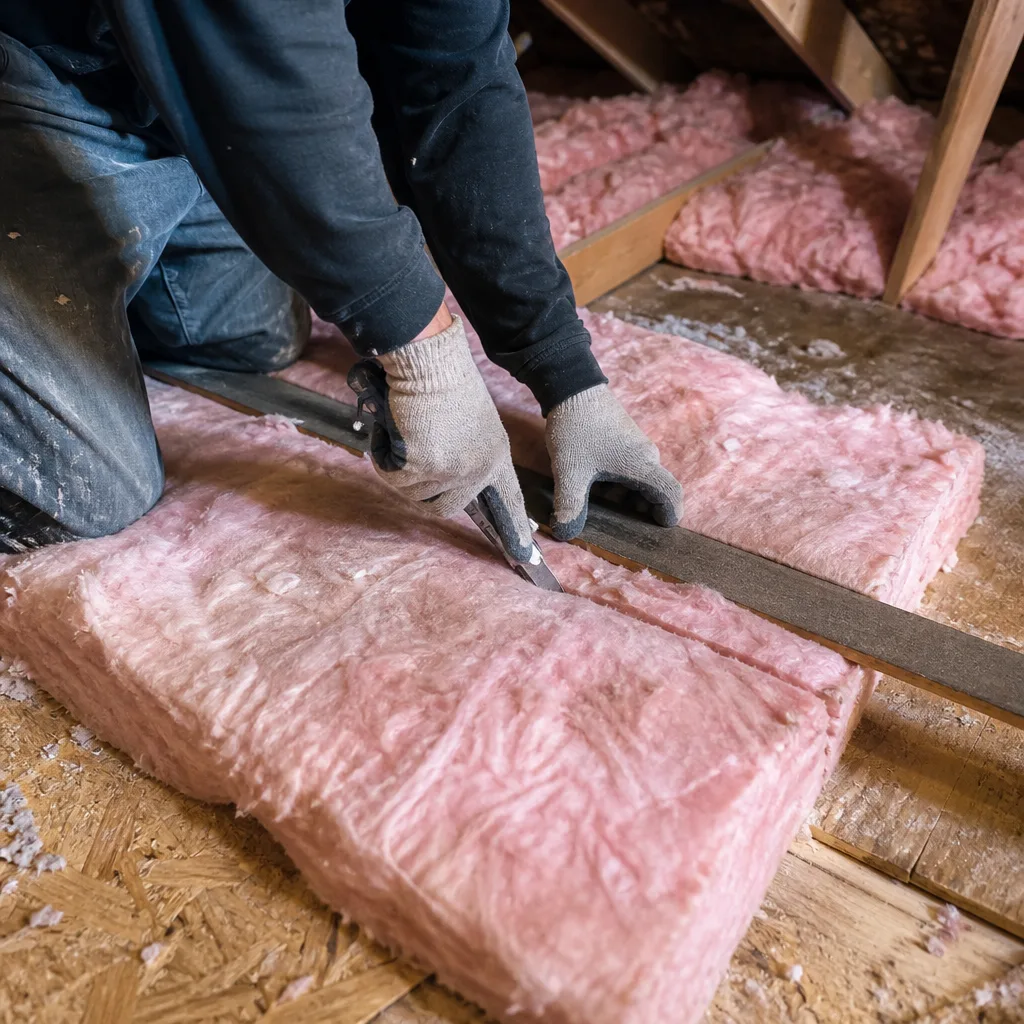
There’s no high-tension danger in radiant barrier work, but there are genuine ways to make the problem worse. A homeowner can safely inspect: check for sagging or torn sections with a flashlight, photograph any dust accumulation or staining for our review, and verify whether can lights or bathroom fans have visible gaps around their housings. What goes wrong in DIY: using solid foil where perforated is required by the 2022 California Energy Code for Climate Zone 3, creating a moisture trap that rots sheathing; stapling too loosely so the barrier flaps and tears within two seasons; or installing over unsealed penetrations so the reflective benefit is lost to convective airflow.
We carry perforated and solid foil on the truck, cut to the widths that match standard Tustin roof framing (24″ o.c. and 16″ o.c. rafter bays). Call (657) 286-7673 with your attic square footage and a few photos; we’ll give you a written price before any work starts.
FAQs
Perforated foil properly installed against roof decking lasts 15-25 years in Tustin’s dry inland climate, though dust accumulation typically reduces effectiveness after 10-12 years unless the attic has minimal ventilation intake. Solid foil in the same assembly can delaminate or trap moisture sooner if paired with vapor-permeable foam. We check barrier condition during every insulation service call and note it in your documentation. Call (657) 286-7673 for a free condition assessment.
Small punctures or tears can be patched with foil tape rated for high-temperature applications, but sagging sections, widespread dust accumulation, or moisture damage require full replacement. The labor to patch multiple spots often exceeds replacement cost, and patched areas create thermal bridges that show on our post-work thermal scans. We quote both options when repair is genuinely viable. Call (657) 286-7673 for an exact recommendation based on your photos.
Most Tustin homes complete in one day, with crews arriving between 7:30 and 8:00 AM and finishing by 3:00 PM for standard roof-deck applications. Two-story homes with steep pitches or limited attic access, like some of the smaller lots in Old Town Tustin, may extend to a second day. We text your technician’s name and ETA the morning of. The blower-door test adds 45 minutes but is non-negotiable under our Haven Standard.
We stock perforated and solid radiant barrier substrates compatible with Icynene foam assemblies in 24″, 48″, and 60″ rolls, along with the foil tape and mechanical fasteners used for your specific rafter spacing. We are an independent service provider, not affiliated with Icynene, and source equivalent or superior materials from Johns Manville and CertainTeed at lower cost with identical code compliance. Same-day installation is available when you provide attic measurements and photos before 10:00 AM. Call (657) 286-7673 to confirm truck stock.
Topside Attic Insulation Tustin is independently owned and operated under The Haven Standard since 2016. We serve Tustin, Tustin Legacy, Tustin Ranch, and surrounding Orange County communities with attic insulation, spray foam, radiant barrier installation, and full building envelope services. Every job begins with a written price and ends with a Documented Photo Record. Bring us any competing written estimate for a Free Second Opinion.
Written by Wes Okafor, Owner, Topside Attic Insulation Tustin at Topside Attic Insulation Tustin, serving Tustin and nearby areas.