
Johns Manville Attic Air Sealing: The Tustin Owner’s Guide
We stock and install Johns Manville-compatible attic air sealing components in Tustin, with most completed jobs running between $1,200 and $2,800 depending on attic square footage and leak density. Same-day service is available when the scope is straightforward; larger envelope jobs with full blower-door testing typically schedule within 48 hours. Most Tustin homeowners discover their Johns Manville air sealing has failed when their HVAC runs constantly, their second floor won’t hold temperature, or their energy bill jumps 20-40% in a single billing cycle after years of stability.
Which Johns Manville Models This Applies To
Johns Manville doesn’t sell attic air sealing as a standalone branded system; instead, their components show up as the weatherization layer in JM insulation packages, particularly in homes built during Tustin’s 2015-2022 construction wave where their blown-in fiberglass was spec’d by tract builders. The critical identifier is the yellow-labeled JM bag stock, usually R-38 or R-44, installed over a thin air barrier that was never fully sealed at the top plates, can lights, or duct boots. If your attic has JM insulation with a dated installation tag (often stapled to a rafter near the scuttle), the original air sealing was likely minimal or omitted entirely.
We match replacement air sealing to the existing JM depth and density, using compatible materials: Owens Corning Energy Complete, Knauf EcoSeal, or Johns Manville’s own AirTight spray sealant where the substrate allows. The OEM-versus-aftermarket question matters less here than in mechanical systems; what matters is the material’s compatibility with fiberglass batts or loose-fill, its Class A fire rating per California Title 24, and whether it’ll hold adhesion at the 110°F-plus peak temperatures Tustin attics see in August. We stock Knauf EcoSeal and OC Energy Complete on every truck; JM AirTight we order with 24-hour lead time.
One compatibility gotcha: JM’s older blown-in systems from 2015-2018 sometimes used a water-based acrylic sealant that degrades to a chalky film after seven to ten years in Orange County heat. If we find that residue, we strip it rather than seal over it. The new sealant won’t bond to the powder.
Signs Your Johns Manville Attic Air Sealing Is Failing
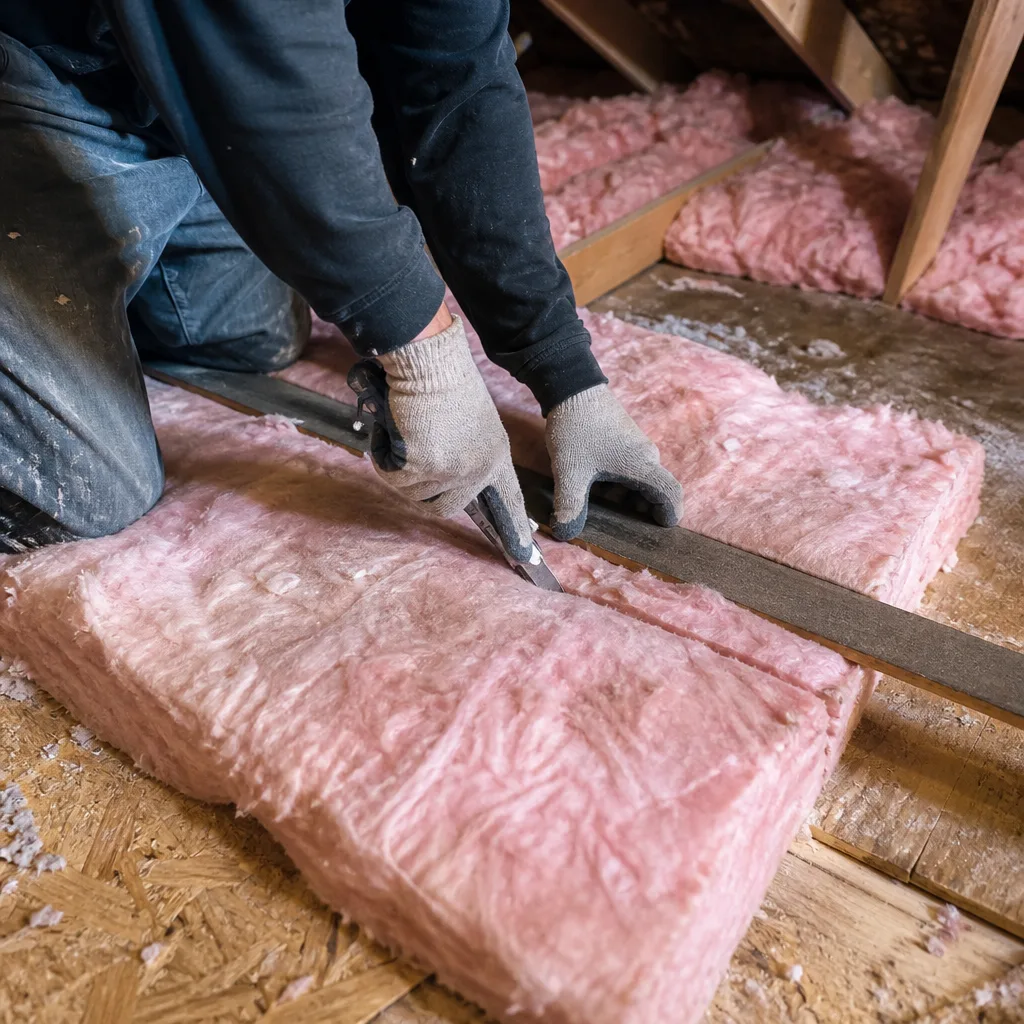
- Hot rooms directly below the attic in summer, cold rooms in winter. Conditioned air is escaping through gaps in the top plates - the horizontal framing member where interior walls meet the ceiling - because the original sealant shrank or was never applied at that joint. We see this constantly in Tustin Legacy’s townhomes, where the builder’s crew insulated fast and sealed later, if ever.
- Dust streaking around ceiling can lights or bathroom fans. Those fixtures cut holes in your thermal boundary. Without a proper airtight cover or gasket, attic air pulls through every time the house depressurizes - which is every time your HVAC blower cycles on. The dust is your insulation fibers and attic particulate migrating into living space.
- Ice damming or moisture staining at the eaves. Warm, moist interior air hits the cold roof deck and condenses. In Tustin’s mild climate this rarely freezes, but the moisture stains drywall and degrades rafter tails over time. The air sealing failed to stop exfiltration at the plate line.
- Energy bill spikes with no rate change or equipment swap. A blower-door test we ran last month in a Tustin Ranch home built in 2019 showed 3,800 CFM50 - nearly double what Title 24 intended - because the JM insulation had been blown over unsealed wire penetrations and a chimney chase. The homeowner’s summer cooling bill had climbed $180 year-over-year.
- Insulation settling unevenly, leaving bare spots near the eaves. Air moving through the attic disturbs loose-fill fiberglass. If you see valleys or scoured areas, air is flowing through the material rather than staying trapped in it. The sealant layer underneath is compromised or absent.
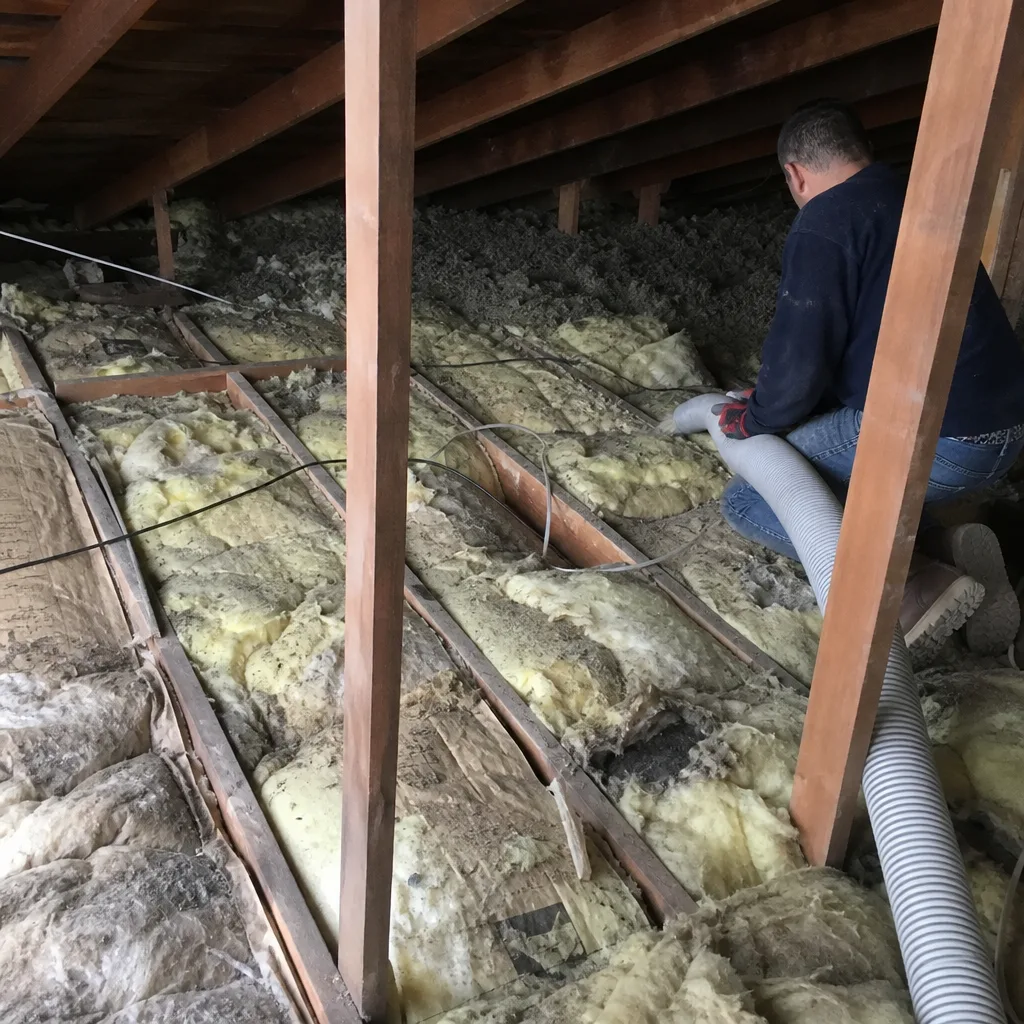 Before
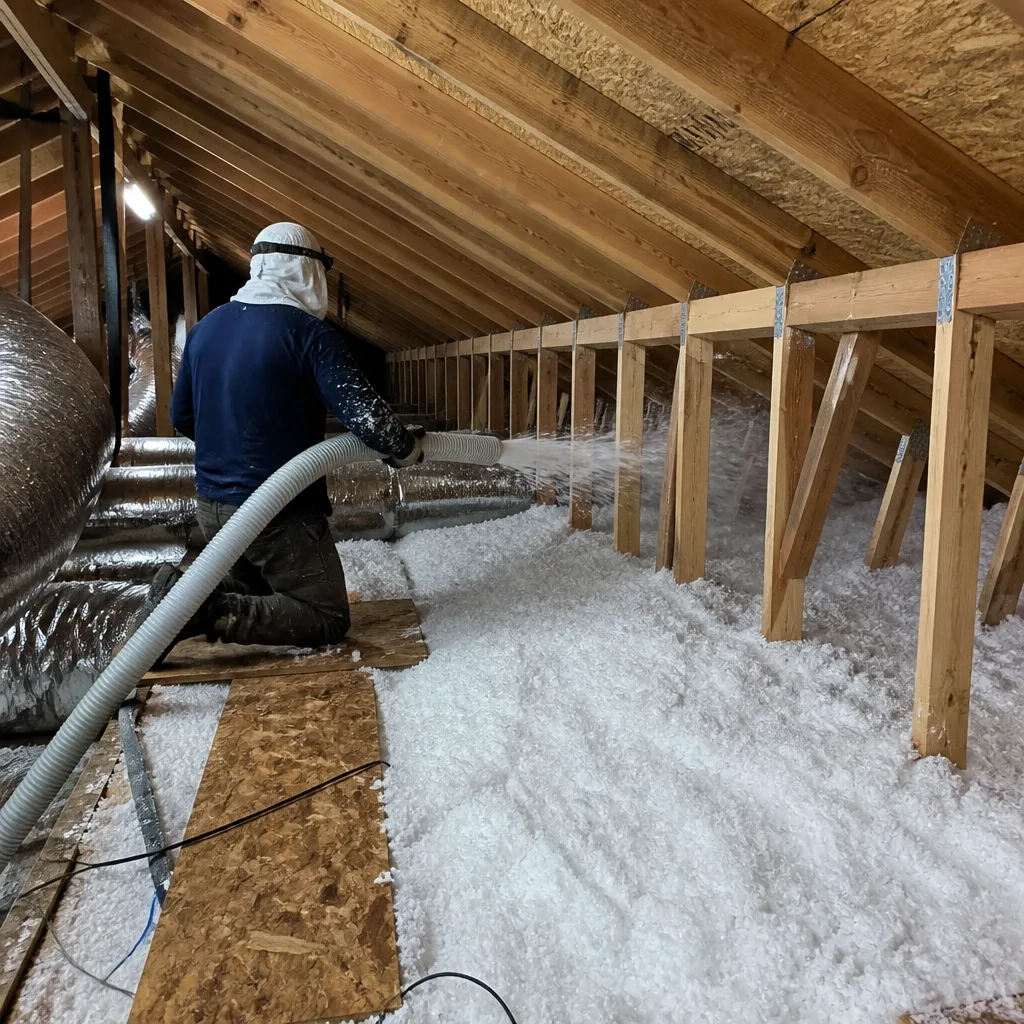 After
AfterReplacement Cost & What’s Included
Most Johns Manville attic air sealing jobs in Tustin run $1,200 to $2,800 installed. The low end covers a focused seal of top plates, can lights, and penetrations in a 1,200-square-foot attic with good access. The high end includes full envelope treatment - chimney chase, duct boots, dropped soffits, and a post-work blower-door test - on larger or more complex attics, common in the custom builds near Tustin Hills.
What drives the range: attic square footage, leak density (how many penetrations per hundred square feet), access difficulty (steep pitch, tight scuttle, or stored belongings), and whether we find degraded prior sealant that needs removal. Every quote is flat and written before work starts - Haven Standard Clause 1. No hourly surprises.
The price includes all materials, labor, cleanup, and a Documented Photo Record of every sealed penetration. On jobs where we run the blower door, you get the before-and-after CFM50 readings in writing. We warranty the air sealing work for 365 days under our Done Right Promise; if a leak we sealed reopens, we return and fix it.
DIY or Call Us?
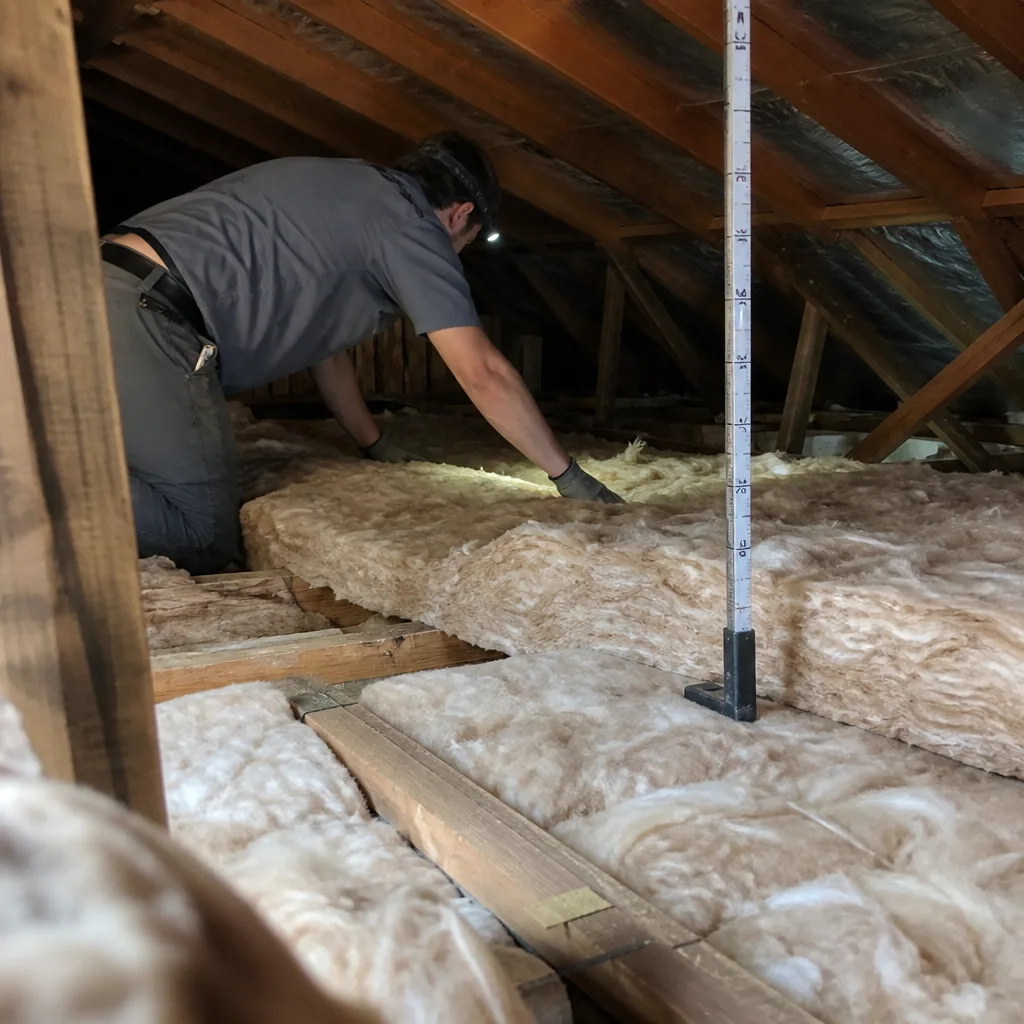
Here’s what you can safely check yourself: look for visible gaps around can lights, bathroom fans, and the attic scuttle hatch. Shine a flashlight at the top plates where interior walls meet the ceiling - if you see daylight or feel air movement on a windy day, the seal is gone. Mark those spots with tape and note them for whoever does the work.
Where DIY goes wrong: proper air sealing requires a blower-door test to locate leaks you can’t see - the ones inside wall cavities, behind insulation, or at the rim joist. Without pressurization, you’re guessing. Worse, many homeowners compress fiberglass insulation while crawling around, reducing its R-value permanently, or they use the wrong sealant (standard caulk won’t bond to dusty framing or flexible duct boots). And the recessed can lights in most Tustin homes require fire-rated airtight covers - not just foam - to meet code and not create a combustion hazard.
Seal the leaks first. Then insulate. The R-value on the bag means nothing if conditioned air is moving through the gap around that recessed can.
Call (657) 286-7673 and we’ll walk through what you’re seeing. Estimates are free, and we bring a written price to every visit.
FAQs
Quality acrylic or latex sealants last 15 to 25 years in Tustin’s dry climate, but water-based products applied during the 2015-2018 construction boom often fail in 7 to 10 years due to attic heat cycling. We use solvent-based or hybrid sealants rated for sustained 180°F exposure. Call (657) 286-7673 for a free inspection if your home falls in that age range.
Spot repairs work if the original sealant is still flexible and bonding well - we can bridge new gaps without stripping everything. If the existing layer is chalky, cracked, or separating from the substrate, partial repair traps air behind the failure and the leak continues. We test adhesion before recommending either path. Call (657) 286-7673 and we’ll show you what we found on camera.
A focused attic air sealing job on a typical Tustin home takes 4 to 6 hours; full envelope treatment with blower-door testing runs a full day. We schedule arrival windows, text when the technician is en route, and leave you with photos and written readings before we go.
We stock Knauf EcoSeal and Owens Corning Energy Complete on every truck, both fully compatible with existing Johns Manville insulation. Johns Manville AirTight we source with 24-hour notice. We’re an independent service provider - not affiliated with Johns Manville - and we also carry Reflectix radiant barrier products where the scope calls for them.
Written by Wes Okafor, Owner, Topside Attic Insulation Tustin at Topside Attic Insulation Tustin, serving Tustin and nearby areas.