
Johns Manville Vapor Barrier Installation: The Tustin Owner’s Guide
Johns Manville vapor barrier installation in Tustin typically runs $1,800-$3,400 for a standard crawl space or attic application, and we stock the full JM membrane line for same-day starts. Most homeowners notice the problem first as a musty smell in the hallway or hardwood cupping near the foundation, not as a visible tear in the plastic itself. We carry 6-mil, 10-mil, and 15-mil JM polyethylene sheeting on every truck, along with the pressure-sensitive seam tape and butyl-backed termination bars that JM specifies for warranty-compliant installs.
Topside Attic Insulation Tustin is an independent service provider, not affiliated with Johns Manville. We source JM materials through authorized regional distributors, same as we do Owens Corning, Knauf, and the other brands we stock.
Which Johns Manville Models This Applies To
Johns Manville doesn’t use “model numbers” for vapor barrier the way they do for batts or boards. What you’re looking for is the mil rating and the ASTM designation printed on the roll edge, usually in a repeating black stripe. The three grades we install in Tustin are:
- 6-mil ECR (E Class, Reinforced): Woven polyethylene scrim between two 3-mil skins. Common in new construction where the builder spec’d minimum code. The scrim prevents punctures during rough-in, but the thin outer layers degrade faster in Tustin’s clay-heavy soil, which holds moisture against the membrane.
- 10-mil Dura-Last (non-reinforced): Solid polyethylene, no scrim. Better for retrofits where we’re not dragging lumber across it. The 10-mil handles the thermal cycling in Tustin Legacy’s tighter crawl spaces without the “alligatoring” we see on thinner stock after three to four summers.
- 15-mil Premium: What we spec for homes with active dehumidification or where the homeowner plans to store anything seasonal. The extra mass buys you roughly double the service life in CA Zone 9 climate conditions.
The compatibility gotcha: JM’s 10-mil and 15-mil rolls are 12 feet wide, but the 6-mil ECR comes in 10-foot and 12-foot widths. If your existing barrier was 10-foot and we’re replacing with 10-mil, the seam pattern changes. That matters for how many linear feet of tape we quote, and it matters for whether we need to pull the old mechanical fasteners or can leave them in place.
OEM versus aftermarket: JM’s own seam tape is EPDM-based with a synthetic rubber adhesive. The aftermarket equivalent we see most often is asphaltic, which off-gasses in a hot crawl space and loses tack where soil moisture wicks up the foundation wall. We stock JM tape specifically. The price difference is roughly $0.18 per linear foot, and we’ve pulled up too many failed asphaltic seams to consider it savings.
Signs Your Johns Manville Vapor Barrier Installation Is Failing
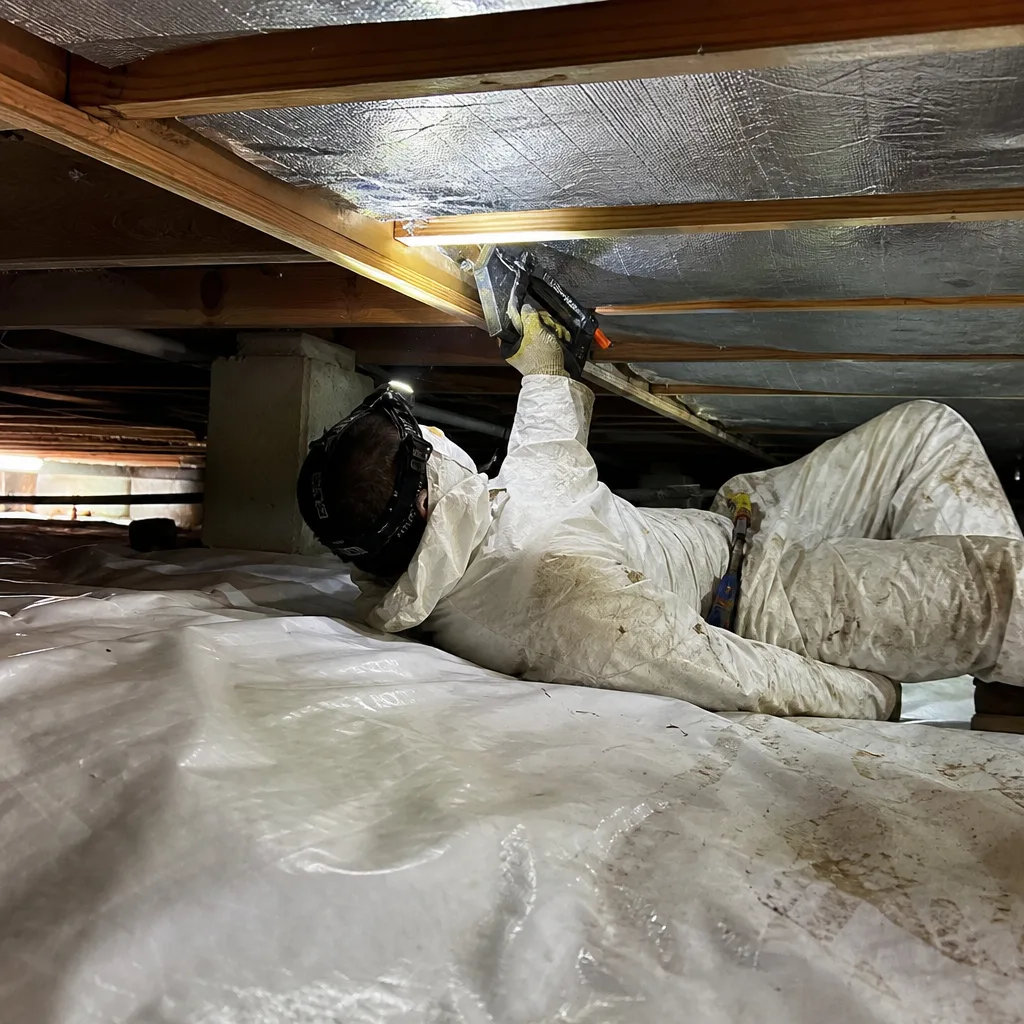
- Musty odor that worsens after rain. The barrier’s primary job is blocking soil gas and evaporative moisture from entering the conditioned envelope. When seams split or the membrane pinholes, relative humidity in the crawl space climbs above 70 percent, and that air finds its way upstairs through plumbing chases and floor gaps. We see this most in the Tustin Ranch area, where the 1980s slab-on-grade homes have minimal subfloor sealing.
- Wood flooring cupping or crown near exterior walls. Moisture migrating through a compromised barrier raises the equilibrium moisture content of the subfloor from below. The boards swell on the underside first, creating a concave or convex profile depending on which face moves more. It’s often misdiagnosed as a plumbing leak; a quick moisture-meter reading at the rim joist tells the real story.
- Visible condensation on ductwork or insulation below the floor. When the vapor barrier fails, the crawl space becomes the coldest surface in the thermal envelope during cooling season. Supply ducts sweat first, then fiberglass batts start weighing heavy with absorbed moisture. That wet insulation compresses and loses R-value, which is how a $200 barrier problem becomes a $2,000 insulation replacement.
- White mineral deposits (efflorescence) on the foundation wall. This means liquid water is moving through the concrete and evaporating at the surface. The barrier should be lapped up the wall and sealed to prevent exactly this wicking path. In Tustin’s older neighborhoods near the 55 freeway, we’ve found barriers installed with no wall termination at all, just plastic laid flat on dirt.
- Pest activity increase. A dry crawl space isn’t attractive to termites and rodents. A damp one is. We don’t do pest control, but we’ve learned to read the evidence. If the homeowner’s pest guy is making quarterly visits instead of annuals, we ask to look below.
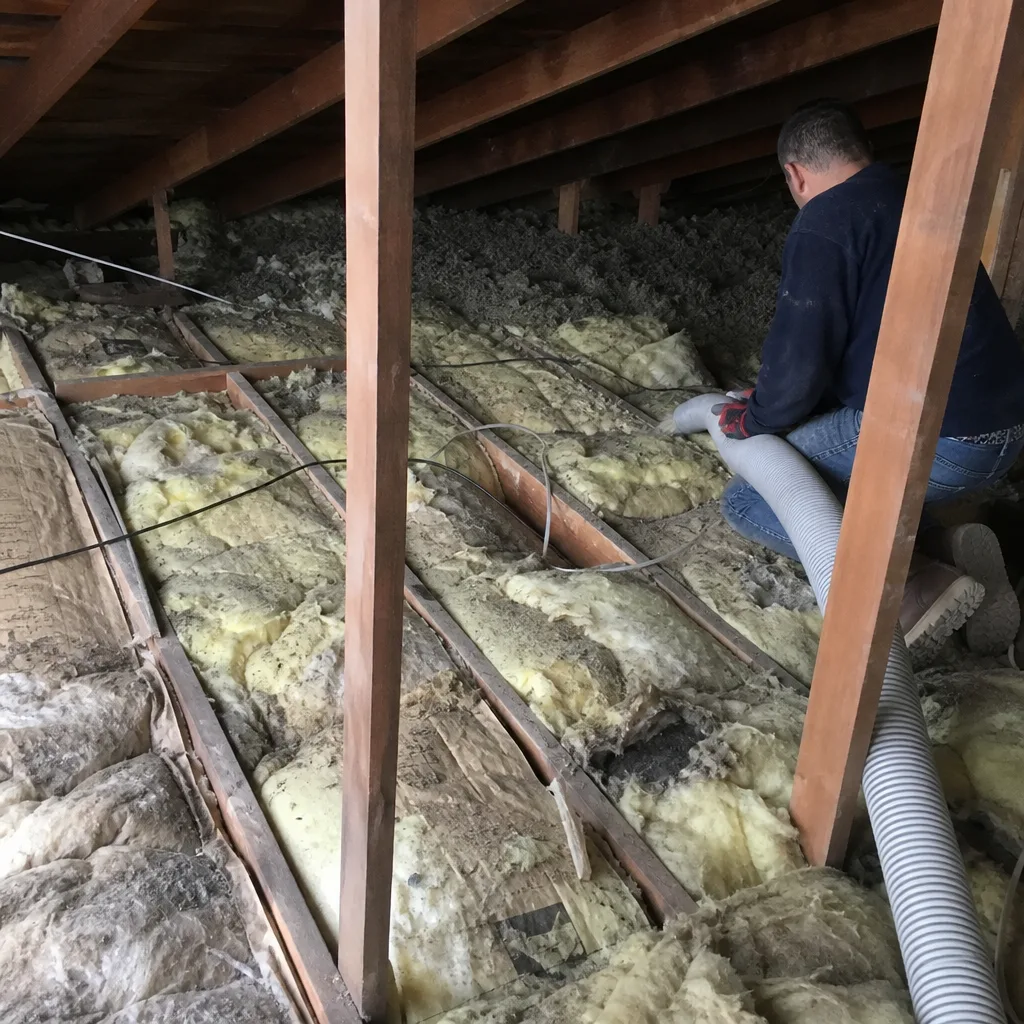 Before
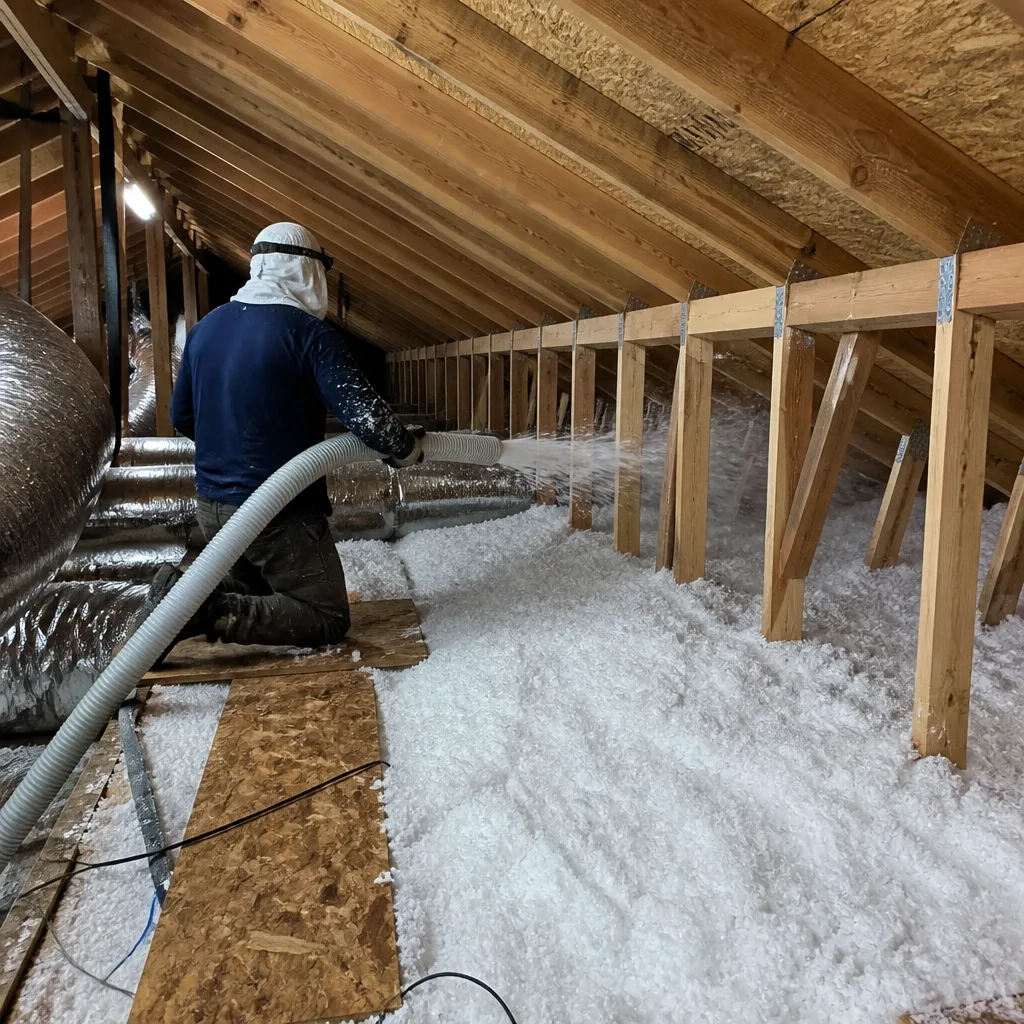 After
AfterReplacement Cost & What’s Included
| Component | Typical Range (Tustin) |
|---|---|
| 6-mil JM ECR, full crawl space (1,000-1,500 sq ft) | $1,800-$2,400 |
| 10-mil JM Dura-Last, same footprint | $2,200-$2,900 |
| 15-mil JM Premium, with wall extensions | $2,800-$3,400 |
| Seam tape, termination bars, mechanical fasteners | Included in above |
| Old barrier removal and disposal | $300-$500 additional if needed |
What moves the number: crawl space height (anything under 18 inches requires different crew scheduling), whether the old barrier is taped or just laid loose, and how much debris or old insulation needs clearing first. We don’t quote over a photo, but we don’t charge for the site visit either. Under Haven Standard Clause 1, you get a written price before any work starts, flat, with the scope and warranty spelled out.
Every JM vapor barrier job includes our Documented Photo Record, before and after. If we’re also air-sealing the rim joist or subfloor penetrations, you’ll get blower-door numbers showing the reduction in CFM50. The 365-Day Done Right Promise applies to the full scope, membrane and sealing together.
DIY or Call Us?
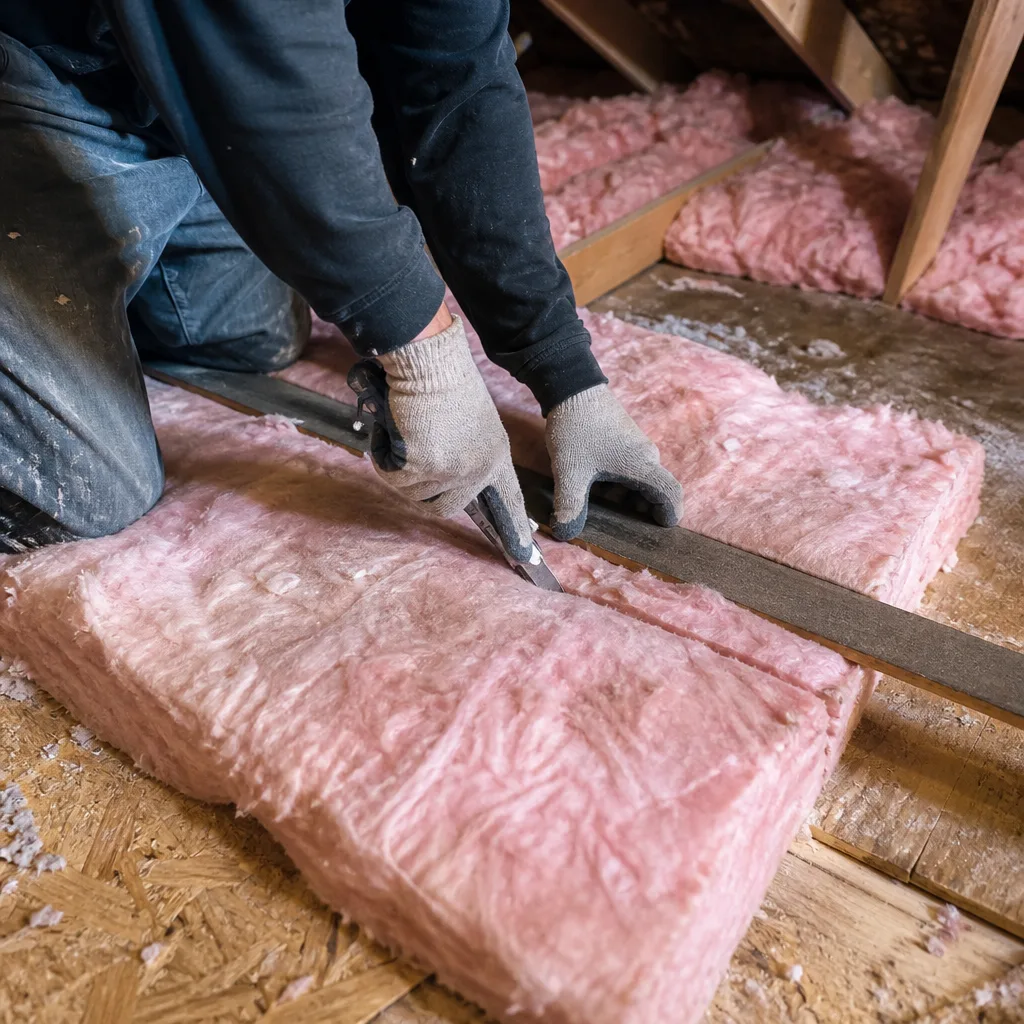
What you can safely check yourself: pull the crawl space hatch and look at the membrane condition with a flashlight on a dry day. Note any standing water, obvious tears, or whether the barrier extends up the foundation wall at all. Take photos. That’s useful information, and it costs nothing.
Where DIY goes wrong: proper vapor barrier installation isn’t just laying plastic. The seams need overlapping by 12 inches minimum, taped with pressure-sensitive product on clean, dry surfaces. The wall termination needs to be mechanically secured above the soil line, not just tucked. And in Tustin’s climate, if you’re not also addressing the air leaks at the rim joist and subfloor penetrations, you’re managing symptoms while the real load on your HVAC continues. We’ve found homeowners who spent a weekend on their knees in a crawl space, did honest work, and still saw no improvement in humidity because the stack effect was pulling untreated air past the gaps they couldn’t reach.
One more thing: crawl spaces are confined spaces. If there’s any history of gas appliances below grade, or if you smell anything sharp, don’t enter. Call us at (657) 286-7673. We carry combustible gas detectors and know the ventilation protocol.
FAQs
In Tustin’s Zone 9 climate, a properly installed JM 10-mil barrier typically lasts 15-20 years; the 6-mil reinforced grade often shows seam degradation and surface oxidation closer to 8-12 years, especially where soil contact is constant. The 15-mil Premium has the longest track record locally, though it’s only been widely available since roughly 2018. Call (657) 286-7673 and we can assess your specific conditions.
Small punctures and single seam failures can be patched with JM-compatible tape if the surrounding membrane is still supple and the substrate is clean and dry. If you’re seeing multiple failures, brittle material that cracks when flexed, or any mold on the underside, replacement is the only warrantable path. We don’t charge for the evaluation, and we’ll show you exactly what we found.
A standard 1,200-square-foot crawl space with old barrier removal, surface prep, and new JM 10-mil install with full seam taping and wall termination takes one crew one day. Tight spaces, debris clearance, or concurrent air sealing can extend to a second day. We schedule start-to-finish, not “we’ll be back when the truck’s free.”
We stock 6-mil, 10-mil, and 15-mil JM polyethylene sheeting, seam tape, and termination bars on every truck. For Tustin calls, same-day evaluation is standard; if the scope is straightforward and you’re ready to proceed, we can often start within 48 hours. The only delay we’ve seen is when a homeowner wants a specific mil grade we don’t have on the truck that day, and even then, our distributor in Orange County typically has it next morning.
Written by Wes Okafor, Owner, Topside Attic Insulation Tustin at Topside Attic Insulation Tustin, serving Tustin and nearby areas.