
Knauf Spray Foam Insulation in Tustin: What to Know First
We provide independent Knauf spray foam insulation service in Tustin, with most residential jobs completed in one day and pricing delivered in writing before any work starts. Most Tustin homeowners with Knauf open-cell or closed-cell spray foam systems pay between $2,800 and $6,400 depending on cavity depth, square footage, and whether the existing substrate needs remediation. This page is for Knauf owners in Tustin Legacy, Old Town, and the hillside tracts near Peters Canyon who need a crew that understands Knauf’s specific foam chemistry and won’t treat it as generic spray foam. Call (657) 286-7673 for a free estimate with a written price.
How Knauf Products Fail - and How We Fix Them
- Knauf Jet Stream Ultra open-cell shrinkage in Tustin’s dry Santa Ana wind cycles. The Ultra line’s 0.5 lb density open-cell foam can pull back from studs when seasonal humidity drops below 30 percent, which happens regularly in Tustin from September through March. We see this most in second-story additions built 2018-2022. Our fix: remove the detached foam with a specialized hot-knife rig, recondition the substrate with a Knauf-compatible primer, and reapply at controlled temperature and humidity - we won’t spray below 65°F substrate temp or 40 percent relative humidity.
- Knauf Ecoseal Plus closed-cell delamination on garage ceiling applications. Ecoseal Plus is a 2.0 lb closed-cell system, but when it’s sprayed directly over dusty OSB in unconditioned Tustin garages, the surface bond fails and the foam separates in sheets. We pressure-wash and mechanically abrade the substrate first, then apply a tie-coat specific to Knauf’s isocyanate formulation. The R-value you paid for - typically R-6.5 per inch - only works if the foam stays attached.
- Knauf Insulation Spray Foam (KISF) rim joist gaps in crawl spaces with seasonal groundwater. Tustin’s clay-heavy soils in the lower Peters Canyon watershed hold moisture against foundation walls, and KISF closed-cell applied too thin at rim joists (below 2 inches) wicks that moisture through pinholes. We pull back to bare wood, treat for mold if present, and rebuild to 3-inch minimum thickness with a capillary break at the sill plate.
- Knauf open-cell overspray into soffit vents blocking attic ventilation. We find this in Tustin Legacy homes where the original installer didn’t mask off the vented soffit properly. The foam hardens across the vent slots and turns the attic into a moisture trap. We use a combination of mechanical removal and controlled solvent application - never a torch, never a grinder without dust containment - then reinstall proper baffles before any new foam goes in.
- Knauf closed-cell off-ratio curing from improper A-side/B-side mixing. When the isocyanate and resin components drift from the manufacturer’s specified ratio, the foam stays soft, smells of amines, and never achieves its rated compressive strength. We core-sample suspect areas, check density with a simple water-displacement test, and if it’s off-spec, we cut it out entirely. Partial remediation isn’t an option - soft foam is failed foam.
Our Knauf Spray Foam Insulation Process
- 1
Call and scope. A live person answers 24/7. We schedule a site visit, and Wes Okafor or a senior tech arrives with a thermal camera, moisture meter, and the written price guarantee.
- 2
Blower-door test and thermal scan. We pressurize the house to 50 pascals and record the CFM50 reading. In Tustin’s 2015-and-newer construction, we expect pre-work numbers between 3,500 and 5,500 CFM50. The thermal scan shows exactly where conditioned air is escaping through Knauf foam gaps or bypasses the foam entirely.
- 3
Air sealing first, always. Seal the leaks first. Then insulate. The R-value on the bag means nothing if conditioned air is moving through the gap around that recessed can. We seal top plates, can lights, and penetrations with Knauf-compatible sealants before any new foam touches the substrate.
- 4
Substrate prep and foam application. We match the Knauf line to the application - open-cell for attic floors and conditioned wall cavities, closed-cell for unconditioned garages, rim joists, and roof decks. Temperature, humidity, and substrate moisture content are logged every 30 minutes during the spray.
- 5
Post-work verification. We run a second blower-door test, deliver before-and-after CFM50 numbers, and provide thermal images and a written R-value report documenting every cavity. The 365-Day Done Right Promise applies from this moment.
- 6
Cleanup and documentation. The crew leaves a Documented Photo Record on a shared drive link before they pull off the job. No exceptions.
 Before
 After
AfterWhat Knauf Spray Foam Insulation Costs in Tustin
These are real ranges for Knauf spray foam work we’ve completed in Tustin since 2016. Every job gets a flat written price before work starts.
| Job Type | Typical Range | What Moves the Price |
|---|---|---|
| Open-cell attic floor (1,200 sq ft) | $2,800 - $4,200 | Existing insulation removal, deck repairs, soffit baffling needed |
| Closed-cell garage ceiling (400 sq ft) | $3,400 - $5,100 | OSB condition, height access, fire-rated coating requirement |
| Rim joist spray foam (crawl space, typical 1,800 sq ft home) | $2,200 - $3,600 | Mold remediation, groundwater management, vapor barrier integration |
| Closed-cell roof deck (2,000 sq ft conditioned attic) | $5,200 - $8,800 | Deck thickness, rafter depth, ignition barrier vs thermal barrier code path |
| Knauf foam removal and reapplication (remediation) | $4,500 - $7,800+ | Volume of failed foam, substrate damage, accessibility |
We also source Reflectix and other brands when a Knauf product isn’t the right fit for the assembly. No proprietary lock-in. Call (657) 286-7673 for a written estimate - free, no obligation.
Why Tustin Homeowners Call Topside Attic Insulation Tustin for Knauf Work
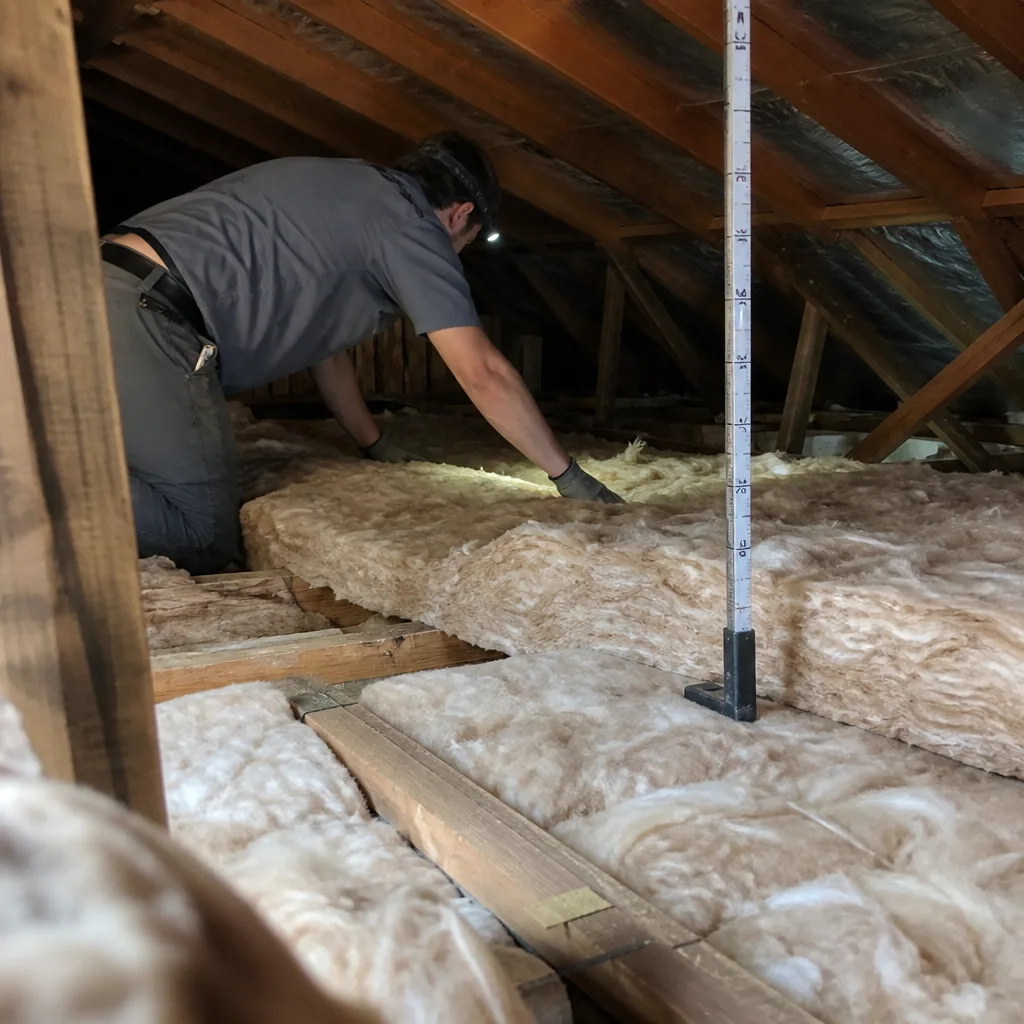
We’ve sealed and insulated over 9,000 homes since 2016, and a significant share of those have been in Orange County’s 92780 and 92782 zip codes. Tustin’s specific building stock - the post-redevelopment Tustin Legacy tract homes with their complex rooflines, the 1960s ranches in Old Town with original batt insulation failing at the top plates, the hillside custom builds with conditioned attics - demands a crew that reads blower-door numbers, not just spray patterns.
Our techs are background-checked and uniformed. Calls are answered by a live person, 24/7. Every Knauf job closes with documented evidence: photos, CFM50 change, written R-value report. The 365-Day Done Right Promise is in writing before anyone lifts a tool. And if you have a competing estimate, bring it - we offer a Free Second Opinion on any written quote.
FAQs
No - Knauf’s product warranty covers manufacturing defects regardless of who installs or services it, provided the original installation met their published application parameters. What voids coverage is undocumented work, off-spec application conditions, or mixing Knauf components with non-compatible third-party chemicals. We log temperature, humidity, and mix ratios on every job and deliver that documentation to you, not just to us. Call (657) 286-7673 if you need help interpreting your original installer’s paperwork.
Most residential remediation jobs are completed in one day; full-cavity removals with reapplication typically run two days. Tustin’s coastal-adjacent climate means we rarely lose days to rain, but Santa Ana wind days can push humidity too low for proper open-cell curing - we monitor and reschedule if conditions aren’t right. Need a specific timeline? Call (657) 286-7673 with your address and we’ll give you a written schedule with the price.
Spot repair is cheaper when the failure is isolated - a single delaminated garage ceiling section, one rim joist with moisture intrusion. Full removal and replacement is the better value when the foam is off-ratio, extensively shrink-pulled, or contaminated with rodent activity (common in Tustin’s older crawl spaces near the golf course). We core-sample and test before recommending either path, and we put both options in writing with a flat price for each. Estimates are free.
We can match Knauf’s density and R-value, but we cannot guarantee perfect visual match on aged foam - UV exposure and oxidation change surface color over time. For visible areas (exposed garage ceilings, for instance), we discuss this during the estimate and can recommend finish options if cosmetics matter. We source Knauf materials through standard distribution channels; we do not claim exclusive or preferred status with the manufacturer. Call (657) 286-7673 to discuss your specific situation.
Document what you see: soft or crumbly foam, gaps between foam and framing, musty odors near sprayed areas, or temperature swings in rooms below sprayed cavities. Note the approximate installation year and the Knauf product line if it’s on your original paperwork. Then call us - we do not charge to look, and we’ll tell you honestly if it’s a quick fix, a full remediation, or something that can wait. (657) 286-7673.
Written by Wes Okafor, Owner, Topside Attic Insulation Tustin at Topside Attic Insulation Tustin, serving Tustin and nearby areas.