
Owens Corning Attic Insulation: The Tustin Owner’s Guide
We stock and install Owens Corning blown-in fiberglass attic insulation in Tustin homes, with most retrofits running $1.80 to $3.20 per square foot installed depending on existing depth and access conditions. Same-day installation is available when we have your target R-value and square footage confirmed by phone. Homeowners usually discover their Owens Corning insulation is underperforming when upstairs rooms won’t hold temperature, energy bills spike 20-40% season-over-season, or a thermal scan shows bare spots where original batts have compressed below labeled thickness.
Which Owens Corning Models This Applies To
Owens Corning produces two attic insulation lines you’ll find in Tustin homes: the ProPink L77 loose-fill blown fiberglass and the EcoTouch PINK FIBERGLAS batts, available in R-13 through R-38. The L77 is the common retrofit choice here because it fills irregular joist bays and covers top plates without the gaps that batt edges leave. To identify what you have, check for the pink color (Owens Corning’s dyed glass), the printed R-value on any exposed paper facing, and the bag code if leftover material is stored in the garage. L77 bags are marked “L77” in the product code; batts show “EcoTouch” and the R-value.
We source Owens Corning material through standard distribution, same as any independent contractor. We are not affiliated with Owens Corning. For Tustin homes built 2015-2022, particularly in Tustin Legacy, we often find the original spec was R-30 batts in 2×10 joists. That’s now below current Title 24 requirements for attic retrofits. When we upgrade those homes, we blow L77 over the existing batts to reach R-38 or R-49, depending on your HVAC load calculation and whether the ductwork runs in the attic. The gotcha: L77 must not contact recessed can lights unless they’re IC-rated (insulation contact). We check every housing label before we blow.
Signs Your Owens Corning Attic Insulation Is Failing
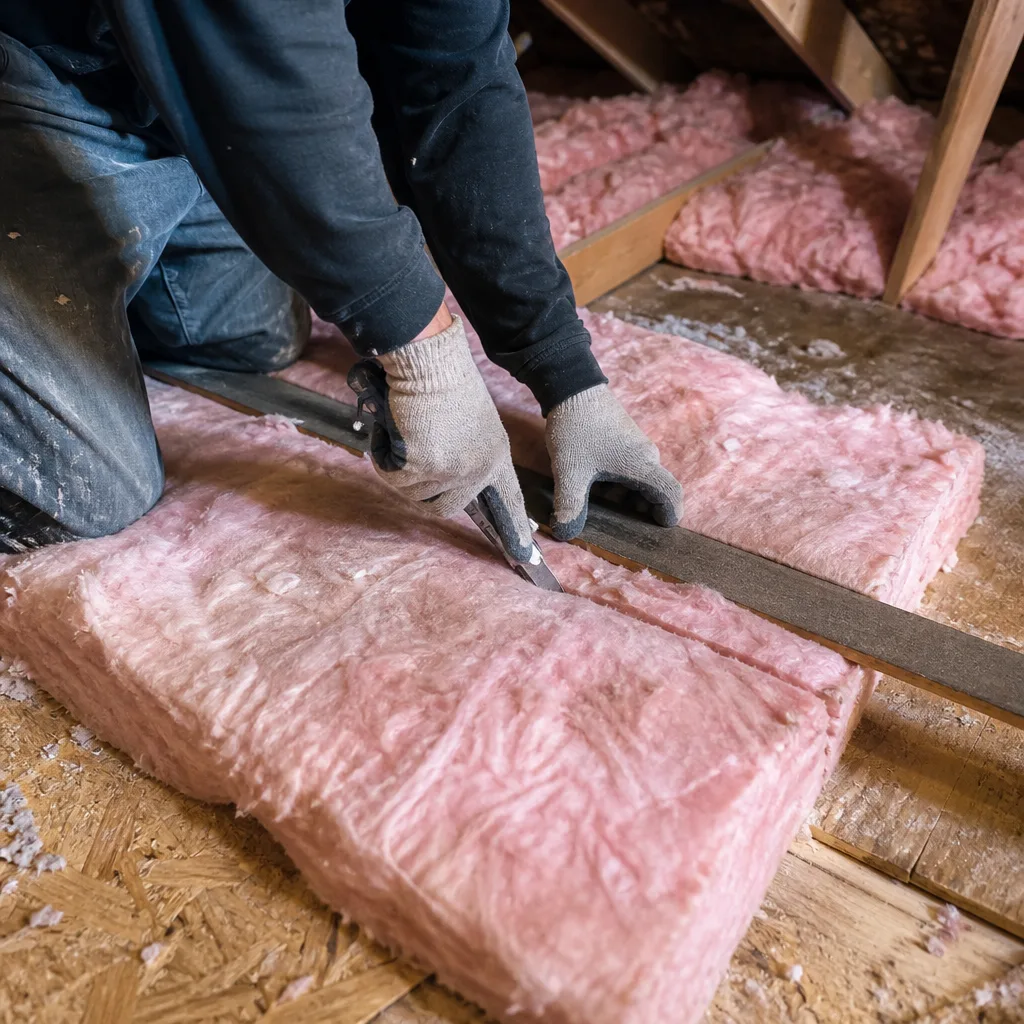
- Uneven temperature between rooms. Blown fiberglass settles over time, especially if the original installer skipped baffles at the eaves. In Tustin, we see this settle 15-25% in the first five years when attic ventilation is marginal. The thermal image shows a gradient from the access hatch outward.
- Ice-cold drywall in winter, hot to touch in summer. This means the insulation has separated from the ceiling plane or was never in full contact. Owens Corning batts need friction-fit contact with the drywall; gaps as small as 1/2 inch cut effective R-value disproportionately.
- Dust streaking around ceiling outlets and can lights. Insulation doesn’t stop air movement. If you’re seeing this, the attic floor wasn’t sealed before insulation went in. Conditioned air is leaking into the attic, carrying dust that deposits on the drywall.
- Energy bill climbing with no rate change. We pulled a Tustin Legacy home’s usage history last month: 34% increase over three years, same occupancy. The original R-30 batts had compressed to R-19 equivalent, and the blower-door reading was 3,800 CFM50. After air sealing and topping to R-38 with L77, the reading dropped to 2,100.
- Moisture staining on ceiling drywall. Fiberglass doesn’t absorb water, but it holds it against the ceiling when attic ventilation fails. In Tustin’s mild climate, this shows up as subtle brown rings near bathroom vents where warm moist air hits cool sheathing.
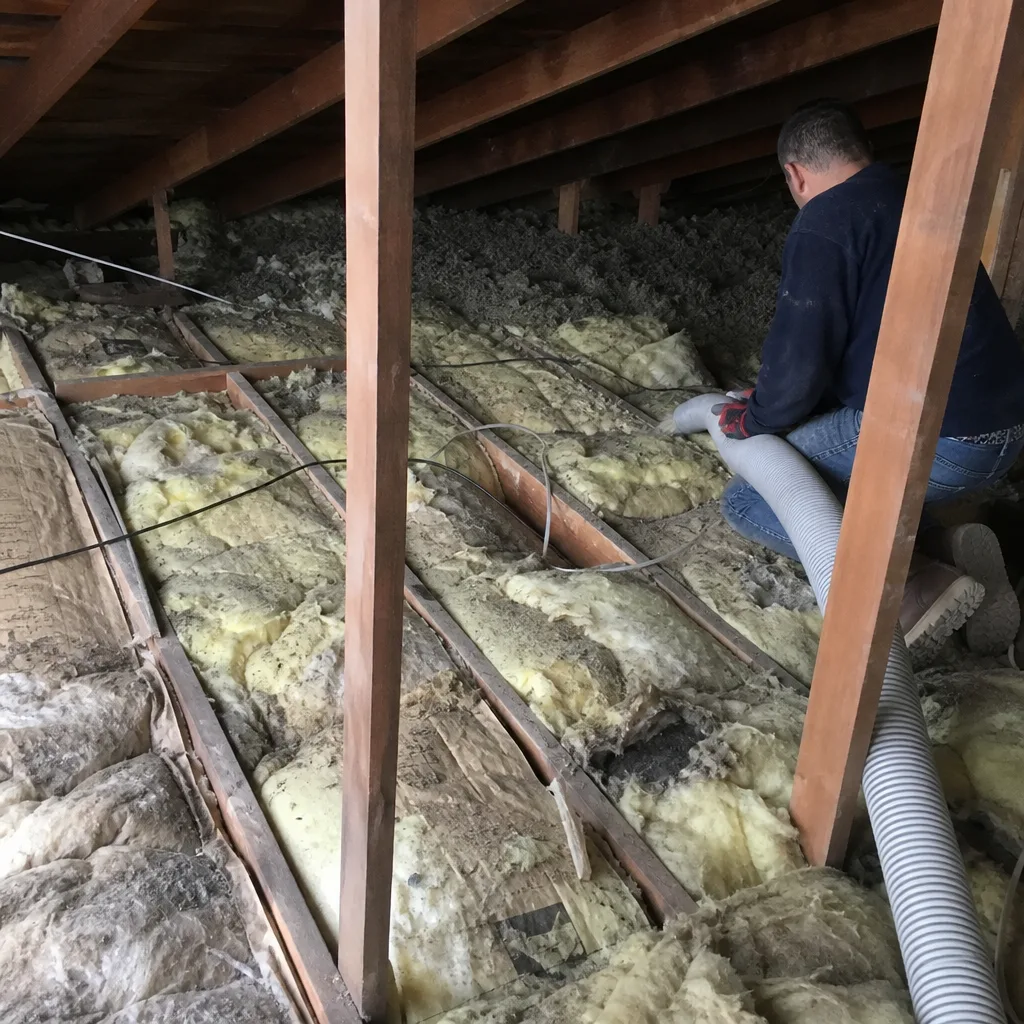 Before
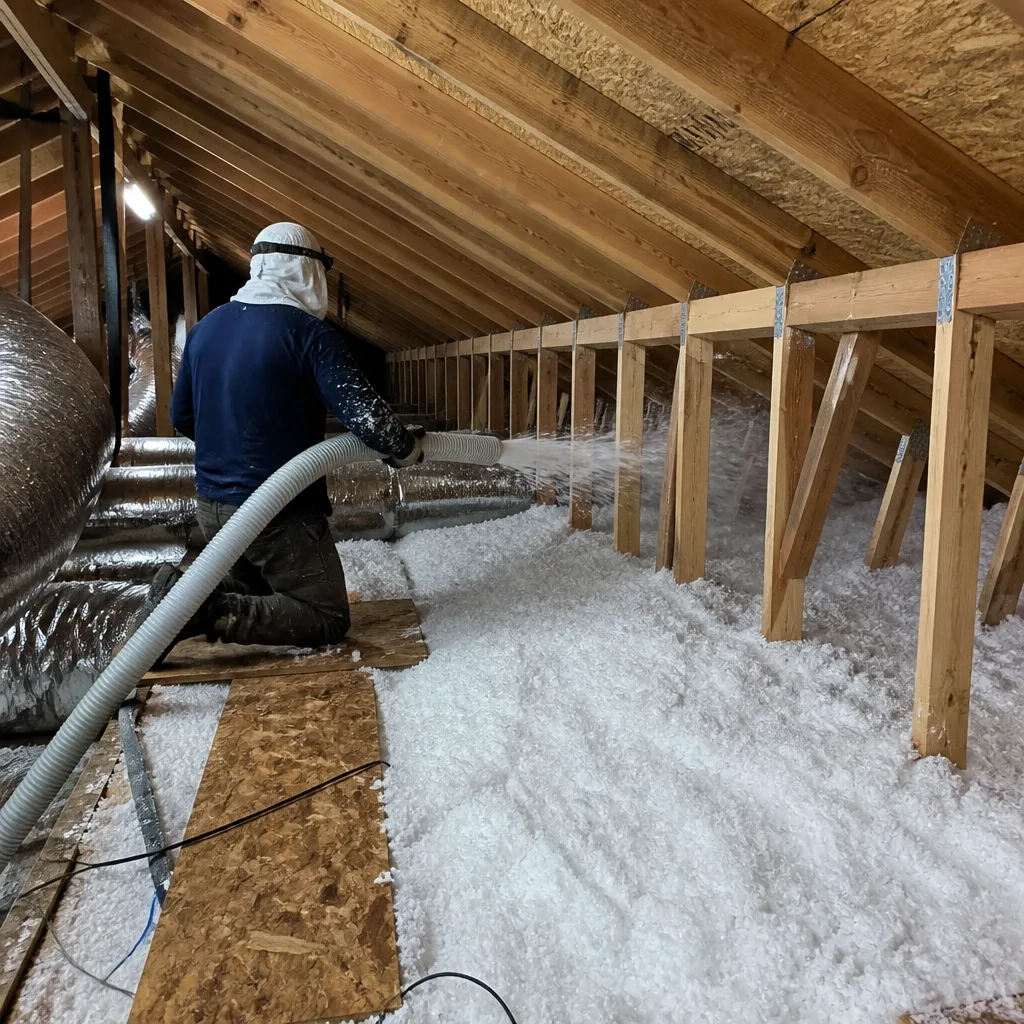 After
AfterReplacement Cost & What’s Included
Most Owens Corning attic retrofits in Tustin run $1.80-$3.20 per square foot for blown-in L77, with the full job typically between $2,400 and $5,800 for attics in the 1,200-2,500 square foot range. The driver is access: a wide scuttle hole in a hallway closet keeps labor down; a 14-inch hatch over a garage with a pull-down ladder adds time for material handling and hose routing.
Every quote breaks out material, labor, and air sealing separately. We don’t bury the sealing in a line item called “prep.” Under Haven Standard Clause 1, you get a written price before any work starts, and that price includes: blower-door test before and after, top plate and penetration sealing with foam and caulk, baffle installation at eaves if missing, L77 blown to specified depth, and a Documented Photo Record delivered by email before we leave. The 365-Day Done Right Promise covers settling, coverage gaps, or any performance issue we can verify with a follow-up blower-door test.
DIY or Call Us?
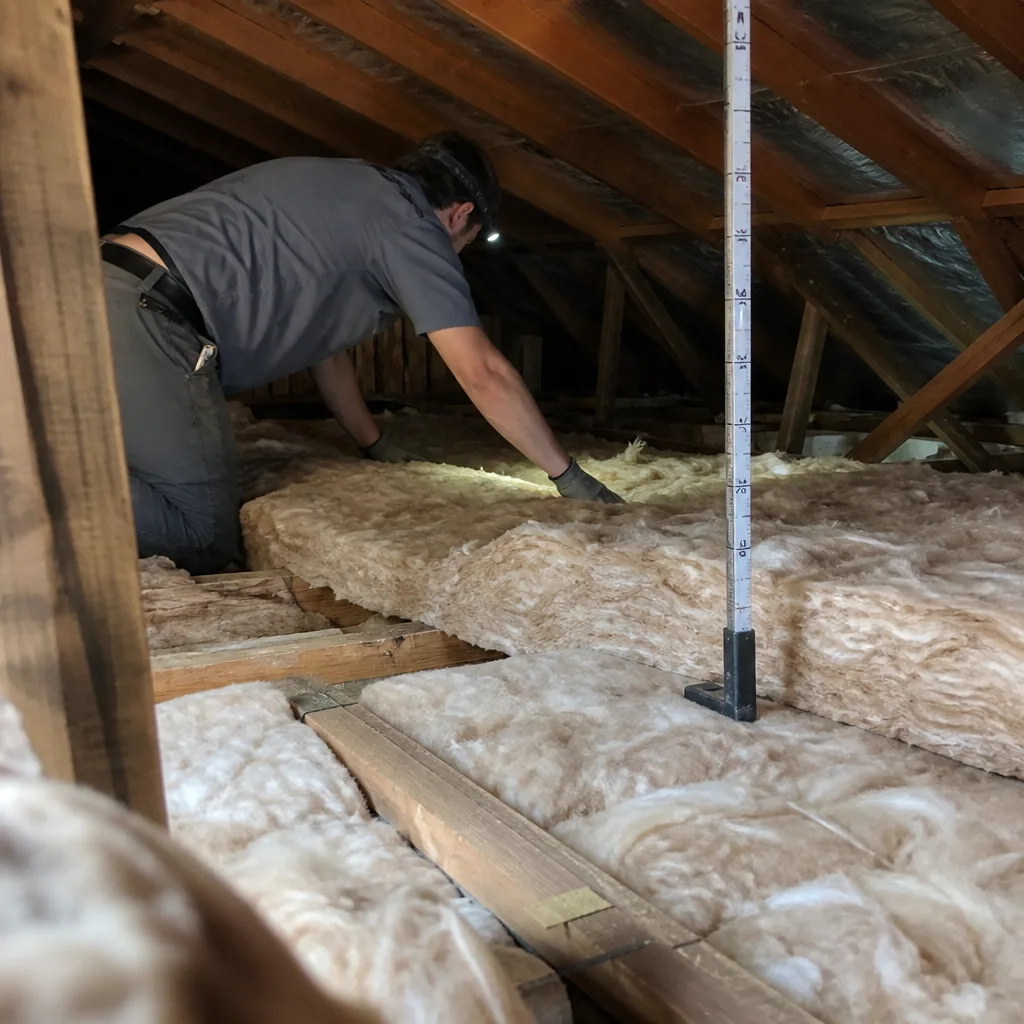
There’s nothing dangerous about handling Owens Corning fiberglass itself. The safety issue is what you can’t see from the attic hatch. Tustin attics built before 1990 may have vermiculite insulation containing asbestos; disturbing it without testing is a health hazard and a regulatory violation. We test before we touch anything.
An owner can safely check: attic hatch location and size, whether existing insulation is pink (Owens Corning), yellow (Johns Manville), or white (Knauf), and whether any recessed lights are labeled “IC.” What goes wrong in DIY: blowing insulation over unsealed top plates, blocking soffit vents with loose fill, or compressing batts during installation and losing half the R-value. We also find homeowners who bought the wrong L77 variant, L77P, which is a wall-cavity product with different density and settling characteristics.
Seal the leaks first. Then insulate. The R-value on the bag means nothing if conditioned air is moving through the gap around that recessed can. Call (657) 286-7673 and we’ll walk through what you’re seeing. Estimates are free, and we offer a Free Second Opinion on any written estimate you’ve already received.
FAQs
Fiberglass itself doesn’t degrade chemically, but settling and compression reduce performance over 15-25 years in our climate. We inspect Tustin homes where 20-year-old batts read at half their labeled thickness. The material is still there; it’s just not doing the job. Call (657) 286-7673 for a depth check, no charge.
Yes, if the existing material is dry, uncontaminated, and uncompressed. We blow L77 over old batts regularly in Tustin Legacy homes. We don’t add over wet, rodent-affected, or oil-stained insulation, those conditions require removal first. Call (657) 286-7673 and we’ll photograph what you have and tell you which path applies.
Most Tustin homes are a single day: morning for air sealing and blower-door baseline, afternoon for blowing and final test. Large attics or those requiring baffle installation at every rafter bay may run into a second day. We give you a written schedule with the price, so you know before we start.
We stock L77 in standard R-value targets and carry Owens Corning, Johns Manville, Knauf, and Rockwool through our supplier network. For Tustin jobs, we typically pull material morning-of to confirm batch color match and verify the bag code against your scope. We don’t show up guessing what goes in your attic.
Written by Wes Okafor, Owner, Topside Attic Insulation Tustin at Topside Attic Insulation Tustin, serving Tustin and nearby areas.