
Rockwool Crawl Space Encapsulation: The Tustin Owner’s Guide
We stock and install Rockwool-compatible crawl space encapsulation systems for Tustin homes, with most completed jobs running between $2,800 and $5,200 depending on crawl square footage and whether the foundation walls need full coverage or just a vapor barrier over bare soil. Same-day installation is available when we have your measurements and photos in advance. Most Tustin owners discover their Rockwool encapsulation has failed when they notice musty odors returning after a dry winter, find condensation beading on the foundation walls in March, or spot sagging Comfortbatt falling away from rim joists in the Legacy area’s tighter crawl spaces where seasonal groundwater shifts the polyethylene sheeting.
Which Rockwool Models This Applies To
Rockwool does not manufacture a dedicated “crawl space encapsulation kit,” so what we’re matching are the three product lines Tustin contractors actually use in below-grade applications: Comfortbatt (framed wall cavities, R-15 to R-23 depending on 2×4 or 2×6 construction), Comfortboard 80 (rigid exterior-grade boards for foundation walls, 1.5″ to 3″ thicknesses), and Safe’n’Sound (interior partition applications where fire resistance matters more than thermal value). The critical compatibility gotcha: Comfortbatt labeled for 2×6 walls is 5.5″ thick, but many Tustin crawl spaces built 1985-2005 have actual 2×6 rough openings of 5.25″ after decades of moisture swelling. We measure before ordering. OEM Rockwool carries the stamped density rating and flame-spread index; quality aftermarket mineral wool from Johns Manville or Owens Corning matches the R-value but may run 0.5 lb/ft³ lighter on density, which matters if you’re pressing it against a damp foundation wall without proper drainage matting behind it.
Signs Your Rockwool Crawl Space Encapsulation Is Failing
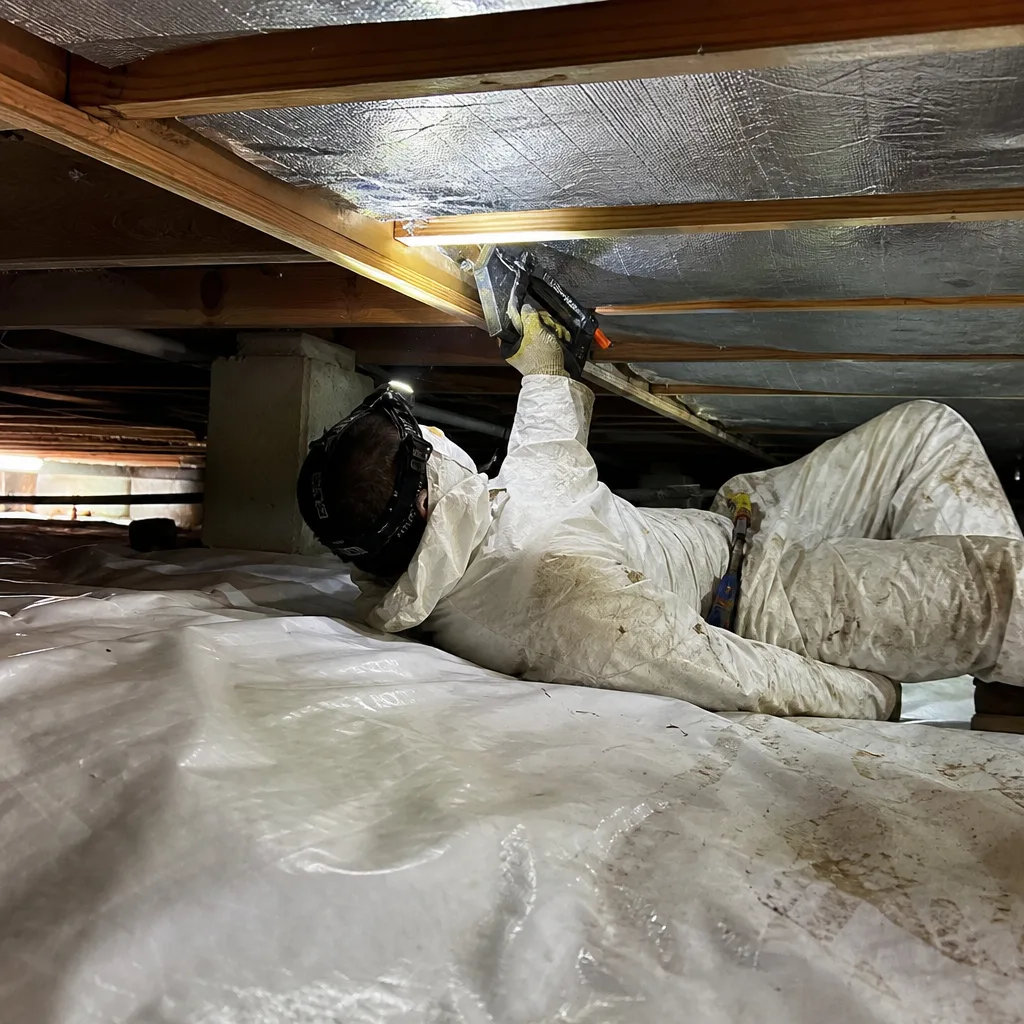
- Musty odor returning after rain. The polyethylene vapor barrier has torn at seams or pulled from the sill plate, letting soil moisture bypass the Rockwool entirely. In Tustin’s clay-heavy soils near Peters Canyon, seasonal expansion often shears tape bonds at the perimeter.
- Condensation on foundation walls behind the insulation. This means the dew point is being hit inside the assembly, usually because the Comfortboard was installed without a dimple mat drainage plane or because the crawl space vents were sealed without adding mechanical dehumidification.
- Comfortbatt sagging or falling from rim joists. The friction-fit relies on precise width; humidity cycling causes wood shrink-swell that loosens the grip. We see this most in Tustin Legacy homes where the original 2005-era encapsulation used 16″ batts in 14.5″ cavities.
- White powder on Rockwool surface. Not mold - efflorescence from masonry salts wicking through. It indicates bulk water is reaching the foundation wall, and the encapsulation is hiding rather than solving the problem.
- Energy bills climbing despite unchanged thermostat settings. Air leakage at the rim joist, common in Tustin’s 1970s ranch-style stock, bypasses the insulation entirely. The R-value on the bag means nothing if conditioned air is moving through the gap around that recessed can - or in this case, the rim joist cavity.
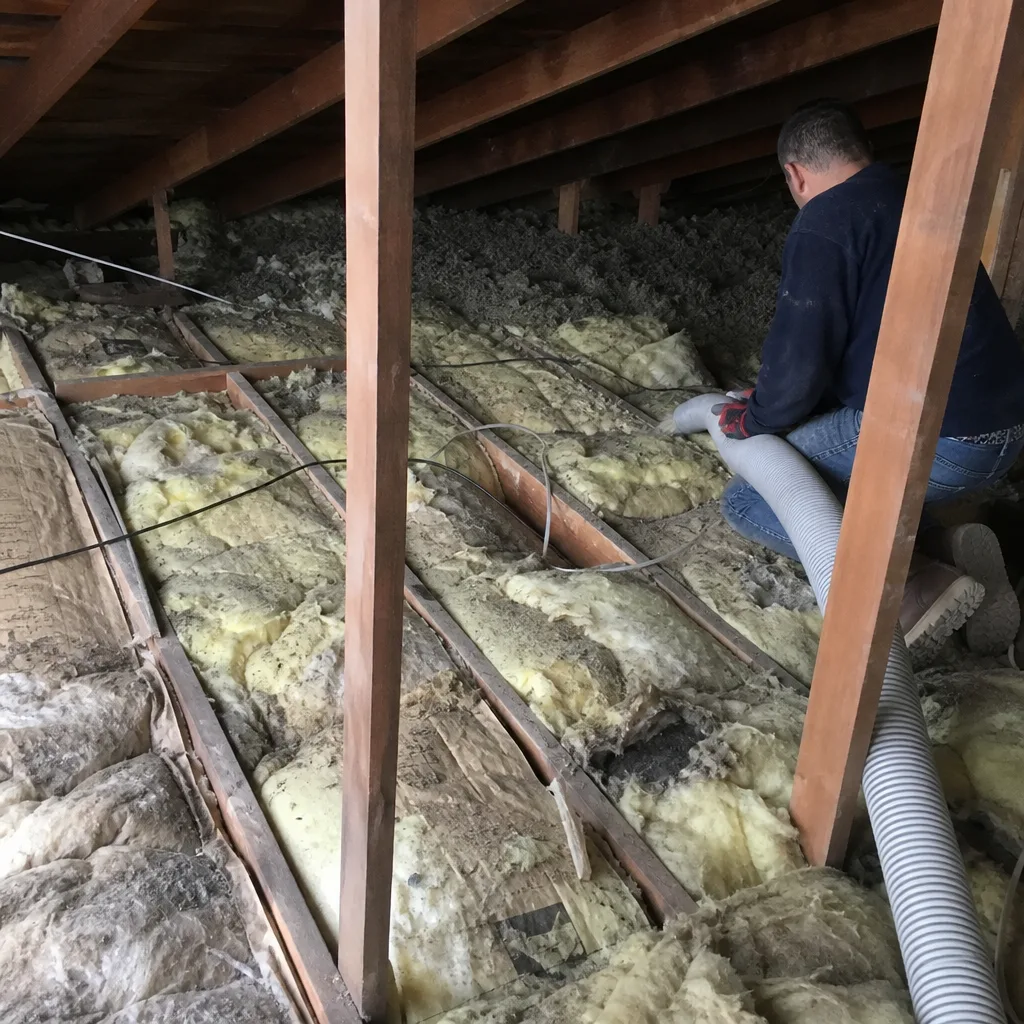 Before
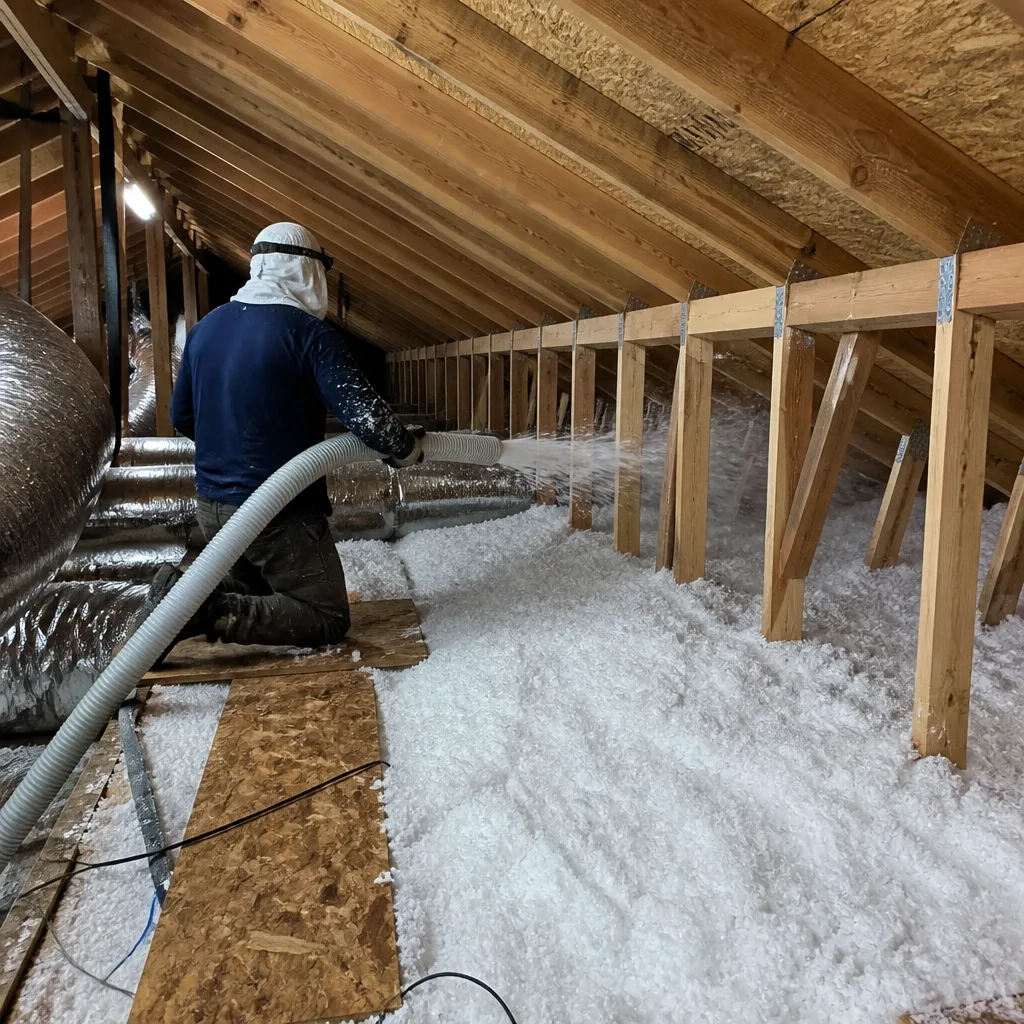 After
AfterReplacement Cost & What’s Included
For a typical Tustin crawl space of 800-1,200 square feet, full Rockwool encapsulation replacement runs $2,800-$4,200 with existing vapor barrier removal and disposal, or $4,000-$5,200 if we need to add a new 6-mil or 10-mil reinforced polyethylene ground cover with sealed seams and mechanical fastening to the sill plate. What drives the range: crawl height (anything under 18″ requires rotation work), whether the rim joists need closed-cell spray foam air sealing before Rockwool goes in, and if a dehumidifier drain line needs routing to the exterior. Every job includes our written scope, the 365-Day Done Right Promise, and a Documented Photo Record showing before condition, air-sealing detail, and finished installation. We publish before-and-after blower-door numbers when the crawl space connects to conditioned space through bypasses - a pressurization measurement that shows, in one figure, how much air your building envelope was losing.
DIY or Call Us?
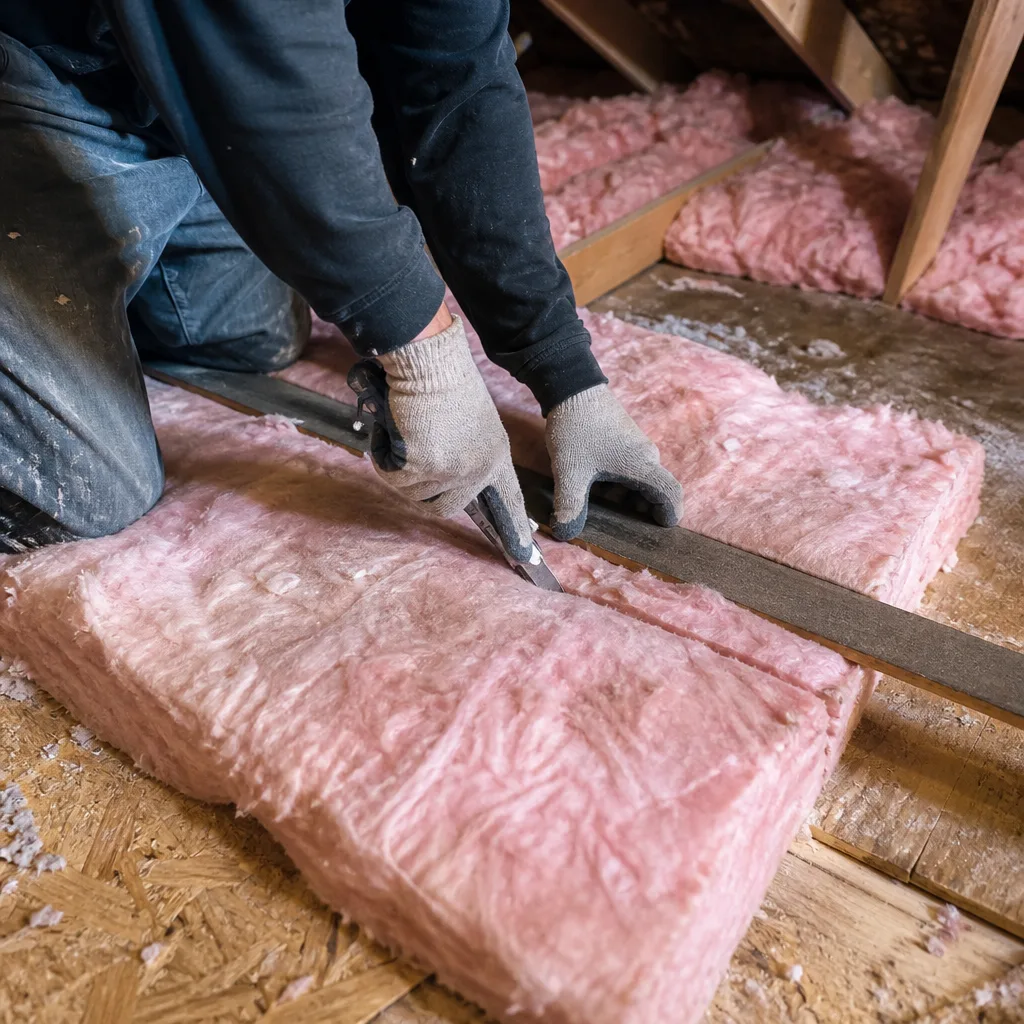
Here’s what you can safely check yourself: confirm your crawl space entry is accessible, photograph any visible sagging or moisture, and note whether your existing vapor barrier is white (standard polyethylene) or silver-faced (Reflectix or similar radiant barrier product - we stock parts for Reflectix systems too if that’s what you’re working with). Where DIY goes wrong: working in confined below-grade spaces with limited ventilation carries real risk, and improperly sealed vapor barriers trap moisture against framing. Rockwool itself won’t mold, but the wood behind it will if bulk water isn’t managed first. We’re independently owned and operated, not affiliated with Rockwool, and we carry moisture meters, thermal cameras, and the right fasteners on every truck. Call (657) 286-7673 - a live person answers, and we’ll schedule a free second opinion on any written estimate you already have.
FAQs
Properly installed with sealed seams and managed humidity, 20-25 years. The mineral wool itself is inert, but the polyethylene vapor barrier and tape bonds are the wear items - expect 10-15 years before seam maintenance in Tustin’s seasonal groundwater cycle. Call (657) 286-7673 and we’ll inspect what you have now.
Partial repair works if the vapor barrier is intact overall and only localized Comfortbatt has sagged. We re-secure with mechanical fasteners and add steel strapping, not just friction fit. If the poly is degraded or bulk water is present, repair wastes money - replacement with proper drainage is the only fix that lasts. Call for an exact assessment; estimates are free.
Most Tustin crawl spaces take one to two days: half day for removal and air sealing, half day for installation and detail work. Tight crawls under 24″ height add time. We arrive with a written scope and leave with a Documented Photo Record - no exceptions.
We stock Comfortbatt in R-15 and R-23, Comfortboard 80 in 1.5″ and 2″ thicknesses, and the drainage matting, fasteners, and tapes that make the system work. For odd sizes or Safe’n’Sound fire-rated assemblies, we pull from our Orange County supplier and typically have it next day. Call (657) 286-7673 to confirm availability for your specific model.
Written by Wes Okafor, Owner, Topside Attic Insulation Tustin at Topside Attic Insulation Tustin, serving Tustin and nearby areas.