
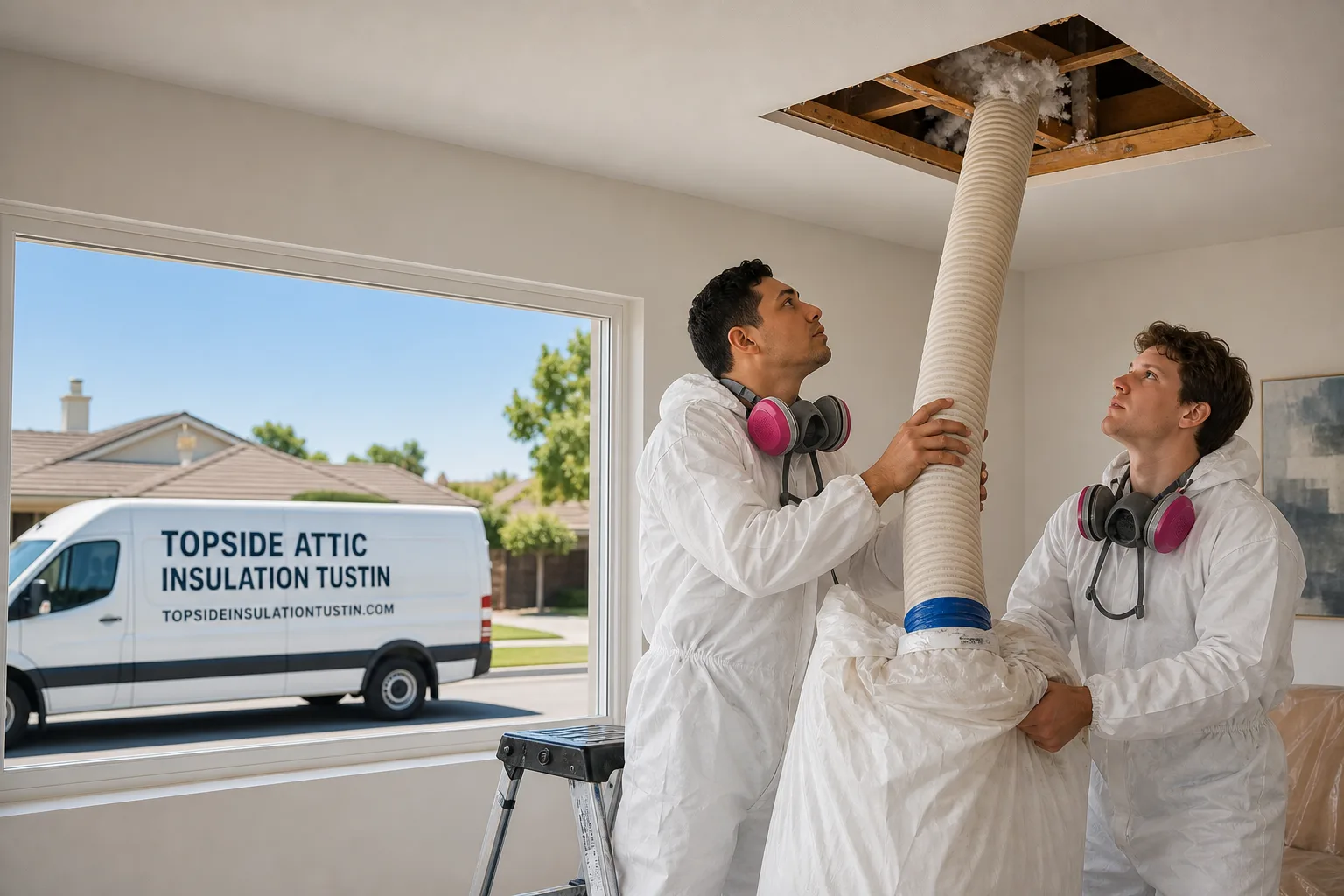
How Much Does Crawl Space Encapsulation & Vapor Barrier Cost in Tustin?
Crawl Space Encapsulation & Vapor Barrier services in Tustin, CA typically run between $3,200 and $8,500 for a standard single-family home, with most jobs landing around $4,800 to $6,200 when the crawl space is in average condition and under 1,500 square feet. A vapor barrier installation alone – without full encapsulation – generally costs $1,400 to $2,800 depending on liner thickness and access conditions. Those ranges hold for the Tustin market in 2026; what moves a job toward the high end or the low end is explained below.
Crawl Space Encapsulation & Vapor Barrier Cost Breakdown (2026)
Crawl space encapsulation is not a single product – it is a system. The final invoice reflects several distinct line items, and understanding each one helps you evaluate any written estimate you receive. Under Haven Standard Clause 1, you get a written price before anyone lifts a tool, so every number below should appear as its own line when a contractor quotes this work.
| Scope Item | Typical Tustin Price Range | Notes |
|---|---|---|
| Vapor barrier only (6-mil poly, basic install) | $1,400 – $2,200 | Covers ground only; no wall liner, no drainage |
| Vapor barrier upgrade (20-mil reinforced liner) | $2,200 – $3,400 | Thicker material, seam-taped, longer service life |
| Full encapsulation (liner + wall coverage + sealing) | $4,200 – $7,500 | Walls, piers, and floor all covered; vents sealed or conditioned |
| Crawl space vent sealing | $300 – $650 | Foam-sealed or insulated plugs; often included in full encapsulation quotes |
| Drainage matting / dimple board | $400 – $900 | Added when moisture intrusion is a recurring issue |
| Sump pump installation (crawl space type) | $900 – $1,800 | Needed only when standing water is observed; not always required in Tustin |
| Dehumidifier (crawl space-rated unit) | $1,000 – $2,200 | Added when relative humidity reads above 60% consistently |
| Existing insulation removal (fiberglass batts) | $600 – $1,400 | Old, wet batts must come out before encapsulation |
| Mold remediation (minor, surface-level) | $500 – $1,500 | Borate treatment on joists; heavy mold requires a separate specialist |
| Post-work crawl space insulation (spray foam or rigid board) | $1,800 – $3,500 | Insulating the perimeter walls after encapsulation is complete |
For context, a 1,200-square-foot crawl space under a typical Tustin home built in the 1970s or 1980s – think the older tracts in Rancho Maderas or along Red Hill Avenue – often requires old batt removal, a 20-mil liner, wall coverage, and vent sealing. That package runs $5,500 to $7,000 before any dehumidifier or drainage work. Newer homes built after 2000 in east Tustin near Jamboree Road tend to have tighter crawl spaces with less accumulated moisture damage, and those jobs frequently fall in the $4,000 to $5,500 range.
What drives cost up: poor access (less than 18 inches of clearance), standing water, active mold, deteriorated existing insulation that must be removed, and any crawl space that was used for storage and requires cleanout first. What drives cost down: a dry, clean space with good access, no existing liner to remove, and a crawl space under 800 square feet.
What Affects Crawl Space Encapsulation & Vapor Barrier Pricing in Tustin
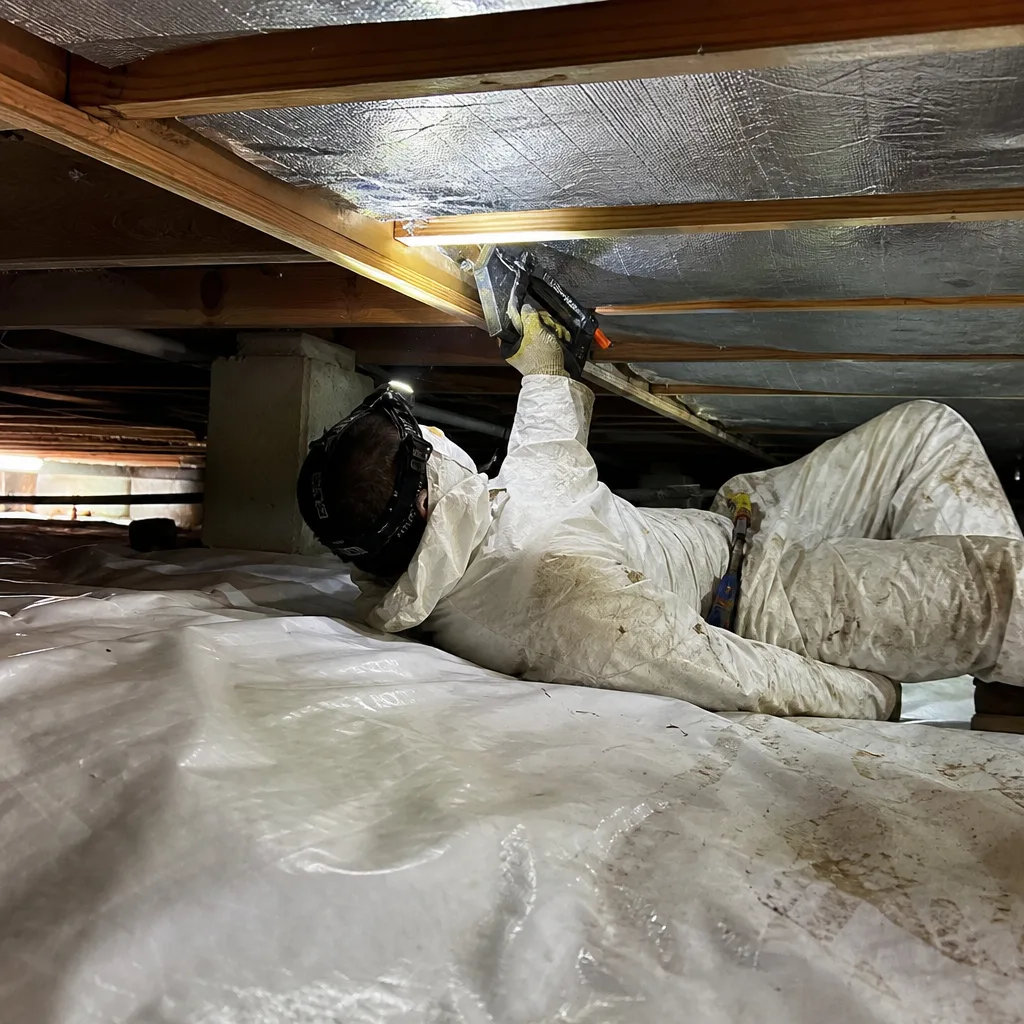
Tustin’s geography and housing stock create pricing conditions that differ from what you’d see in, say, a coastal city with persistent marine layer or a mountain community with snowmelt. Here is what actually moves the number on your estimate:
- Crawl space square footage. Most contractors price encapsulation per square foot, typically $3.50 to $7.50 per square foot for full encapsulation in the Tustin market. A 600-square-foot space and a 2,000-square-foot space require the same mobilization cost, but materials scale directly with footage. Always confirm whether the quote covers actual crawl space area or conditioned floor area above – they’re not the same number.
- Access and working height. Tustin’s mid-century ranch homes on the west side of the city – many of them built between 1955 and 1975 – have crawl spaces with 18 to 24 inches of clearance. Anything under 18 inches adds labor time and increases installation cost by 15% to 25% because technicians cannot move efficiently and liner placement becomes slow, careful work rather than fast work.
- Existing moisture damage and mold. Orange County’s dry summers hide a persistent crawl space problem: irrigation runoff and plumbing slow-leaks that go undetected for years. In Tustin specifically, homes near the older Enderle Center neighborhood and the legacy agricultural land converted to residential in the 1980s sometimes show elevated ground moisture because the soil retains irrigation habits from prior land use. If the technician finds mold on the joists or wicking on the mudsill, that has to be addressed before any liner goes down.
- Liner thickness and material grade. A 6-mil poly sheet is the minimum code allows, but it punctures during annual inspections and doesn’t last as long. Most Tustin homeowners doing this once and doing it right choose a 12-mil to 20-mil reinforced liner. The price difference between 6-mil and 20-mil on a 1,000-square-foot space is roughly $600 to $1,100 in materials alone – a meaningful number, but one that typically pays back in liner longevity over 5 to 10 years.
- Vented vs. unvented (conditioned) crawl space design. Older Tustin homes were built with vented crawl spaces – the theory being that outdoor air would dry the space out. Building science no longer supports that for most climates. Sealing the vents and conditioning the crawl space (bringing it inside the thermal envelope) is now the preferred approach and adds $300 to $650 in sealing materials, but it eliminates the seasonal humidity cycling that degrades liner seams and floor system wood over time.
- Add-ons: dehumidifier, drainage, and post-encapsulation insulation. A crawl space dehumidifier rated for the space (typically 70-pint or 90-pint for Tustin’s crawl space volumes) adds $1,000 to $2,200 to the job. Drainage matting adds $400 to $900. If the perimeter walls are uninsulated after encapsulation, closed-cell spray foam or rigid foam board on the walls adds $1,800 to $3,500. These aren’t mandatory on every job, but they are often the difference between a crawl space that performs and one that needs follow-up work in three years.
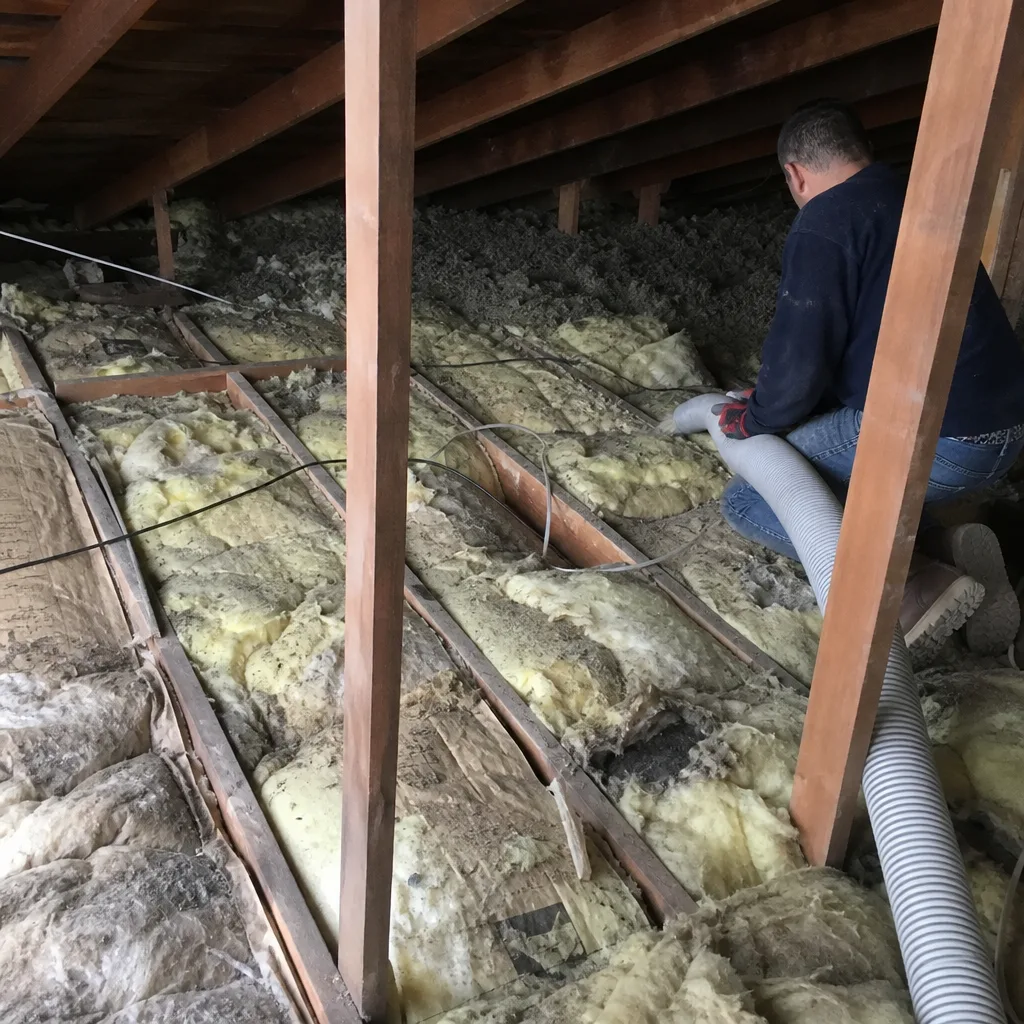 Before
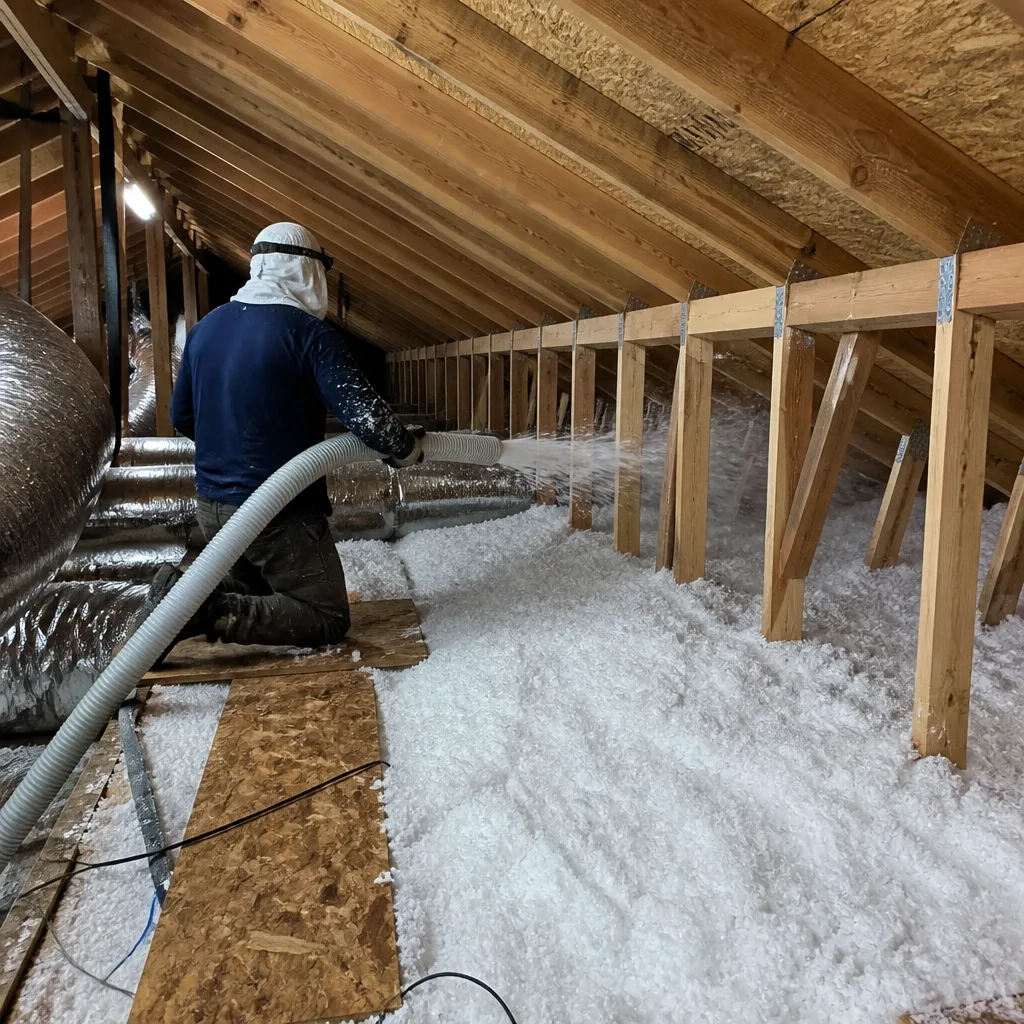 After
AfterTustin Building Code and Permit Considerations
The City of Tustin follows the California Building Code, which in turn references California Energy Code (Title 24) for crawl space work. A vapor barrier installation alone typically does not require a permit in Tustin. Full encapsulation – particularly work that involves sealing existing foundation vents and converting a vented crawl space to a conditioned one – can trigger a permit requirement depending on scope. The City of Tustin Building Division, located at 300 Centennial Way, handles these reviews, and permit fees for crawl space work in this category generally run $150 to $350.
This matters for two reasons. First, unpermitted vent-sealing work can come up during a home sale inspection and complicate escrow. Second, permitted work is inspected, which means a third party verifies the installation – and that is a form of documentation that protects you as the homeowner. Any contractor who tells you a permit is unnecessary for vent sealing on a conditioned crawl space conversion is worth a second opinion. We offer a free second opinion on any written estimate, and reading a competitor’s scope with you is part of that conversation.
How to Save on Crawl Space Encapsulation & Vapor Barrier in Tustin
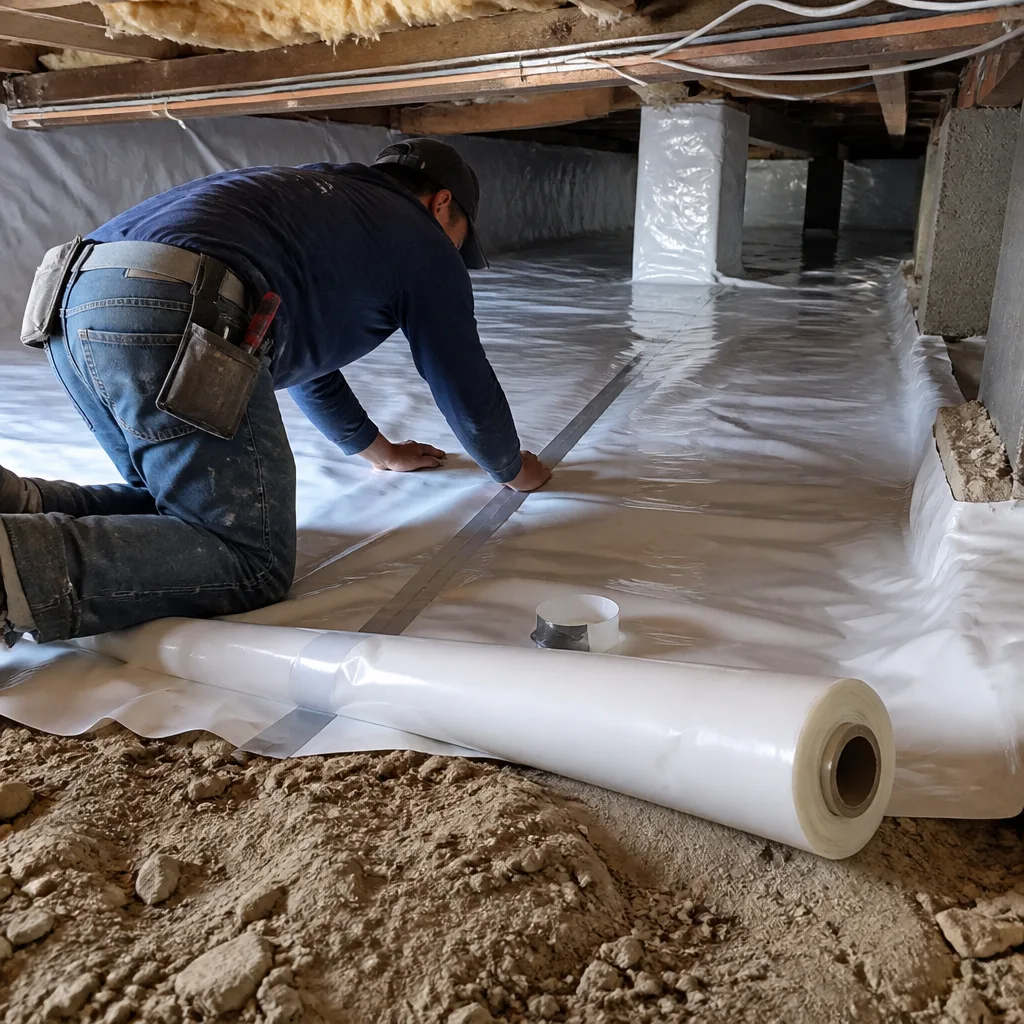
Crawl space encapsulation is not a category where the lowest bid usually wins. A liner installed over wet soil, or sealed vents without proper conditioning, creates moisture problems that cost more to fix than the original installation. That said, there are legitimate ways to reduce the total outlay without reducing the quality of what goes in.
Get the estimate before the crawl space gets worse. In Tustin, the rainy season runs roughly November through March. If a crawl space has a slow moisture problem, it gets meaningfully worse after two or three wet winters. Addressing it in early fall – before water has further degraded the joists or existing liner – often saves the cost of mold remediation and full batt removal. A crawl space that needs only a liner install in September might need liner plus mold treatment plus joist repair by the following spring.
Separate the phases if budget is constrained. If the full encapsulation budget is not available in one payment, a quality contractor will scope the work in logical phases: liner installation first, dehumidifier second, perimeter wall insulation third. This only works if each phase is done correctly – a liner installed without resolving an active moisture source just traps the problem. Be honest with the technician about what’s driving the timing and let them tell you the right sequencing.
Check for utility rebates. Southern California Edison and SoCal Gas occasionally offer rebates for whole-home energy improvements that include Crawl Space Insulation components. The specific programs and dollar amounts change by quarter, so it’s worth asking the contractor to confirm current availability at the time of your estimate. We stay current on these programs for the Tustin service area and note available rebates in our written scope when they apply.
Use the free second opinion. If you have a written estimate from another contractor, bring it to us. We will read the scope line by line and tell you whether each item is necessary, correctly priced for the Tustin market, and specified to an appropriate material grade. There is no charge for this and no obligation to book. Call (657) 286-7673 to schedule it.
Don’t buy more dehumidification than the space needs. Crawl space dehumidifiers are sized by pint-per-day capacity relative to cubic footage of the space and the ambient humidity conditions. Tustin’s inland location means the crawl space RH (relative humidity) is generally lower than a comparable home in Seal Beach or Huntington Beach. A correctly sized 70-pint unit for a 1,200-square-foot Tustin crawl space will outperform an oversized 90-pint unit that short-cycles. Ask to see the sizing calculation before approving that line item.
What You Get When the Job is Done: The Documented Record
One of the more useful things to understand before you hire anyone for crawl space work is what leaving looks like. After the liner is down and the vents are sealed, you can’t see any of it without crawling back in yourself. This is a category where documentation matters more than almost any other home improvement.
Every job Envelope Insulation Co. completes includes a Documented Photo Record – before and after photos of the crawl space conditions, the liner installation, the vent sealing, and any remediation work. These photos are part of your job record. They’re not available on request after the fact; they’re included and delivered when the crew leaves. Under the 365-Day Done Right Promise, if anything about the installation is not right – a seam that’s lifting, a vent plug that’s shifted, any moisture return that the installation should have addressed – we make it right. The written scope and written warranty are in your hands before anyone starts, so you know exactly what “done right” means before the first technician goes under the house.
For homeowners planning to sell in the next three to five years, that documentation has real value. A buyer’s inspector who finds a clean, documented encapsulation with photos and a transferable warranty is not going to flag the crawl space as a concern. A crawl space that was encapsulated by an unknown contractor with no documentation is a question mark that can hold up a sale.
Crawl Space Encapsulation vs. Vapor Barrier: What Is Actually the Difference?
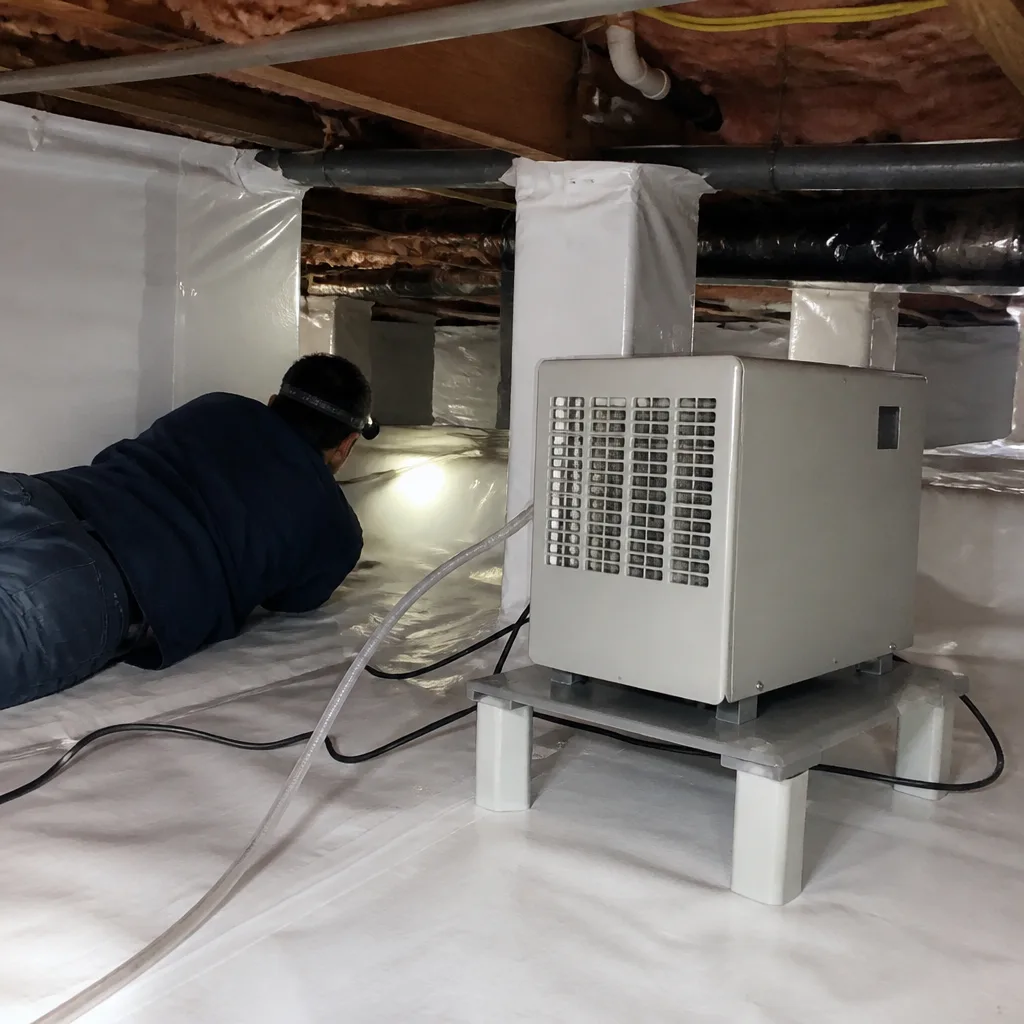
These terms get used interchangeably in contractor ads, but they describe different scopes of work, and the price difference is significant.
A vapor barrier is a single layer of polyethylene sheeting laid on the ground of the crawl space. It slows moisture vapor from migrating up through the soil into the framing above. It does not seal the walls, it does not address the foundation vents, and it does not change how air moves through the space. It’s the minimum-code option and costs the least – $1,400 to $2,800 in Tustin for most homes.
Encapsulation means the entire crawl space is sealed: the ground, the perimeter walls up to the mudsill, the foundation vents, and any penetrations. The goal is to bring the crawl space inside the home’s thermal and moisture envelope so it behaves more like conditioned space and less like the outdoors under your floor. Done correctly, it reduces the load on the HVAC system, reduces floor-level temperature variation, and extends the service life of the floor structure. It costs more – $4,200 to $7,500 for most Tustin homes – but it solves the underlying problem rather than slowing it down.
Which one is right depends on the current condition of the crawl space and the moisture source. If the space is dry and well-vented and the goal is a code-compliant ground cover, a vapor barrier is sufficient. If there’s a documented humidity problem, visible efflorescence on the foundation walls, or condensation on the joists in winter, encapsulation is the correct scope. A technician who recommends full encapsulation on a dry, well-maintained crawl space without explaining why is worth questioning. A technician who recommends a vapor barrier on a space with active moisture problems is giving you a partial solution. The written scope should explain the reasoning either way.
For more information about our approach to this work in the Tustin market, see our full Crawl Space Encapsulation & Vapor Barrier in Tustin service page, which walks through our process from initial crawl space assessment to final documentation.
FAQs – Crawl Space Encapsulation & Vapor Barrier Cost in Tustin
How much does crawl space encapsulation cost in Tustin, CA in 2026?
Full crawl space encapsulation in Tustin runs $4,200 to $7,500 for most single-family homes, with the average job around $5,500 to $6,000. A basic vapor barrier installation (ground cover only, no wall liner or vent sealing) costs $1,400 to $2,800. The total depends on crawl space square footage, liner thickness, existing damage, and whether add-ons like a dehumidifier or drainage matting are needed. Call (657) 286-7673 and we’ll put a written price in front of you before anything else happens.
Is a permit required for crawl space encapsulation in Tustin?
A permit is not required for vapor barrier installation alone in Tustin. Converting a vented crawl space to a conditioned (sealed vent) crawl space can require a permit from the City of Tustin Building Division, and permit fees for this work typically run $150 to $350. Any contractor who tells you permits are never required for vent sealing is worth a second look – unpermitted vent-sealing work can come up as a deficiency during a resale inspection. We confirm permit requirements as part of every written scope we deliver.
How long does crawl space encapsulation last?
A properly installed 20-mil reinforced liner in a conditioned crawl space typically lasts 20 to 25 years before it needs replacement. A 6-mil poly vapor barrier in a vented crawl space may need replacement in 8 to 12 years, depending on foot traffic during inspections and moisture cycling. The liner thickness you choose at installation directly affects long-term cost per year. In Tustin’s relatively dry inland climate, a 12-mil to 20-mil liner with sealed vents is the specification that holds up best over time.
Can I just install a vapor barrier myself to save money?
A DIY vapor barrier using 6-mil poly from a home center costs roughly $200 to $500 in materials for a 1,000-square-foot crawl space – so yes, the materials cost is low. What typically goes wrong: seams that aren’t taped fail to prevent vapor migration; the liner doesn’t run up the foundation walls to the mudsill; penetrations around pipes and posts aren’t sealed. The result is a crawl space that looks encapsulated but performs like an unprotected one. If the crawl space has any moisture problem at all, a partial vapor barrier can trap moisture under the liner and accelerate wood decay. For a dry space with no existing issues and no vent-sealing work involved, a well-done DIY ground cover is a reasonable interim measure. For anything more complex, the documented installation from a professional – with photos and a written warranty – is worth the difference.
Does crawl space encapsulation actually reduce energy bills?
Yes, measurably. Conditioning the crawl space reduces the temperature differential between the floor and the living space above, which lowers heating and cooling load. Studies from Oak Ridge National Laboratory show crawl space encapsulation can reduce whole-home energy use by 15% to 22% in homes with significant crawl space thermal losses. In Tustin, where summer temperatures regularly exceed 95°F and heating season is mild but real, floor-level heat loss in winter and heat gain in summer both respond to a properly conditioned crawl space. We note energy performance expectations in the written scope on applicable jobs so you have a reference point, not a promise that can’t be verified.
How do I know if I need encapsulation or just a vapor barrier?
If your crawl space is dry, the vents are functioning, the existing liner (if any) is intact, and you’re doing this to meet code or to cover bare soil before selling: a vapor barrier is probably the right scope. If you’ve noticed musty odors at floor level, higher-than-expected humidity in the living space during winter, visible condensation on pipes or joists, or soft spots in the floor: encapsulation – with vent sealing and possibly a dehumidifier – is the correct answer. The assessment starts with a technician in the crawl space with a moisture meter and a flashlight, not a conversation over the phone. Call (657) 286-7673 and we’ll send someone to take a look and give you a written scope before any work is proposed.
Key Takeaways
- Vapor barrier only (ground cover, no wall liner): $1,400 to $2,800 in Tustin
- Full encapsulation (liner + walls + vent sealing): $4,200 to $7,500 for most Tustin homes
- Average full-encapsulation job in Tustin in 2026: roughly $5,500 to $6,000
- Liner thickness matters: 20-mil lasts 20 to 25 years; 6-mil lasts 8 to 12 years
- Vent sealing may require a City of Tustin permit ($150 to $350 in fees)
- Add-ons (dehumidifier, drainage matting, wall insulation) can add $1,400 to $4,500 to the total
- Every job from Envelope Insulation Co. starts with a written price – no work begins without it
- A Documented Photo Record is included on every visit, not available on request
- The 365-Day Done Right Promise applies to all completed work
Ready to Get a Written Price for Your Tustin Crawl Space?
We’re available on the home page to learn more about how Envelope Insulation Co. approaches crawl space work under The Haven Standard. Or, if you’d rather go straight to a written price: call (657) 286-7673. A live person answers – no voicemail, no callback window. We’ll schedule a crawl space assessment, send you a technician you can identify by name, and put a flat written price in front of you before any work is proposed. If you already have a written estimate from another contractor, bring it. We’ll read it with you at no charge.
Envelope Insulation Co. has completed crawl space work in Tustin, Irvine, Orange, Santa Ana, Anaheim, and across Orange County since 2016. Every job – 9,000-plus homes and counting – has started with a written price and ended with a documented record. Wes Okafor and the team apply the same standard to a $1,400 vapor barrier job as to a $7,500 full encapsulation. The scope is in writing. The photos are in your inbox when we leave. And if anything isn’t right within 365 days, we come back and make it right.
Written by Wes Okafor, Owner at Envelope Insulation Co. / Topside Attic Insulation Tustin, serving Tustin, CA since 2016. Pricing reflects the Tustin market as of 2026. Topside Attic Insulation Tustin offers free estimates – call (657) 286-7673.
What Our Customers Say
"They air-sealed the attic floor before insulating and showed me the blower-door number before and after. The upstairs is finally the same temperature as downstairs."
- Marisol D."They photographed rodent damage in the old insulation that we had no idea about, and priced the exclusion work separately so we could decide."
- Harriet N."The winter gas bill dropped by about a third. They had estimated a quarter, so they under-promised."
- Genevieve R.