
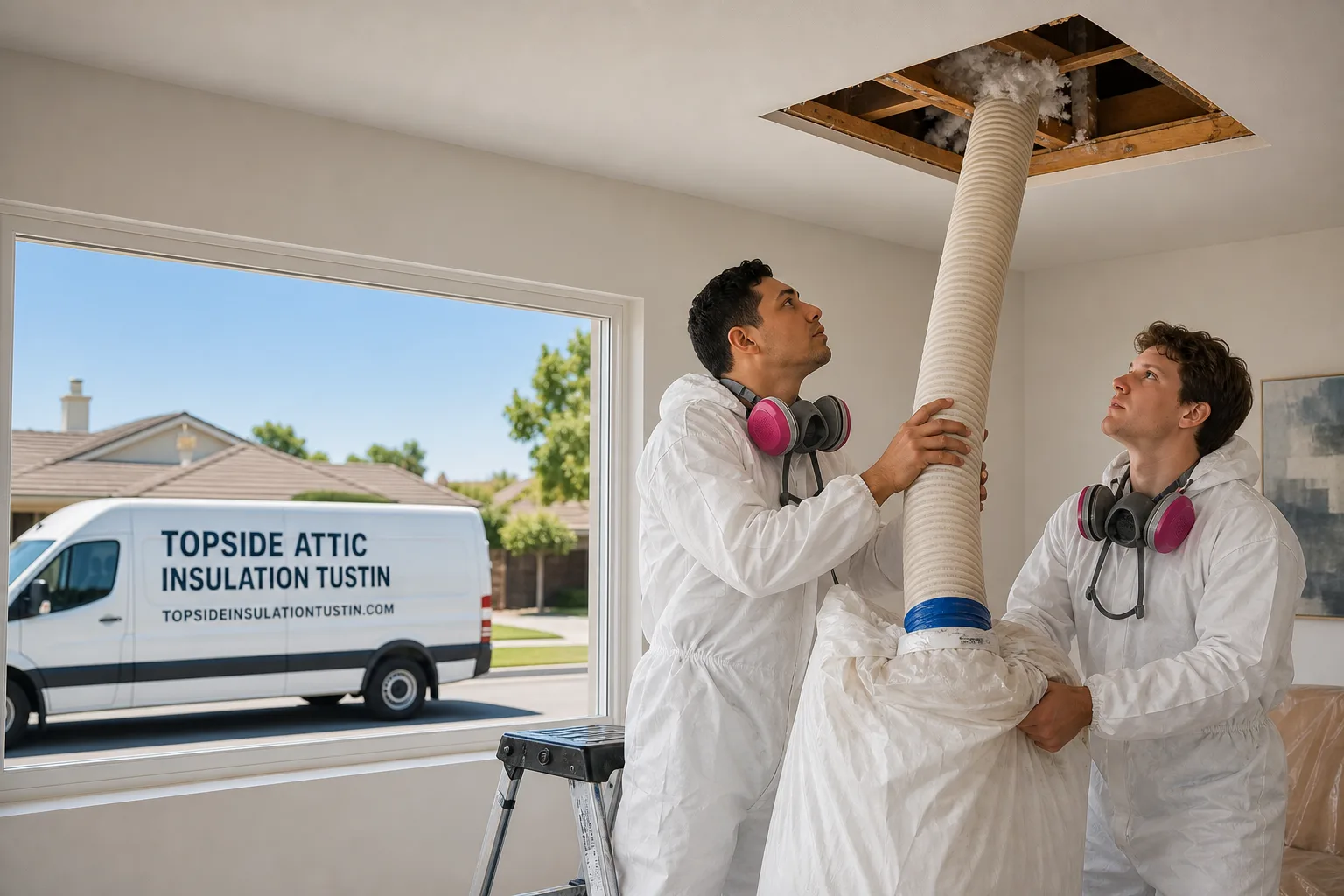
How Much Does Radiant Barrier Installation Cost in Tustin?
Radiant barrier installation in Tustin, CA typically costs between $1,400 and $3,200 for a standard single-story home, with most homeowners landing in the $1,700 to $2,400 range depending on attic square footage and access conditions. Most jobs are completed in a single day, and the payback period in Tustin’s climate – where attic temperatures routinely hit 140 to 160°F during June through September – tends to run three to six years in cooling-cost savings.
Radiant Barrier Installation Cost Breakdown (2026)
Our Radiant Barrier Installation services in Tustin break into a handful of predictable line items. Below is what our crews actually see on typical jobs in this market:
| Line Item | Typical Range (Tustin, 2026) | Notes |
|---|---|---|
| Foil radiant barrier material | $0.15 - $0.35 per sq ft | Double-sided, perforated foil is standard for vented attics in Southern California |
| Labor – staple-up application | $0.60 - $1.10 per sq ft | Stapling to rafter undersides; most common method in Tustin tract homes built 1970-2005 |
| Labor – draped/laid application | $0.45 - $0.85 per sq ft | Laid over existing attic insulation; faster install, slightly lower radiant performance |
| Attic access upgrade (if needed) | $150 - $350 | Older Tustin homes near Old Town and the Tustin Legacy area sometimes have undersized hatches |
| Minor air sealing before installation | $200 - $600 | Under Haven Standard, air sealing of top plates and penetrations is completed before any material goes in |
| Removal of existing debris or damaged insulation | $300 - $900 | Less common, but older Tustin homes near Irvine Boulevard sometimes have rodent-damaged batts that need to come out first |
| Full job – 1,200 sq ft attic (typical) | $1,400 - $2,200 | Most 3-bedroom Tustin homes built between 1975 and 1995 |
| Full job – 1,800 sq ft attic (larger home) | $2,000 - $3,200 | Larger footprints in East Tustin, Tustin Ranch, and newer developments near the 261 corridor |
What moves the number up: a low-pitch roofline with minimal clearance (common on some 1960s-era Tustin Ranch Road properties), an attic with multiple HVAC units, or a home with complicated roof geometry that requires extra cutting and seaming. What moves it down: a clean, open attic with a single HVAC unit and good hatch access. If your attic already has existing blown-in insulation sitting on the floor, a draped application over the top is the faster and cheaper path – though for maximum summer cooling performance in Tustin’s inland heat, the staple-up method positioned at least three inches from the existing insulation surface is the better choice. We explain why that air gap matters during every estimate.
What Affects Radiant Barrier Installation Pricing in Tustin
- Attic square footage: This is the single biggest lever on the final number. A 900-square-foot attic on a small Old Town Tustin bungalow and a 2,200-square-foot attic in a Tustin Ranch two-story are genuinely different jobs. Measure your conditioned floor space and assume your attic footprint is roughly the same number.
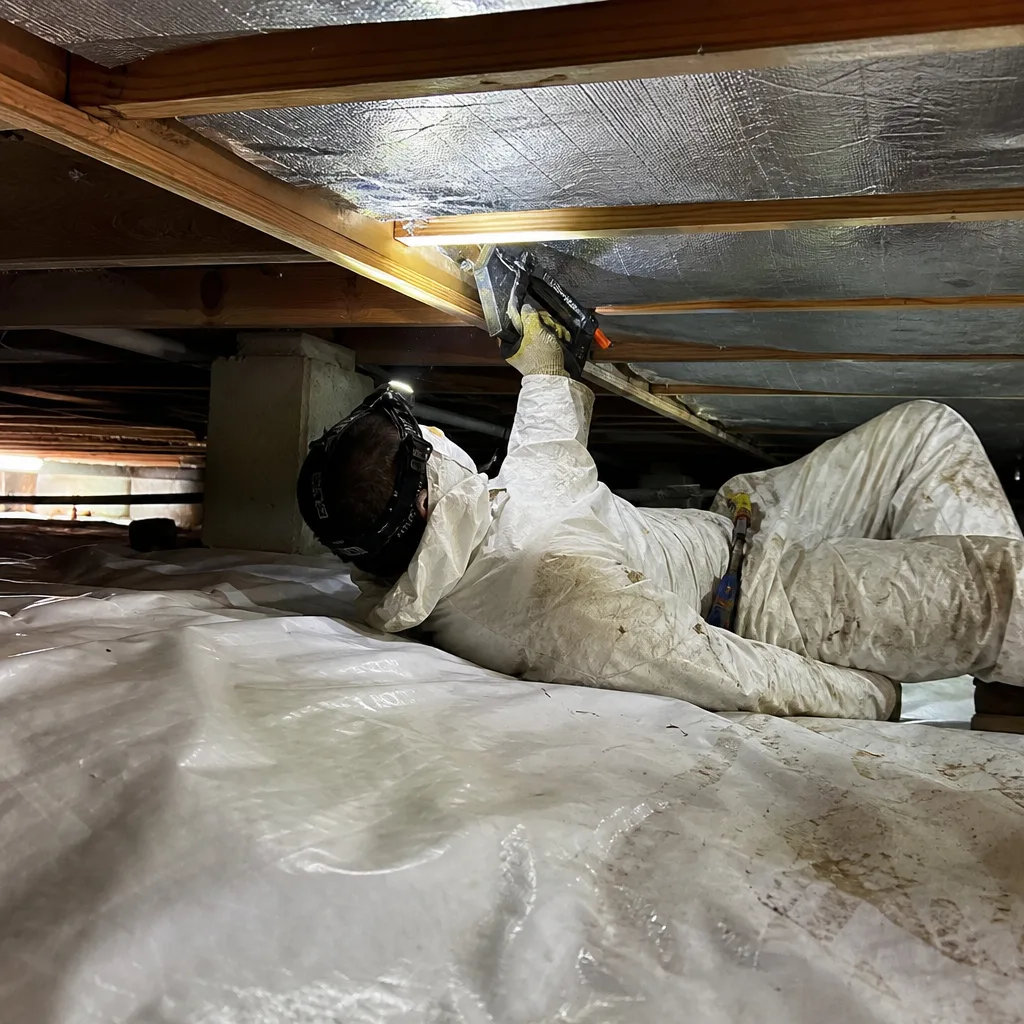
- Application method – staple-up versus draped: Staple-up, which attaches the foil directly to the underside of the roof rafters, requires more labor time but creates a proper air gap that reflects radiant heat before it ever reaches your insulation layer. Draped is faster and cheaper but works best when combined with adequate existing insulation underneath.
- Tustin’s climate zone and attic temperatures: Tustin sits in California Climate Zone 8, which means long, hot summers and a home cooling load that can run three to four months continuously. That context makes the radiant barrier’s summer performance particularly valuable here compared to coastal cities fifteen miles west. Contractors who understand this will spec a double-sided perforated foil rather than a single-sided product – the perforations allow moisture vapor to pass through rather than trap condensation in your attic.
- Existing insulation condition: If your attic insulation is in good shape, the crew can work around it. If we find rodent damage, significant compression, or insulation that has settled below R-19 – which happens more often than most homeowners expect in Tustin homes built before 1985 – addressing that before adding the radiant barrier is the honest call, even if it adds to the job cost.
- HVAC equipment and ductwork in the attic: Homes in the Tustin Unified area and older sections of the city frequently have all HVAC equipment and ducting in the attic. That adds seaming and cutting time because the foil has to be fitted around equipment, and it also increases how hard your crew works in there. Expect a 10 to 15 percent labor premium on attics with full HVAC systems compared to attics with a single air handler.
- Attic access quality: A standard 22-by-30-inch pull-down stair makes material handling straightforward. A 14-by-22-inch scuttle hole in a closet ceiling – which shows up regularly in 1970s Tustin tract construction – slows material handling and adds labor. If your access needs to be expanded, that typically adds $150 to $350 to the job but also makes every future attic visit faster and safer.
- Air sealing scope required: Under The Haven Standard at Envelope Insulation Co., we treat air sealing as a prerequisite, not an upsell. Before any radiant barrier material goes in, top plates, can light penetrations, and attic bypasses are sealed. In Tustin homes built before 1995, it’s common to find significant air leakage at these points. That sealing work adds cost to the line item, but it also means your HVAC system isn’t cooling the neighborhood while you pay for a radiant barrier to do its job above.
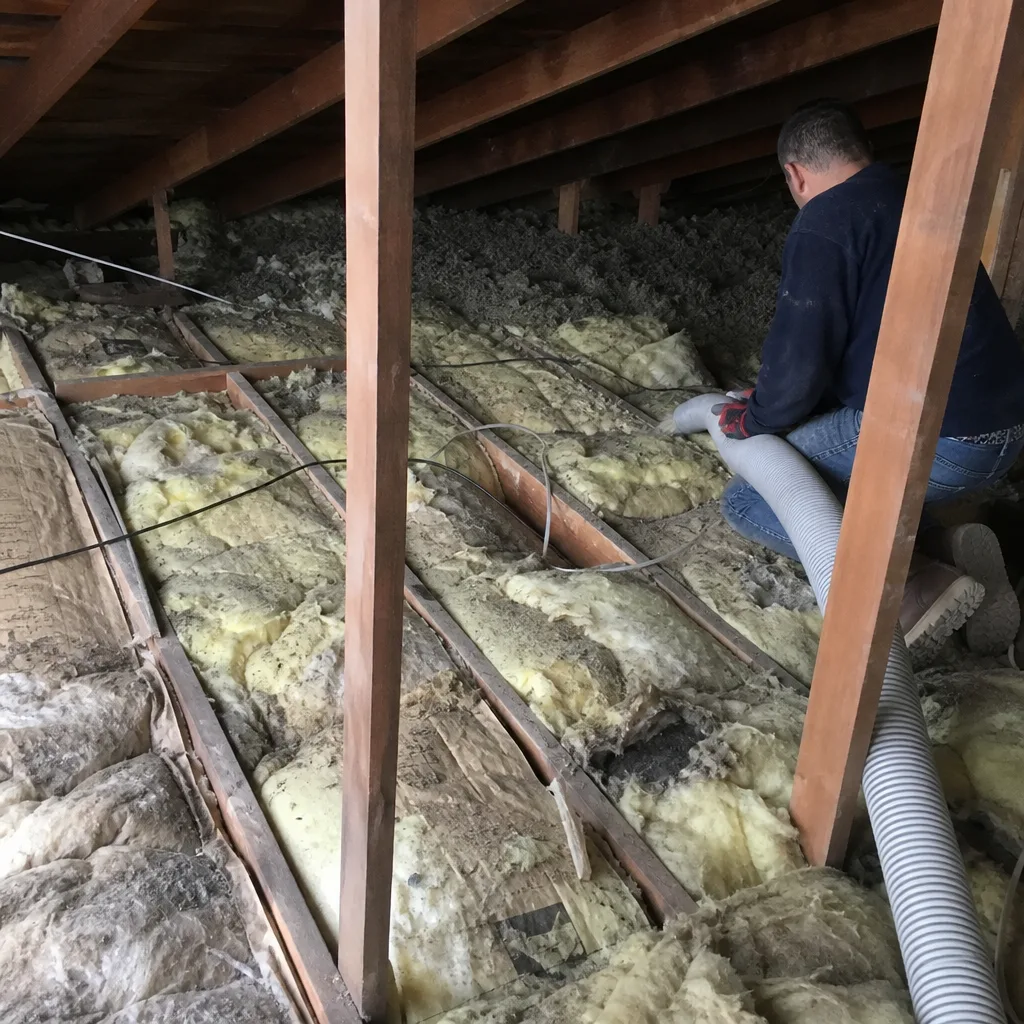 Before
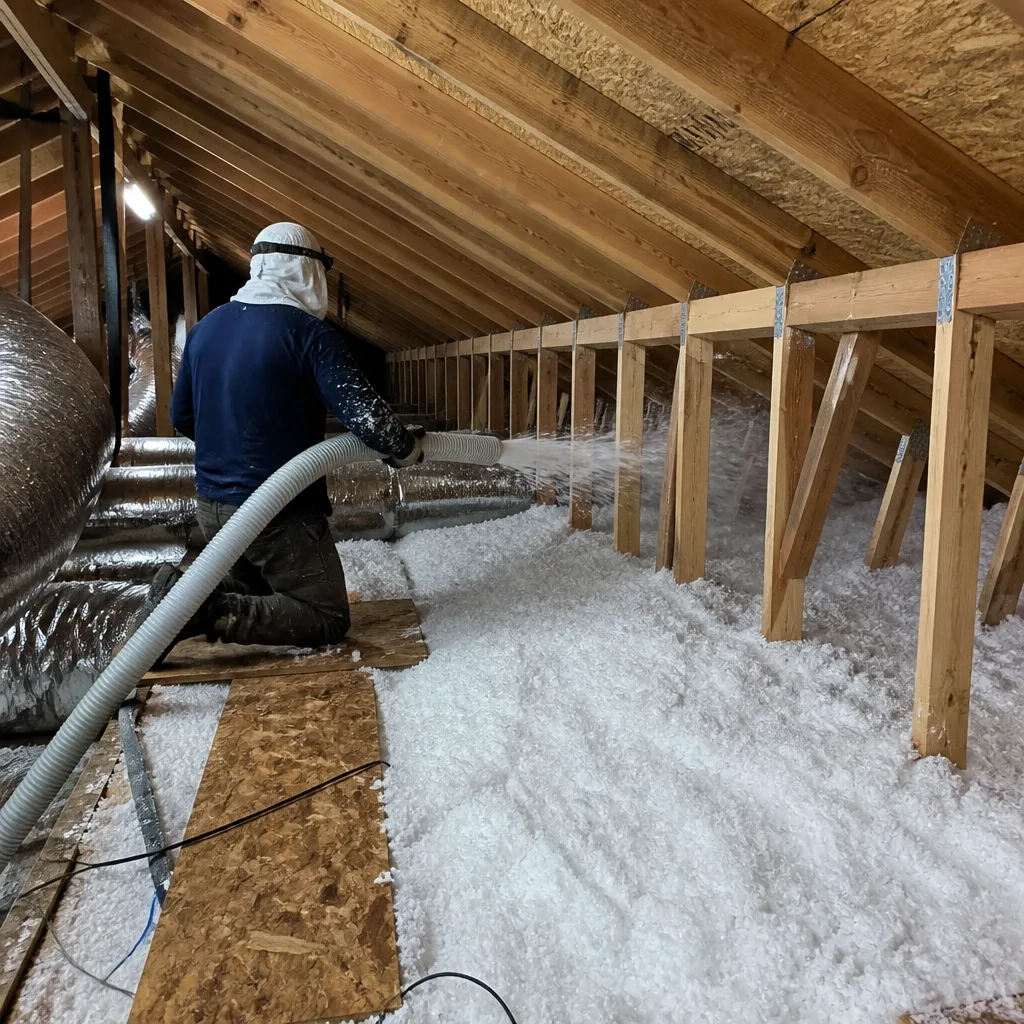 After
AfterHow to Save on Radiant Barrier Installation in Tustin
There are a few ways to reduce the total cost without reducing the quality of the result.
Bundle with attic insulation work
If your attic insulation is due for an upgrade anyway – and in Tustin homes built before 2000, it often is – scheduling both the radiant barrier installation and an insulation upgrade at the same time means one mobilization, one set of attic prep, and one crew visit. That eliminates duplicate labor on the access work, the debris removal, and the pre-work air sealing. Most homeowners who bundle see a 10 to 18 percent reduction in the combined cost compared to two separate jobs scheduled months apart.
Ask for a free second opinion on any written estimate
If you already have a quote from another contractor, bring it to us. Under Haven Standard policy, we’ll read it with you line by line and point out anything that looks off – whether that’s a material specification that won’t perform well in Tustin’s climate, an application method that isn’t right for your attic geometry, or a price that needs explaining either way. The Free Second Opinion on Any Written Estimate is included, no strings attached.
Check for utility and state incentive programs
Southern California Edison and SoCalGas periodically offer rebates on building-envelope improvements including radiant barriers when paired with qualifying insulation work. Programs and eligibility change year to year, so check the current SCE and CPUC program listings before your job is scheduled rather than after. A contractor who will only work with their own preferred incentive program is worth questioning – your rebate should follow your project, not theirs.
Prioritize your attic prep before the crew arrives
If there are items stored in your attic – which is common in Tustin Ranch homes with larger attic footprints – clearing them before the crew’s arrival saves direct labor time that otherwise gets billed at $65 to $90 per hour. It’s one of the few line items entirely in your control.
Get a written price before any work starts
This sounds obvious, but it directly protects your budget. Under Haven Standard Clause 1, a flat price, written scope, and written warranty are delivered before anyone lifts a tool. That means no after-the-fact change orders for conditions the crew could reasonably have anticipated during the estimate. Call (657) 286-7673 to schedule a free estimate with a written price – no work starts without it.
What You Should Expect From the Installation Day
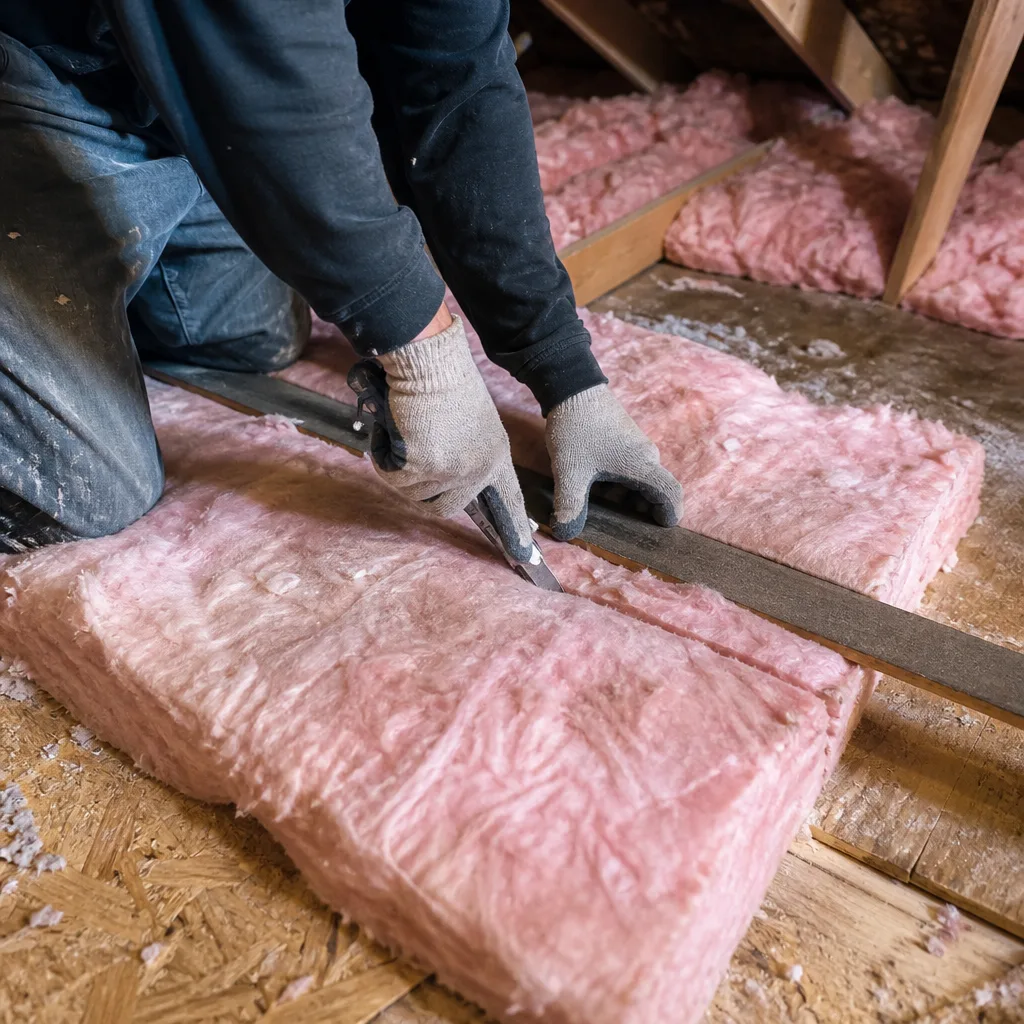
Knowing what the actual work looks like helps homeowners in Tustin evaluate any estimate they receive – including ours.
A typical radiant barrier staple-up job on a 1,500-square-foot Tustin attic runs five to eight hours for a two-person crew. The day starts with attic inspection and air sealing of any identified top-plate gaps, can light boxes, and utility penetrations. That work is documented with photos before the barrier material comes in. Then the foil is cut and stapled to the underside of the roof rafters, working in rows from the ridge down toward the eaves, with seams overlapped and taped at joints.
At the end of the job, you receive a Documented Photo Record showing the completed installation – coverage, seaming, and any areas where the geometry required custom fitting. On applicable jobs where air sealing scope was significant, before-and-after blower-door test numbers – a pressurization measurement that shows, in a single figure, how much conditioned air the home was losing before and after sealing – are documented so you can see the actual air-leakage change, not just take our word for it.
The 365-Day Done Right Promise applies to every completed job. If the installation isn’t right, we make it right – that commitment is in writing before work begins, not offered verbally after the fact.
Radiant Barrier vs. Additional Attic Insulation: Which One First?
This is a question we get regularly on jobs in Tustin, and it deserves a direct answer.
A radiant barrier works by reflecting radiant heat – the infrared energy radiating off the underside of a hot roof deck – before it reaches your insulation. Attic insulation works by slowing conductive heat transfer once heat has already crossed the air gap and is trying to move through your ceiling assembly. The two mechanisms are different and genuinely complementary.
In Tustin’s climate, where roof deck temperatures hit 150°F or above on summer afternoons and cooling costs account for the majority of most homeowners’ annual energy bills, a radiant barrier addresses the largest single source of summer heat gain in an attic. If your existing insulation is already at R-38 or better, a radiant barrier is typically the higher-ROI next step. If your insulation has settled to R-19 or below – which is the floor for new construction in California Climate Zone 8 – adding insulation first, or simultaneously, makes more sense.
We document what we find in your attic before recommending either path. That finding goes into the written scope so you have a record of the starting condition. See our full Radiant Barrier Installation in Tustin service page for more detail on how we approach this assessment.
Is Radiant Barrier Installation Worth It in Tustin?
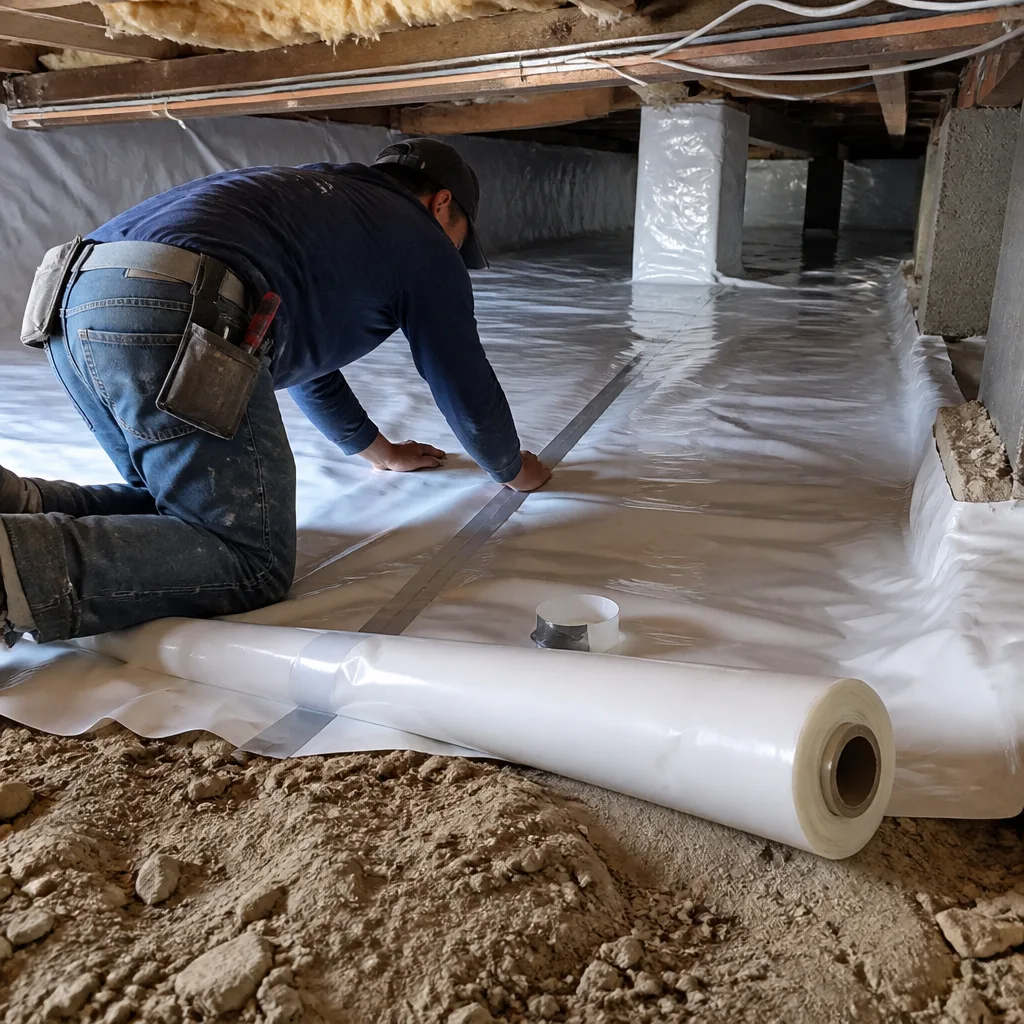
For most Tustin homeowners, yes – but the number that makes the case is cooling load reduction, not just installation cost.
Independent testing from Lawrence Berkeley National Laboratory and the Florida Solar Energy Center found that radiant barriers in hot climates reduce attic radiant heat gain by 40 to 97 percent depending on installation method and conditions. In practical terms for a Tustin home with central air conditioning, that typically translates to 5 to 15 percent reduction in cooling costs during summer months. On a home spending $200 to $350 per month on electricity during June through September, a 10 percent reduction is $20 to $35 per month, or $80 to $140 over the cooling season.
At a job cost of $1,700 to $2,400 for a typical Tustin attic, that puts the simple payback at roughly four to eight years on cooling savings alone – before accounting for reduced HVAC wear from lower attic temperatures and any increases in home value from a documented building-envelope improvement.
The case gets stronger if your HVAC equipment and ductwork live in the attic, which is common in Tustin construction. Ducts running through a 150°F attic lose conditioning to the surrounding air even when they’re insulated. A radiant barrier that drops attic temperature by 20 to 30°F means your ducts aren’t working against themselves every afternoon from June through September.
Tustin-Specific Considerations: What We See on Local Jobs
Tustin’s housing stock is more varied than the single-ZIP-code view suggests. The older homes near Old Town Tustin – many built between 1955 and 1975 – tend to have lower roof pitches, smaller attic access hatches, and original insulation that has long since settled below current code minimums. In those attics, we commonly find R-11 to R-19 batts that have been there since the Carter administration, and attic air leakage that adds meaningfully to the blower-door reading.
The homes in the Tustin Ranch and Tustin Legacy areas, built mostly between 1987 and 2005, have better access and more attic volume, but they also more frequently have the full HVAC system in the attic – package units, air handlers, and ductwork all sitting in 140-degree air. Those are exactly the homes where a radiant barrier delivers the clearest return, because the equipment is being cooked every summer day without one.
Newer construction near the Tustin Legacy mixed-use development sometimes already has a radiant barrier installed by the builder – typically a foil-faced roof deck sheathing product rather than a field-installed foil barrier. If you’re unsure what your home has, that’s something we check during every attic estimate at no charge.
We’ve also encountered a pattern in some Tustin homes near the 55 freeway corridor where roofing contractors applied a second layer of composition shingles rather than tearing off the first. That double-layer roof deck holds heat longer and radiates more intensely into the attic, which actually increases the payback case for a radiant barrier.
FAQs – Radiant Barrier Installation Cost in Tustin
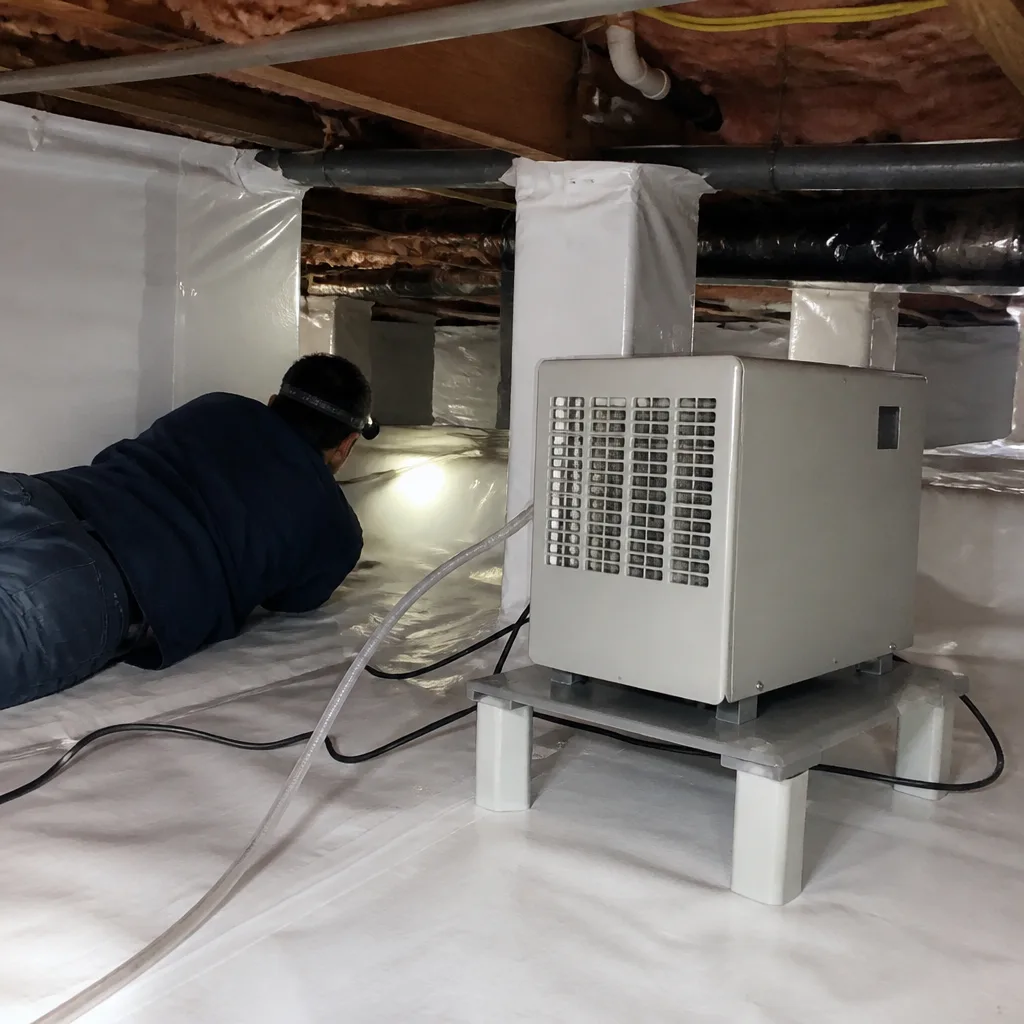
How much does radiant barrier installation cost in Tustin, CA?
Most radiant barrier installation jobs in Tustin run between $1,400 and $3,200, with the typical single-story home in the $1,700 to $2,400 range. The primary variable is attic square footage – a 1,200-square-foot attic on a 3-bedroom Tustin tract home is a different scope than a 2,000-square-foot attic in a larger Tustin Ranch property. A written price before any work starts is included in every estimate from Envelope Insulation Co. – call (657) 286-7673 to schedule yours.
Does radiant barrier installation actually lower cooling bills in Tustin?
Yes. In Tustin’s Climate Zone 8 conditions, a properly installed perforated foil radiant barrier stapled to rafter undersides typically reduces cooling costs by 5 to 15 percent during summer months. For a home spending $250 per month on electricity in July and August, that’s a reduction of $12 to $37 per month. Homes with HVAC equipment and ducts in the attic tend to see results at the higher end of that range because the radiant barrier also reduces the heat load on ductwork running through the attic.
How long does radiant barrier installation take in a typical Tustin home?
A 1,200 to 1,800-square-foot attic in a typical Tustin home takes a two-person crew five to eight hours from start to finish, including the air sealing work that precedes the barrier installation. Larger or more complex attics – homes with multiple roof peaks, significant HVAC equipment, or difficult access – can run a full day. In almost all cases the home is fully usable throughout; the crew is in the attic, not in the living space.
Is a permit required for radiant barrier installation in Tustin?
In most cases, no. The City of Tustin does not require a building permit for radiant barrier installation when it’s a standalone improvement to an existing residential attic. If the job is combined with HVAC work, electrical modifications, or structural changes, permit requirements for those scopes apply separately. We verify current permit requirements with the City of Tustin Building Division before every job – if your project needs one, it goes into the written scope before work starts.
What’s the difference between a perforated and non-perforated radiant barrier?
Perforated foil has small holes punched through the surface that allow moisture vapor to pass through rather than collecting on the foil. For vented attics in Southern California – which covers the large majority of Tustin homes – perforated foil is the correct specification. Non-perforated barriers are typically used on unvented roof assemblies where vapor control is managed by other means. Installing a non-perforated barrier in a vented Tustin attic can trap moisture and create conditions that accelerate wood rot over time. We specify double-sided perforated foil on all standard residential installs in this market.
Can radiant barrier be installed over existing attic insulation?
Yes, with important nuances. A draped application – laying the foil over existing insulation rather than stapling it to the rafter undersides – is possible and costs somewhat less in labor. However, this method only works well if there’s at least two to three inches of clear air gap above the foil surface, which is harder to guarantee when draping over irregular existing insulation. The staple-up method, which positions the foil at the rafter underside and creates a reliable air gap above the insulation, performs consistently better in Tustin’s summer heat load conditions. We assess which approach is appropriate for your attic’s specific geometry during the estimate visit.
Key Takeaways
- Radiant barrier installation in Tustin costs $1,400 to $3,200 for most homes, with typical jobs landing at $1,700 to $2,400.
- Attic square footage, application method (staple-up vs. draped), and HVAC equipment in the attic are the three biggest cost drivers.
- Tustin’s Climate Zone 8 summer heat makes radiant barriers a strong investment, especially for homes with HVAC equipment and ducts in the attic space.
- Perforated, double-sided foil stapled to rafter undersides is the correct specification for vented Tustin attics – not single-sided or non-perforated products.
- Air sealing of top plates and attic penetrations should be completed before the barrier goes in – doing it afterward makes both less effective.
- A written price, written scope, and written warranty are delivered before any work starts – that’s Haven Standard Clause 1, on every job.
- The Documented Photo Record included on every job means you have a record of exactly what was installed and where.
- Bundling radiant barrier with attic insulation work typically saves 10 to 18 percent on combined cost versus two separate jobs.
Get a Written Price for Radiant Barrier Installation in Tustin
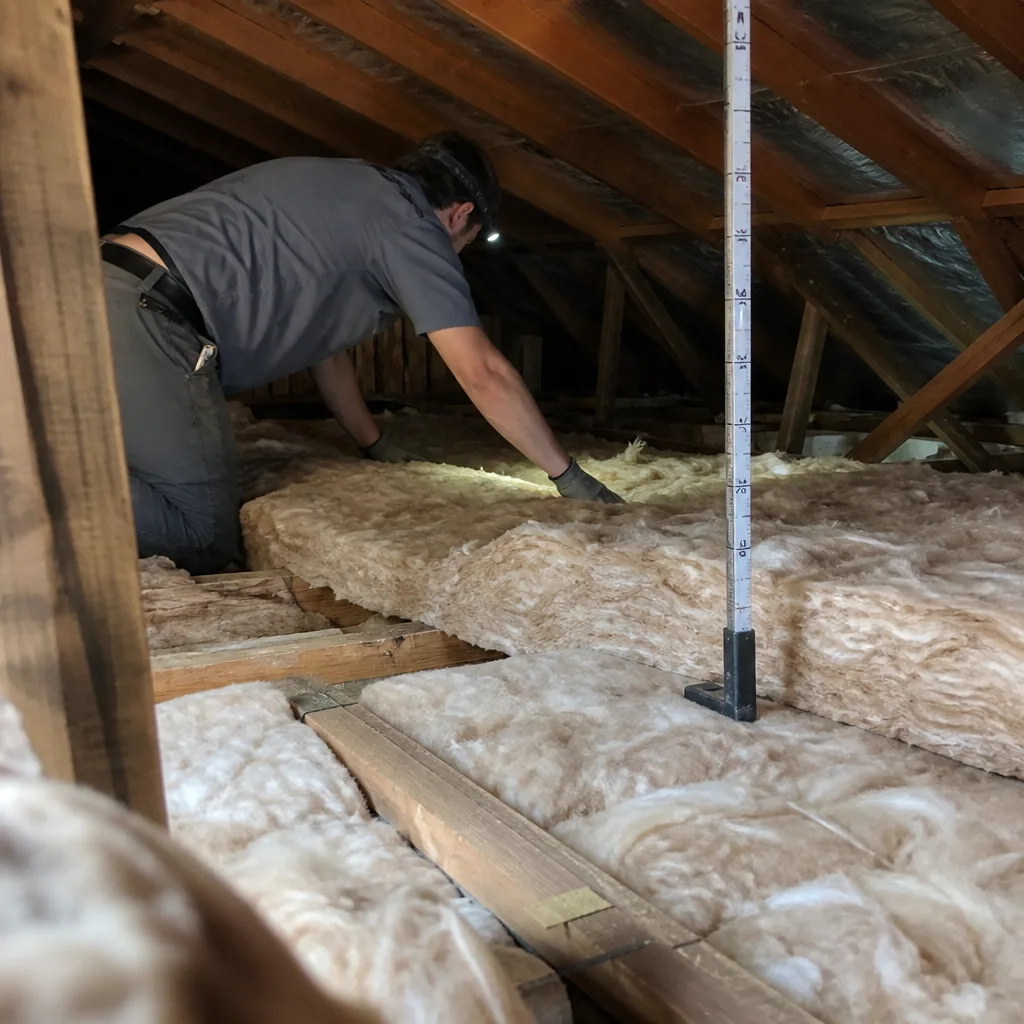
If you’re ready to see what a radiant barrier installation actually costs for your specific attic – not a ballpark from a website, but a flat written price for your square footage, your access conditions, and your HVAC layout – call us at (657) 286-7673. We’ll schedule an attic assessment, document what we find, and give you a written price before any conversation about scheduling work. There’s no charge for the estimate, and no work starts without the written scope and written warranty in your hands first.
We’ve been doing this across Tustin and the surrounding cities since 2016 – more than 9,000 homes sealed and insulated, every one with a written price going in and a documented photo record coming out. If you have a competing quote already written up, bring it. We’ll read it with you as part of the Free Second Opinion included with every estimate visit.
You can also learn more about how we approach the full job – assessment, air sealing, installation, and documentation – on our Radiant Barrier Installation in Tustin service page, or start from our home page to see the full range of building-envelope services we provide in Tustin and the surrounding communities.
Written by Wes Okafor, Owner at Envelope Insulation Co. (operating as Topside Attic Insulation Tustin), serving Tustin, CA since 2016.
Pricing reflects the Tustin market as of 2026. Topside Attic Insulation Tustin offers free estimates – call (657) 286-7673.
What Our Customers Say
"Two other companies quoted to blow more insulation on top of what was there. These were the only ones who said the existing material had to come out first, and explained why."
- Clifford E."Turned up on time, protected the hallway, and the written scope matched what was actually done."
- Bruno S."Crawl space encapsulation done properly. Photographs of the vapour barrier at every seam, and the damp smell in the hallway is gone."
- Ainsley P.