
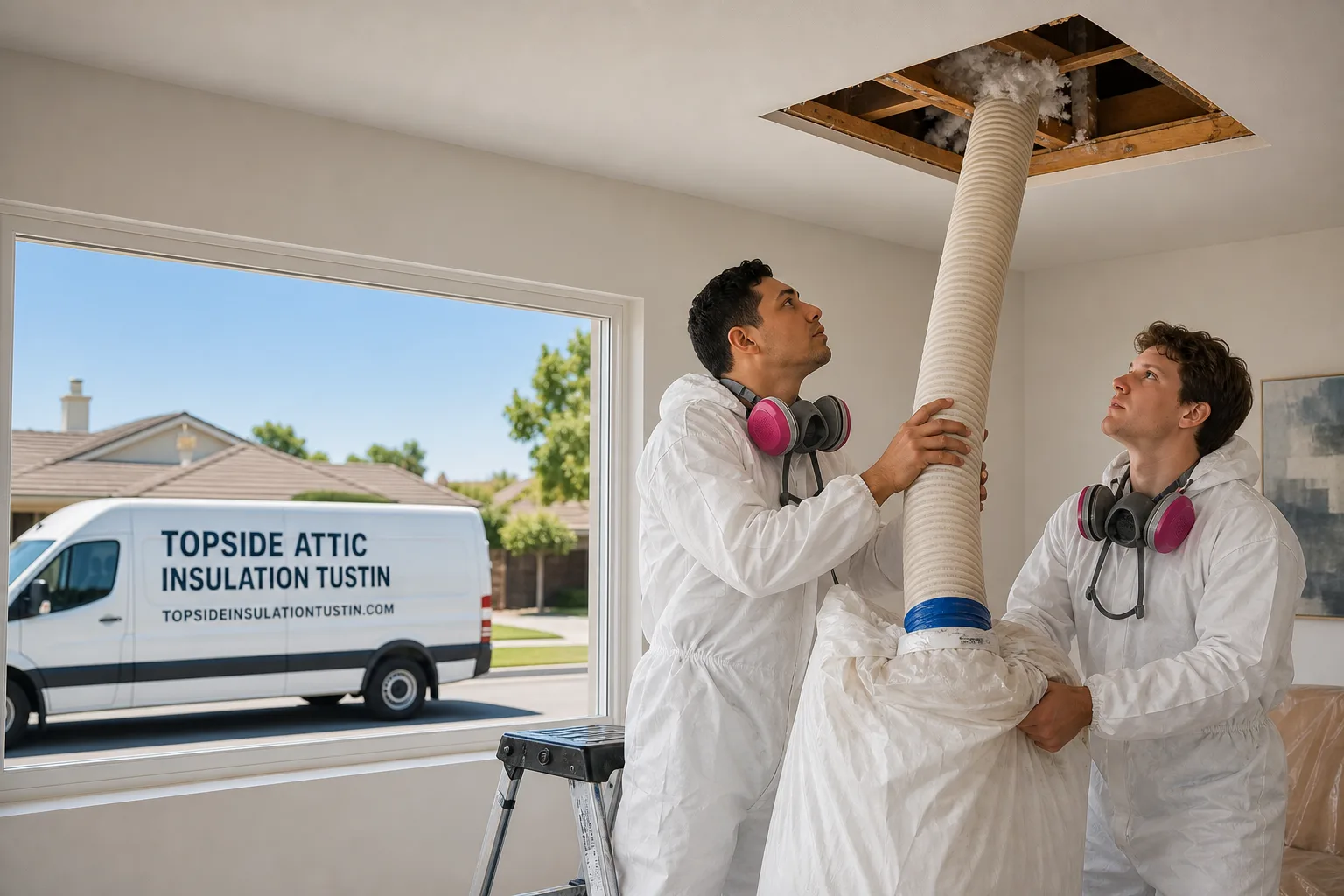
How Much Does Attic Insulation Cost in Tustin?
Attic Insulation Near Me in Tustin, CA typically runs between $1,800 and $4,500 for a standard single-story home, with most jobs landing around $2,400 to $3,200 when you include air sealing before the insulation goes in. The range moves based on attic square footage, current insulation condition, the material you choose, and whether penetrations and top plates need to be sealed first – which, in our experience across thousands of Orange County homes, they almost always do.
If you’re getting quotes and the numbers feel all over the map, it’s usually because contractors aren’t quoting the same scope. Some prices include air sealing; many don’t. Some include removal of old, degraded material; most don’t. We’ll break down what each line item actually costs in the Tustin market so you can read any estimate clearly.
Attic Insulation Cost Breakdown (2026)
The table below reflects current Tustin-area pricing as of 2026. These are real installed-cost ranges – material plus labor, on a typical Orange County tract home or custom residence. They don’t include permit fees (Tustin Building Division fees vary by project value) or utility rebates, which we cover in the savings section below.
| Service / Line Item | Typical Tustin Price Range | Notes |
|---|---|---|
| Blown-in fiberglass insulation (attic floor) | $1.20 – $2.00 per sq ft installed | Most common upgrade on Tustin homes built 1970-1995 |
| Blown-in cellulose insulation (attic floor) | $1.10 – $1.80 per sq ft installed | Made from recycled content; performs well in Tustin’s dry heat |
| Spray foam insulation (roof deck / rafter bay) | $3.50 – $6.50 per sq ft installed | Creates conditioned attic; higher upfront, lowers HVAC load significantly |
| Batt insulation (fiberglass or mineral wool) | $1.40 – $2.40 per sq ft installed | Used for attic knee walls and air-handler platforms |
| Radiant barrier installation | $0.60 – $1.10 per sq ft installed | Valuable in Tustin’s west-facing homes with afternoon sun exposure |
| Attic air sealing (top plates, can lights, penetrations) | $400 – $1,200 | Completed before insulation – not optional if leaks are present |
| Old insulation removal | $1.00 – $2.00 per sq ft | Required when existing material is contaminated, compressed, or wet |
| Attic cleaning and rodent proofing | $500 – $1,800 | Common in older Tustin Ranch and Old Town adjacents; soiled insulation must come out first |
| Blower-door test (before and after) | $250 – $450 | Measures actual air leakage in CFM50 – the only way to verify air sealing worked |
| Full attic project (1,200-1,500 sq ft attic, air seal + blown-in) | $2,200 – $4,000 | Most common scope for a 1,800-2,400 sq ft Tustin home |
| Full attic project (1,500-2,000 sq ft attic, air seal + blown-in) | $3,000 – $5,200 | Typical for larger Tustin Ranch and Peppertree-area homes |
What Moves the Price Up – or Down
The single biggest variable in any Tustin attic insulation quote is whether air sealing is included. A crew that skips straight to blowing in insulation over an unsealed attic floor is leaving the job half-done. Attic air sealing – closing off top plates, recessed-light penetrations, plumbing chases, and HVAC boot gaps with foam and mastic – typically adds $400 to $1,200 to a project, but it also accounts for the majority of the energy performance you’re actually buying. Without it, the insulation layer slows heat transfer but does little to stop the conditioned air that’s already escaping through gaps.
Material choice is the second biggest lever. Blown-in fiberglass from Owens Corning or Johns Manville and blown-in cellulose from GreenFiber sit close in price, and both work well in Orange County’s climate. Spray foam – either open-cell from Icynene or closed-cell from Demilec – costs substantially more per square foot but converts a vented attic into a conditioned one, which matters if you have HVAC ducts in the attic (a very common configuration in Tustin homes built before 2005).
Attic height and access difficulty also affect labor. A full-height attic on a two-story Tustin home is straightforward to work in. A low-slope attic on a 1960s ranch in the Old Town area – with 18 inches of headroom and original vermiculite on the decking – takes significantly longer and may involve additional remediation costs before any new material goes in.
What Affects Attic Insulation Pricing in Tustin
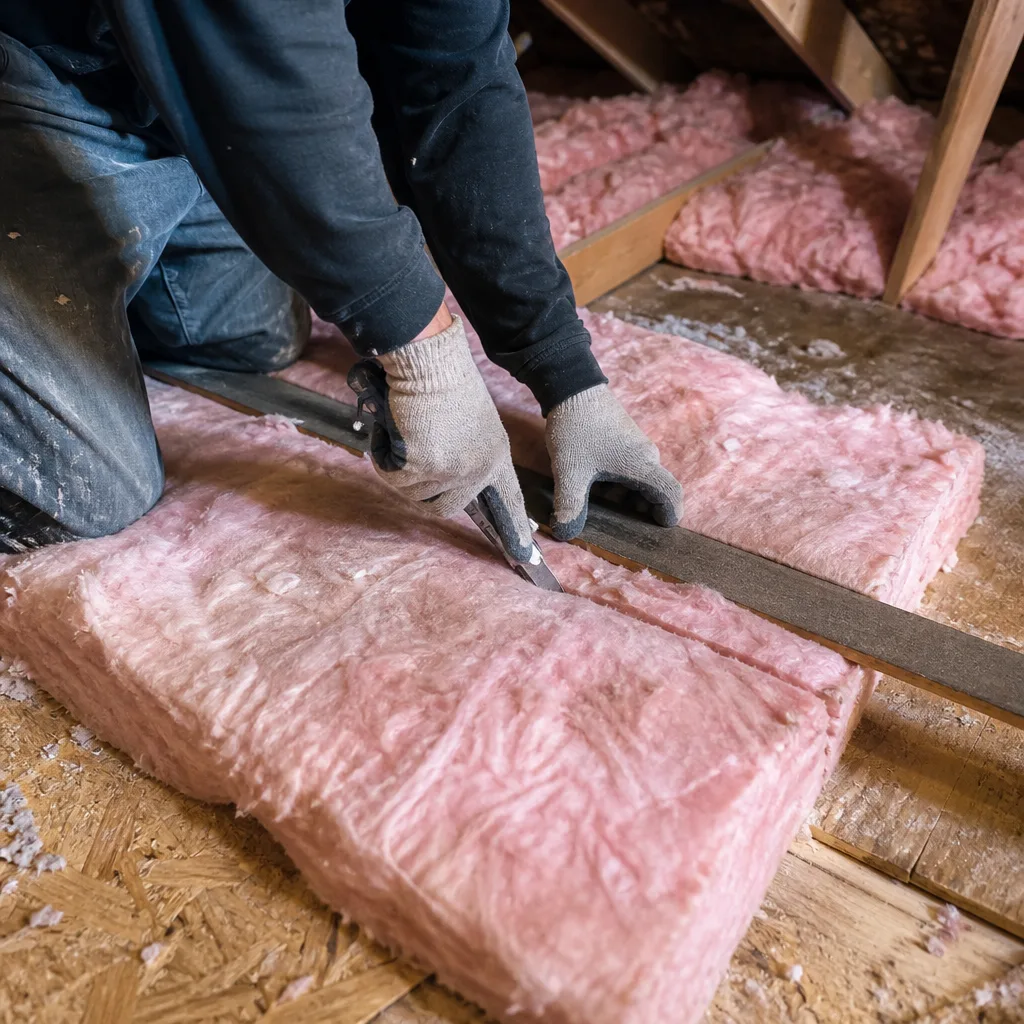
- Current R-value and insulation condition: California Title 24 calls for R-38 minimum in climate zone 8 (which covers Tustin). Homes built before the mid-1990s often have R-11 to R-19 at best – degraded, sometimes rodent-damaged batts that need removal before anything new goes in. Removal adds cost but is rarely optional when the existing material is soiled or compressed below usable performance.
- Attic square footage and geometry: A 1,200 sq ft attic on a straightforward gable-roof house is simple. Tustin Ranch homes with hip roofs, multiple roof planes, and interior soffits have significantly more linear footage of top-plate to seal, more recessed lights to address, and trickier access points – all of which add labor time.
- Presence of recessed (“can”) lights: Older recessed lights are some of the biggest air-leakage sources in a Tustin home. Each one needs to be air-sealed with a rated enclosure before insulation is placed around it. In homes with 20 or more can lights – not unusual in a 2,500 sq ft 1990s Tustin Ranch house – this work alone can represent several hours of labor.
- HVAC ducts in the attic: A large share of Tustin homes have their air-handler and ductwork sitting in an unconditioned attic. If that attic runs to 130 degrees in July (common on west- and south-facing roofs in this part of Orange County), you’re paying to cool air that loses 20-30% of its capacity before it ever reaches a vent. Duct sealing and insulating, or converting the attic to conditioned space with spray foam, addresses this – but it adds scope and cost that a basic insulation quote won’t capture.
- Existing damage or contamination: Rodent activity is more common in Tustin’s older neighborhoods – particularly around the Old Town and first-ring Tustin Legacy areas – than most homeowners expect. Soiled insulation has to come out in sealed bags before new material goes in. The removal cost runs $1.00 to $2.00 per sq ft and rodent-proofing the entry points adds another $500 to $1,500 depending on how many gaps need to be sealed at the roofline.
- Permit requirements: The City of Tustin’s Building Division requires permits for some insulation scopes – particularly spray foam on the roof deck and work that changes the fire assembly rating. Adding spray foam to a conditioned attic conversion typically requires a permit and inspection. Blown-in insulation on the attic floor generally does not, but always confirm with the contractor before work starts. Permit fees in Tustin run $150 to $400 for most residential insulation scopes.
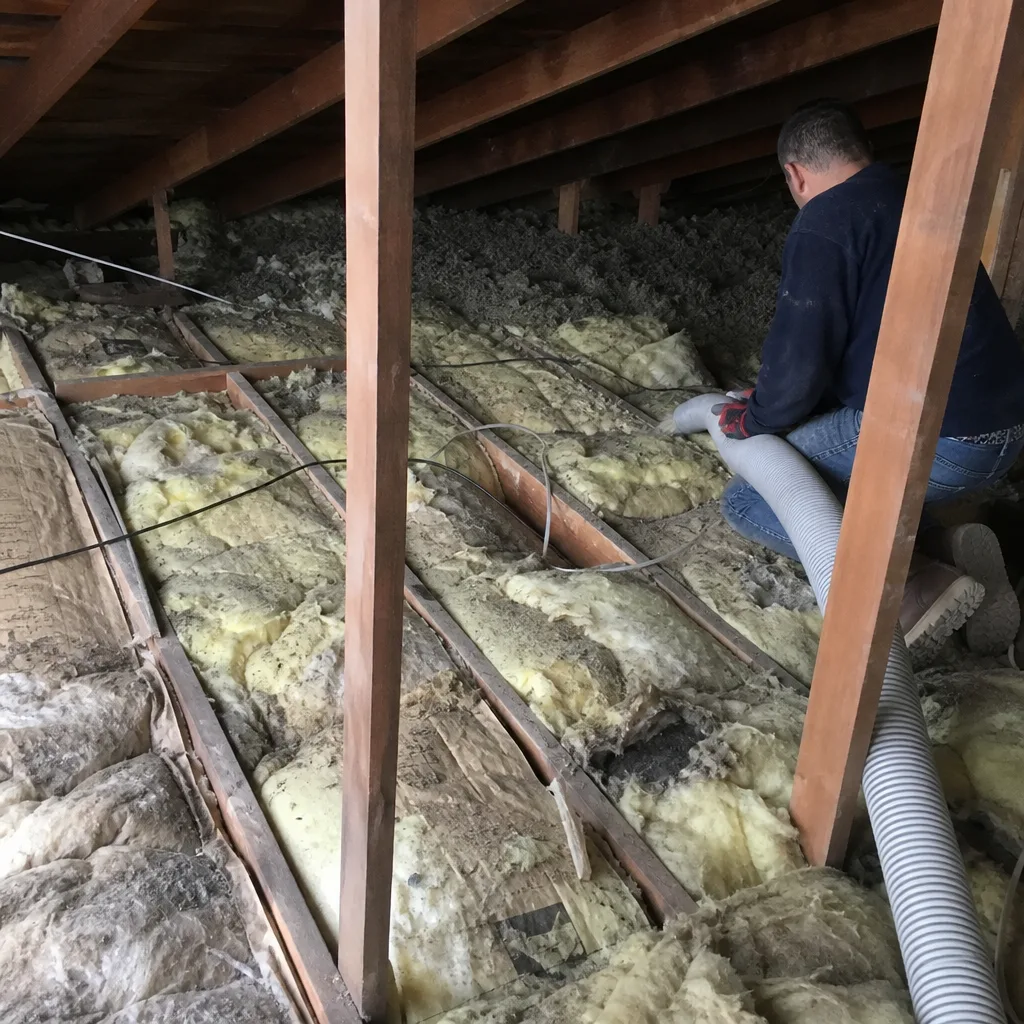 Before
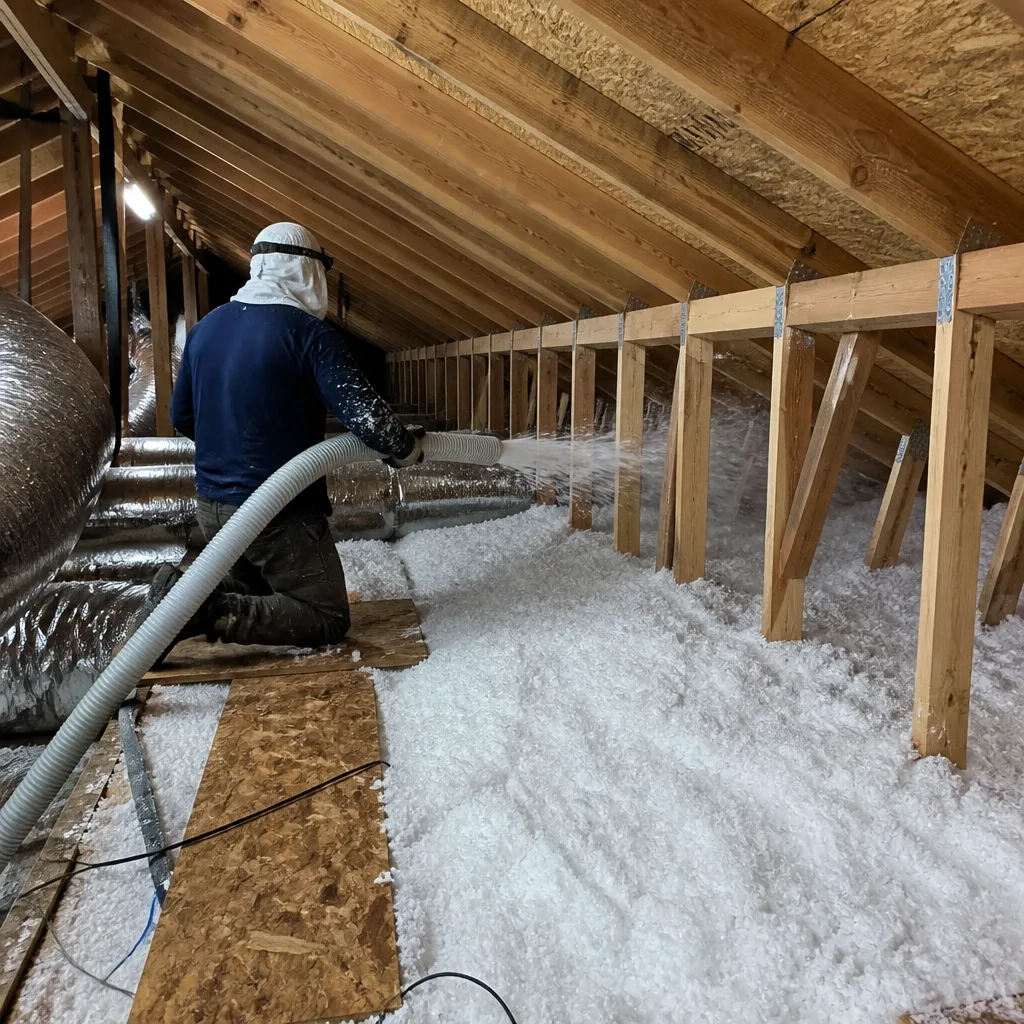 After
AfterTustin-Specific Factors Worth Knowing
Tustin sits in IECC/Title 24 Climate Zone 8 – technically a “hot-dry” inland coastal zone, but one that sees meaningful temperature swings. Summer afternoons in Tustin regularly hit 95-100 degrees, especially in inland pockets east of the 55 freeway. That afternoon heat load is aggressive on attics with west- and south-facing roof exposure, and it’s the primary reason we see so many Tustin homes where the HVAC runs almost continuously despite having insulation already in place. The insulation is there; the air sealing never was.
Homes in the Tustin Ranch master-planned area, mostly built between 1988 and 2002, tend to have large attics with significant recessed-light arrays and original builder-grade blown-in fiberglass that’s been settling for 25 to 35 years. We regularly see these attics reading at R-14 to R-20 on site – well below the current Title 24 minimum of R-38. In the Old Town Tustin area and the neighborhoods immediately east of Newport Avenue, homes from the 1950s and 1960s sometimes have no attic insulation at all, or original mineral wool batts that have shifted and compressed into piles rather than a uniform layer.
Radiant barriers perform particularly well on west-facing Tustin homes. On a 1,600 sq ft attic that faces afternoon sun, a reflective radiant barrier draped from the rafters can reduce attic temperature by 20 to 30 degrees – which directly reduces the cooling load on any ducts running through that space. The installed cost of $0.60 to $1.10 per sq ft makes it one of the better dollar-for-dollar upgrades in this specific climate.
How to Save on Attic Insulation in Tustin
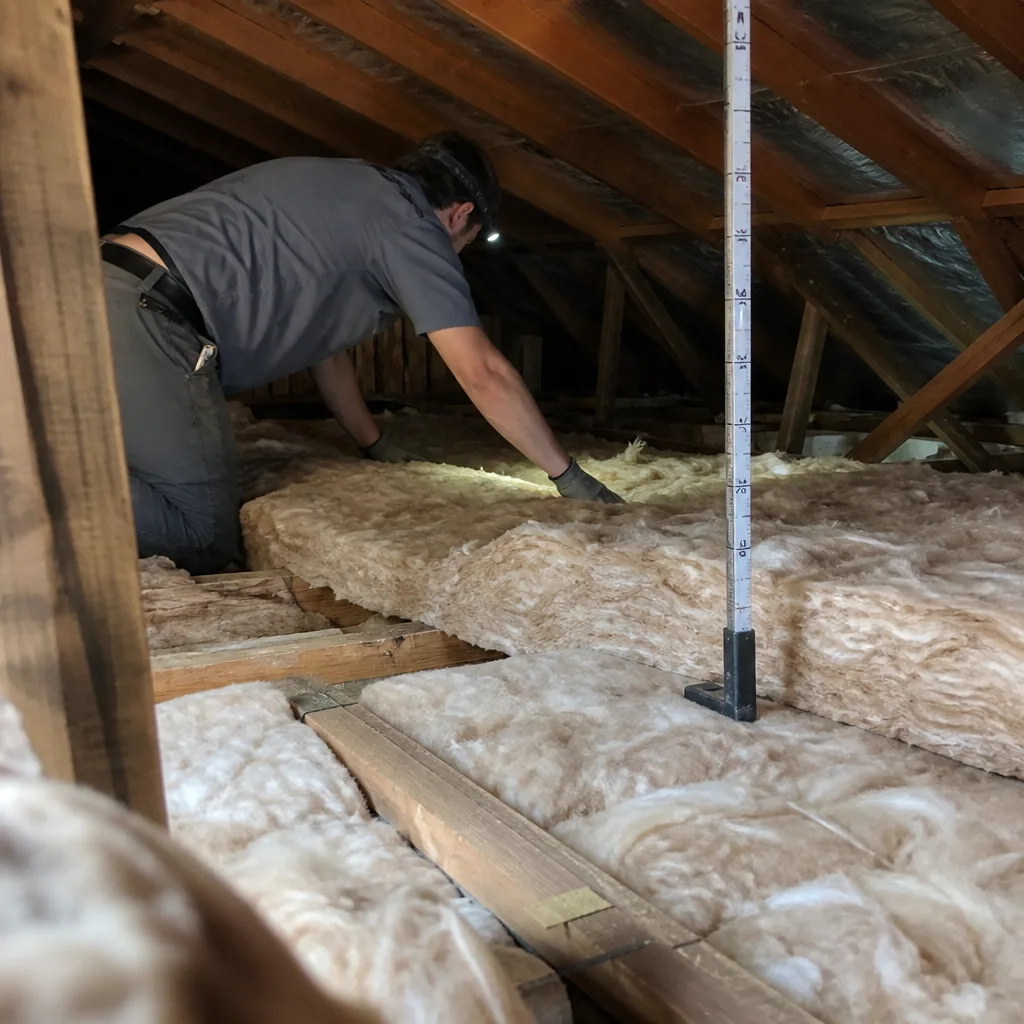
Use Available Utility Rebates
Southern California Edison (SCE) offers rebates on qualifying insulation upgrades for their residential customers. As of 2026, SCE’s energy efficiency rebate program pays $0.10 to $0.15 per square foot on attic insulation upgrades that bring a home to R-38 or above, subject to program availability and income qualification. The exact rebate amounts change each program year, so check sce.com/rebates directly before your project starts – or ask us to pull the current figures when we do your estimate. SoCal Gas offers separate rebates if your heating system benefits from the envelope improvements.
The federal Inflation Reduction Act’s Section 25C tax credit also applies to qualifying insulation and air sealing improvements: up to 30% of the cost of eligible material and installation, capped at $1,200 per year. A $3,000 Tustin attic insulation project that qualifies could come with a $900 federal tax credit. We document every project with a written scope and material list, which is what your tax professional needs to claim this credit.
Get the Scope Right Before You Compare Prices
The most common mistake we see Tustin homeowners make is comparing quotes that don’t include the same work. One contractor quotes blown-in insulation only. Another quotes blown-in plus air sealing. A third quotes removal, air sealing, blown-in, and a blower-door test. The cheapest quote on paper is often the most expensive outcome because whoever skipped the air sealing left the biggest source of energy loss untouched.
Under Haven Standard Clause 1, Envelope Insulation Co. delivers a written price, written scope, and written warranty before any work starts. Bring us any written competing estimate and we’ll read it with you – line by line – so you understand exactly what each quote does and doesn’t include. That’s a free second opinion, no obligation.
Don’t Pay for Removal You Don’t Need
Not every attic requires Attic Insulation Replacement. If the current material is dry, not contaminated, and not compressed below R-10, blown-in can often be added on top to bring the total R-value up to code. Removing material that doesn’t need to come out adds $1.00 to $2.00 per sq ft for no performance benefit. We assess this on every estimate – and if your existing insulation is still performing, we say so.
Combine Scope Where It Makes Sense
If your attic needs both insulation and a radiant barrier, doing them in the same mobilization is less expensive than scheduling two separate jobs. The same applies to duct sealing: a crew that’s already in the attic for air sealing can seal accessible duct connections at a fraction of the cost of a second visit. Ask specifically about combined-scope pricing when you get your estimate.
Schedule During Off-Peak Periods
Attic insulation demand in Tustin peaks in spring (April-June, as homeowners prepare for summer) and again in late fall (October-November). January through March tends to have shorter lead times, and some contractors offer better pricing during slower periods. We don’t manufacture urgency or create artificial scarcity – but if you have flexibility on timing, it’s worth asking about scheduling options.
To get a written price specific to your Tustin home, call (657) 286-7673. Estimates are free, include a site assessment, and come with a written scope you can compare against any other quote you’ve received.
What the Job Looks Like From Start to Finish
This is worth spelling out because a lot of homeowners aren’t sure what they’re agreeing to when they schedule attic insulation work. Here’s what a typical Tustin project looks like under The Haven Standard:
- Before anyone arrives: You have a written price, written scope, and written warranty in hand. The technician’s name is confirmed and you get a text when they’re on the way.
- Day of – assessment first: The technician does a full attic walk-through before any equipment is staged. Any conditions that differ from the estimate get flagged and priced before work starts – never after.
- Air sealing before insulation: Top plates, penetrations, recessed light enclosures, plumbing chases, and HVAC boots are sealed with foam and mastic. This step is completed and inspected before the blower opens.
- Blower-door test (applicable jobs): On jobs where air sealing is included, a blower-door test – a pressurization reading that shows, in one number, how much air the building envelope is losing – is run before and after sealing. You get both numbers in writing so you can see the actual change, not just trust that something improved.
- Insulation installed to spec: Material is blown or placed to the specified R-value with depth markers set so the final coverage is verifiable. Materials come from Owens Corning, Johns Manville, Knauf, Rockwool, CertainTeed, Icynene, Demilec, or GreenFiber – depending on the material specified in your written scope.
- Documented photo record: Photos of the attic before, during, and after the work are included with every project. Not on request – included, as standard.
- Written closeout: The job doesn’t close until you have the blower-door numbers (where applicable), the photo record, and a record of the materials installed and R-value achieved.
The 365-Day Done Right Promise applies to every completed job. If something isn’t right within the first year, we make it right – in writing, not by phone, and without a service call fee.
FAQs – Attic Insulation Cost in Tustin
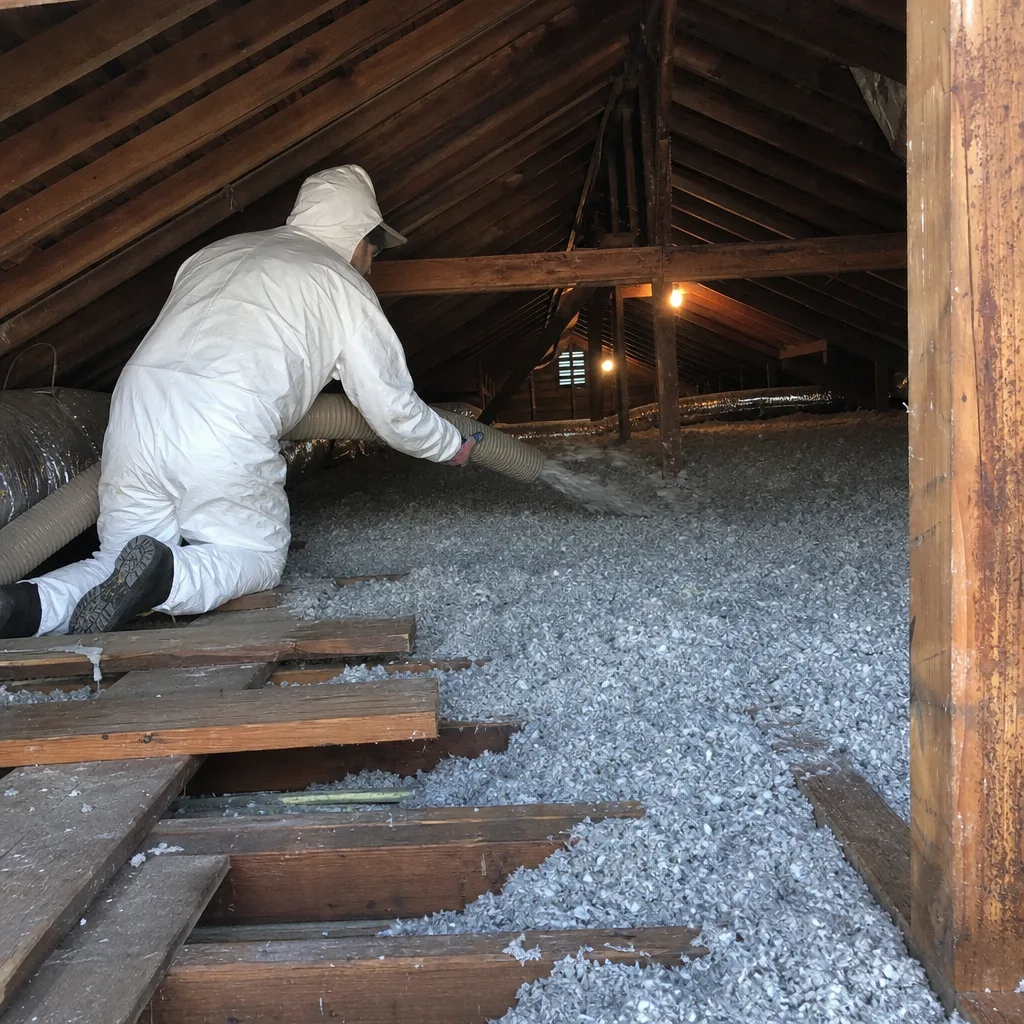
How much does attic insulation cost in Tustin, CA?
Most attic insulation projects in Tustin run between $1,800 and $4,500 for a standard single-story home, with the most common scope – air sealing plus blown-in insulation on a 1,200 to 1,500 sq ft attic – landing between $2,200 and $3,800 installed. Larger homes in Tustin Ranch with 1,800+ sq ft attics, or projects that include spray foam on the roof deck, can run $4,500 to $7,000 or more. The number that matters most is what’s in the written scope: the same square footage can produce very different prices depending on whether air sealing, removal, and testing are included.
Is it cheaper to add insulation on top of old insulation, or remove it first?
Attic Insulation Top-Up is less expensive – typically $1.20 to $2.00 per sq ft versus $2.20 to $4.00 per sq ft when you add removal costs. But removal is necessary when the existing material is contaminated by rodents or moisture, is compressed below effective R-value, or when rodent remediation requires getting the attic floor clean. In many Tustin homes built before 1990, the original batts have compressed and shifted enough that adding on top without removing would give you an uneven, unverifiable R-value. We assess this during every estimate and tell you which situation applies to your attic.
Does attic insulation require a permit in Tustin?
Blown-in insulation on the attic floor generally does not require a permit from the City of Tustin Building Division. Spray foam insulation on the roof deck – particularly in a conditioned-attic conversion – typically does require a permit and inspection. Some jurisdictions also require permits when insulation is part of a larger remodel. Permit fees in Tustin run $150 to $400 for most residential insulation scopes. We confirm permit requirements as part of the written scope on every project; you’re never discovering requirements after work starts.
Can attic insulation lower my energy bill in Tustin?
Yes, measurably – but the reduction depends heavily on whether air sealing is done first. In Tustin homes where we’ve run before-and-after blower-door tests, a properly sealed and insulated attic typically reduces the building’s air leakage by 30 to 50 percent, measured in CFM50 (cubic feet per minute at 50 pascals of pressure). A home that tested at 3,800 CFM50 before sealing and 2,100 after is losing roughly 45% less conditioned air. SCE estimates that proper attic insulation and air sealing can reduce heating and cooling costs by 15 to 30 percent annually in the Orange County climate zone, though the exact figure depends on your home’s current condition, HVAC efficiency, and duct configuration.
How long does attic insulation last in Tustin’s climate?
Blown-in fiberglass and cellulose insulation, properly installed and undisturbed, typically maintain useful performance for 20 to 30 years in Tustin’s dry climate. Heat cycling at the extreme end – 130-degree attic temperatures in summer – can accelerate some settling in cellulose, which is why depth markers and a documented post-installation R-value reading matter. Spray foam, once cured, doesn’t settle and has an indefinite performance lifespan in the absence of physical damage. The main enemies of insulation longevity in this market are rodent activity (which compresses and soils material rapidly) and moisture intrusion from plumbing or HVAC condensate leaks. Both are visible in a thorough attic assessment before any new material goes in.
What’s the difference between blown-in insulation and spray foam for a Tustin attic?
Blown-in insulation – fiberglass or cellulose – goes on the attic floor and slows heat transfer between the attic and the living space below. The attic itself stays unconditioned and can still reach extreme temperatures. Spray foam applied to the roof deck and rafter bays converts the attic into a conditioned space, meaning attic temperatures stay much closer to interior temperatures. For Tustin homes where HVAC equipment and ducts are in the attic, spray foam often makes more financial sense long-term because it directly protects the equipment running efficiency. For homes where ducts are in the living space (below the insulation plane), blown-in is usually the better value. A blower-door test and attic assessment before choosing helps you pick the right approach rather than the most-marketed one.
Why Air Sealing Is a Hard Prerequisite – Not an Upsell
We want to be direct about something that separates our work from a lot of what you’ll see quoted in the Tustin market: we don’t blow our Attic Insulation services over an unsealed attic floor. Ever. This isn’t a positioning statement – it’s a physics issue.
Insulation resists heat transfer by conduction. It does almost nothing to stop air movement. A house with 10 linear feet of unsealed top-plate gaps – a typical number in a 1990s Tustin Ranch home with lots of interior walls – can lose the equivalent of leaving a window cracked open 24 hours a day. Adding R-38 of blown-in insulation over those gaps makes the assembly thicker. It doesn’t close the gap. The air keeps moving, carrying conditioned air out and hot attic air in, and your HVAC system keeps running to compensate.
Every Envelope Insulation Co. project that includes attic insulation starts with an attic air-sealing assessment. If air sealing is needed – and in most Tustin homes, it is – the air sealing work is completed and the attic is verified before the insulation blower starts. On applicable jobs, a blower-door test runs before and after so you have actual numbers, not our word for it.
For a full picture of what’s included in our attic insulation work in this market, visit our Attic Insulation in Tustin service page. And if you want to understand how attic insulation fits into your home’s full building envelope, the home page covers the complete service line we offer across the region.
How to Read a Competing Quote
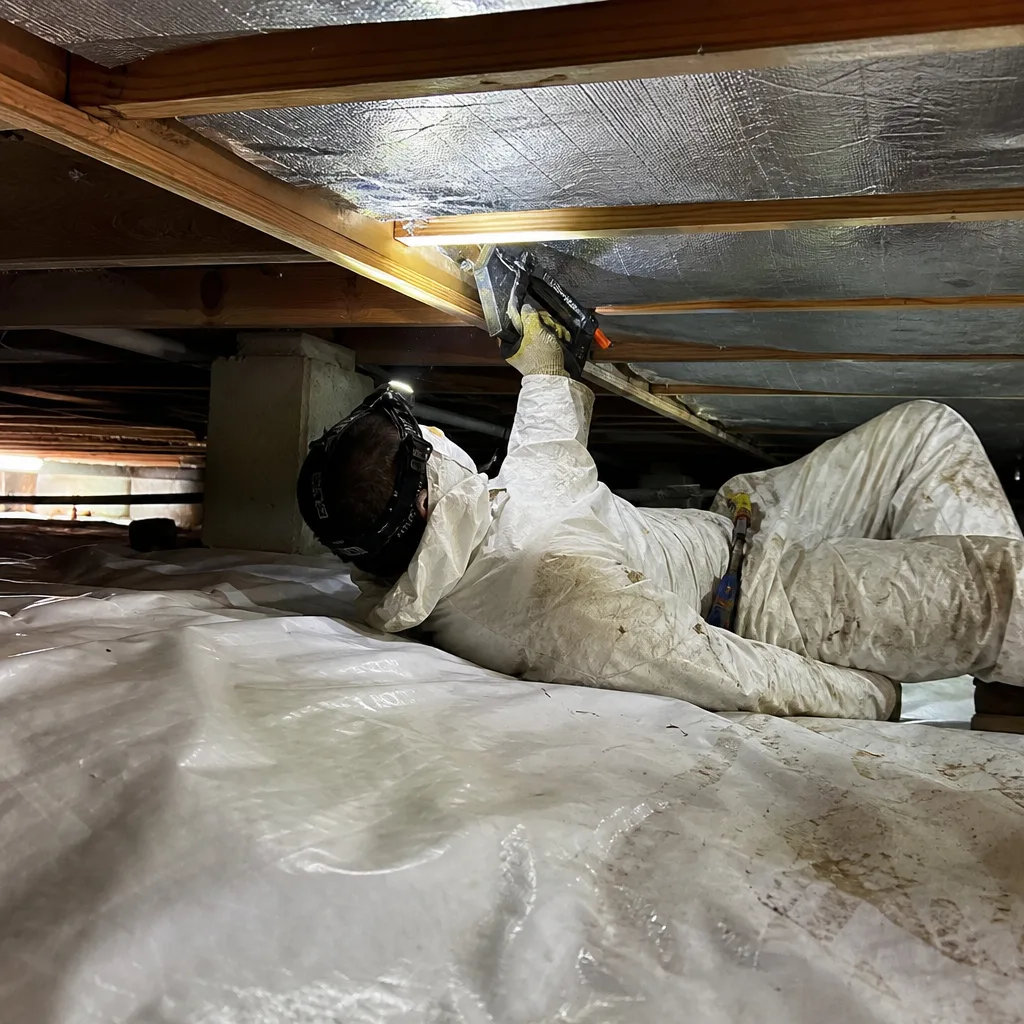
If you have a written quote from another contractor and want to understand what you’re looking at, here are the questions to ask:
- Does the quote include attic air sealing, or only insulation installation? (If it doesn’t say, assume not.)
- What R-value will be achieved, and how will it be verified after installation?
- Does the price include removal of existing material, or assume installation on top?
- What specific materials will be used – brand and product name?
- Is there a written warranty, and what does it cover?
- Will you receive any documentation – photos, blower-door numbers, material records – when the job is complete?
- Does the price include permit filing if a permit is required?
Bring us any written estimate and we’ll go through it with you. That’s a free second opinion – no obligation to book with us, no pressure. Under Haven Standard, we’d rather you make a fully informed decision than a fast one.
Key Takeaways
- Most Tustin attic insulation projects run $1,800 to $4,500, with the typical scope (air seal plus blown-in, 1,200-1,500 sq ft attic) landing around $2,200 to $3,800 installed.
- Air sealing should always come before insulation – it accounts for most of the measurable energy performance gain, and skipping it is the single most common reason attic insulation underdelivers.
- Tustin’s Climate Zone 8 heat load, combined with the high prevalence of HVAC ducts in attics, makes radiant barriers and conditioned-attic conversions (spray foam on roof deck) worth evaluating – not just blown-in on the floor.
- SCE rebates and the federal Section 25C tax credit (up to 30%, capped at $1,200/year) can meaningfully reduce net project cost for qualifying Tustin homeowners.
- Removal of existing insulation is necessary when material is contaminated, compressed below R-10, or soiled by rodents – common in Old Town Tustin and first-ring Tustin Legacy neighborhoods.
- Before-and-after blower-door numbers are the only objective way to verify that air sealing worked. If a contractor isn’t offering them, you have no way to confirm the result.
- A written price, written scope, and written warranty before any work starts – Haven Standard Clause 1 – means you know exactly what you’re buying before anyone opens a truck door.
Get a Written Price for Your Tustin Home
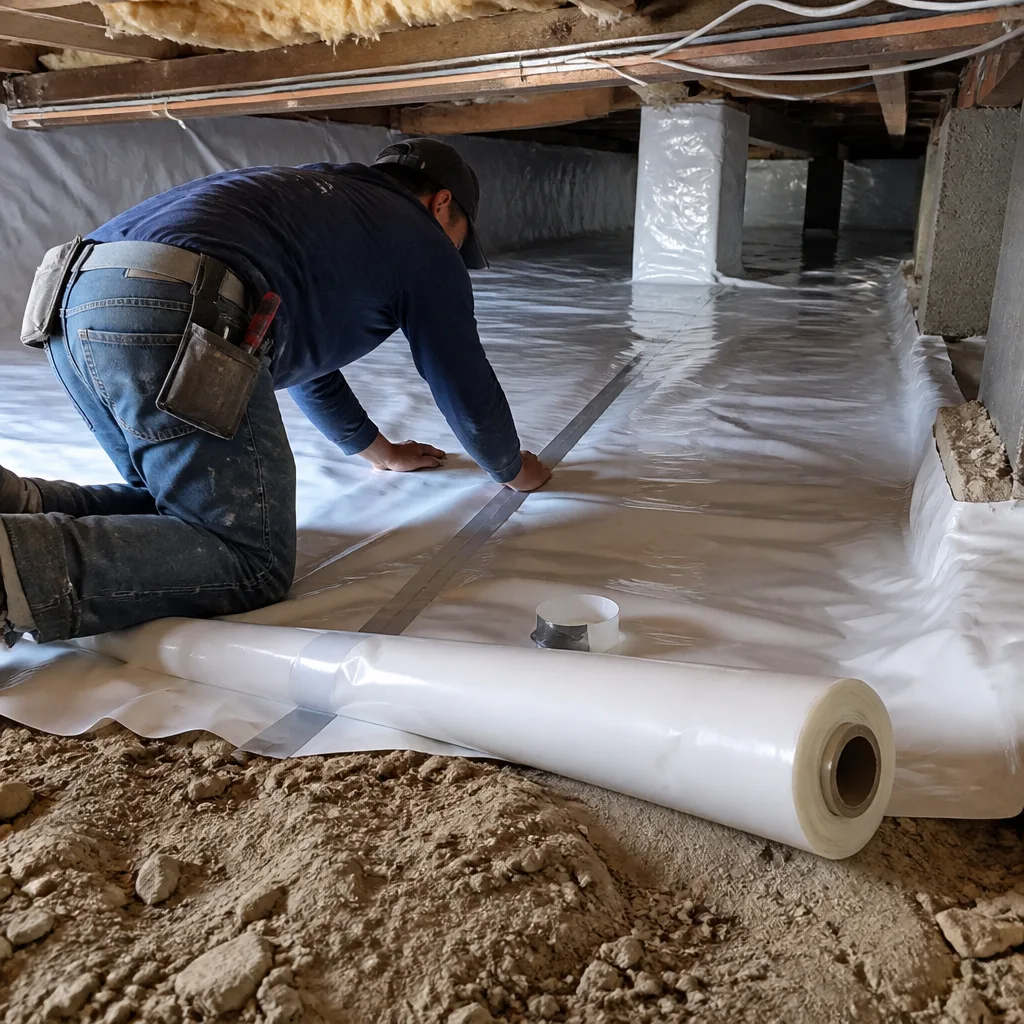
If you want to know what attic insulation will actually cost for your specific home in Tustin – not a range from a webpage, but a flat written number tied to a specific scope of work – call (657) 286-7673. Wes Okafor leads every project assessment at Envelope Insulation Co., and estimates are free. You’ll leave the call with a written price you can compare against anything else you’ve received, a clear explanation of what’s included and why, and no obligation to move forward until you’re ready.
We’ve assessed and insulated more than 9,000 homes across the region since 2016. Every one of them started with a written price and ended with a documented record. Tustin homes are no different.
Written by Wes Okafor, Owner at Envelope Insulation Co. (operating as Topside Attic Insulation Tustin), serving Tustin, CA since 2016.
Pricing reflects the Tustin market as of 2026. Topside Attic Insulation Tustin offers free estimates – call (657) 286-7673.
What Our Customers Say
"They photographed rodent damage in the old insulation that we had no idea about, and priced the exclusion work separately so we could decide."
- Harriet N."The winter gas bill dropped by about a third. They had estimated a quarter, so they under-promised."
- Genevieve R."Two other companies quoted to blow more insulation on top of what was there. These were the only ones who said the existing material had to come out first, and explained why."
- Clifford E.