
Last updated September 24, 2026
The Complete Guide to Insulation in Tustin
A house in Tustin with R-38 attic insulation and unsealed top plates can still register a blower-door result above 8 ACH50 - meaning the insulation is doing roughly half the job the homeowner paid for. We’ve measured this exact scenario in more than 200 Tustin homes since 2016, mostly in the older tracts north of Interstate 5 where ceiling drywall gaps and unsealed can-light housings create thermal bypasses that R-value alone cannot fix. This guide maps what actually happens in Tustin’s housing stock, not a national average: how CEC Climate Zone 10 changes your minimum requirements, why radiant barriers help in some vented attics and waste money in others, and what documentation a completed job should produce so you can verify what you bought.
Quick Answer
Insulation in Tustin must address two distinct problems: slowing conductive heat transfer through building assemblies (measured in R-value) and stopping convective air leakage that bypasses that insulation entirely (measured in ACH50 on a blower-door test). For most Tustin homes built between 1960 and 1990, the second problem matters more than the first, which is why California’s Title 24 code now treats air sealing as a co-equal requirement with insulation depth. A properly executed job in Tustin typically runs $2.80-$5.40 per square foot of conditioned floor area for attic work including air sealing, with spray foam retrofits ranging $4.50-$8.20 per square foot where wall cavities are accessible. For a detailed breakdown of these numbers, see our Insulation Cost Breakdown: The Tustin Homeowner’s Reference for 2026.
Table of Contents
- Why Tustin’s Climate Zone Changes Your Insulation Requirements
- The Stack-Effect Problem in Tustin’s Tract Homes
- Insulation Materials Compared for Tustin Conditions
- Radiant Barriers: When They Help and When They Don’t
- Title 24 Compliance and What It Means for Your Project
- The Documentation Your Job Should Produce
- What Insulation Costs in Tustin
- Common Mistakes to Avoid
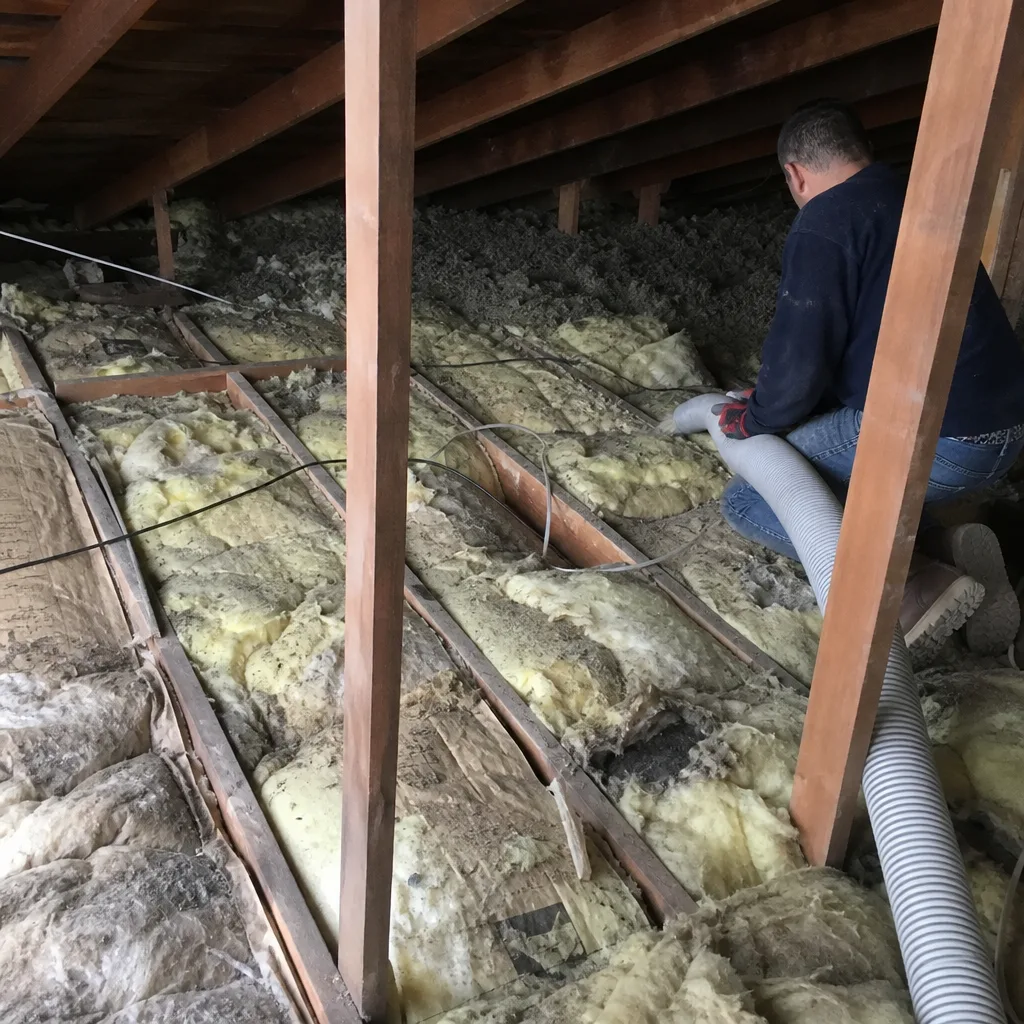 Before
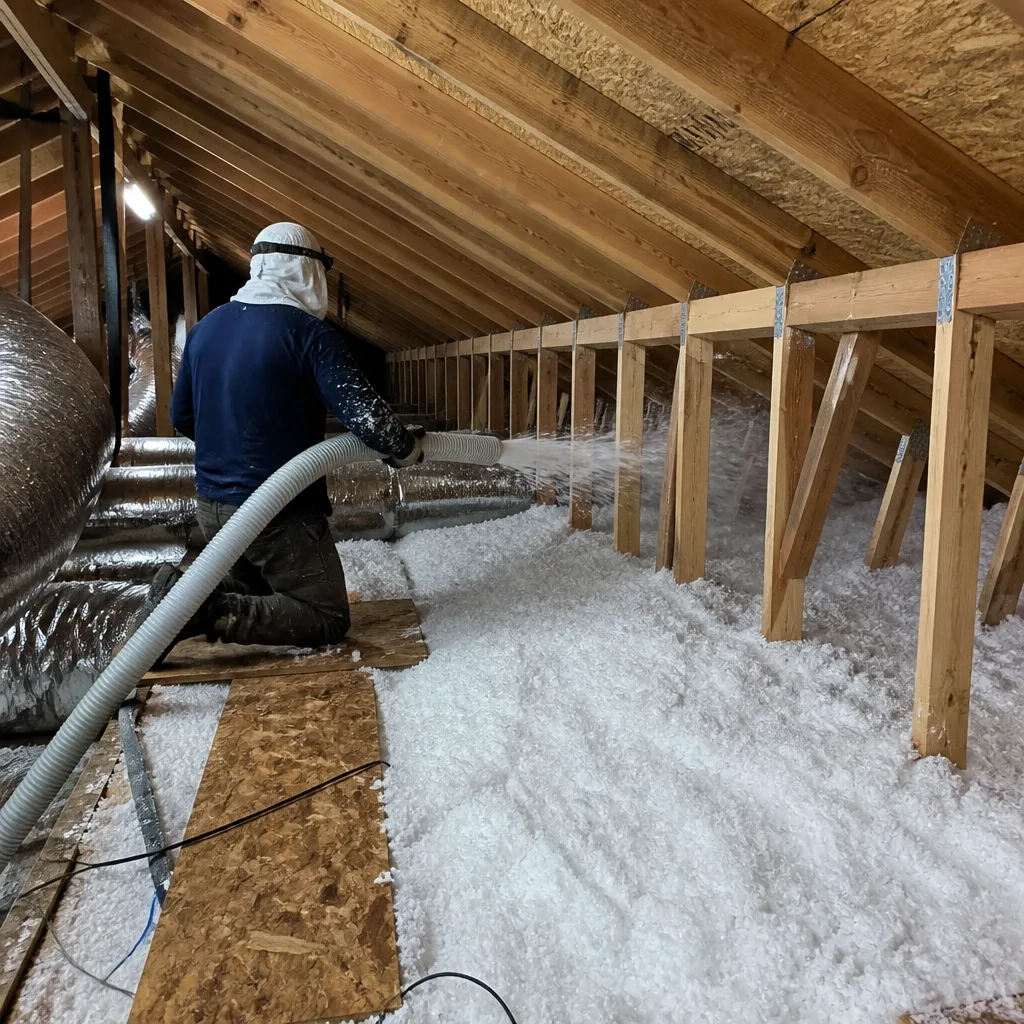 After
AfterWhy Tustin’s Climate Zone Changes Your Insulation Requirements
Tustin sits in CEC Climate Zone 10, a designation that places it in the “marine-influenced warm” category - a narrow band along the Southern California coast where summer daytime peaks hit the mid-90s but overnight lows rarely stay above 70°F. This matters because insulation performance is not linear with temperature, and the prescriptive tables most homeowners find online assume either inland desert conditions (Zone 14) or cooler northern zones entirely.
The California Energy Commission sets different minimum R-values by zone. For attic insulation in Tustin’s Zone 10, the current Title 24 prescriptive minimum is R-38 for new construction and R-30 for alterations where existing insulation is being supplemented. But here’s what generic calculators miss: these are installed R-values, not labeled R-values, and installation quality in Zone 10’s vented attics degrades performance by 15-30% if gaps, compression, or wind-washing occur.
Wind-washing - outdoor air moving through loose-fill insulation and stripping away its effective R-value - is particularly relevant in Tustin. The Santa Ana winds that arrive in fall and winter create positive pressure in vented attics that can push air through poorly baffled eave vents and directly across insulation. We’ve measured attic floor insulation in Tustin’s Orchard Hills area reading 20% below its labeled R-value due to this effect alone.
The practical implication: a Tustin homeowner targeting R-38 should specify R-44 or R-49 material if the installation cannot be verified as gap-free, or should invest in air sealing and baffle installation first. Under Topside Attic Insulation Tustin home, we do not quote insulation depth without first assessing whether the attic floor can hold that performance in place.
Key zone-specific factors for Tustin:
- Cooling-dominated load profile: insulation’s summer performance matters more than winter
- Diurnal temperature swing of 20-25°F means thermal mass and insulation work together differently than in desert zones
- Marine layer humidity (60-80% morning RH) creates condensation risk in unconditioned attics if air sealing is done without controlled ventilation
- Santa Ana wind events can pressurize attics and accelerate insulation degradation if eave baffles are missing or improperly installed
The Stack-Effect Problem in Tustin’s Tract Homes
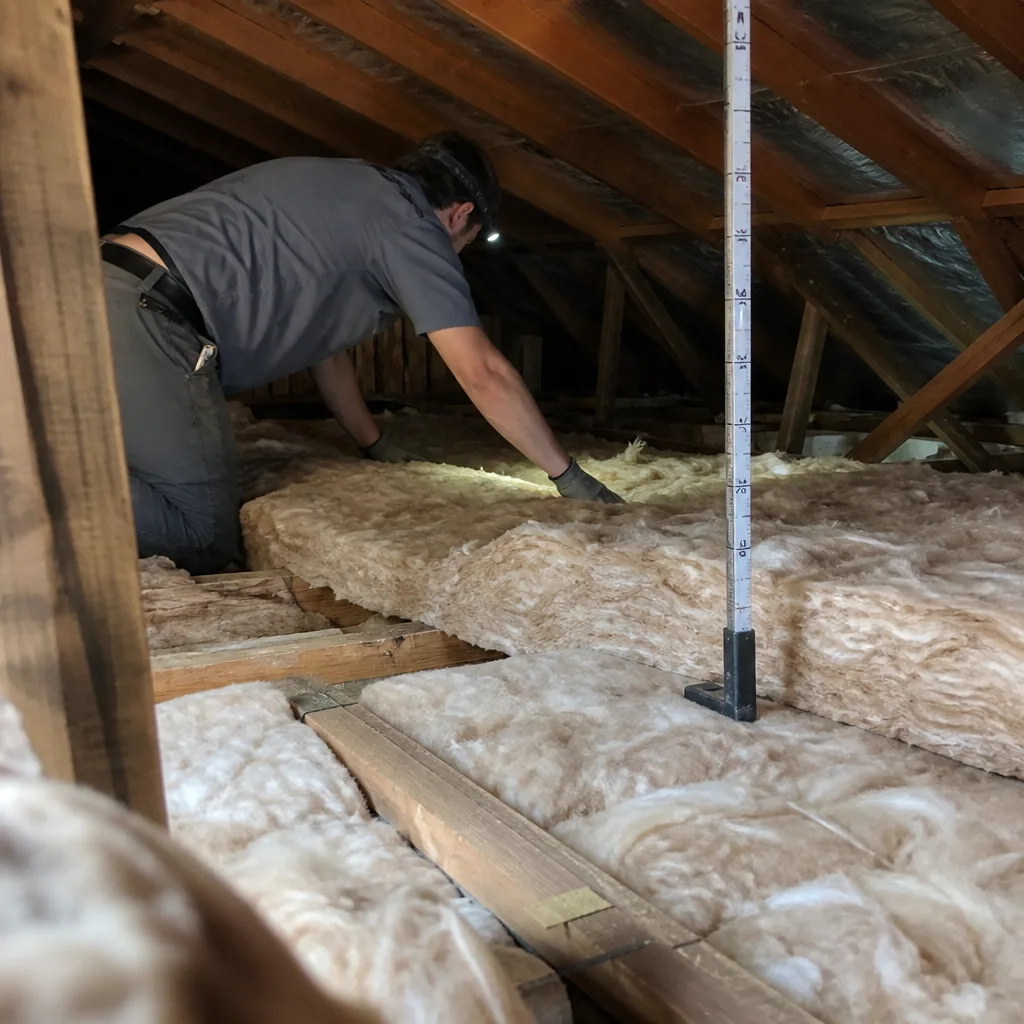
Tustin’s housing stock is weighted heavily toward 1960s-1980s construction: the Tustin Legacy area, the tracts between Newport Avenue and Jamboree Road, and the neighborhoods south of Edinger Avenue. These homes share a construction detail that undermines insulation performance regardless of what material is in the attic: top plates and drywall ceiling penetrations that were never sealed during original construction.
The stack effect - the natural buoyancy of warm air that causes it to rise and escape through upper building assemblies - is amplified in Tustin’s climate. Summer attic temperatures in these homes regularly reach 130-150°F. That heat pressurizes against the ceiling plane, and any gap becomes a two-way problem: conditioned air leaks upward in cooling season, and superheated attic air leaks downward when the system cycles off. A blower-door test - a pressurization reading that shows, in one number, how much air your building envelope is losing - reveals this clearly.
We’ve tested homes in the Tustin Meadows neighborhood with R-30 fiberglass batts in the attic that still leaked at 7.5 ACH50. After sealing top plates with fire-rated caulk, boxing can lights with sealed covers, and foaming wire and plumbing penetrations, the same homes dropped to 4.2 ACH50 - a 44% reduction in leakage with zero change to insulation depth. The insulation then performed as labeled because it had an air barrier on both sides.
What we measure to confirm stack-effect leakage in Tustin homes:
- Blower-door baseline: We depressurize the house to -50 Pascals and record CFM50 - the cubic feet per minute of airflow required to maintain that pressure difference. In Tustin’s 1,800-2,400 square foot tracts, we typically see 3,500-5,500 CFM50 before air sealing.
- Infrared scan during test: With the house depressurized, we use thermal imaging to locate ceiling plane leaks. The pattern is consistent in Tustin’s vintage stock: linear cold strips along top plates, hot spots at can lights, and plume-shaped anomalies at drywall butt joints.
- Attic floor inspection: We photograph and measure gaps around chimneys, flues, duct boots, and partition walls. In Tustin homes with original construction, these gaps often total 15-30 square feet of unsealed opening - equivalent to leaving a window open year-round.
- Post-sealing verification: We repeat the blower-door test after air sealing and before insulation installation. Under the Haven Standard, we do not install new insulation over an unsealed attic floor. The documented reduction becomes part of your project record.
The cost of this air sealing step in Tustin typically adds $800-$1,800 to an attic insulation job, depending on accessibility and the number of penetrations. Without it, you’re paying for insulation performance you’re not receiving.
Insulation Materials Compared for Tustin Conditions
Material selection in Tustin should start with the job type - new construction, accessible attic retrofit, enclosed wall cavity, or crawl space - because each constrains what can be installed and how it performs in Zone 10’s conditions. Here’s how the common options compare for Tustin homeowners, with costs based on our 2024-2025 project data.
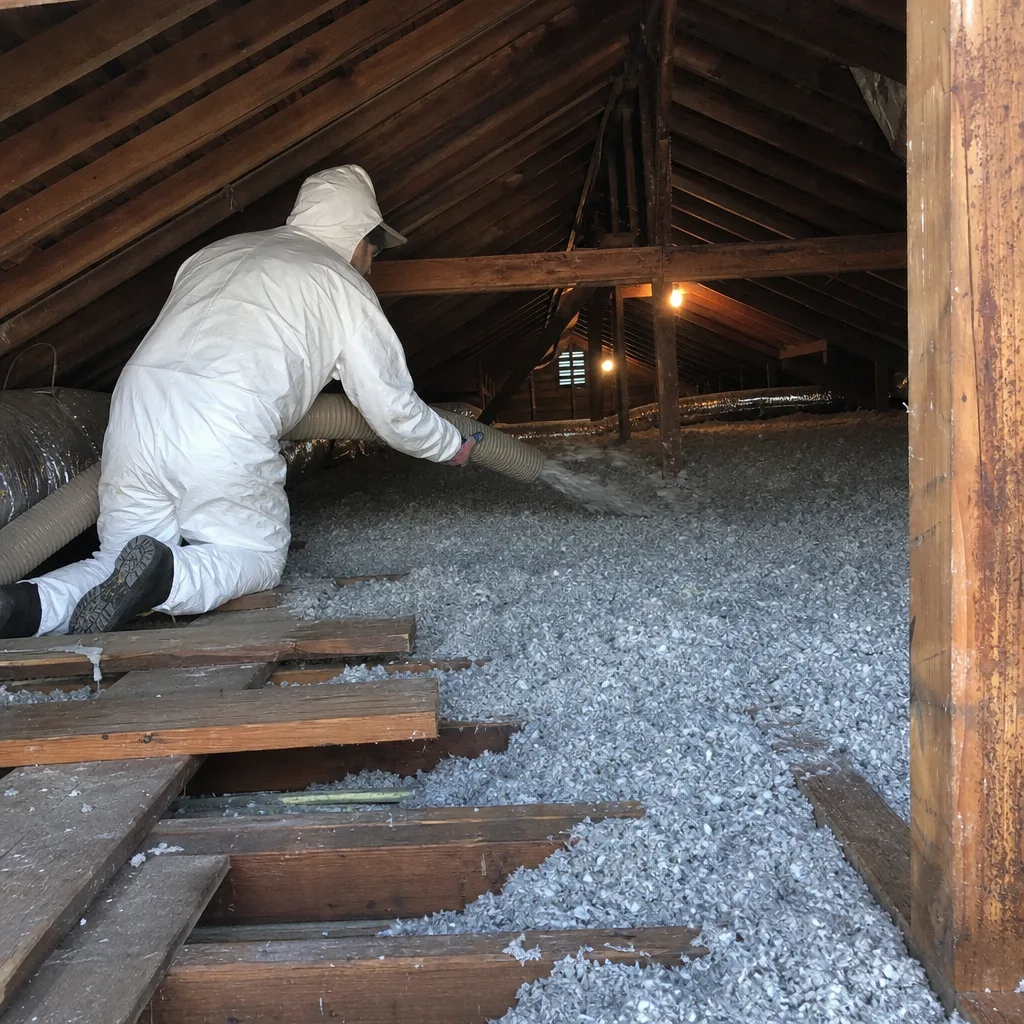
Blown-in fiberglass (Owens Corning AttiCat, Johns Manville Climate Pro) is the default for Tustin attic retrofits where the attic floor is accessible and air sealing has been completed. It fills irregular joist cavities, doesn’t settle significantly if installed to proper density, and performs well in Tustin’s dry climate where moisture degradation is minimal. Installed at R-38 depth (approximately 12-14 inches depending on product), we see material and labor costs of $2.80-$4.20 per square foot of attic floor in typical Tustin homes. The limitation: it requires a contained cavity to perform. In an unsealed attic, wind-washing and convective looping cut effective performance by 20% or more.
Dense-pack cellulose (GreenFiber, among others) offers slightly higher R-value per inch and better resistance to air movement within the cavity, which matters in Tustin’s vented attics. We specify it for closed cavities - walls with exterior siding removed, or floors over unconditioned crawl spaces - where the material’s slight settling is acceptable and its fire-retardant treatment adds safety value. Cost runs $3.20-$5.00 per square foot for accessible cavities, higher where fishing is required. In Tustin’s climate, cellulose holds moisture content at 8-12% by weight, well below the threshold for mold risk, but we avoid it in crawl spaces with chronic drainage issues.
Open-cell spray foam (Demilec Heatlok HFO High Lift, among others) creates both insulation and air barrier in one application, which makes it the defensible choice for Tustin’s complex rooflines - the tongue-and-groove cathedral ceilings in Tustin Ranch’s 1990s custom homes, for example, or conditioned attic conversions where HVAC equipment is relocated. At $4.50-$6.80 per square foot for attic applications, it’s higher cost than loose-fill, but it eliminates the separate air-sealing step and provides the only practical solution for sloped ceiling planes where batt insulation leaves gaps. The caveat: open-cell is vapor-permeable. In Tustin’s marine-influenced climate, we specify closed-cell (2.0 lb density) for roof decks below 4:12 pitch where bulk water intrusion risk exists, or where dew point analysis shows condensation potential on the foam surface.
Closed-cell spray foam runs $6.20-$8.20 per square foot in Tustin applications and is reserved for: crawl space rim joists where ground moisture is present; roof decks in low-slope assemblies; and局部 repairs where structural rigidity is needed. Its R-6.5 per inch and vapor-blocking properties justify the premium in these specific conditions, but we do not recommend full-attic closed-cell for cost reasons alone - the performance gain over properly air-sealed loose-fill does not typically repay the investment in Tustin’s climate.
| Material | Best Tustin Application | Installed Cost/SF | R-Value/Inch | Air Barrier? |
|---|---|---|---|---|
| Blown fiberglass | Vented attic, sealed floor | $2.80-$4.20 | R-2.9-3.2 | No |
| Dense-pack cellulose | Wall cavities, sloped floors | $3.20-$5.00 | R-3.2-3.8 | Partial |
| Open-cell spray foam | Cathedral ceilings, conditioned attics | $4.50-$6.80 | R-3.6-3.9 | Yes |
| Closed-cell spray foam | Rim joists, low-slope roofs | $6.20-$8.20 | R-6.0-6.5 | Yes |
Material sourcing: we specify Owens Corning, Johns Manville, Knauf, Rockwool, CertainTeed, Icynene, Demilec, and GreenFiber depending on job requirements - no proprietary product lock-in that limits options.
Radiant Barriers: When They Help and When They Don’t
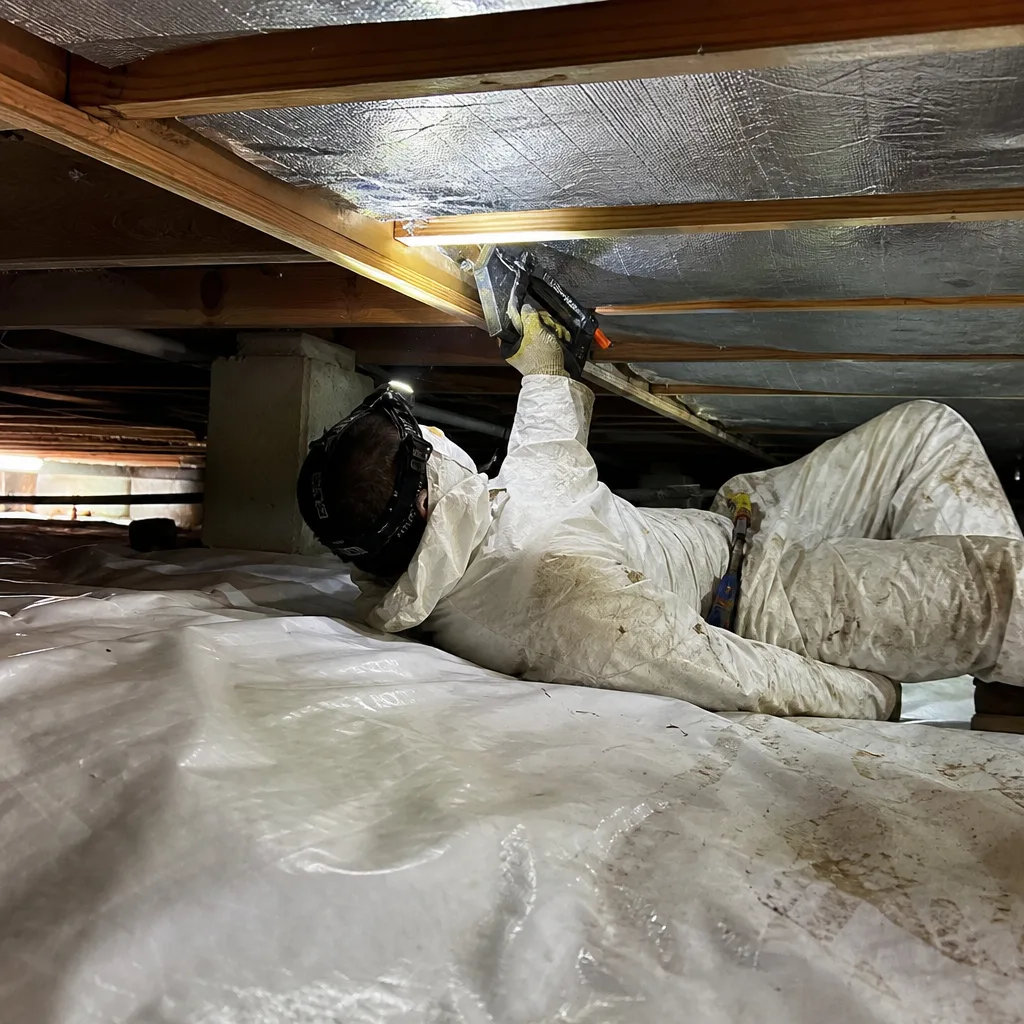
Radiant barrier installation - typically a reflective foil stapled to roof deck underside or laid over attic floor insulation - is aggressively marketed in Southern California. In Tustin’s specific conditions, the value proposition depends on three factors that generic sales pitches rarely address.
A radiant barrier reduces radiant heat transfer from a hot surface (your roof deck at 150°F+) to cooler surfaces below. It does not reduce conductive heat transfer, which is what R-value measures. In a Tustin attic with adequate insulation and proper air sealing, the roof deck’s radiant contribution to cooling load is typically 15-25% of total attic heat gain. A radiant barrier can cut this portion by 40-60%, but the overall cooling load reduction is usually 5-12% - not the 30% figures sometimes advertised.
When radiant barriers add measurable value in Tustin:
- Homes with R-19 or less existing attic insulation where full upgrade is deferred
- Cathedral or vaulted ceilings with limited cavity depth for insulation
- Roof decks with dark shingles or tiles and poor attic ventilation
- Conditioned attics where ductwork runs below the roof deck and additional R-value cannot be added
When they’re redundant or counterproductive:
- Attics with R-38+ blown fiberglass and proper air sealing - the insulation already limits roof deck heat transfer to negligible levels
- Attic floors where the barrier is laid over loose-fill insulation - dust accumulation on the upward-facing surface degrades reflectivity within 3-5 years in Tustin’s dry, dusty conditions
- Homes with significant air leakage - a radiant barrier does nothing for convective heat transfer, which dominates in leaky assemblies
In Tustin’s Orchard Hills and Tustin Ranch neighborhoods, we’ve measured post-installation performance in homes that received radiant barriers over R-30 insulation with unsealed attic floors. The blower-door result was unchanged, and the cooling load reduction was within measurement error - less than 3%. The same investment in air sealing and R-38 upgrade produced 18-25% measured reduction.
Our recommendation: specify radiant barriers only after air sealing and insulation are optimized, and only where cavity constraints or duct location justify the $1.20-$2.40 per square foot installed cost. For most Tustin vented attics, that money is better spent on blower-door-verified air sealing.
Title 24 Compliance and What It Means for Your Project
California’s Title 24, Part 6 building energy code applies to all new construction and most alterations that involve removing or modifying existing insulation. For Tustin homeowners, compliance is not optional - it’s enforced through city permit requirements and utility rebate eligibility - and the 2022 standards (effective through at least 2025) contain provisions that differ significantly from national IRC guidelines.
Key Title 24 provisions for Tustin insulation work:
- Prescriptive vs. performance path: You can meet code by following the prescriptive R-value table (R-38 attic, R-13 walls for Zone 10) or by using the performance path - energy modeling that shows the proposed assembly meets the target Energy Design Rating. The performance path often allows lower R-values if air sealing is exceptional, but it requires HERS verification - a third-party inspection we coordinate as part of project documentation.
- Quality insulation installation (QII): Since the 2019 standards, Title 24 requires QII verification for most insulation upgrades. This means a HERS rater inspects for gaps, compression, full contact with surfaces, and proper attic damming around access hatches. We build QII compliance into every Tustin job because re-inspection fees for failed QII run $200-$400.
- Air sealing requirements: The 2022 standards added explicit air sealing requirements for alterations: visual inspection of top plates, penetrations, and envelope seams, plus blower-door testing for additions over 1,000 square feet. For Tustin’s typical 1,500-2,500 square foot whole-house retrofits, we conduct blower-door testing regardless of addition size - it’s the only way to verify the work.
- Refrigerant management: If your insulation project involves HVAC duct modification or relocation, Title 24 mandates refrigerant charge verification and duct leakage testing. We coordinate this with licensed HVAC contractors in our Tustin projects.
Permit requirements in Tustin: the City of Tustin requires permits for insulation removal and replacement when the work exceeds 100 square feet or involves spray foam application. We pull permits on all applicable jobs and include the permit cost in our written price. The inspection sequence is typically: rough (pre-cover) for air sealing verification, final for insulation depth and QII confirmation.
Utility rebates: Southern California Edison and SoCalGas offer insulation rebates for Tustin homeowners through the Energy Upgrade California program. Rebate amounts vary by measure and income qualification, but typical attic insulation rebates run $0.15-$0.40 per square foot with minimum R-30 installation and verified air sealing. We file rebate paperwork on the customer’s behalf as part of project closeout - it’s included in our standard documentation package.
The Documentation Your Job Should Produce
A completed insulation job in Tustin should leave you with a documented record, not just a warmer house. Under the Haven Standard, every job closes with specific deliverables that let you verify what was installed and how it performed. This is not standard industry practice - most Tustin homeowners receive an invoice and perhaps a one-page warranty card. Here’s what we produce and what you should demand from any contractor.
Pre-project documentation:
- Written scope of work: Specific locations, materials by brand and product name, installed R-values, and air-sealing details. Not “insulate attic” - “Install Owens Corning AttiCat blown fiberglass to R-38 (12.5 inches) over sealed attic floor, including fire-rated caulk seal of all top plates, foam seal of 14 can-light housings with Tenmat covers, and baffle installation at 24 eave vents.”
- Written price: Fixed total, line-item breakdown, payment schedule. Under Haven Standard Clause 1: no work starts without a written price.
- Written warranty: Material and workmanship terms, duration, transferability, and claim procedure. Our 365-Day Done Right Promise - if it’s not done right, we make it right - is documented here.
During-project documentation:
- Documented Photo Record on Every Visit: Photos of attic condition before work, air sealing in progress, insulation depth markers, and completed installation. These are delivered digitally, not held until requested.
- Blower-door readings (applicable jobs): Pre-sealing CFM50 and ACH50, post-sealing CFM50 and ACH50, with date, time, and technician signature. This is the performance verification that matters more than R-value alone.
Post-project documentation:
- Installed R-value certificate: Product, depth, density (for spray foam), and calculated R-value. Required for utility rebate filing and future real estate disclosure.
- HERS verification documents (if QII or performance path): Third-party inspection sign-off for permit finalization.
- Utility rebate forms filed: Completed and submitted with customer authorization, with copy provided for records.
- Permit final approval: City of Tustin sign-off, copy provided.
Since 2016, we’ve delivered this documentation package on every one of our 9,000+ completed jobs. The photo record alone has resolved more post-project questions than any verbal assurance could - a customer in Tustin’s Laurelwood neighborhood used our 2019 photo documentation to verify insulation location during a 2023 roof replacement, avoiding $1,200 in unnecessary re-installation.
What Insulation Costs in Tustin
Pricing insulation work requires a site visit in most cases - ceiling height, attic accessibility, existing material condition, and air-leakage severity all move the number. That said, Tustin’s market has stabilized enough that we can publish ranges based on our 2024-2025 project data, with the caveat that every job gets a written price before any work starts.
Attic insulation with air sealing (typical 1,800-2,400 SF Tustin home):
- Air sealing only (no insulation): $1,200-$2,400
- Remove existing insulation, air seal, install R-38 blown fiberglass: $4,800-$7,200
- Remove existing, air seal, install R-44 blown fiberglass: $5,400-$8,100
- Conditioned attic conversion with open-cell spray foam (R-38 equivalent): $8,500-$14,000
Wall insulation (accessible cavities):
- Dense-pack cellulose, exterior siding removed: $3.20-$4.80 per square foot of wall area
- Open-cell spray foam, new construction or gut remodel: $4.80-$6.40 per square foot
- Injection foam, existing closed cavities (limited applications): $5.50-$8.00 per square foot
Crawl space work:
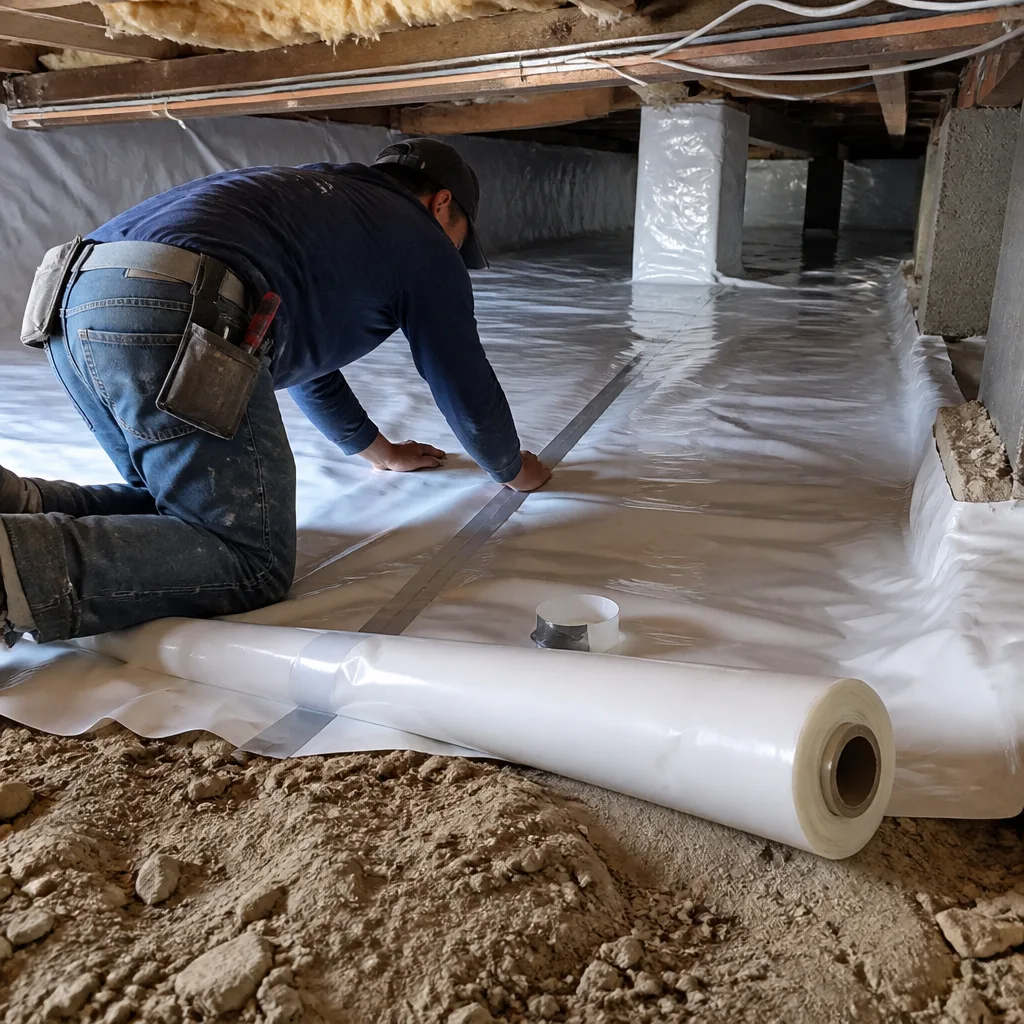
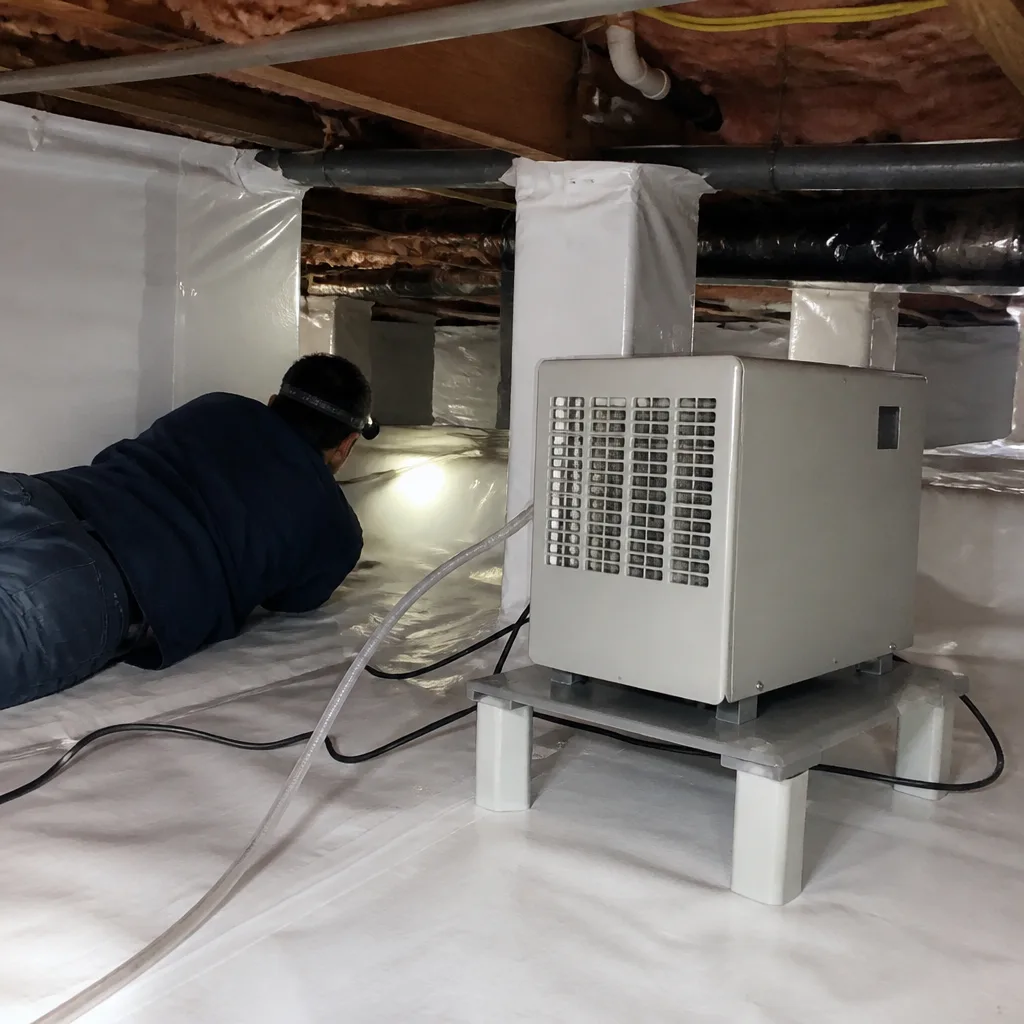
For crawl space encapsulation and vapor barrier in Tustin, we typically see $3,800-$7,500 for full encapsulation with closed-cell rim joist spray foam and 12-mil vapor barrier, depending on crawl height, drainage conditions, and pier count. Attic insulation in Tustin represents the majority of our retrofit work, but crawl space thermal boundary upgrades matter significantly in homes with ducts or plumbing in that space.
Spray foam insulation in Tustin - specifically spray foam insulation in Tustin - carries premium pricing but solves problems that loose-fill cannot. The defensible applications are listed in the materials section above; we do not recommend spray foam where blown fiberglass or cellulose will perform equivalently at lower cost.
Factors that increase cost in Tustin’s market: asbestos-containing vermiculite or old batt insulation requiring hazardous removal ($2.00-$4.50 per square foot additional); limited attic access requiring hatch enlargement; active rodent infestation requiring cleaning and proofing before insulation; and complex rooflines with multiple dormers or valleys that multiply air-sealing labor.
We offer a Free Second Opinion on Any Written Estimate - bring us a competing quote and we will read it with you, line by line, to compare scope and specifications.
Common Mistakes to Avoid
- Installing insulation before air sealing: In Tustin’s 1970s tracts, this is the most common error we correct. Once insulation covers the attic floor, finding and sealing top plates and penetrations requires removal and reinstallation. The correct sequence is seal first, insulate second - always.
- Trusting labeled R-value over installed performance: A bag of R-38 fiberglass becomes R-28 or less if compressed into a 2×8 joist cavity or installed with 5% gaps. We measure depth and density, not just depth, and verify with infrared.
- Adding radiant barrier without addressing air leakage: We’ve audited Tustin homes with $2,000 radiant barriers and 6 ACH50 blower-door results. The barrier reflects heat; it doesn’t stop the conditioned air you’re losing.
- Ignoring the HVAC system: Ducts in unconditioned Tustin attics lose 15-30% of cooling capacity to radiant and convective gain. Insulating the attic floor without addressing duct leakage or relocating ducts to conditioned space leaves significant savings unrealized.
- Using the wrong material for the cavity: Spray foam in a vented attic with no air barrier strategy; fiberglass batts in irregular joist cavities with gaps; cellulose in chronically damp crawl spaces - each mismatch degrades performance and can create moisture problems.
- Skipping permit and rebate coordination: Unpermitted work voids some homeowners insurance policies and eliminates rebate eligibility. The permit cost is minor compared to these consequences.
- Accepting verbal warranties: “Lifetime warranty” means nothing without written terms, exclusions, and a defined claims process. Under Haven Standard, you receive written scope, written price, and written warranty before anyone lifts a tool.
When to Call a Professional
Some insulation conditions in Tustin require professional assessment regardless of your DIY comfort level. Asbestos-containing vermiculite insulation - common in pre-1980 Tustin homes, particularly in the older neighborhoods near Old Town - requires licensed abatement. Active rodent infestation with soiled insulation presents health hazards that standard DIY equipment cannot safely address. And any work involving spray foam application requires respiratory protection and ventilation engineering that exceeds homeowner-grade equipment.
More fundamentally, if your goal is measured performance improvement rather than material installation, you need blower-door testing and infrared verification that rental equipment cannot replicate. We’ve re-audited Tustin homes where well-intentioned homeowners added insulation and saw no utility bill reduction - the air leakage they couldn’t see or measure was still dominating the load.
Topside Attic Insulation Tustin offers free estimates in Tustin. A typical assessment takes 60-90 minutes and includes attic inspection, blower-door baseline if accessible, and a written price before we leave. Call (657) 286-7673 to schedule. Calls are answered by a live person 24/7 - no voicemail loops, no callback windows measured in business days.
Frequently Asked Questions
Most attic insulation jobs in Tustin homes between 1,800 and 2,400 square feet run $4,800-$8,100 including air sealing, with the final price depending on existing material condition, attic accessibility, and whether hazardous material removal is required. Spray foam conversions for conditioned attics range $8,500-$14,000. We provide a written price before any work starts - call (657) 286-7673 for an exact quote; estimates are free.
Title 24 requires R-38 in Tustin attics for new construction and R-30 minimum for alterations, but we typically specify R-38 to R-44 for retrofits because installation quality factors and wind-washing effects reduce effective performance below labeled values. CEC Climate Zone 10’s cooling-dominated profile means summer attic performance matters more than winter, and deeper insulation provides more stable temperature buffering through Tustin’s hot afternoons and warm evenings.
In Tustin’s housing stock, replacement is usually the better investment. Insulation installed before 1990 is typically below current R-value, often compressed or moisture-damaged, and was never paired with air sealing. Adding new material over old traps air gaps and can mask active leaks. We remove and replace in most cases, with the exception of recently installed, properly performing material that simply needs supplementation.
Air sealing and blown-in attic insulation can often be completed in one day for Tustin homes with standard accessibility and no hazardous material concerns. Jobs requiring insulation removal, extensive air sealing, or spray foam application typically span two days for proper curing and inspection sequencing. We schedule based on your availability and provide a specific timeline in the written scope.
Radiant barriers provide measurable benefit in Tustin homes with limited insulation depth, dark roofing, or cathedral ceilings where cavity space is constrained. In well-insulated, properly air-sealed vented attics, the incremental cooling load reduction is typically 3-5% - rarely enough to justify the installed cost. We recommend them selectively, not universally, and only after air sealing and insulation are optimized.
You should receive: a written scope showing what was installed where; an installed R-value certificate with product and depth; pre- and post-project photos; blower-door test results if air sealing was performed; permit final approval if required; and utility rebate filing confirmation if applicable. Under the Haven Standard, this documentation is delivered automatically, not available on request.
The Bottom Line
Insulation in Tustin fails when it’s treated as a material specification rather than a system performance problem. CEC Climate Zone 10’s hot days, marine humidity, and Santa Ana wind events create conditions that R-value alone cannot address - which is why we measure air leakage first, seal what we find, then insulate to verified depth with documented results. The 9,000+ homes we’ve completed since 2016 share one common element: every job started with a written price and ended with a documented record, including before-and-after blower-door numbers on applicable work. If you’re researching insulation for a Tustin home, start with an assessment that measures what you’re actually losing - not just what the label says you’re buying. For more guides & resources on Tustin-specific insulation performance, browse our blog.
Call (657) 286-7673 for a free estimate. A live person answers 24/7, and you’ll receive a written price before any work starts - that’s Haven Standard Clause 1, no exceptions.
Written by Wes Okafor, Owner at Topside Attic Insulation Tustin, serving Tustin since 2016.