
Last updated September 24, 2026
How to Hire a Insulation Contractor in Tustin: A Step-by-Step Guide
Three of the most common insulation bids circulating in Tustin describe the same end state - “R-38 blown-in fiberglass” - but none of them commit to air-sealing scope, post-install depth verification, or documentation you can submit to SCE for a rebate. We’ve pulled permits on homes in Tustin Ranch and Old Town where the previous contractor blew insulation directly over unsealed top plates and can-light penetrations, leaving the homeowner with a warmer attic and the same leaky envelope. In this guide, you’ll learn how to separate bids that sell installed material from bids that sell verified performance, what five written deliverables to demand before signing, and why the single most predictive question you can ask is about a blower-door test. For insulation warning signs every Tustin homeowner should know, see our companion reference.
Quick Answer
Hiring an insulation contractor in Tustin starts with verifying a C-2 license on the CSLB website, then demanding five written deliverables before any work begins: a scoped air-sealing plan, installed R-value per zone, blower-door pre/post commitment, material brand and batch documentation, and a lien waiver. The best contractors in Tustin seal first, insulate second, and hand you documentation that proves the work performed, not just the material installed.
Table of Contents
- Step 1: Verify the Right License (90 Seconds)
- Step 2: Demand Five Written Deliverables Before Signing
- Step 3: Spot Red Flags in Insulation Bids
- Step 4: Compare Different Materials on Cost-Per-Effective-R
- Tustin-Specific Climate and Code Considerations
- What Your Post-Job Documentation Package Should Contain
- Common Mistakes to Avoid
- When to Call a Professional
- Frequently Asked Questions
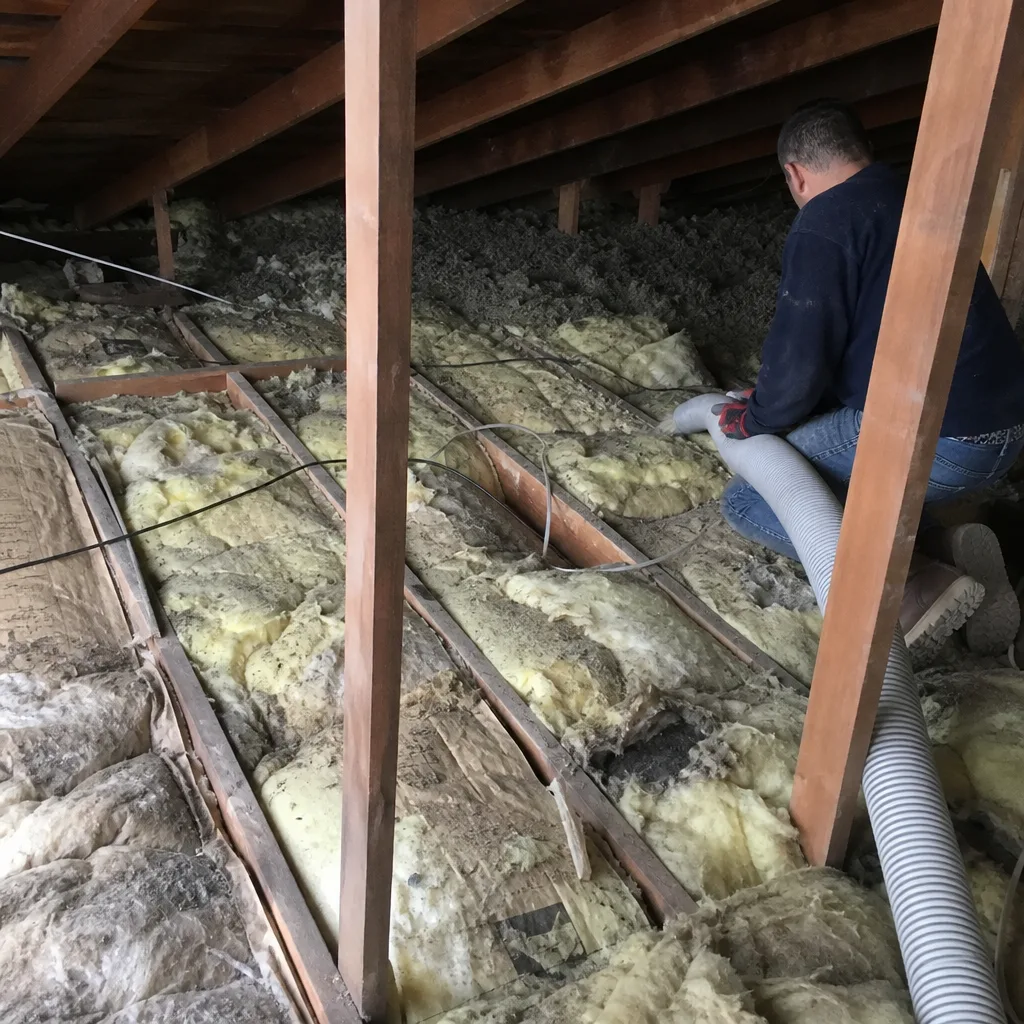 Before
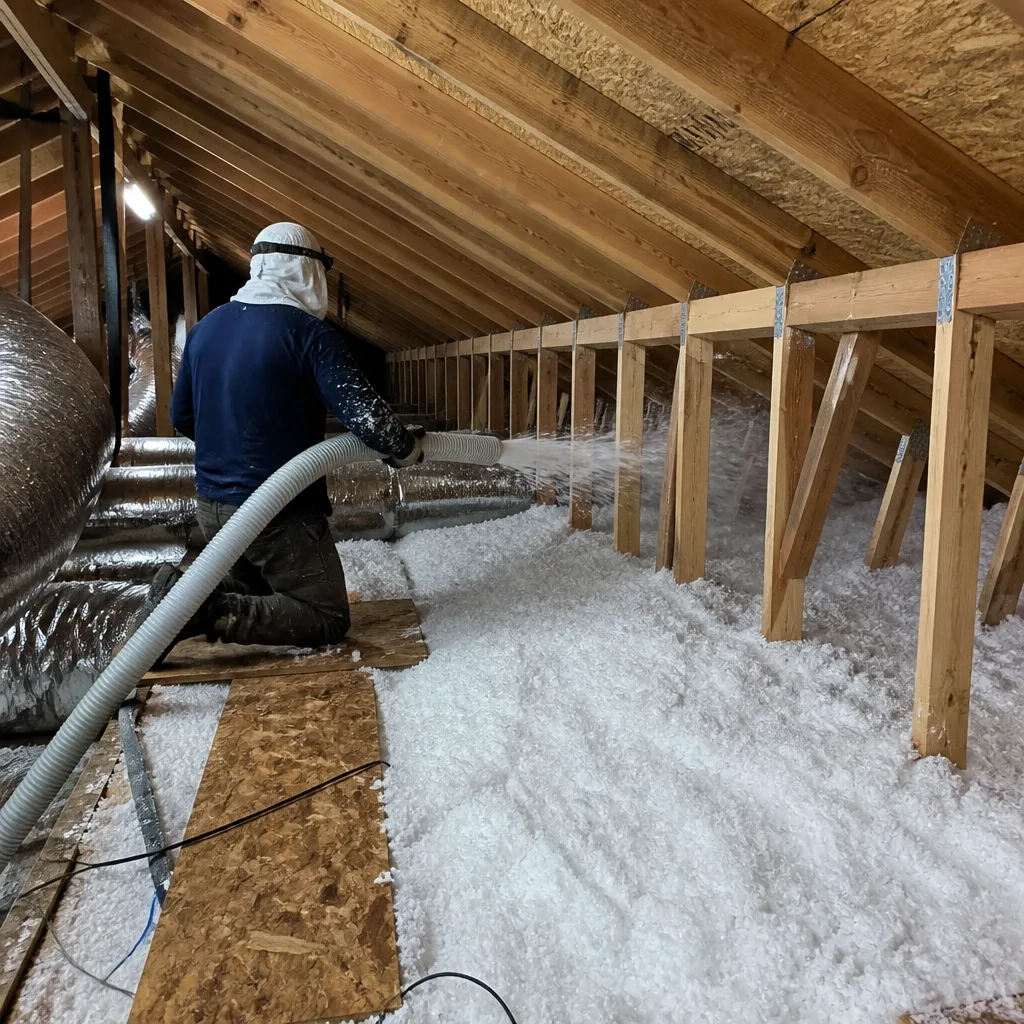 After
AfterStep 1: Verify the Right License (90 Seconds)
In California, insulation work falls under the C-2 classification: Insulation and Acoustical Contractor. Not a B-General, not a C-36 Plumbing, not an unlicensed handyman advertising on neighborhood apps. The C-2 is the specific license that authorizes a contractor to install thermal insulation, weather stripping, and associated sealing materials.
Verifying takes under two minutes. Go to cslb.ca.gov, click “Check a License,” enter the business name or license number, and confirm three things:
- The status reads “Active,” not “Suspended” or “Cancelled.”
- The classification shows “C-2 – Insulation and Acoustical.”
- The workers’ compensation certificate is current if the company employs anyone (required by law for licensed contractors with employees).
We’ve seen Tustin homeowners assume a contractor’s license covers insulation because they “do attics.” It doesn’t. A B-General can oversee insulation as part of a larger project, but if the scope is standalone insulation or air sealing, the C-2 is the proper classification. Hiring outside it exposes you to liability if something goes wrong and can void manufacturer warranties that require certified installation.
While you’re on the CSLB page, scroll to the disciplinary history. A clean record for five-plus years is what you want to see. One complaint about a lien or unfinished work warrants a direct question, not necessarily a disqualification. Three or more in a decade is a pattern.
Step 2: Demand Five Written Deliverables Before Signing
Under Haven Standard Clause 1, every job begins with a written price, a written scope, and a written warranty before anyone lifts a tool. For insulation work specifically, we recommend Tustin homeowners demand five documents before signing any contract. These separate contractors who sell material from contractors who sell performance.
1. Scope of Air-Sealing Work
The document must list, by location, what penetrations will be sealed: top plates, can lights, plumbing and electrical penetrations, chimney chases, and attic access hatches. Vague language like “air sealing as needed” is not a scope. “Seal all top plates with fire-rated caulk, install ten pre-fabricated can-light covers, and weatherstrip attic hatch” is a scope. In Tustin’s climate, where summer attic temperatures exceed 140°F, unsealed can lights act as miniature chimneys, drawing conditioned air upward year-round.
2. Installed R-Value Per Zone
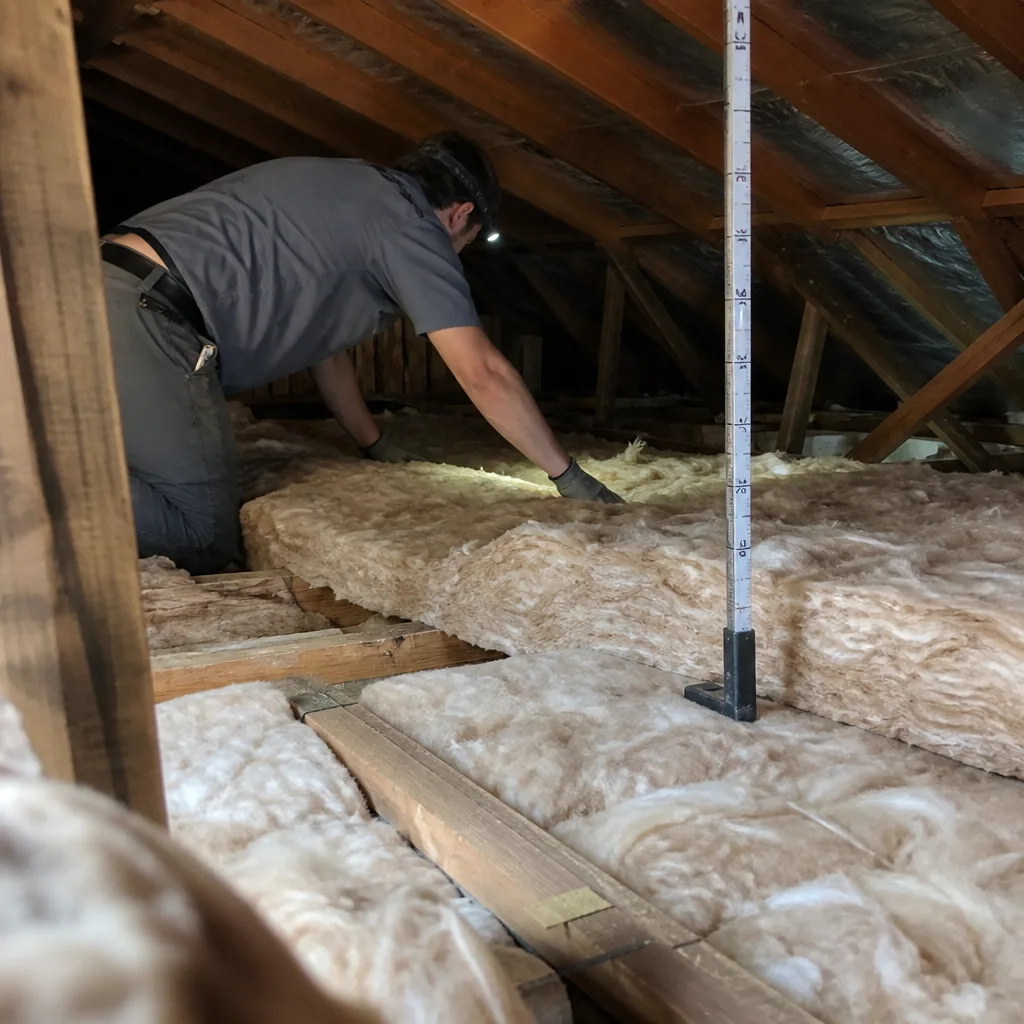
California Title 24 requires minimum R-values by climate zone. Tustin sits in Climate Zone 8, where attic insulation must achieve R-38 minimum for new construction and R-30 for retrofits in most cases. The written deliverable should state the target R-value for each distinct zone - attic floor, knee walls, vaulted ceilings - and the method of verification. We use a depth gauge and thermal imaging to confirm uniform coverage; the documentation includes photos with timestamps.
3. Blower-Door Pre/Post Commitment
This is the single most predictive question you can ask: “Will you give me a blower-door reading before and after?” A blower-door test - a pressurization reading that shows, in one number, how much air your building envelope is losing - is the only way to verify that air-sealing work actually reduced infiltration. Not “we’ll check for drafts.” Not “we do quality work.” A numerical CFM50 reading, dated, with the test standard (ASTM E779 or equivalent) noted. Contractors who refuse this commitment typically don’t own the equipment or don’t want their work measured.
4. Material Brand and Batch Documentation
The deliverable should name the manufacturer and product line: Owens Corning AttiCat, Johns Manville Climate Pro, Knauf EcoFill, or another specified material. Batch numbers matter for warranty claims if the material underperforms. Generic “blown-in fiberglass” language leaves you with no recourse.
5. Lien Waiver on Completion
California mechanics’ lien law allows contractors and suppliers to place liens on your property for unpaid work. A conditional lien waiver, signed upon final payment, releases these claims. Reputable contractors in Tustin provide this without asking. If a contractor hesitates or charges extra for lien waiver documentation, that’s a signal about how they handle their subcontractor and supplier relationships.
Step 3: Spot Red Flags in Insulation Bids
We’ve reviewed competitor bids brought in for our Free Second Opinion service. Certain patterns predict low-price, low-performance results with remarkable consistency.
Red Flag: No Mention of Air Sealing
A bid that jumps straight to “install R-38 blown-in fiberglass” without addressing the envelope leaks first is selling material, not performance. In Tustin’s older neighborhoods like Old Town, where homes built in the 1960s and 1970s have minimal original air sealing, blowing insulation over unsealed penetrations traps moisture and creates pathways for conditioned air to escape. The insulation performs at a fraction of its rated R-value.
Red Flag: Vague Depth Language
“Approximately R-38” or “up to R-38” allows a contractor to hit minimum depth in the center of the attic while skimping near eaves, around hatches, and in corners where access is difficult. Insulation depth should be specified as a minimum average with no area more than 10% below target, verified by multiple measurements.
Red Flag: Verbal-Only Pricing
Any contractor who won’t put a price in writing before work starts is operating outside basic professional standards. Verbal estimates become “misunderstandings” when the final invoice arrives. Under Haven Standard, a written price is non-negotiable - it’s the foundation of the working relationship.
Red Flag: Pressure to Decide Immediately
“This price is only good today” or “I have material left over from another job” are classic high-pressure tactics. Material costs don’t fluctuate daily. A contractor with genuine scheduling constraints will explain them plainly without manufactured urgency.
Red Flag: No Discussion of Ventilation
Adding insulation without assessing attic ventilation can cause moisture accumulation, especially in Tustin’s mild, humid winters. Baffles at eaves, ridge vent continuity, and exhaust fan ducting to exterior should be evaluated before insulation goes in.
Step 4: Compare Different Materials on Cost-Per-Effective-R
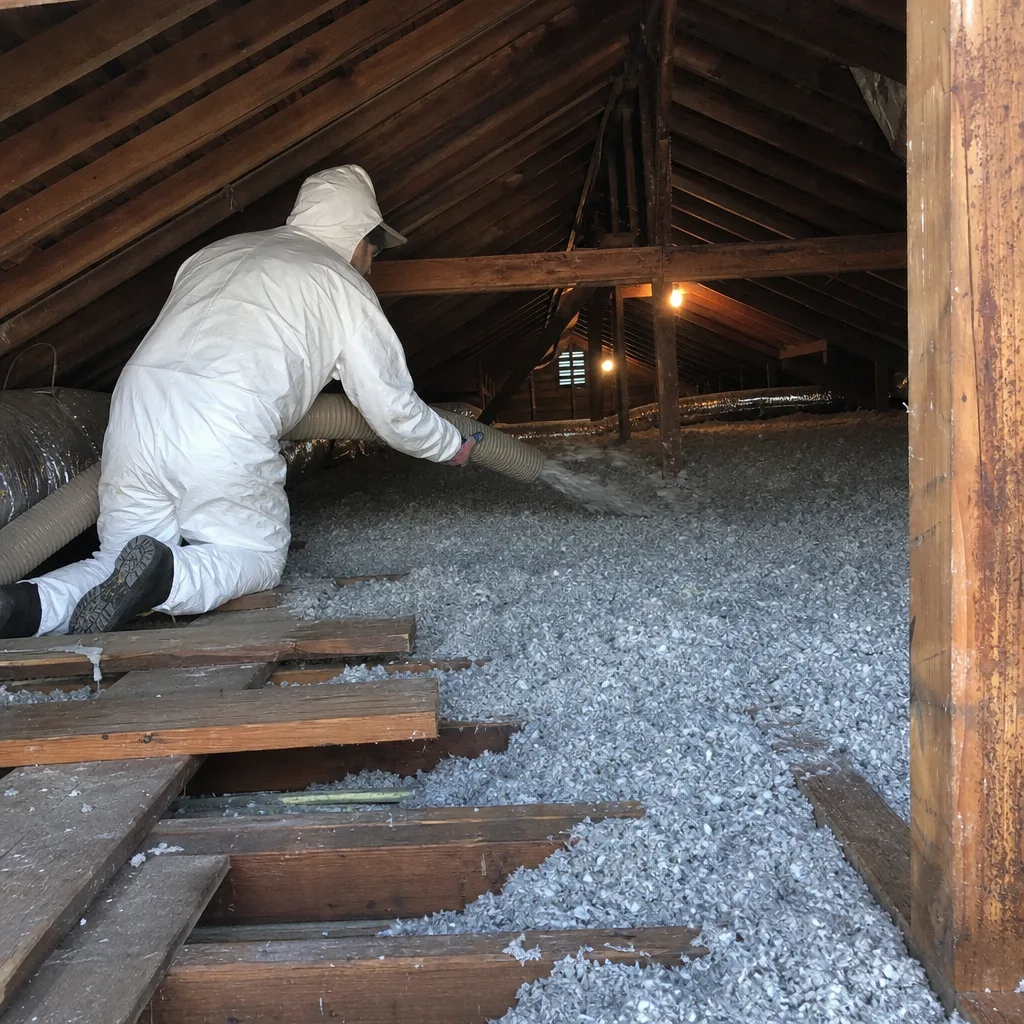
Tustin homeowners often receive bids quoting different materials: fiberglass batts, blown-in cellulose, open-cell spray foam, or closed-cell spray foam. Comparing these on cost-per-bag or cost-per-board-foot is misleading because each material performs differently in real conditions.
The apples-to-apples metric is cost-per-effective-R - the installed cost divided by the R-value that actually performs in your specific assembly, accounting for thermal bridging, air movement, and installation quality.
| Material | Nominal R-Value (per inch) | Effective R-Factor in Tustin Attics* | Typical Installed Cost Range (Tustin market) |
|---|---|---|---|
| Blown-in fiberglass (Owens Corning AttiCat) | R-2.5 to R-3.0 | 0.85-0.90 of nominal | $1.80 – $2.80 per effective R per sq ft |
| Blown-in cellulose (GreenFiber) | R-3.2 to R-3.8 | 0.90-0.95 of nominal | $1.60 – $2.50 per effective R per sq ft |
| Open-cell spray foam (Icynene) | R-3.5 to R-3.7 | 0.95-1.00 of nominal (air-seals simultaneously) | $3.50 – $5.00 per effective R per sq ft |
| Closed-cell spray foam (Demilec) | R-6.0 to R-6.5 | 0.95-1.00 of nominal (air-seals + moisture barrier) | $4.50 – $6.50 per effective R per sq ft |
*Effective R-factor accounts for typical installation quality in Tustin’s climate, including wind washing at eaves and thermal bridging through framing members.
The table reveals why spray foam commands premium pricing: its air-sealing integration means the effective R-factor approaches nominal R-value, whereas fiberglass in a leaky attic may perform at 70% of rating. For a Tustin homeowner planning to stay 10+ years, the lifecycle cost calculation often favors higher first-cost materials with verified performance. For shorter holds or rental properties, blown-in cellulose with rigorous air sealing frequently optimizes return on investment.
When comparing bids, ask each contractor to state their assumed effective R-factor and the basis for it. A contractor who can’t explain this distinction is pricing material, not performance.
Tustin-Specific Climate and Code Considerations
Tustin’s location in the Los Angeles Basin creates distinct envelope challenges that inform how insulation should be specified and installed.
Marine Layer and Winter Moisture
From November through March, Tustin experiences regular marine layer intrusion with relative humidity exceeding 80% in early mornings. Attics with inadequate ventilation and air sealing see condensation on cool roof sheathing, particularly north-facing slopes. Insulation installed without addressing these moisture pathways traps water against structural members. We’ve found mold on rafters in Tustin Ranch homes where fiberglass was added over leaky ceiling penetrations without vapor management.
Summer Attic Heat and Cooling Load
Tustin’s summer design temperature is 92°F ambient, but dark shingle attics routinely reach 140-150°F. This extreme delta-T between conditioned space and attic drives enormous cooling load through the ceiling plane. R-38 insulation with compromised air sealing performs like R-20 or lower because convective loops carry conditioned air into the attic continuously. The blower-door test quantifies this loss; without it, you’re guessing.
Title 24 and Local Amendments
Orange County adopts California Title 24 with minimal amendments, but Tustin’s building department enforces specific documentation requirements for insulation permits, codes & inspections in CA on additions and alterations. Prescriptive compliance requires HERS verification for most projects involving insulation changes. The documentation package we provide - including blower-door report, thermal images, and depth verification photos - satisfies HERS rater requirements without additional contractor visits.
SCE Rebate Documentation
Southern California Edison offers insulation rebates through its Energy Upgrade California program, but claims require pre- and post-installation documentation including contractor invoice with material specifications. Bids that don’t mention rebate documentation leave money on the table - typically $0.15-$0.30 per square foot for attic insulation in Tustin’s climate zone.
What Your Post-Job Documentation Package Should Contain
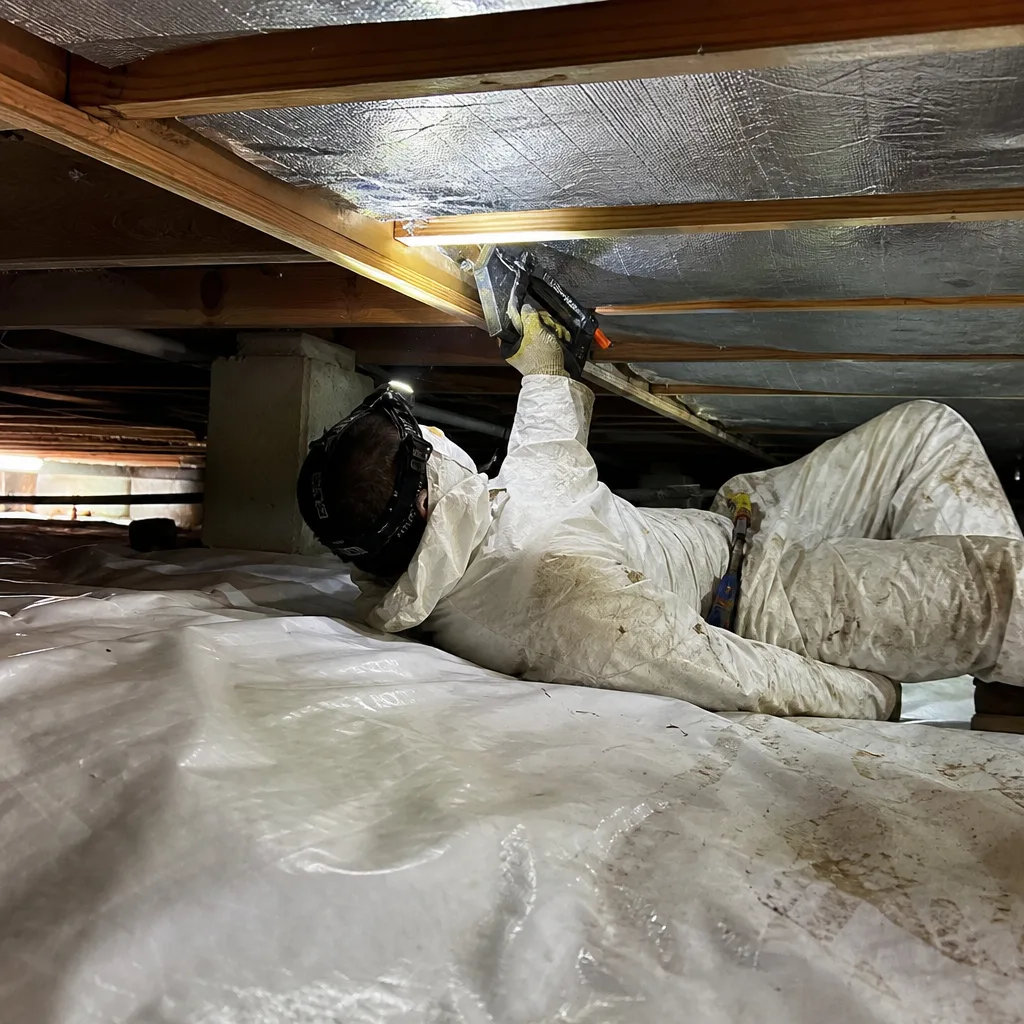
The work is finished. The crew has left. What should you hold in your hands?
A proper documentation package transforms insulation from an invisible product into a verified asset with transferable value. Here’s what we deliver on every job, and what you should demand from any contractor in Tustin.
The Blower-Door Report
This is the centerpiece. A single-page report showing CFM50 before air sealing, CFM50 after air sealing, and the percentage reduction. For context: a typical 2,000-square-foot Tustin home built in the 1970s might test at 4,500 CFM50 before work and 2,800 CFM50 after comprehensive air sealing and insulation. That’s a 38% reduction in infiltration, verifiable in one number. Without this report, you have no evidence the air-sealing work performed as specified.
The Thermal Image Set
Infrared photographs showing temperature differentials across the ceiling plane, with annotations identifying any remaining anomalies. We include these in our Attic Insulation in Tustin documentation package. A uniform ceiling surface at 75°F with no hot spots indicates consistent insulation depth and coverage.
The Depth Verification Record
Multiple attic-floor measurements with GPS-tagged photos, showing insulation depth at representative locations. For blown-in material, we measure at center, eaves, around penetrations, and near the hatch - the locations most susceptible to thin coverage.
The Written Scope Completion Checklist
A signed document matching the pre-work scope, with each line item initialed by the lead technician. This closes the loop on what was promised versus what was performed.
The Material Documentation
Manufacturer specification sheet for the installed product, with batch number recorded. This supports warranty claims and proves rebate eligibility.
The Lien Waiver
Final, unconditional lien waiver upon payment, protecting your title.
These six documents take a contractor approximately 30 minutes to compile. If a bid doesn’t include them, ask why. The answer reveals whether the contractor views the job as complete when the material is installed, or when the performance is verified.
Common Mistakes to Avoid
- Skipping the license check because “they seemed professional.” We’ve corrected work from unlicensed operators in Tustin who presented polished bids and wore matching shirts. The CSLB lookup takes 90 seconds and is the only verification that matters.
- Comparing bids on total price alone. A $3,200 bid with no air sealing and no documentation is not cheaper than a $4,800 bid with scoped air sealing, blower-door verification, and rebate documentation. The first is a material purchase; the second is a performance contract.
- Accepting “R-38 equivalent” language for spray foam. Spray foam is rated by thickness and R-value per inch, not by equivalence to fiberglass. A 5-inch open-cell application at R-3.6 per inch achieves R-18, not R-38. It air-seals simultaneously, but the R-value math is different and must be stated clearly.
- Ignoring the attic floor condition. In Tustin’s older homes, particularly in the neighborhoods east of Jamboree Road, we’ve found degraded original insulation, rodent activity, and moisture damage that must be addressed before new material is added. Bids that assume a clean substrate without inspection are guessing.
- Neglecting to ask about cleanup and protection. Insulation work generates debris. The bid should specify floor protection, HEPA filtration during work, and post-job cleaning scope. We include this in our written price; contractors who don’t mention it often leave the homeowner with a day’s additional cleaning.
- Failing to verify warranty transferability. Some manufacturer warranties require installation by certified contractors using specified materials. A “lifetime warranty” from an uncertified installer is a promise with no backing. We source from Owens Corning, Johns Manville, Knauf, and other major manufacturers with established warranty programs; the documentation proves eligibility.
When to Call a Professional
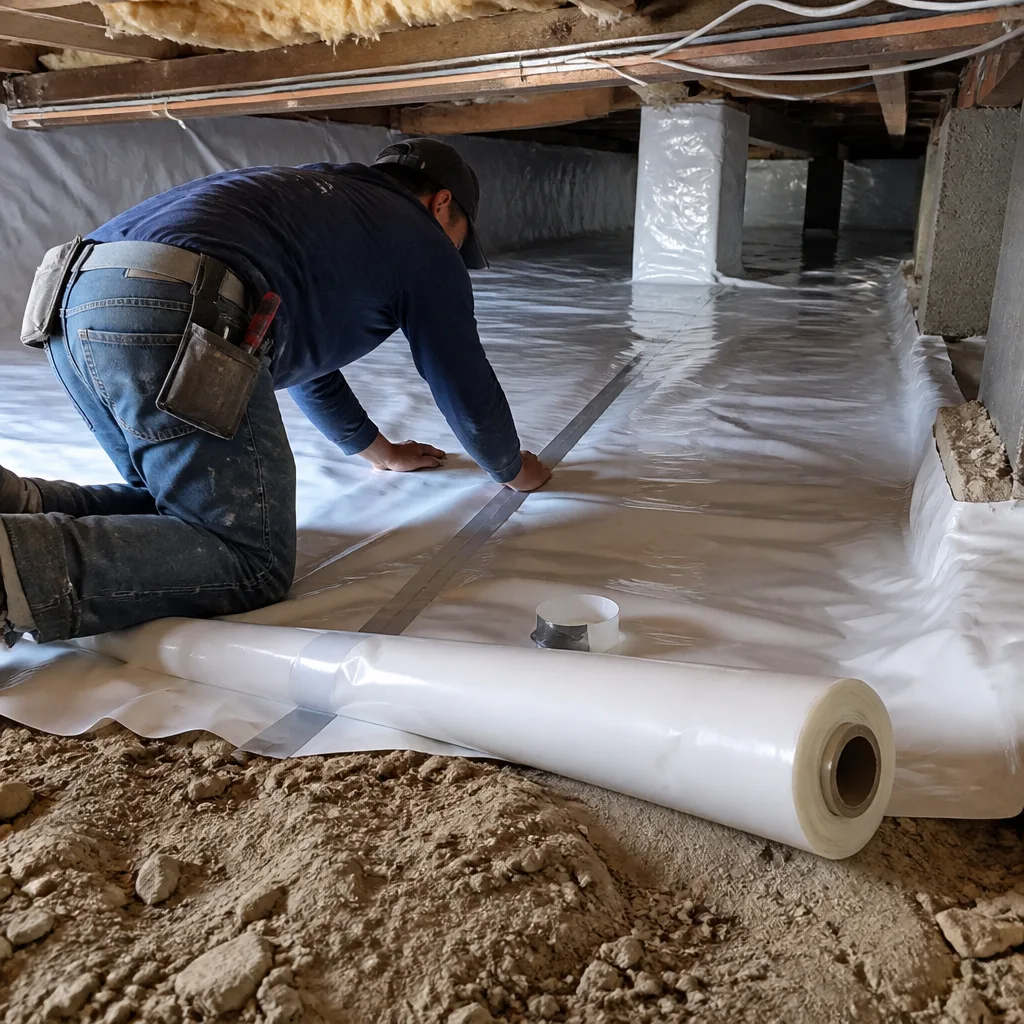
Certain conditions in Tustin homes warrant immediate professional assessment rather than DIY evaluation. Call a licensed insulation contractor if you notice temperature stratification between rooms, visible insulation degradation or displacement, moisture staining on ceiling drywall, or energy bills increasing without usage changes. Homes built before 1980 in Tustin typically have minimal original air sealing and benefit from comprehensive envelope assessment regardless of apparent insulation condition.
Topside Attic Insulation Tustin offers free estimates in Tustin - call (657) 286-7673. Every estimate includes a written price, a scoped air-sealing plan, and documentation of what you’ll receive when the work is complete. Under Haven Standard, no work starts without these in writing.
Frequently Asked Questions
Most attic insulation jobs in a Tustin home between 1,800 and 2,800 square feet run between $2,800 and $5,500 for blown-in fiberglass or cellulose with comprehensive air sealing, and $6,500 to $12,000 for spray foam applications. See our Insulation Cost Breakdown: The Tustin Homeowner’s Reference for 2026 for detailed pricing factors. The range depends on attic accessibility, existing material condition, and the extent of air-sealing work required. Call (657) 286-7673 for a written price specific to your home - estimates are free.
Visit cslb.ca.gov, click “Check a License,” and enter the business name or license number. Confirm the classification reads “C-2 – Insulation and Acoustical,” the status is “Active,” and workers’ compensation is current if the company has employees. The entire verification takes under 90 seconds and is the most important due-diligence step you can take.
A blower-door test is a pressurization reading that shows, in one number, how much air your building envelope is losing. It matters because insulation without air sealing performs poorly - conditioned air escapes through leaks, and the insulation never reaches its rated R-value. The pre- and post-work readings prove whether air sealing actually reduced infiltration. We publish these numbers on every applicable job so homeowners can verify their results. Browse more guides & resources on attic performance and home efficiency.
Spray foam is worth the premium for homeowners planning to stay 10+ years, for homes with complex attic geometry where blown-in coverage is difficult, or where moisture management is a concern. In Tustin’s climate, open-cell spray foam at roofline creates a conditioned attic that eliminates the extreme temperature delta that stresses HVAC equipment. For shorter holds or simple rectangular attics, blown-in cellulose with rigorous air sealing often optimizes return on investment. We evaluate both approaches during our free estimate and quote the option that fits your goals.
Yes. Southern California Edison offers rebates through Energy Upgrade California, typically $0.15-$0.30 per square foot for attic insulation in Tustin’s climate zone. Claims require pre- and post-installation documentation including contractor invoice with material specifications and installed R-value. We include rebate-ready documentation with every job; contractors who don’t mention rebates may not provide the paperwork required to claim them.
A typical attic insulation project in Tustin - including air sealing, material installation, and cleanup - takes one to two days for blown-in applications and two to three days for spray foam, which requires curing time. Larger homes or those requiring insulation removal first may extend to three or four days. We provide a specific timeline in our written scope before work begins, with arrival windows confirmed by text the morning of.
The Bottom Line
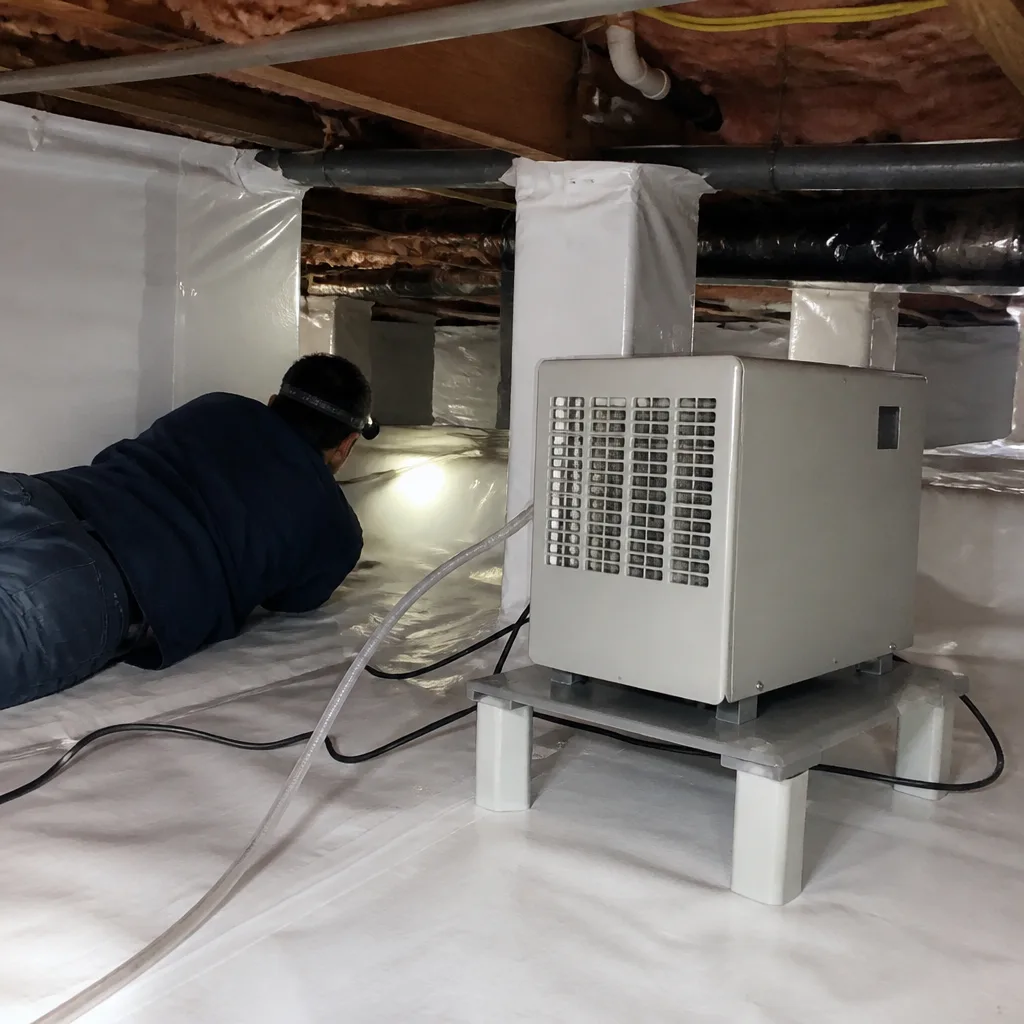
Hiring an insulation contractor in Tustin is not primarily about comparing prices for the same product. It’s about distinguishing bids that sell installed material from bids that sell verified building performance. The verification comes from five written deliverables, a C-2 license you can check in 90 seconds, and a blower-door report that proves the air sealing worked. Everything else - brand names, depth claims, energy savings estimates - is secondary to that documentation. We’ve sealed and insulated over 9,000 homes since 2016, every one with a written price before work started and a documented record when the crew left. The Haven Standard exists because the alternative - verbal promises and invisible products - leaves homeowners with no way to know what they actually bought.
Ready to see what a performance-based bid looks like? Call Topside Attic Insulation Tustin at (657) 286-7673 for a free estimate with written pricing, or bring us a competing quote for our Free Second Opinion. We’ll read it with you and show you what to ask before you sign.
Written by Wes Okafor, Owner at Topside Attic Insulation Tustin, serving Tustin since 2016.